:+86 15106109009
:sales@couplingzy.com


 English
  русский
  Español
  عربى
عربى  Português
  Deutsch
  Türk
Türk  Indonesia

Long Expansion Welded Universal Couplings for Heavy-Duty Power Transmission
Content
- 1 Product Overview and Engineering Purpose
- 2 Core Advantages in Heavy-Duty Applications
- 3 Technical Performance Summary
- 4 Model Range and Selection Flexibility
- 5 Advantages Compared with Competing Coupling Solutions
- 6 Manufacturing Strength and Process Control
- 7 Customization and Non-Standard Engineering Capability
- 8 Applications in Key Industries
- 9 Installation Considerations
- 10 Maintenance and Service Life
- 11 Energy Efficiency and Operational Value
- 12 Why This Coupling Is a Strong Choice for Modern Heavy Industry
- 13 Practical Selection Guidance
- 14 Quality Assurance and Standards Awareness
- 15 Q&A Section
- 15.1 Q1: What is the main purpose of a long expansion welded universal coupling?
- 15.2 Q2: What makes this coupling different from a standard universal coupling?
- 15.3 Q3: What torque range can the product series support?
- 15.4 Q4: What is the maximum shaft angle?
- 15.5 Q5: Why is axial compensation important?
- 15.6 Q6: Is this coupling suitable for high-temperature environments?
- 15.7 Q7: How does the welded structure improve performance?
- 15.8 Q8: What industries commonly use this coupling?
- 15.9 Q9: Can the coupling be customized?
- 15.10 Q10: What maintenance is required?
- 15.11 Q11: Why choose a mechanically flexible coupling instead of an elastic coupling?
- 15.12 Q12: What information should be provided for selection?
- 16 Conclusion
- 17 References
- 18 Product: SWC-CH type long expansion welding universal coupling
In heavy industry, a coupling is more than a mechanical connector. It is a critical power-transmission component that determines whether large equipment runs smoothly, safely, and continuously under demanding loads. The long expansion welded universal coupling is designed for applications where torque is high, installation space is challenging, shaft alignment is imperfect, and axial displacement is unavoidable. It combines the angular compensation capability of a universal joint with an extended telescopic structure, allowing equipment to maintain stable torque transmission while absorbing axial movement caused by thermal expansion, foundation settlement, process vibration, load fluctuation, and installation tolerance.
The SWC-CH type long expansion welding universal coupling belongs to the category of flexible couplings with non-elastic elements. Unlike rubber-elastic, tire, jaw, or diaphragm couplings, this product relies on a robust mechanical universal joint structure and a telescopic spline or sliding assembly to compensate for misalignment and displacement. This makes it especially suitable for metallurgical equipment, petrochemical production lines, heavy conveying systems, mining machinery, port machinery, lifting systems, water engineering equipment, and other installations where a conventional coupling may not provide enough axial travel or torque capacity.
With a nominal torque range reaching up to 1000 kN·m and a telescopic adjustment range up to 1000 mm in selected specifications, the long expansion welded universal coupling provides a strong solution for severe industrial operating conditions. Its maximum allowable shaft angle of up to 15° enables flexible layout between driving and driven machines. Its welded connection design improves structural integrity and helps reduce looseness, deformation, and assembly weakness under repeated heavy loads. For users seeking high torque capacity, long service life, reliable displacement compensation, and reduced maintenance frequency, this coupling offers a practical and technically mature answer.
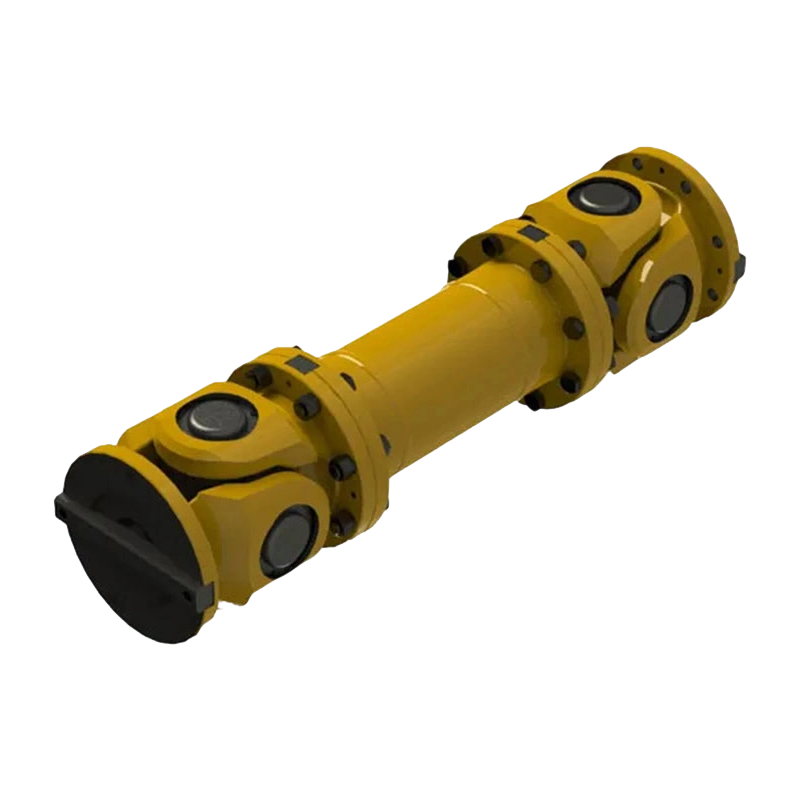
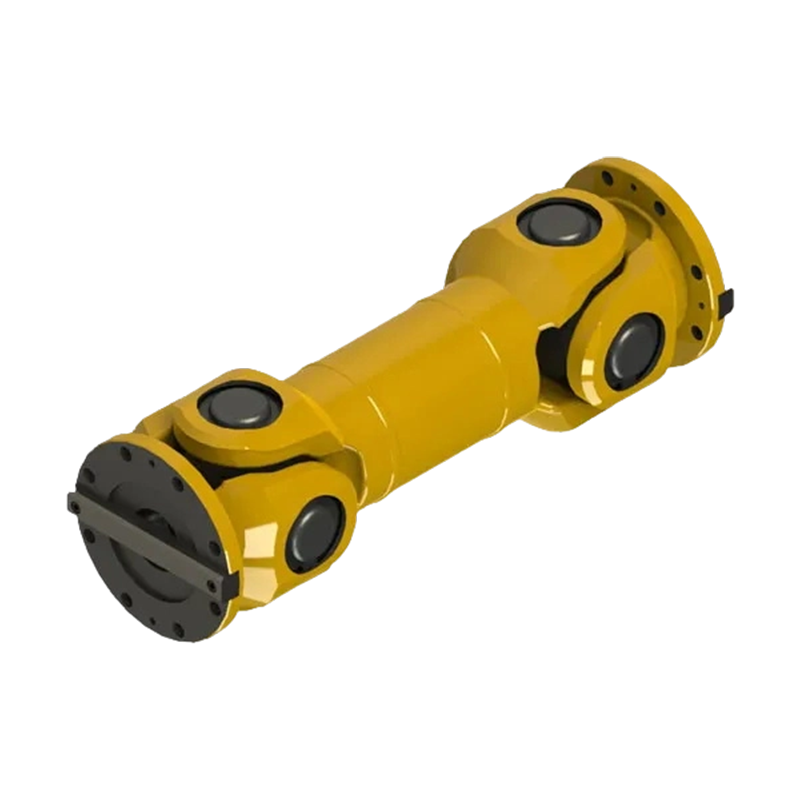
SWC-CH type long expansion welding universal coupling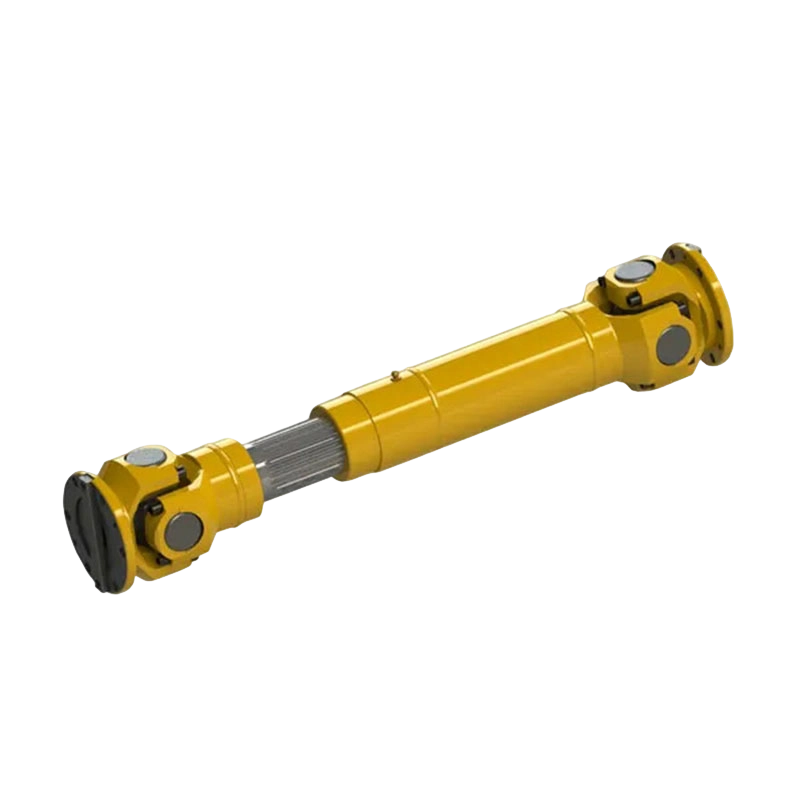
Product Overview and Engineering Purpose
The long expansion welded universal coupling is developed for transmitting torque between two shafts that are not perfectly aligned and may also move axially during operation. In many heavy-duty systems, the distance between the driving shaft and driven shaft is not fixed. Equipment may expand when heated, contract during cooling, vibrate under load, or shift slightly because of foundation movement. If the coupling cannot compensate for this displacement, excessive axial force may be transferred to bearings, gearboxes, motors, reducers, rolls, pumps, or other precision components. Over time, this leads to bearing heating, seal damage, shaft fatigue, abnormal noise, vibration, and unplanned shutdown.
The key engineering purpose of the SWC-CH type long expansion welding universal coupling is to isolate the connected equipment from harmful axial stress while maintaining efficient torque transmission. Its long telescopic section allows large axial movement without forcing the connected shafts to absorb the displacement. This is especially valuable in long production lines, high-temperature process equipment, rolling mills, drying systems, furnace-related conveying equipment, heavy roller tables, and large mechanical drives where operating dimensions vary continuously.
Compared with standard universal couplings, the long expansion version provides a much larger compensation stroke. Compared with many flexible elastic couplings, it handles higher torque, larger shaft angles, heavier shock loads, and harsher environmental conditions. Compared with rigid couplings, it greatly reduces the risk of overload on bearings and shafts caused by misalignment. The result is a coupling that supports both mechanical flexibility and industrial strength.
Core Advantages in Heavy-Duty Applications
Superior Axial Compensation Capability
The most important advantage of this coupling is its long telescopic stroke. Axial displacement is one of the most difficult problems in heavy machinery because it often changes during the process. In a petrochemical system, pipelines and rotating equipment may expand significantly because of temperature. In metallurgical equipment, rollers, conveyors, and drive units are exposed to thermal cycles and heavy impact. In mining and port machinery, long structures may move under load, weather, vibration, and uneven foundation conditions. A coupling with insufficient axial compensation can become a source of mechanical stress instead of a solution.
The long expansion welded universal coupling is designed to absorb large axial movement while continuing to transmit torque. Selected models provide expansion and contraction quantities from 200 mm to 1000 mm, depending on size and configuration. This extended movement capacity helps protect connected equipment and makes the coupling suitable for long-span installations. It also reduces the need for frequent realignment, making the system more tolerant of real operating conditions.
High Torque Capacity for Demanding Drives
The product series supports nominal torque values from small heavy-duty sizes such as 22.4 kN·m to large specifications up to 1000 kN·m. This wide range allows users to select a model according to motor power, working speed, load factor, impact condition, and fatigue requirement. In large industrial systems, torque is rarely constant. Equipment may experience starting torque, reversing load, sudden blockage, impact from materials, and periodic overload. A coupling must therefore be selected not only for nominal torque but also for fatigue torque, bearing life factor, and service condition.
The SWC-CH type is built for high-load operation. Its large rotating diameter, reinforced fork structure, precision bearing support, and welded arrangement contribute to stable torque transfer. The product is designed for equipment where a low-grade coupling may deform, loosen, wear rapidly, or fail under repeated impact. By selecting a coupling with suitable torque margin, users can reduce downtime and improve production continuity.
Angular Misalignment Compensation up to 15 Degrees
A major benefit of a universal coupling is its ability to transmit rotation between shafts at an angle. The SWC-CH type supports an axis angle of up to 15°, making it useful where equipment layout cannot maintain perfect coaxial alignment. This feature helps simplify installation and allows mechanical designers greater freedom in arranging motors, reducers, rolls, drums, and driven equipment.
Angular compensation also reduces the load transmitted to bearings and seals. If a rigid coupling is installed between two shafts with angular error, it forces the shafts to bend or the bearings to carry extra radial and axial loads. The universal coupling allows the angular difference to be absorbed by the joint structure, helping the connected machines operate more smoothly. In applications with vibration or movement, this ability is particularly valuable.
Welded Structure for Stability and Strength
The welded connection design gives the coupling strong structural continuity. In large couplings, welding can provide excellent strength when it is properly engineered, controlled, and inspected. A welded structure reduces the number of detachable joints that may loosen under vibration. It also allows a robust integrated design suitable for heavy torque and large-size installations.
For heavy industry, connection reliability is essential. Bolted or assembled structures may be suitable for many applications, but in long-stroke universal couplings operating under high load, a well-designed welded structure offers enhanced rigidity and fatigue resistance. Proper welding procedures, material preparation, heat control, post-weld treatment, and non-destructive testing are essential to ensuring that the welded areas perform reliably over time.
Protection of Precision Components
Motors, reducers, bearings, pumps, and roll shafts are often more expensive and more difficult to replace than the coupling itself. A coupling that absorbs misalignment and displacement protects these critical assets. The long expansion welded universal coupling reduces the mechanical stress that would otherwise be transferred to precision components. This helps prevent bearing overload, gear tooth misalignment, seal leakage, shaft bending, and thermal stress accumulation.
In continuous production industries, the cost of downtime may exceed the cost of spare parts. A coupling that extends equipment life and reduces maintenance demand creates measurable value. It helps maintenance teams shift from emergency repair to planned inspection, improving operational reliability.
Technical Performance Summary
The following table summarizes typical technical characteristics of the long expansion welded universal coupling series. Values vary by model, and final selection should be based on torque, speed, working angle, installation length, telescopic requirement, fatigue condition, and service environment.
| Technical Item | Typical Range or Feature | Engineering Significance |
| Product type | Long expansion welded universal coupling | Combines universal joint angular compensation with extended axial movement |
| Coupling category | Flexible coupling with non-elastic elements | Provides mechanical flexibility without relying on rubber or plastic elastic parts |
| Nominal torque | Approximately 22.4 kN·m to 1000 kN·m | Suitable for heavy-duty industrial power transmission |
| Fatigue torque | Approximately 11.2 kN·m to 500 kN·m | Supports long-term repeated load operation when properly selected |
| Maximum shaft angle | Up to 15° | Allows significant angular misalignment compensation |
| Expansion and contraction quantity | Approximately 200 mm to 1000 mm | Absorbs large axial displacement and thermal movement |
| Connection structure | Welded type | Improves structural stability and strength under heavy load |
| Typical industries | Metallurgy, petrochemical, mining, conveying, lifting, port machinery, water equipment | Designed for harsh and high-load industrial environments |
Model Range and Selection Flexibility
The series includes multiple sizes identified by rotating diameter, such as 180 mm, 200 mm, 225 mm, 250 mm, 285 mm, 315 mm, 350 mm, 390 mm, 440 mm, 490 mm, and 550 mm specifications. Each size may include different expansion configurations, commonly represented by shorter and longer telescopic variants. For example, smaller sizes may provide 200 mm or 700 mm of expansion, while larger sizes may provide 400 mm, 800 mm, or 1000 mm depending on the model.
This structured model range allows customers to select a coupling that fits the required torque and installation length while also meeting axial movement requirements. A coupling should not be chosen only according to shaft diameter or nominal torque. Proper selection also considers fatigue torque, bearing life factor, operating angle, rotational speed, starting condition, reversing frequency, impact load, lubrication condition, ambient temperature, and maintenance access.
For heavy-duty drives, conservative selection is often preferred. If a system experiences shock load, frequent starts, variable speed, or process blockage, the selected coupling should provide adequate safety margin. The availability of many specifications makes it easier to match actual application needs rather than forcing users to adapt the machine layout to a limited coupling range.
Advantages Compared with Competing Coupling Solutions
Compared with Rigid Couplings
Rigid couplings are simple and efficient, but they require precise alignment and offer almost no tolerance for angular, radial, or axial movement. In heavy industrial systems where thermal growth and foundation movement are common, rigid couplings can transmit harmful forces directly into equipment. This may shorten bearing life and increase vibration.
The long expansion welded universal coupling provides the torque capacity expected in heavy machinery while adding angular and axial compensation. It is therefore much more suitable for systems where the shaft center distance changes or where perfect alignment cannot be maintained during operation. Although rigid couplings may be less expensive initially, the universal long expansion design often reduces total life-cycle cost by protecting equipment and minimizing downtime.
Compared with Elastic Couplings
Elastic couplings using rubber, polyurethane, tire elements, or other non-metallic components are excellent for damping vibration in many medium-duty applications. However, elastic elements can age, crack, soften, harden, or fail under heat, oil, chemicals, ozone, heavy impact, and high torque. Their axial displacement capacity is usually limited compared with a long telescopic universal coupling.
The SWC-CH type uses non-elastic mechanical elements, making it better suited for high torque, high temperature, and heavy-duty environments. It does not depend on rubber elasticity for compensation. Instead, compensation is provided by the universal joint geometry and telescopic structure. This improves reliability in harsh conditions and reduces the need for frequent replacement of elastic wear parts.
Compared with Standard Universal Couplings
Standard universal couplings can handle angular misalignment but may not provide sufficient axial expansion. When equipment requires large length variation, a standard universal coupling may need additional sliding mechanisms or complex installation arrangements. This increases system complexity and may introduce new maintenance points.
The long expansion design integrates extended axial compensation into the coupling itself. This creates a cleaner and more robust power-transmission solution. It is particularly useful when the distance between equipment changes significantly during operation or when installation length must be adjusted over a wide range.
Compared with Low-Cost Unverified Alternatives
In the coupling market, low-cost products may appear attractive, but heavy-duty applications demand more than basic dimensional compatibility. Material quality, heat treatment, machining accuracy, welding control, bearing quality, dynamic balance, inspection procedures, and engineering support all influence service life. A coupling failure in a steel plant, mine, port, or petrochemical facility can cause major production loss and safety risk.
A professionally manufactured long expansion welded universal coupling provides traceable production, controlled processes, strict quality checks, and design support. The advantage is not only the product itself but also the technical assurance behind it. Customers receive a coupling designed for the actual working condition, not merely a component that fits the shaft.
Manufacturing Strength and Process Control
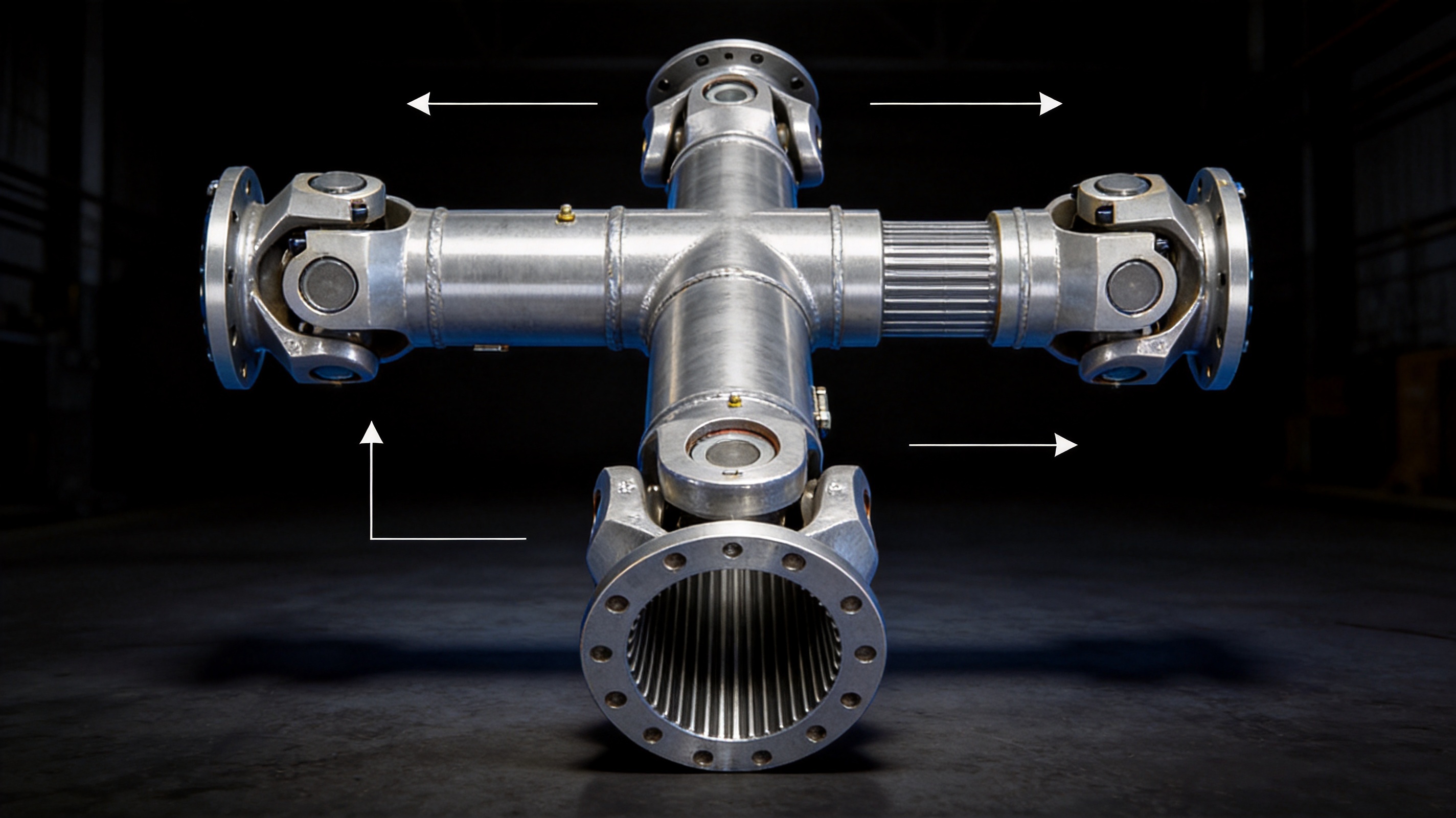
High-performance couplings require advanced manufacturing capability. Zhongye Heavy Industry Technology (Zhenjiang) Co., Ltd. integrates research and development, manufacturing, and sales, with product applications across metallurgy, mining, water equipment, lifting equipment, paper machinery, port machinery, and other industrial fields. The company’s product range includes gear couplings, universal couplings, tire couplings, jaw couplings, star couplings, diaphragm couplings, drum couplings, grid couplings, Oldham couplings, flange couplings, chain couplings, safety couplings, and customized non-standard coupling solutions.
The company operates a modern workshop system covering heavy manufacturing, precision machining, warehousing, office support, and related facilities. The production base includes a heavy workshop for large components, a precision workshop for accurate machining and finishing, storage areas for production organization, and supporting infrastructure for efficient manufacturing. This structure is important because heavy couplings require both large-scale fabrication capability and precise finishing accuracy.
Material Selection and Preparation
The performance of a universal coupling begins with material selection. Heavy-duty couplings require steels with suitable strength, toughness, fatigue resistance, and machinability. Material preparation includes inspection of chemical composition, mechanical properties, and surface quality. For parts exposed to high stress, improper material selection may lead to cracks, deformation, or premature wear.
Before machining and welding, materials must be cut and prepared according to controlled procedures. Proper preparation reduces internal stress and improves dimensional consistency. In high-torque universal couplings, each component must withstand repeated load cycles. Therefore, material consistency is a foundation for fatigue resistance and service reliability.
Precision Machining
Universal couplings require accurate machining of yokes, flanges, bearing seats, spline or telescopic parts, bolt holes, and fitting surfaces. If these surfaces are not accurately produced, the coupling may suffer from vibration, uneven bearing load, poor assembly fit, or reduced fatigue life. Precision machining ensures that the coupling rotates smoothly and distributes load correctly.
Advanced machining capability is especially important for large couplings because the components are heavy and difficult to handle. Large workpieces require stable machine tools, proper clamping, accurate measurement, and experienced operators. The precision workshop supports production of components with controlled tolerances, enabling reliable assembly and consistent performance.
Welding Engineering
The welded structure is a defining feature of this coupling type. Welding for heavy-duty rotating components is not a simple joining operation; it is an engineered process. It requires proper groove preparation, welding procedure control, heat input management, deformation control, and inspection. Poor welding may introduce cracks, porosity, lack of fusion, or residual stress, all of which can compromise coupling safety.
A controlled welding process improves the strength and stability of the coupling. Skilled welding personnel, suitable welding equipment, and process documentation help ensure that welded sections meet design requirements. For large telescopic universal couplings, welding quality directly affects fatigue performance and dimensional accuracy.
Heat Treatment and Stress Control
Heat treatment may be used to improve mechanical properties, reduce internal stress, and enhance fatigue resistance. Stress control is particularly important after welding and rough machining. If residual stress remains high, components may deform during final machining or service. Proper heat treatment and process sequencing help maintain dimensional stability.
In heavy-duty couplings, fatigue resistance is not achieved by material strength alone. It also depends on smooth transitions, controlled hardness, proper surface condition, and reduced stress concentration. Manufacturing processes must therefore support the product’s long-term performance under repeated torque and angular movement.
Assembly Accuracy
The universal joint assembly must allow smooth angular motion while carrying high load. Bearing installation, cross shaft positioning, flange alignment, and telescopic section fitting all require careful control. If clearances are too large, impact and vibration may occur. If clearances are too small, movement may be restricted and heat may increase. Correct assembly ensures that the coupling compensates for misalignment as designed.
For long expansion couplings, the telescopic movement must be smooth and reliable. Sliding surfaces should be accurately machined and properly protected. Lubrication channels and sealing arrangements must support long-term operation. Assembly inspection verifies that the coupling can move through its required stroke without binding.
Testing and Quality Control
Quality control is a competitive advantage in heavy coupling manufacturing. Inspection may include dimensional measurement, material verification, weld inspection, hardness testing, assembly checks, rotation tests, and balance-related procedures where required. Non-destructive testing can be used to detect internal or surface defects in welded or high-stress areas.
Strict inspection reduces the risk of field failure. It also ensures that each coupling meets the required specification before delivery. For users, this means greater confidence in installation and operation. A coupling that is manufactured and inspected under a controlled system provides predictable performance in critical equipment.
Customization and Non-Standard Engineering Capability
Industrial equipment is not always standardized. Older machines may have unique shaft dimensions, special flange patterns, unusual installation lengths, limited maintenance access, or special environmental requirements. Some projects require replacement of imported couplings, adaptation to existing machinery, or design improvement to solve recurring failures. For these situations, customization capability is essential.
Zhongye undertakes the design and manufacture of various non-standard couplings. For the long expansion welded universal coupling, customization may involve flange dimensions, bolt hole patterns, shaft connection forms, telescopic stroke, total length, material grade, protective coating, sealing arrangement, lubrication method, and torque rating. Engineering support can help customers select a coupling based on actual working conditions rather than relying only on catalog data.
Customized design is especially important when replacing a coupling in an existing production line. The new coupling must match installation dimensions while improving reliability. Through measurement, technical communication, drawing confirmation, and manufacturing control, a custom solution can reduce installation risk and shorten equipment downtime.
Applications in Key Industries
Metallurgical Equipment
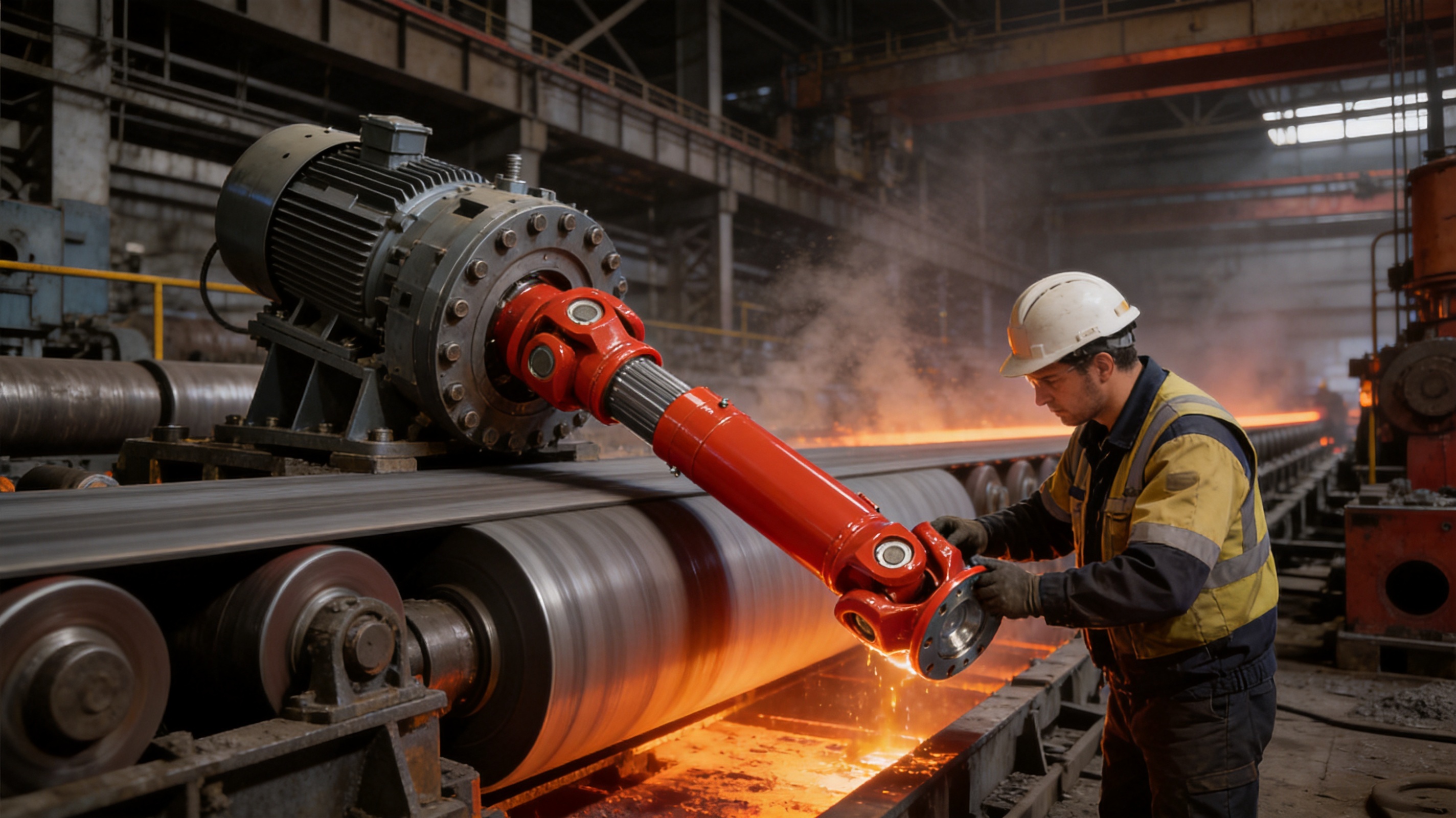
Metallurgical production often involves high temperature, impact load, dust, water, scale, and continuous operation. Rolling mills, roller tables, straightening machines, and auxiliary drives require couplings that can withstand shock and misalignment. The long expansion welded universal coupling is well suited for these conditions because it offers high torque capacity and angular flexibility while compensating for axial movement caused by thermal expansion.
In rolling and conveying systems, shafts may not remain perfectly aligned during operation. Loads change rapidly when material enters or exits the equipment. A strong universal coupling reduces stress on reducers and roll shafts, helping maintain production stability.
Petrochemical Systems
Petrochemical equipment often experiences thermal expansion and contraction. Long process lines, rotating machinery, and connected structures may shift as temperature changes. A coupling with extended axial compensation can absorb this movement and reduce stress on bearings, seals, and connected shafts.
The welded universal coupling is valuable in applications where reliability and leakage prevention are important. By reducing external mechanical stress on driven equipment, it supports safer and more stable operation.
Mining Machinery
Mining equipment operates in environments with dust, impact, heavy load, and difficult maintenance conditions. Conveyors, crushers, feeders, and hoisting equipment may be exposed to sudden load changes. Couplings in these systems must be strong, durable, and easy to inspect.
The high torque capacity and mechanical compensation ability of the long expansion universal coupling make it suitable for mining applications. Its robust design helps reduce failure risk in remote or hard-to-access locations.
Port and Lifting Equipment
Port machinery and lifting equipment often involve large structures, variable loads, and outdoor conditions. Crane drives, travel mechanisms, conveyors, and loading systems may experience structural deflection and alignment changes. A coupling that tolerates angular misalignment and axial movement helps maintain reliable drive performance.
Because downtime in port equipment can affect logistics efficiency, durable coupling selection contributes directly to operational productivity.
Heavy Conveying Systems
Long conveyors may experience frame movement, temperature variation, and load changes. Drive units may not remain perfectly aligned with driven drums or rollers. The long expansion welded universal coupling provides the axial flexibility and torque strength required for such systems. It can reduce stress on gearboxes and bearings while maintaining efficient power transmission over long service periods.
Installation Considerations
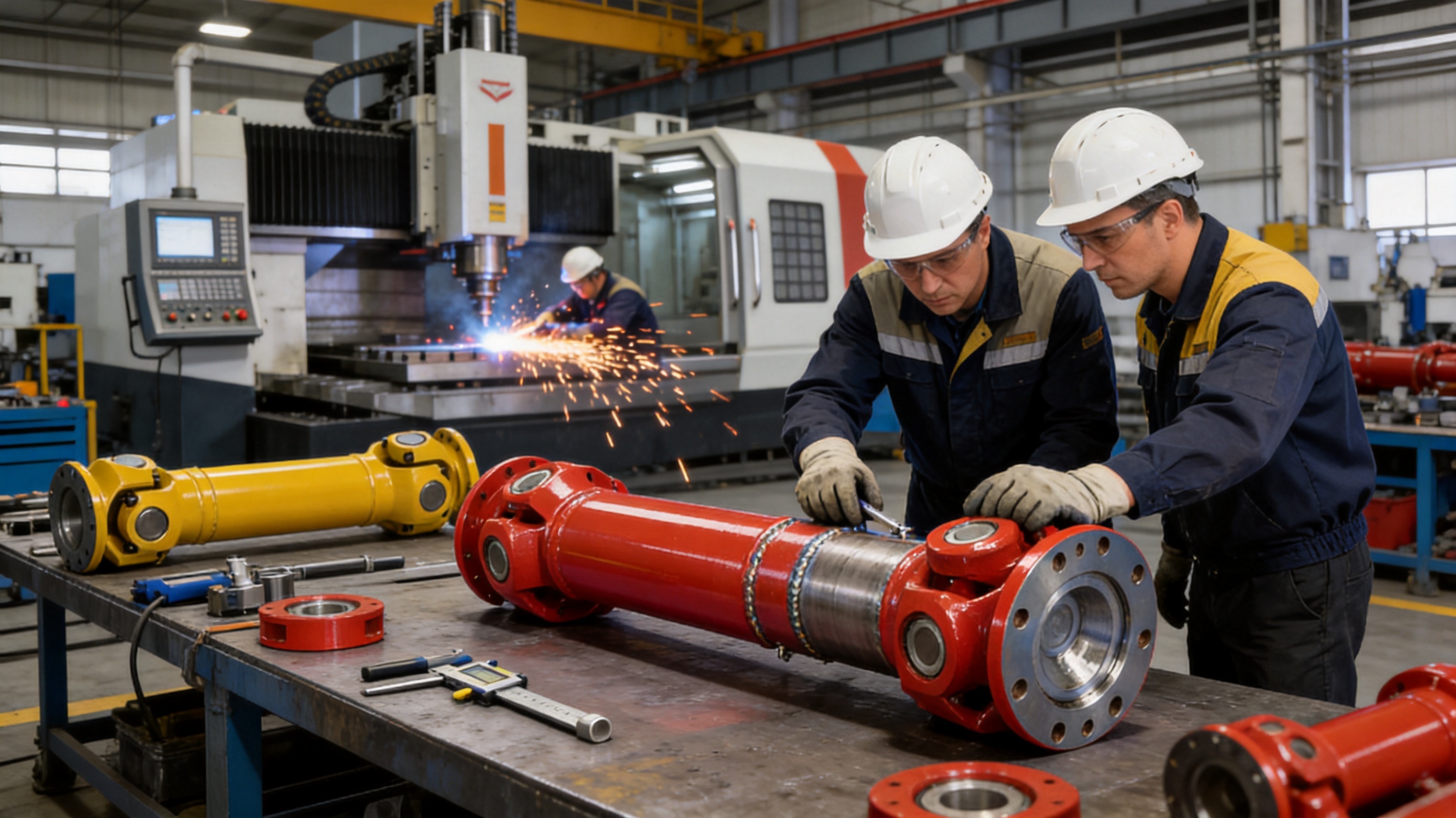
Correct installation is essential for achieving the expected service life. Even a high-quality coupling can fail prematurely if it is installed incorrectly. Before installation, all mating surfaces should be cleaned and inspected. Shaft and flange dimensions should be checked against drawings. The coupling should be handled with proper lifting equipment to avoid impact damage or deformation.
The operating angle should be kept within the specified limit. Although the coupling can support up to 15°, lower working angles generally improve service life and reduce bearing load. If the application requires continuous operation near the maximum angle, the selection should be reviewed carefully with technical support.
The telescopic section should be installed at the correct middle or working position to allow movement in both expansion and contraction directions. If the coupling is installed fully extended or fully compressed, it may not have enough remaining travel to absorb operating displacement. Proper installation position is therefore critical.
Bolts should be tightened according to recommended torque values and locking methods. Flange runout and alignment should be checked. Lubrication points should be filled with suitable grease or lubricant according to operating requirements. After initial operation, inspection should verify that there is no abnormal vibration, noise, heating, or loosening.
Maintenance and Service Life
The long expansion welded universal coupling is designed for low-maintenance operation compared with many alternatives, but it still requires scheduled inspection. Maintenance should focus on lubrication condition, bearing temperature, bolt tightness, telescopic movement, seal condition, surface cracks, abnormal wear, and vibration changes. Regular inspection helps detect early signs of misalignment, overload, lubrication failure, or component wear.
Lubrication is particularly important for universal joint bearings and telescopic sliding parts. Proper lubrication reduces friction, prevents wear, and supports smooth movement. In dusty or wet environments, sealing and lubricant condition should be monitored more frequently. Contaminated grease can accelerate wear, while insufficient lubrication can cause heating and bearing damage.
Service life depends on load, speed, angle, lubrication, environment, installation accuracy, and maintenance quality. Selecting the correct model with adequate safety margin is the first step. Operating the coupling within its design limits and maintaining it properly are equally important. When these conditions are met, the coupling can significantly extend the life of connected equipment and reduce total maintenance cost.
Energy Efficiency and Operational Value
Efficient torque transmission is a major advantage of mechanical universal couplings. Because the SWC-CH type does not rely on soft elastic deformation to transmit power, it can deliver high torque with limited power loss. Reduced vibration and lower stress on bearings also contribute to better system efficiency. When a coupling prevents misalignment-related drag, bearing overload, and mechanical friction, the entire drive system benefits.
The operational value of the coupling includes more than energy efficiency. It reduces unplanned downtime, protects expensive machinery, improves installation tolerance, and supports stable production. In heavy industry, a single shutdown may cause major financial loss. Therefore, a reliable coupling can create value far beyond its purchase price.
Why This Coupling Is a Strong Choice for Modern Heavy Industry
Modern heavy industry demands equipment that is powerful, reliable, adaptable, and cost-effective over its entire service life. The long expansion welded universal coupling meets these demands by combining large axial compensation, high torque capacity, angular flexibility, and welded structural strength. It is not a general-purpose light-duty component; it is a specialized solution for demanding drive systems where ordinary couplings may be inadequate.
Its advantages become especially clear in applications with thermal expansion, large installation distance variation, heavy impact, or non-coaxial shaft arrangements. By reducing mechanical stress on connected equipment, it supports longer service life and lower maintenance cost. By offering a wide model range and customization support, it helps engineers solve both standard and non-standard transmission challenges.
The manufacturing strength behind the product further enhances its competitiveness. Advanced workshops, precision machining, controlled welding, quality inspection, R&D capability, and non-standard design support all contribute to product reliability. For customers who require dependable power transmission in heavy industrial environments, this combination of product design and manufacturing capability is essential.
Practical Selection Guidance
When selecting a long expansion welded universal coupling, engineers should begin with the transmitted power, rotational speed, and calculated torque. The nominal torque of the coupling should meet or exceed the application requirement after applying appropriate service factors. If the equipment has impact load, frequent starting, reversing operation, or possible blockage, a higher safety margin should be used.
The required axial movement should be calculated based on thermal expansion, installation tolerance, operating displacement, and maintenance adjustment needs. The selected coupling should provide enough expansion and contraction capacity without reaching the end of its telescopic travel during operation. The installation length should also match the machine layout.
The working angle should be confirmed. Although the coupling can support a significant angle, operating at a smaller angle generally improves fatigue life. If both ends of the coupling use universal joints, the angular arrangement should be designed to reduce speed fluctuation and vibration. Shaft connection dimensions, flange patterns, keyways, bolt holes, and fit tolerances should be confirmed before manufacturing.
Environmental conditions should also be considered. Dust, water, chemicals, temperature, outdoor exposure, and maintenance accessibility may affect sealing, lubrication, coating, and material selection. For special environments, customized protection may be recommended. Technical communication between the user and manufacturer is the best way to ensure accurate selection.
Quality Assurance and Standards Awareness
Industrial coupling users increasingly expect products that comply with recognized quality management practices. Zhongye’s products are manufactured with attention to international standards and quality systems such as ISO 9001. A quality-oriented production system helps ensure consistency from design review to material procurement, machining, welding, assembly, inspection, and delivery.
Standards awareness is important because couplings are safety-related rotating components. A failure may damage surrounding equipment or create hazards for personnel. Proper documentation, inspection records, and process control provide assurance that the coupling is manufactured according to defined requirements. For large projects, this can also support acceptance procedures and maintenance planning.
Q&A Section
Q1: What is the main purpose of a long expansion welded universal coupling?
Its main purpose is to transmit torque between shafts while compensating for angular misalignment and large axial displacement. It is especially useful when equipment expands, contracts, vibrates, or shifts during operation.
Q2: What makes this coupling different from a standard universal coupling?
The long expansion design provides a much larger telescopic stroke than many standard universal couplings. This allows it to absorb significant axial movement, making it suitable for systems affected by thermal expansion or long-distance installation variation.
Q3: What torque range can the product series support?
The series includes models with nominal torque values ranging from approximately 22.4 kN·m to 1000 kN·m. The correct model should be selected according to operating torque, fatigue conditions, speed, angle, and service factor.
Q4: What is the maximum shaft angle?
The coupling supports an axis angle of up to 15°. However, for long service life, engineers should use the smallest practical working angle and confirm the selection when operating near the maximum limit.
Q5: Why is axial compensation important?
Axial compensation prevents thermal expansion, contraction, and equipment movement from transferring harmful force to bearings, reducers, motors, pumps, and shafts. This helps reduce wear, vibration, and unplanned failure.
Q6: Is this coupling suitable for high-temperature environments?
Yes, it is suitable for many high-temperature industrial environments because it uses mechanical non-elastic elements rather than rubber elastic components. However, final suitability depends on material selection, lubrication, sealing, and actual temperature conditions.
Q7: How does the welded structure improve performance?
A properly engineered welded structure improves overall stability and strength. It reduces looseness in heavy-load conditions and supports reliable operation when welding procedures, inspection, and stress control are properly managed.
Q8: What industries commonly use this coupling?
Common applications include metallurgy, petrochemical equipment, mining machinery, heavy conveying systems, lifting machinery, port equipment, water equipment, and other industrial drive systems requiring high torque and displacement compensation.
Q9: Can the coupling be customized?
Yes. Customization may include total length, telescopic stroke, flange dimensions, bolt patterns, shaft connection forms, materials, coatings, lubrication arrangements, and other non-standard requirements.
Q10: What maintenance is required?
Maintenance should include regular inspection of lubrication, bearing condition, bolt tightness, telescopic movement, seals, vibration, noise, and surface condition. Proper lubrication is essential for long service life.
Q11: Why choose a mechanically flexible coupling instead of an elastic coupling?
Mechanical non-elastic couplings are often better for high torque, high temperature, heavy impact, and large axial movement. They do not rely on rubber or plastic elements that may age, crack, or degrade in harsh environments.
Q12: What information should be provided for selection?
Users should provide transmitted power, speed, torque, working angle, installation length, required axial stroke, shaft dimensions, flange details, operating environment, load characteristics, and any special requirements.
Conclusion
The long expansion welded universal coupling is a powerful solution for heavy-duty power transmission systems that require high torque, angular flexibility, and large axial displacement compensation. Its ability to absorb movement protects connected equipment, reduces mechanical stress, and supports stable operation in harsh industrial environments. With nominal torque capacity up to 1000 kN·m, expansion capability up to 1000 mm in selected specifications, and an allowable shaft angle up to 15°, it meets the needs of demanding applications in metallurgy, petrochemical processing, mining, port machinery, lifting systems, and heavy conveying equipment.
Its competitive strength lies not only in the product design but also in the manufacturing foundation behind it. Precision machining, controlled welding, material quality, inspection procedures, R&D capability, and customization support all contribute to reliable field performance. For industrial users who value service life, reduced downtime, equipment protection, and engineering adaptability, this coupling provides a practical and high-value transmission solution.
References
1. Mechanical Power Transmission Design Handbook, Industrial Coupling and Shaft Connection Principles.
2. ISO 9001 Quality Management Systems, Requirements and Industrial Manufacturing Application Guidance.
3. Shigley’s Mechanical Engineering Design, Fatigue, Shafts, Bearings, and Power Transmission Components.
4. Machinery’s Handbook, Couplings, Fits, Tolerances, Welding, and Rotating Component Design Data.
5. Steel Industry Equipment Maintenance Manual, Heavy-Duty Drive Systems and Universal Coupling Service Practices.
6. Welding Engineering and Fabrication Standards for Heavy Rotating Components, Technical Reference Edition.
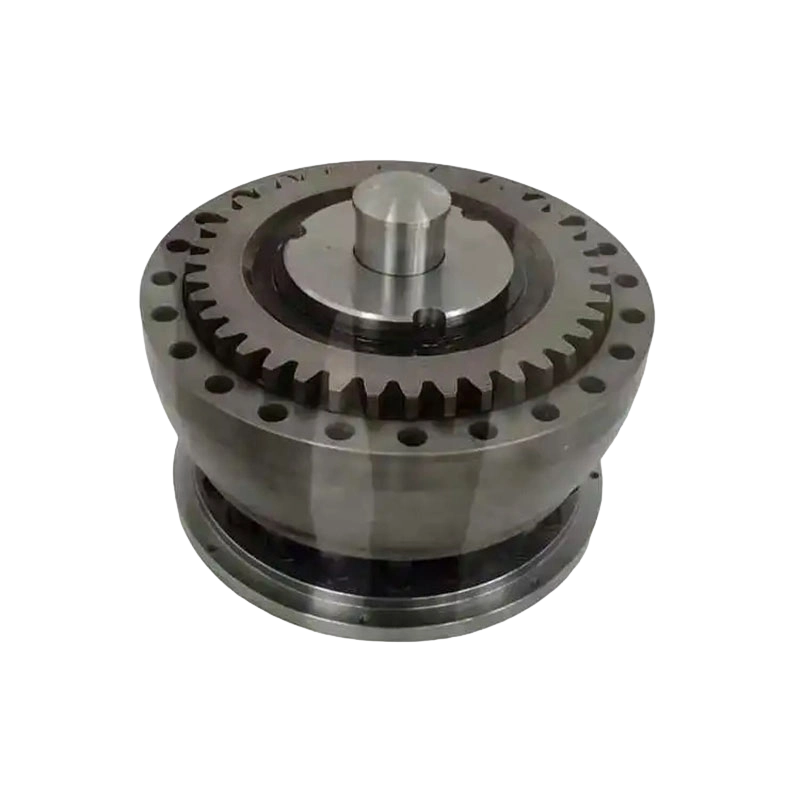
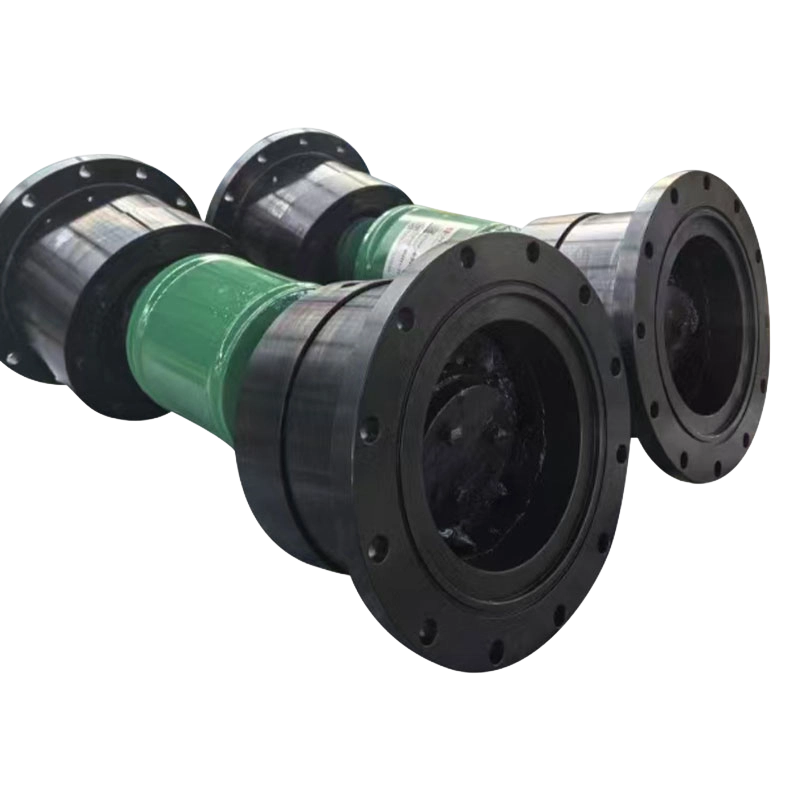
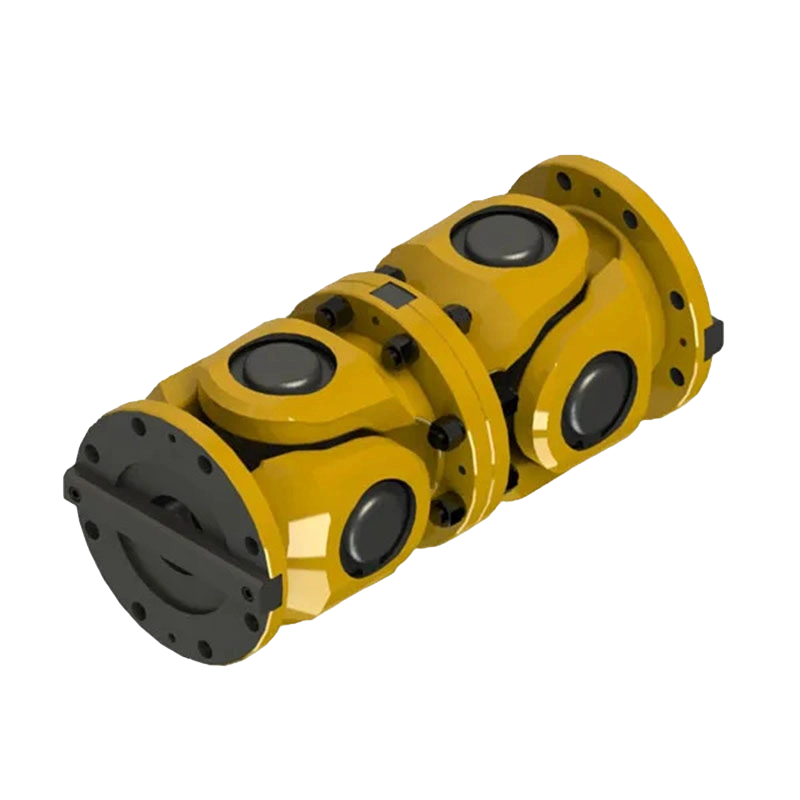
Product: SWC-CH type long expansion welding universal coupling
- Quick Links
- About
- Products
- Our Service
- News & Events
- Contact
- Products Series
- Flexible Couplings with Non-Elastic Elements
- Flexible Couplings with Metal Elastic Elements
- Flexible Couplings with Non-Metallic Elastic Elements
- Safety Coupling
- Rigid Coupling
- Contact Us
- Tel : +86 511 8572 3800 +86 511 8572 3900
- Mobile : +86 15106109009
- Email : sales@couplingzy.com
- Add:No.1 Zhongye Yingbin Avenue, Gaozi Street, Dantu Economic Development Zone, Zhenjiang City, Jiangsu Province, China.


