:+86 15106109009
:sales@couplingzy.com


 English
  русский
  Español
  عربى
عربى  Português
  Deutsch
  Türk
Türk  Indonesia

MPJ Type Diaphragm Coupling with Intermediate Shaft for Long-Span Precision Power Transmission
Content
- 1 Product Overview and Engineering Purpose
- 2 Core Structural Features
- 3 Representative Technical Parameters
- 4 Advantages over Traditional Flexible Couplings
- 5 Manufacturing Strength and Quality Control
- 6 Performance in Harsh Industrial Environments
- 7 Application Areas
- 8 Selection Considerations
- 9 Installation and Maintenance Guidance
- 10 Customization and Engineering Support
- 11 Why the MPJ Diaphragm Coupling Is a Strong Competitive Choice
- 12 Q&A Section
- 12.1 Q1: What is the MPJ type diaphragm coupling with intermediate shaft mainly used for?
- 12.2 Q2: What makes it different from a standard diaphragm coupling?
- 12.3 Q3: Does the MPJ diaphragm coupling require lubrication?
- 12.4 Q4: How does it compare with snake spring or grid couplings?
- 12.5 Q5: Can it compensate for shaft misalignment?
- 12.6 Q6: What torque range is available?
- 12.7 Q7: Is the coupling suitable for corrosive environments?
- 12.8 Q8: What information is needed for coupling selection?
- 12.9 Q9: Can non-standard versions be manufactured?
- 12.10 Q10: Why is dynamic balancing important for this coupling?
- 13 Conclusion
- 14 References
- 15 Product: MPJ type diaphragm coupling with intermediate shaft type (Q/YP 21002X-2018)
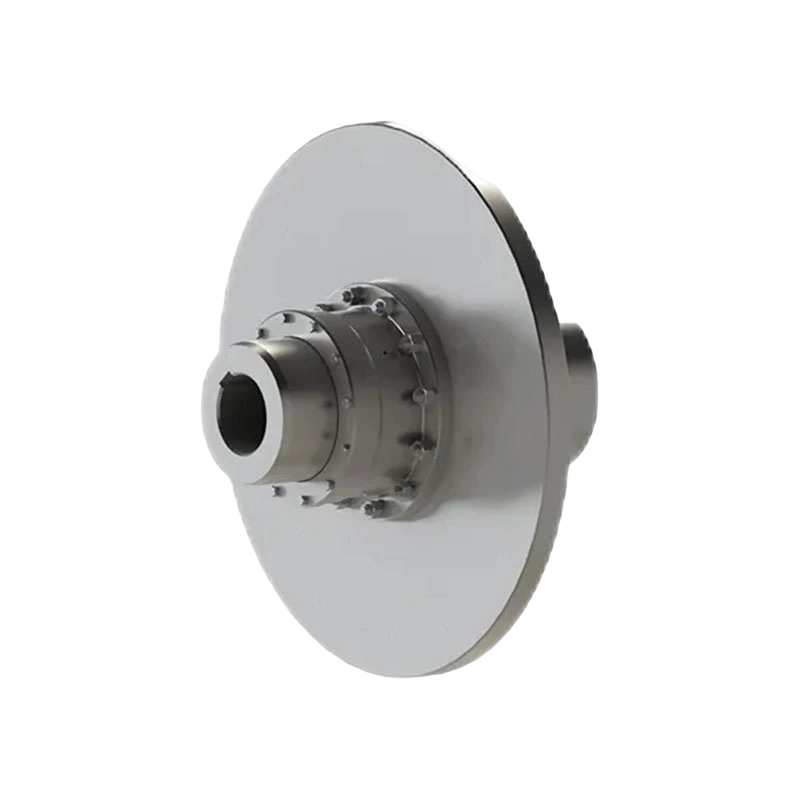
The MPJ type diaphragm coupling with intermediate shaft is a high-performance flexible shaft coupling designed for demanding industrial transmission systems that require long-distance connection, high torsional rigidity, stable dynamic balance, and reliable misalignment compensation. Developed according to the Q/YP 21002X-2018 standard, this coupling combines a precision metal diaphragm assembly with a high-strength intermediate shaft, creating a robust transmission component for equipment where accuracy, safety, and continuous operation are essential.
As a flexible coupling with metal elastic elements, the MPJ type diaphragm coupling uses the elastic deformation of thin metal diaphragms to compensate for angular, axial, and parallel displacement between connected shafts. Unlike couplings that rely on rubber, nylon, or lubricated sliding components, the MPJ structure is all-metal, lubrication-free, corrosion-resistant when stainless steel diaphragm materials are used, and suitable for environments where heat, chemicals, high speed, and heavy load may challenge ordinary coupling designs.
In modern industrial facilities, shaft alignment is rarely perfect during the full operating life of machinery. Thermal expansion, foundation settlement, bearing wear, frame deformation, and dynamic load changes can all introduce shaft displacement. The MPJ diaphragm coupling addresses these realities with a flexible but torsionally stiff metal membrane system. It transmits torque accurately while absorbing misalignment through diaphragm bending, helping reduce extra stress on bearings, shafts, seals, and connected equipment.
Zhongye Heavy Industry Technology (Zhenjiang) Co., Ltd. manufactures this coupling for users in metallurgical equipment, mining equipment, water systems, lifting equipment, paper machinery, port equipment, petrochemical installations, marine engineering, aerospace-related machinery, turbine-generator systems, fans, compressors, pumps, and other power transmission applications. The company integrates research and development, manufacturing, sales, testing, quality control, and non-standard customization, enabling it to provide both standard MPJ models and engineered solutions for special operating conditions.
MPJ type diaphragm coupling with intermediate shaft type (Q/YP 21002X-2018)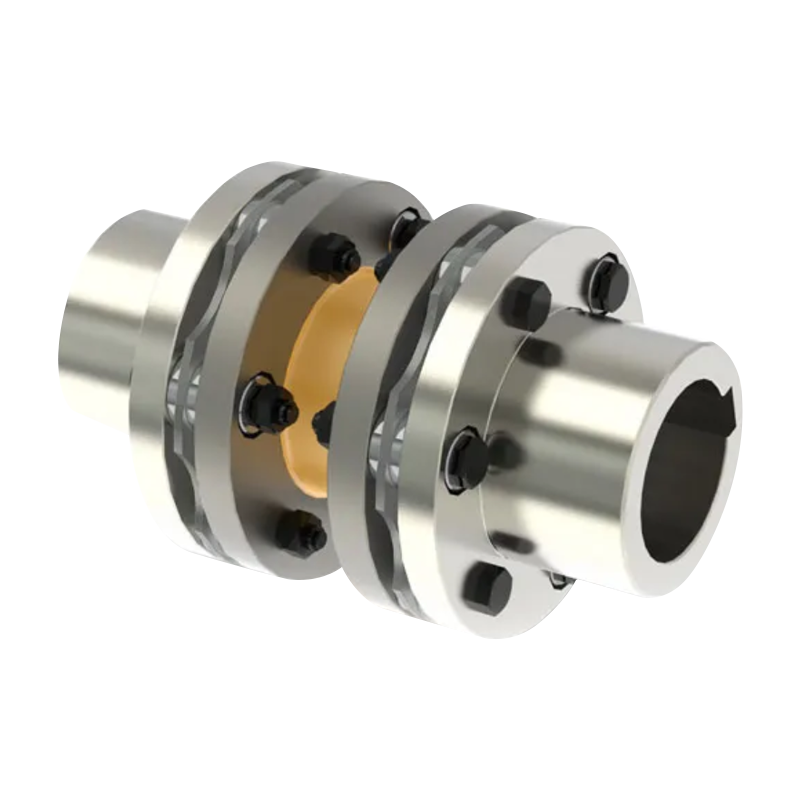
Product Overview and Engineering Purpose
The MPJ type diaphragm coupling with intermediate shaft is developed for transmission layouts where the distance between the driving shaft and driven shaft is greater than that of compact direct-connected equipment. In many large installations, motors, gearboxes, pumps, compressors, fans, generators, and process machines cannot always be placed close together. Maintenance space, structural layout, temperature zones, process requirements, and vibration isolation often require a long-span connection. The intermediate shaft design solves this problem by extending the coupling assembly while maintaining flexible compensation at both ends.
The product is classified as a flexible coupling with metal elastic elements because its flexibility comes from the elastic bending of metal diaphragms rather than from elastomer compression or sliding tooth movement. The diaphragm packs are precisely manufactured and assembled so that torque is transmitted through tension and compression within the metal elements. This gives the coupling high torsional stiffness, low backlash, and excellent repeatability, making it suitable for both heavy-duty and precision transmission systems.
The MPJ series covers a wide nominal torque range, from 63 N·m for smaller equipment up to 10,000,000 N·m, equal to 10,000 kN·m, for extremely heavy industrial applications. This wide range allows engineers to select an appropriate model for applications ranging from small industrial fans and pumps to large turbine generators and heavy metallurgical drives. The allowable speed range is also broad, with smaller models capable of high-speed operation and larger models designed for massive torque at lower rotational speeds.
The intermediate shaft structure offers a significant advantage in large-span installations. A coupling with only one flexible element can compensate for limited misalignment but may introduce bending loads when the shaft span is long. The MPJ design uses diaphragm assemblies in combination with an intermediate shaft, allowing the coupling to manage angular and parallel offset more effectively. The result is smoother operation, reduced bearing reaction forces, and improved reliability of the whole drivetrain.
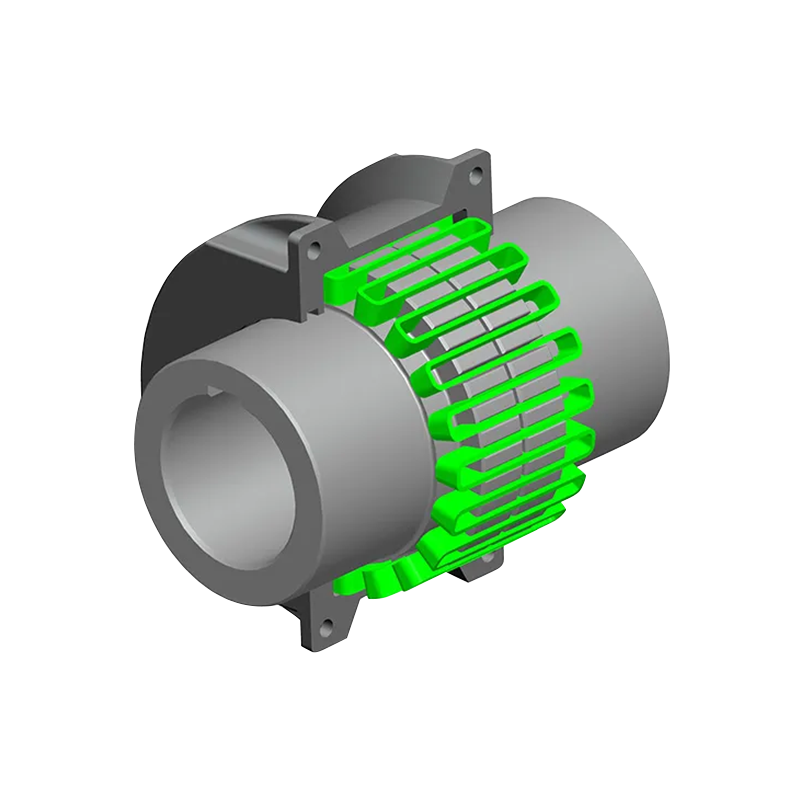
Compared with traditional snake spring or grid couplings, the MPJ diaphragm coupling emphasizes torsional precision, lubrication-free operation, long service life, and suitability for harsh environments. Snake spring couplings are known for shock absorption and some vibration damping, but they often require lubrication and periodic maintenance. The MPJ diaphragm coupling, by contrast, is designed for users who prioritize maintenance reduction, dynamic balancing, cleanliness, high speed, and stable torque transfer.
Core Structural Features
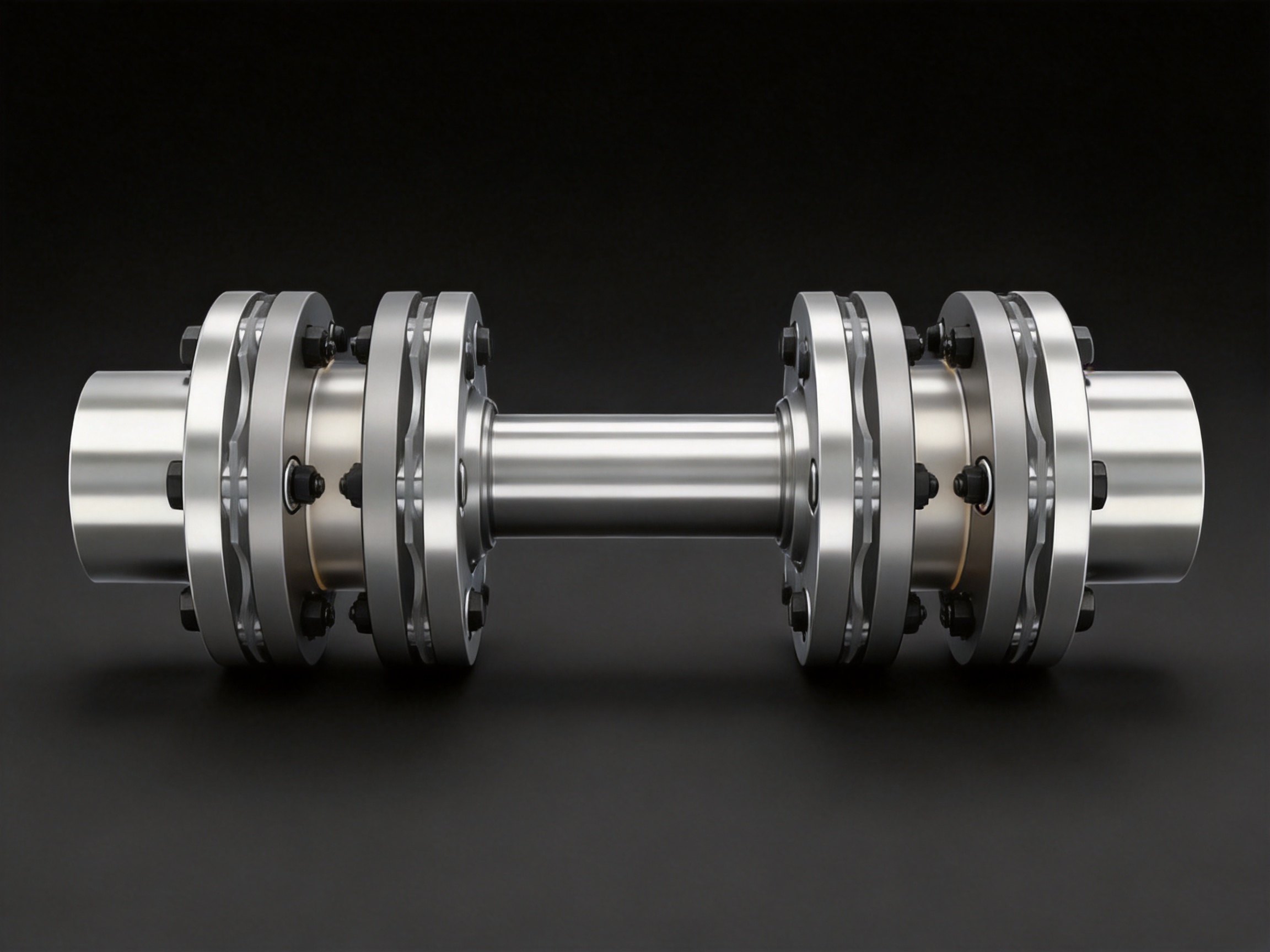
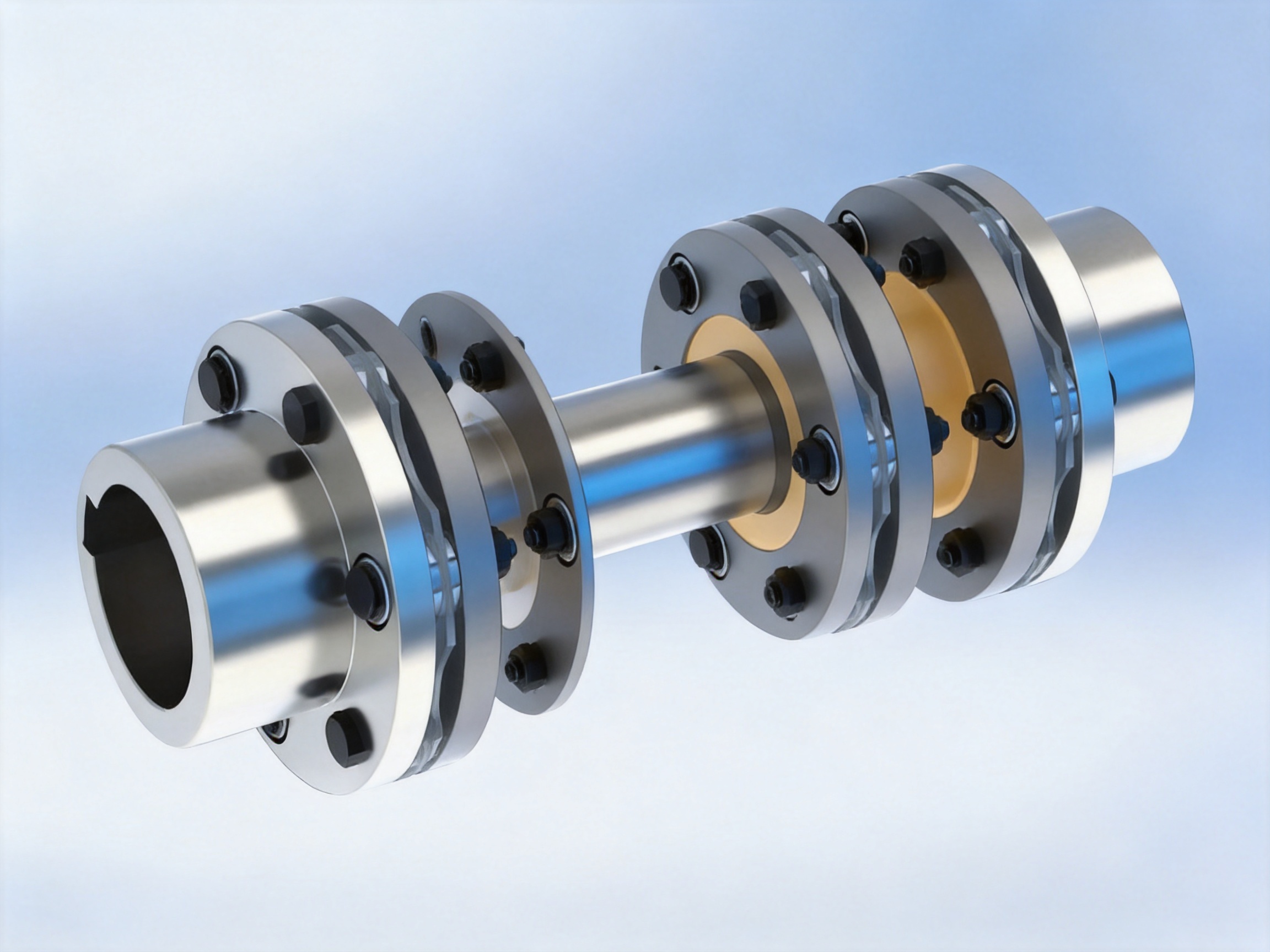
The MPJ diaphragm coupling consists mainly of two hub assemblies, two metal diaphragm packs, fastening components, and an intermediate shaft. The hubs connect to the driving and driven shafts through machined shaft holes, keys, interference fits, or other connection methods depending on the project requirement. The diaphragm packs are installed between each hub and the intermediate shaft flange, forming two flexible planes. This arrangement enables the coupling to accommodate shaft displacement without sacrificing torsional accuracy.
The diaphragm pack is the heart of the product. It is usually manufactured from high-strength stainless steel or other suitable alloy materials selected according to load, corrosion resistance, fatigue strength, and operating temperature. The diaphragm geometry is carefully engineered to balance flexibility and strength. Under operation, torque is transmitted through the diaphragm while small deformation absorbs misalignment. Because the diaphragm works within its elastic range, no regular replacement of rubber elements is required under normal design conditions.
The intermediate shaft is manufactured for strength, concentricity, and dynamic stability. In high-speed equipment, the straightness, balance grade, material consistency, and machining accuracy of the intermediate shaft directly influence vibration behavior. Zhongye’s manufacturing process emphasizes precision turning, boring, drilling, milling, heat treatment when required, inspection, and dynamic balancing to help the final coupling operate smoothly.
Fasteners play an important role in diaphragm coupling performance. The bolted connections must clamp the diaphragm pack securely and transmit torque reliably without loosening during cyclic loading. High-strength fasteners, controlled tightening, and proper assembly procedures are therefore important parts of the product’s overall reliability. For critical applications, balancing and inspection are performed on the assembled coupling to verify that it meets operational requirements.
The all-metal design provides resistance to many environmental challenges. In applications involving heat, oil mist, petrochemical vapor, humidity, sea air, or abrasive industrial conditions, non-metallic flexible elements may age, harden, swell, crack, or lose elasticity. Metal diaphragms avoid many of these failure modes. When corrosion-resistant diaphragm materials are selected, the coupling can maintain reliable performance in marine engineering, petrochemical plants, and other severe environments.
Representative Technical Parameters
The complete MPJ series includes many sizes from MPJ1 to MPJ42. Engineers select the model according to nominal torque, operating torque, peak torque, speed, shaft diameter, shaft extension length, installation span, environment, balance requirement, and service factor. The following table summarizes representative sizes from the series to show the product’s broad capability range.
| Model | Nominal Torque | Allowable Speed | Typical Shaft Hole Diameter Range | Key Advantage |
| MPJ1 | 63 N·m | 9300 r/min | 20 mm to 38 mm | Compact high-speed transmission for smaller machinery |
| MPJ5 | 800 N·m | 5100 r/min | 40 mm to 75 mm | Stable connection for pumps, fans, and light industrial drives |
| MPJ10 | 4000 N·m | 3650 r/min | 60 mm to 95 mm | Balanced performance for medium-duty rotating equipment |
| MPJ15 | 20000 N·m | 2450 r/min | 75 mm to 140 mm | Heavy-duty torque transfer with metal diaphragm flexibility |
| MPJ22 | 63000 N·m | 1600 r/min | 140 mm to 220 mm | Suitable for larger industrial process machinery |
| MPJ30 | 500000 N·m | 1000 r/min | 280 mm to 360 mm | Strong long-span connection for heavy equipment |
| MPJ36 | 2000000 N·m | 620 r/min | 480 mm to 600 mm | Large-scale transmission for severe industrial service |
| MPJ42 | 10000000 N·m | 350 r/min | 800 mm to 950 mm | Extreme torque capacity for very heavy machinery |
The table is intended as a simplified selection reference. Final coupling selection should be based on the actual working torque, starting torque, overload condition, shaft sizes, rotational speed, installation distance, expected misalignment, working temperature, corrosive medium, balancing grade, and safety factor. For non-standard systems, Zhongye can provide engineering support and customized dimensions.
Advantages over Traditional Flexible Couplings
The MPJ diaphragm coupling offers several important advantages over traditional flexible couplings, especially in installations requiring long spans, high speed, reduced maintenance, and reliable torque accuracy. Many conventional couplings perform well in specific conditions, but their structures may introduce limitations when used in demanding modern equipment. The MPJ coupling addresses these limitations through metal diaphragm flexibility, precision manufacturing, and intermediate shaft design.
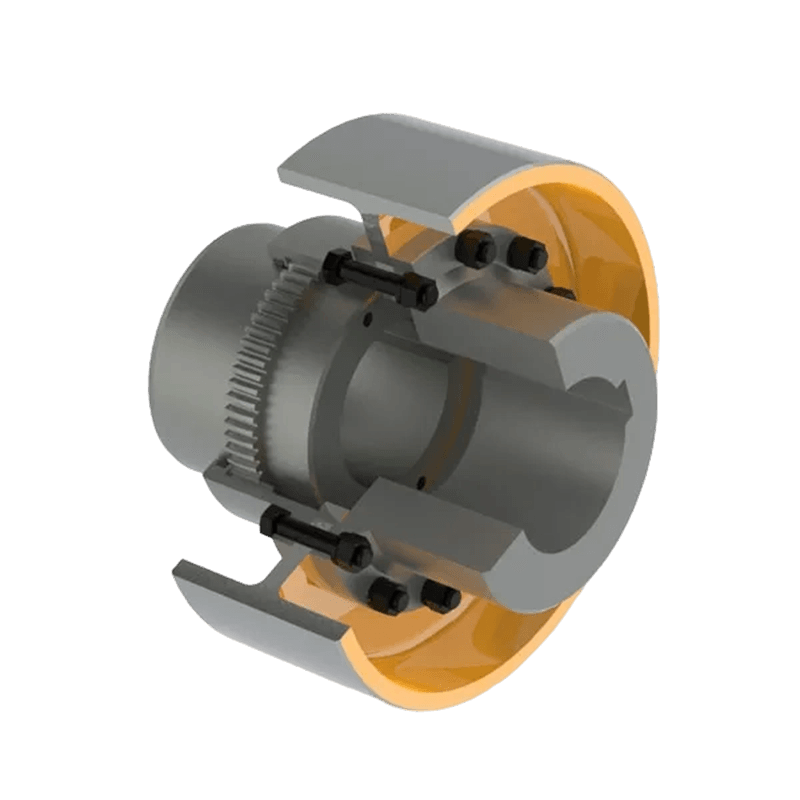
One of the strongest advantages is lubrication-free operation. Gear couplings, grid couplings, and snake spring couplings may require grease or oil to reduce wear between moving parts. Lubrication adds maintenance tasks, creates contamination risks, and may become unreliable in high-temperature or dusty environments. The MPJ diaphragm coupling has no sliding tooth mesh and no spring grid requiring grease. The metal diaphragms flex elastically, so routine lubrication is unnecessary. This reduces maintenance cost and improves cleanliness around the transmission system.
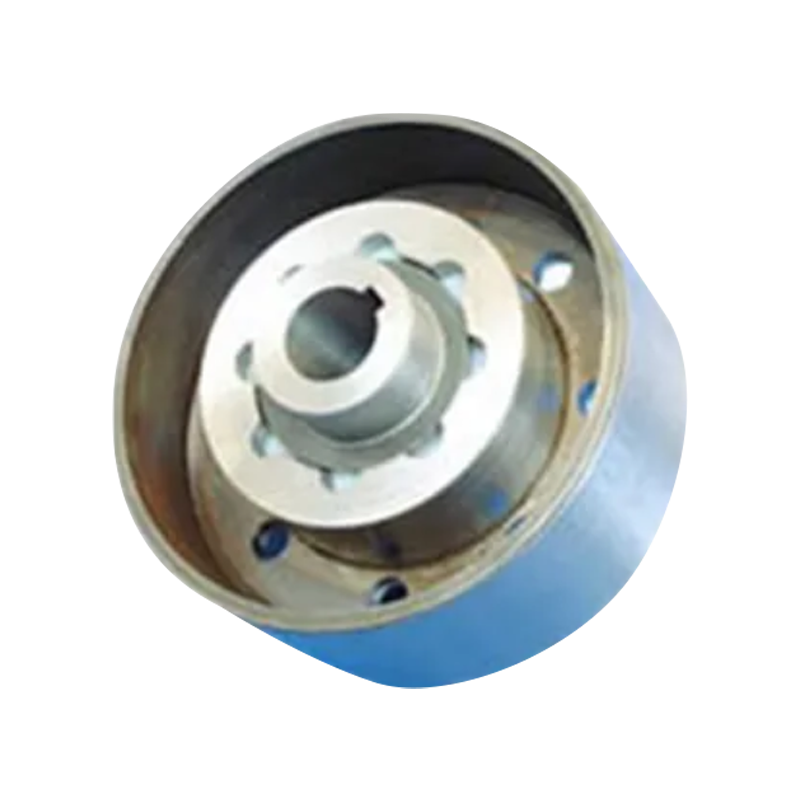
Another advantage is high torsional rigidity. Elastomeric couplings and tire couplings can absorb shock, but their lower torsional stiffness may allow angular twist under load. In precision systems, such twist can reduce control accuracy, create phase lag, and influence dynamic response. The MPJ diaphragm coupling transmits torque through metal components, producing high torsional stiffness and low backlash. This is valuable for turbine machinery, compressors, generators, high-speed fans, test benches, and other equipment that requires accurate power transfer.
Dynamic balancing performance is also a major strength. High-speed machinery is sensitive to unbalance, eccentricity, and uneven mass distribution. Because the MPJ coupling is manufactured with precise metal components and can be dynamically balanced as an assembly, it can support stable operation at high rotational speeds. Compared with couplings containing loose elastic blocks, grids, or components that may shift after wear, the diaphragm coupling maintains a more stable rotating mass distribution.
The product also provides excellent misalignment compensation without imposing excessive reaction forces. In a long-span arrangement, parallel offset and angular offset can occur simultaneously. The two diaphragm packs at opposite ends of the intermediate shaft allow the coupling to accommodate these deviations effectively. This reduces the load transferred to bearings and shaft seals, helping extend the service life of connected machinery.
Compared with non-metallic elastic element couplings, the MPJ design is less vulnerable to aging. Rubber and polyurethane components can degrade due to heat, ozone, oil, chemicals, ultraviolet exposure, or fatigue. In high-temperature or chemically aggressive applications, elastomers may require frequent replacement. Metal diaphragms, when properly selected and operated within design limits, provide longer service life and more stable mechanical properties over time.
Compared with rigid couplings, the MPJ diaphragm coupling protects the drivetrain from alignment errors. Rigid couplings require very accurate shaft alignment and do not compensate for displacement. If misalignment occurs, rigid couplings transfer high bending loads to bearings and shafts. The MPJ coupling maintains the accuracy advantages of metal transmission while adding controlled flexibility, making it more suitable for real industrial environments where perfect alignment cannot be maintained indefinitely.
Compared with some safety couplings, the MPJ coupling is not primarily designed to disconnect under overload, but it can be integrated into systems that already include overload protection or torque monitoring. Its advantage lies in efficient, continuous, stable torque transmission. When used with appropriate safety devices, it contributes to a complete drivetrain protection strategy.
Manufacturing Strength and Quality Control
Zhongye Heavy Industry Technology (Zhenjiang) Co., Ltd. is located in Zhenjiang, Jiangsu Province, China, and operates as an integrated coupling manufacturer with research, design, machining, assembly, inspection, sales, and service capabilities. The company’s production base includes a heavy workshop, precision workshop, office and engineering facilities, warehouse space, and supporting infrastructure. This manufacturing foundation allows the company to produce both standard couplings and non-standard transmission components for demanding industrial users.
The MPJ diaphragm coupling requires accurate machining and careful assembly. Hub bore accuracy, flange runout, bolt hole position, diaphragm flatness, intermediate shaft straightness, and assembly concentricity all affect final performance. Zhongye’s manufacturing process is designed to control these variables through material inspection, machining process control, dimensional measurement, heat treatment management when required, surface treatment, dynamic balancing, and final quality verification.
Material selection is the first stage of quality. Coupling hubs and intermediate shafts must have sufficient strength, toughness, and fatigue resistance. Diaphragm materials must provide high elastic performance and corrosion resistance when required. Fasteners must meet strength and reliability requirements. By selecting appropriate materials for the load and environment, the coupling can maintain safe operation under repeated torque cycles.
Precision machining is the second foundation. Shaft holes must match customer shaft dimensions and fit requirements. Keyways, flange faces, pilot surfaces, and bolt holes must be produced accurately to ensure assembly alignment and torque capacity. For large MPJ models, machining stability becomes more challenging due to heavy parts and large diameters. Zhongye’s heavy workshop capability supports the production of large components, while the precision workshop supports tighter tolerance work.
Dynamic balancing is especially important for intermediate shaft diaphragm couplings. A coupling may have correct static dimensions but still generate vibration if its rotating mass is not balanced. For high-speed applications, balance correction helps reduce vibration, bearing load, noise, and fatigue stress. The MPJ series is well suited for dynamic balancing because its all-metal structure is stable and accurately machinable.
Inspection and testing help ensure that the finished coupling meets design requirements. Typical checks may include bore diameter, shaft hole length, flange dimensions, outer diameter, runout, bolt hole accuracy, diaphragm condition, surface quality, assembly length, mass, inertia estimation, and balance condition. For customized projects, additional checks may be required, such as material certificates, non-destructive testing, special coating inspection, or customer-specific acceptance criteria.
The company’s ISO 9001 quality management foundation supports standardized production and traceable manufacturing. A disciplined quality system is important because industrial couplings are safety-critical components. Coupling failure can stop production, damage connected machinery, or create hazardous conditions. By emphasizing process control and inspection, the manufacturer helps users reduce operational risk.
Performance in Harsh Industrial Environments
The MPJ type diaphragm coupling is particularly valuable in harsh environments where ordinary couplings may require frequent maintenance. Metallurgical plants, mines, ports, paper mills, chemical plants, and marine facilities expose transmission components to dust, humidity, temperature variation, shock load, corrosive gases, and continuous operation. A coupling used in these settings must not only transmit torque but also resist environmental deterioration.
In petrochemical applications, oil, gas, chemical vapor, and elevated temperature may attack non-metallic materials. A diaphragm coupling with stainless steel elastic elements can provide better resistance to these conditions. Because the coupling does not rely on grease, there is also less risk of lubricant contamination or lubricant breakdown. This is useful for equipment where cleanliness, fire safety, and maintenance reduction are important.
In marine engineering, salt air and moisture can accelerate corrosion. Proper material selection and surface treatment are therefore essential. The MPJ design allows corrosion-resistant diaphragm materials and protective treatments for hubs and intermediate shafts. Its metal elastic element structure is also suitable for installations where long-term stability and compact maintenance access are priorities.
In metallurgical and mining equipment, shock load and dust are common. While some couplings are chosen primarily for damping, diaphragm couplings are preferred where high torque accuracy, low maintenance, and stable alignment compensation are needed. The MPJ intermediate shaft arrangement can separate machines across required distances while keeping torque transmission reliable.
In turbine-generator and high-speed fan systems, vibration control is critical. A coupling must operate smoothly and avoid introducing additional unbalance or cyclic stress. The MPJ coupling’s precision-machined metal structure and dynamic balancing capability make it suitable for high-speed rotating applications. Its torsional rigidity also supports stable rotational behavior and efficient power transfer.
Application Areas
The MPJ diaphragm coupling with intermediate shaft can be used in a wide range of industrial systems. Its most suitable applications are those involving long-distance shaft connection, high-speed rotation, heavy torque, strict reliability requirements, or difficult maintenance conditions.
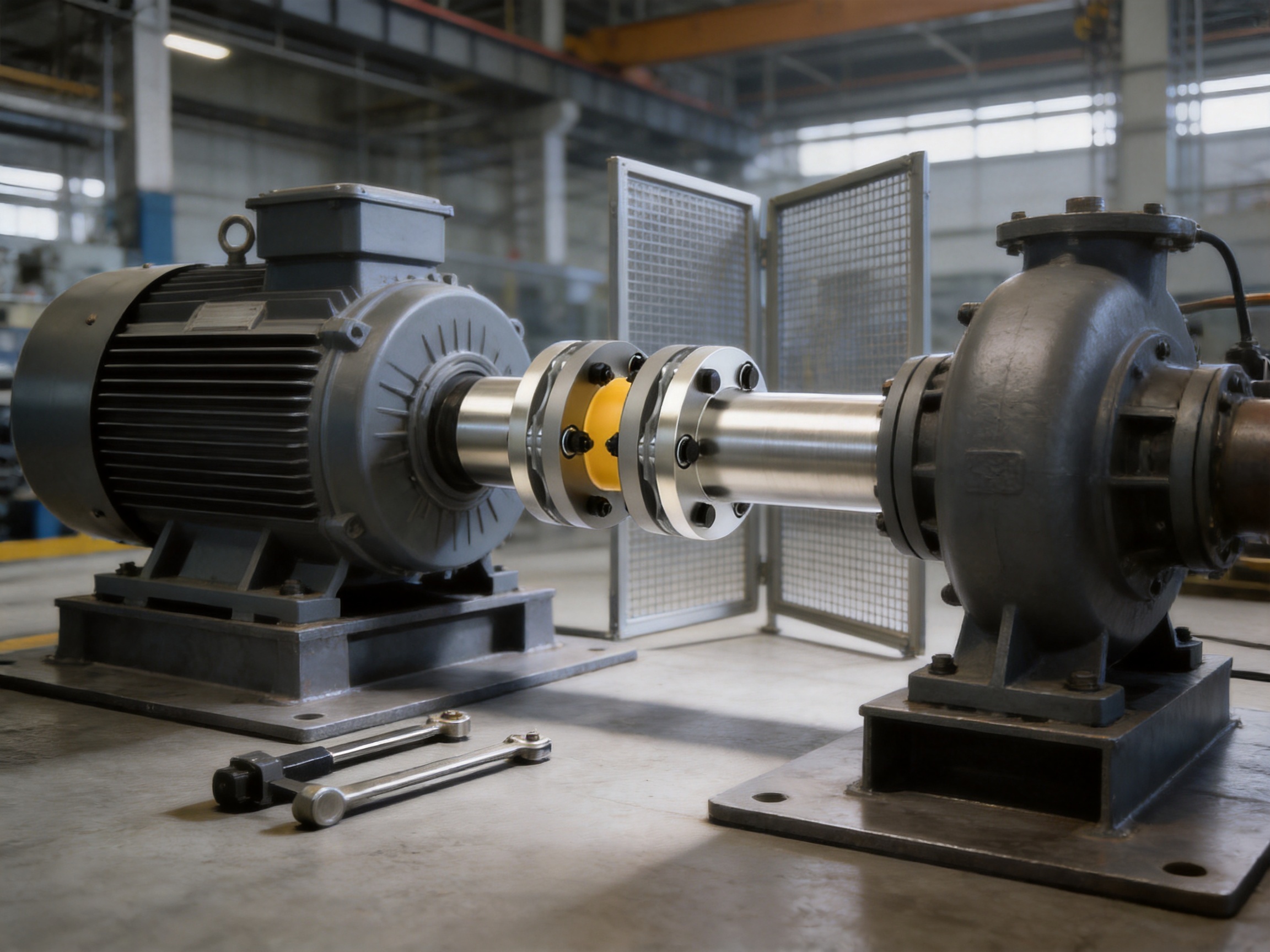
In pump systems, the coupling connects motors to pumps while compensating for alignment deviation caused by thermal expansion, base movement, or installation tolerances. The lubrication-free design reduces maintenance around pump rooms and process plants.
In fan and blower systems, the coupling supports smooth high-speed operation. Industrial fans often operate continuously, and unplanned shutdowns can affect process ventilation, cooling, or emission control. A dynamically balanced diaphragm coupling helps maintain stable rotation.
In compressor systems, torsional stability and alignment compensation are important. Compressors can generate fluctuating torque and vibration. The MPJ coupling provides a high-rigidity transmission path while protecting connected shafts from misalignment stress.
In turbine and generator systems, the coupling must transmit torque accurately and withstand high dynamic demands. The MPJ series includes models suitable for heavy torque and carefully balanced operation, making it appropriate for power and energy equipment.
In metallurgical equipment, the coupling can be applied to rolling mills, auxiliary drives, continuous casting equipment, and related systems where heavy loads and harsh environments are common. The all-metal design and large torque range support demanding production lines.
In port machinery and lifting equipment, reliability and safety are vital. Cranes, conveyors, hoists, and loading systems often operate under variable loads. The MPJ coupling can be selected for robust torque transfer in heavy mechanical systems.
In paper machinery, continuous production requires stable transmission and low downtime. The coupling’s lubrication-free design helps reduce maintenance interruptions and contamination risk.
In water treatment and water equipment, pumps, mixers, and process machinery may operate continuously in humid environments. With suitable surface treatment and material selection, the MPJ diaphragm coupling can provide durable service.
Selection Considerations
Selecting the correct MPJ diaphragm coupling requires more than matching nominal torque alone. The engineer should consider the actual working torque, motor power, rotational speed, service factor, starting characteristics, load variation, overload frequency, shaft diameter, shaft hole length, installation distance, allowable misalignment, ambient temperature, corrosive exposure, and balancing requirement.
The basic torque calculation begins with power and speed. However, the selected nominal torque should include a service factor suitable for the driven equipment. Machines with steady loads may require a lower service factor, while crushers, rolling equipment, reciprocating compressors, and heavy start-stop systems require greater allowance. Peak torque and emergency overload conditions should also be considered.
Speed must be checked against the allowable speed of the coupling model. Smaller MPJ models generally allow higher speed, while larger models are designed for high torque at lower speeds. If the operating speed is close to the limit, dynamic balancing and critical speed analysis of the intermediate shaft may be necessary.
Shaft dimensions determine hub selection. The MPJ series provides shaft hole diameter ranges for each model. The bore, keyway, fit tolerance, and shaft engagement length should match the actual motor and equipment shafts. If the shaft size does not match a standard option, a customized hub may be produced.
Installation span is a defining factor for intermediate shaft couplings. The recommended length should be considered where possible because mass and moment of inertia values are often calculated according to recommended length. If the customer requires a longer or shorter intermediate shaft, the manufacturer should verify strength, balance, torsional behavior, and critical speed.
Misalignment capacity must not be abused. Although the diaphragm coupling can compensate for angular, axial, and parallel displacement, it should still be installed with good alignment practice. Excessive misalignment increases diaphragm stress and may reduce service life. Proper alignment at installation improves reliability and reduces vibration.
Environmental conditions influence material and surface treatment. Stainless steel diaphragms may be recommended for corrosion resistance. Protective coatings or special materials may be considered for marine, chemical, or outdoor service. Temperature should also be reviewed because thermal expansion can change shaft position during operation.
Installation and Maintenance Guidance
Correct installation is essential to achieve the expected performance of an MPJ diaphragm coupling. Before installation, all coupling components should be inspected for transportation damage, contamination, burrs, and dimensional correctness. Shaft surfaces should be clean, and hub bores should be checked for proper fit.
The coupling should be installed according to the designed assembly length. The intermediate shaft and diaphragm packs must not be forced into position. If the coupling does not fit naturally, shaft alignment, foundation position, and spacing should be checked. Forcing the assembly can introduce pre-stress into the diaphragms and shorten service life.
Bolts should be tightened according to the specified sequence and torque. Uneven tightening can distort the diaphragm pack or create unbalanced clamping force. For critical equipment, the use of calibrated torque tools and documented tightening procedures is recommended.
Alignment should be performed carefully. Even though the coupling compensates for misalignment, good initial alignment reduces stress and improves operating smoothness. Both cold alignment and hot alignment may be considered for equipment with significant thermal growth. After the machine reaches operating temperature, final alignment verification may be useful in critical systems.
During operation, maintenance is comparatively simple because the coupling does not require lubrication. Periodic inspection should focus on bolt tightness, unusual noise, vibration level, diaphragm condition, corrosion, and evidence of overload or contact. If vibration increases, the user should check alignment, bearing condition, foundation stability, rotor balance, and coupling condition.
If a diaphragm pack is damaged, the cause should be investigated rather than simply replacing the part. Possible causes include excessive misalignment, overload, incorrect assembly, loose bolts, severe vibration from connected machinery, or operation beyond design speed. Correcting the root cause helps prevent repeat failure.
Customization and Engineering Support
Many industrial transmission systems require non-standard coupling solutions. Zhongye’s capability to undertake the design and manufacture of customized couplings is therefore an important advantage. Customization may include special shaft bore dimensions, non-standard keyways, extended intermediate shaft lengths, special flange interfaces, alternative materials, corrosion-resistant surface treatment, higher balance grade, special packaging, and application-specific documentation.
For retrofit projects, the coupling may need to match existing equipment dimensions. Replacing an older grid coupling, gear coupling, rigid coupling, or other connection type may require careful measurement of shaft spacing, hub dimensions, guard clearance, and foundation layout. The MPJ coupling can be engineered to provide improved performance while fitting within existing installation constraints where feasible.
For new equipment manufacturers, consistent quality and repeatable dimensions are important. The MPJ series provides a standardized platform that can be integrated into machine design. When the equipment requires long-term supply, the manufacturer’s broad production capability and complete specifications help support continuity.
For heavy-duty users, technical communication before production is valuable. The manufacturer can help review operating data, select appropriate models, evaluate torque and speed conditions, and recommend suitable materials. This pre-sale technical support helps customers avoid undersized couplings, unnecessary overdesign, or installation problems.
After-sale service support is also important because couplings operate as part of a larger drivetrain. If a user experiences vibration, abnormal noise, or unexpected wear, professional coupling knowledge can help identify whether the issue comes from alignment, foundation, bearing condition, torsional vibration, or coupling selection. This practical service capability strengthens the total value of the product.
Why the MPJ Diaphragm Coupling Is a Strong Competitive Choice
The MPJ type diaphragm coupling with intermediate shaft is a strong competitive choice because it combines the strengths of flexible compensation, high torsional rigidity, long-span connection, and maintenance-free metal elastic element design. It is especially attractive to users who want to reduce lubrication tasks, improve operational stability, and extend service life in demanding conditions.
Against snake spring and grid couplings, it offers cleaner operation and less maintenance. Against elastomeric couplings, it offers better temperature resistance, higher torsional stiffness, and reduced aging problems. Against rigid couplings, it offers essential misalignment compensation. Against gear couplings, it avoids the sliding tooth lubrication requirement and can deliver smoother high-speed performance when properly balanced.
The product’s wide torque range gives engineers flexibility across many industries. Few coupling types can cover small equipment and extremely heavy machinery with one product family. The MPJ series, from MPJ1 to MPJ42, provides selection continuity from 63 N·m up to 10,000,000 N·m. This makes it easier for plants and equipment manufacturers to standardize around a proven coupling concept while selecting suitable sizes for different machines.
The intermediate shaft arrangement is particularly valuable in real equipment layouts. It allows equipment spacing, maintenance access, thermal separation, and structural flexibility while maintaining torque transmission quality. For plants where equipment arrangement is constrained by process layout, the MPJ design provides a practical and reliable solution.
The manufacturer’s broad coupling portfolio also supports customer confidence. In addition to diaphragm couplings, Zhongye produces toothed couplings, elastic sleeve column pin couplings, elastic pin couplings, gear couplings with elastic pins, universal couplings, tire couplings, jaw couplings, star couplings, drum couplings, grid couplings, Oldham couplings, flange couplings, clip shell couplings, roller chain couplings, safety couplings, and customized non-standard couplings. This broad experience means the company understands many transmission principles and can recommend suitable solutions rather than forcing one coupling type into every application.
Q&A Section
Q1: What is the MPJ type diaphragm coupling with intermediate shaft mainly used for?
It is mainly used for long-span power transmission between driving and driven machines. It is suitable for pumps, fans, compressors, generators, turbines, metallurgical equipment, mining equipment, port machinery, lifting equipment, paper machinery, water equipment, and other industrial systems requiring reliable torque transfer and misalignment compensation.
Q2: What makes it different from a standard diaphragm coupling?
The intermediate shaft design allows the coupling to connect shafts over a longer distance. With diaphragm assemblies at both ends, it can compensate for angular and parallel displacement more effectively in large-span installations while maintaining high torsional rigidity.
Q3: Does the MPJ diaphragm coupling require lubrication?
No. The coupling uses elastic bending of metal diaphragms rather than sliding gear teeth or lubricated spring grids. This lubrication-free structure reduces maintenance work, avoids grease contamination, and supports cleaner operation.
Q4: How does it compare with snake spring or grid couplings?
Snake spring and grid couplings can provide shock absorption, but they often require lubrication and periodic maintenance. The MPJ diaphragm coupling provides higher torsional rigidity, excellent dynamic balancing potential, no routine lubrication, and better suitability for high-speed and harsh environments.
Q5: Can it compensate for shaft misalignment?
Yes. The metal diaphragm packs compensate for angular, axial, and parallel displacement through elastic deformation. However, accurate installation alignment is still recommended to reduce diaphragm stress and maximize service life.
Q6: What torque range is available?
The MPJ series covers a nominal torque range from 63 N·m to 10,000,000 N·m. This wide range allows use in both small industrial machinery and extremely heavy transmission systems.
Q7: Is the coupling suitable for corrosive environments?
Yes, when appropriate materials and surface treatments are selected. Stainless steel diaphragms and protective treatments can improve corrosion resistance for marine engineering, petrochemical plants, humid environments, and other severe conditions.
Q8: What information is needed for coupling selection?
Important information includes motor power, operating speed, working torque, peak torque, service factor, shaft diameter, shaft hole length, shaft spacing, installation layout, misalignment condition, temperature, corrosive exposure, and balancing requirement.
Q9: Can non-standard versions be manufactured?
Yes. Zhongye can provide customized coupling designs, including special bores, non-standard shaft lengths, special flange interfaces, alternative materials, corrosion-resistant configurations, and heavy-duty engineered solutions.
Q10: Why is dynamic balancing important for this coupling?
Dynamic balancing reduces vibration, bearing load, noise, and fatigue stress during rotation. It is especially important for high-speed applications and long intermediate shaft assemblies where even small unbalance can affect system stability.
Conclusion
The MPJ type diaphragm coupling with intermediate shaft is an advanced flexible shaft coupling solution for industrial power transmission systems that demand long-distance connection, high torsional stiffness, stable rotation, and reduced maintenance. Its metal diaphragm structure provides reliable compensation for angular, axial, and parallel displacement, while the intermediate shaft design makes it suitable for large-span installations.
Compared with many traditional coupling types, the MPJ series offers clear benefits in lubrication-free operation, dynamic balancing, torsional precision, environmental resistance, and long-term reliability. Its broad torque range from 63 N·m to 10,000,000 N·m enables use across a wide spectrum of industrial machinery, from compact pumps and fans to heavy turbine generators and metallurgical systems.
Backed by the manufacturing capability, quality control, engineering support, and customization strength of Zhongye Heavy Industry Technology (Zhenjiang) Co., Ltd., the MPJ diaphragm coupling provides users with a dependable, efficient, and adaptable transmission component. For industries seeking lower maintenance, improved drivetrain stability, and durable performance under demanding conditions, the MPJ type diaphragm coupling with intermediate shaft is a highly competitive and technically mature choice.
References
Q/YP 21002X-2018, Technical Standard for MPJ Type Diaphragm Coupling with Intermediate Shaft.
Mechanical Power Transmission Design Handbook, Industrial Coupling Selection and Application Principles.
ISO 9001 Quality Management Systems, Requirements for Manufacturing Process Control and Continuous Improvement.
AGMA Coupling Application Guidelines, Flexible Coupling Design, Selection, and Maintenance Practices.
Rotating Machinery Dynamics Reference Manual, Shaft Alignment, Dynamic Balancing, and Vibration Control.
Product: MPJ type diaphragm coupling with intermediate shaft type (Q/YP 21002X-2018)
- Quick Links
- About
- Products
- Our Service
- News & Events
- Contact
- Products Series
- Flexible Couplings with Non-Elastic Elements
- Flexible Couplings with Metal Elastic Elements
- Flexible Couplings with Non-Metallic Elastic Elements
- Safety Coupling
- Rigid Coupling
- Contact Us
- Tel : +86 511 8572 3800 +86 511 8572 3900
- Mobile : +86 15106109009
- Email : sales@couplingzy.com
- Add:No.1 Zhongye Yingbin Avenue, Gaozi Street, Dantu Economic Development Zone, Zhenjiang City, Jiangsu Province, China.


