:+86 15106109009
:sales@couplingzy.com


 English
  русский
  Español
  عربى
عربى  Português
  Deutsch
  Türk
Türk  Indonesia

Intermediate Shaft Drum Gear Coupling: Design, Performance, Manufacturing, and Industrial Applications
Content
- 1 Introduction
- 2 Product Definition and Operating Principle
- 3 Structural Design Features
- 4 Performance Advantages
- 5 Representative Technical Specifications
- 6 Comparison with Other Coupling Types
- 7 Manufacturing Process and Engineering Strengths
- 8 Company Capabilities and Customer Support
- 9 Industrial Applications
- 10 Selection Guide
- 11 Installation Recommendations
- 12 Maintenance and Service Life
- 13 Advantages of Customized Manufacturing
- 14 Why the GAZ Series Is a Competitive Industrial Solution
- 15 Frequently Asked Questions
- 15.1 What is an intermediate shaft drum gear coupling?
- 15.2 Is the GAZ coupling an elastic coupling?
- 15.3 What is the torque range of the GAZ series?
- 15.4 Can the coupling compensate for angular, radial, and axial misalignment?
- 15.5 Does the coupling require lubrication?
- 15.6 What happens if the gear teeth are nitrided or surface hardened?
- 15.7 Which GAZ models are suitable for high-speed applications?
- 15.8 What are the largest GAZ models used for?
- 15.9 Can the coupling be customized?
- 15.10 How should the coupling be maintained?
- 15.11 What information is needed for a product quotation?
- 16 Conclusion
- 17 References
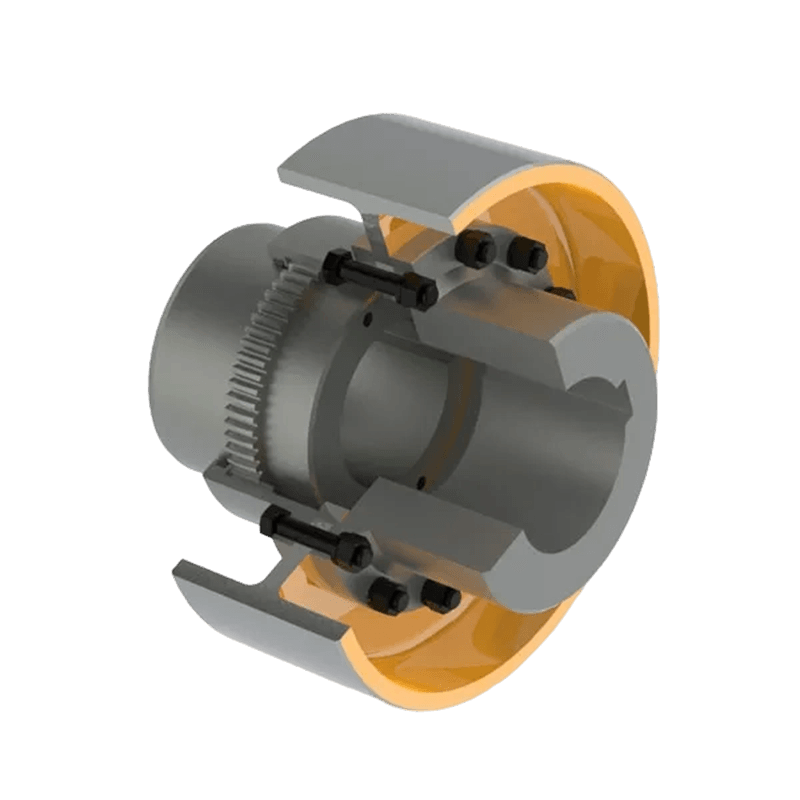
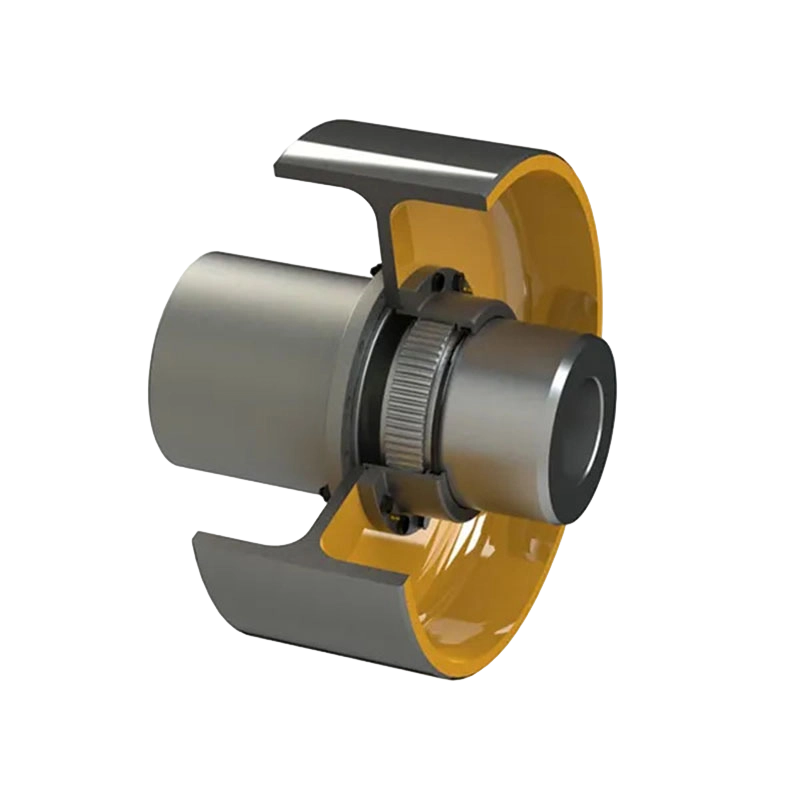
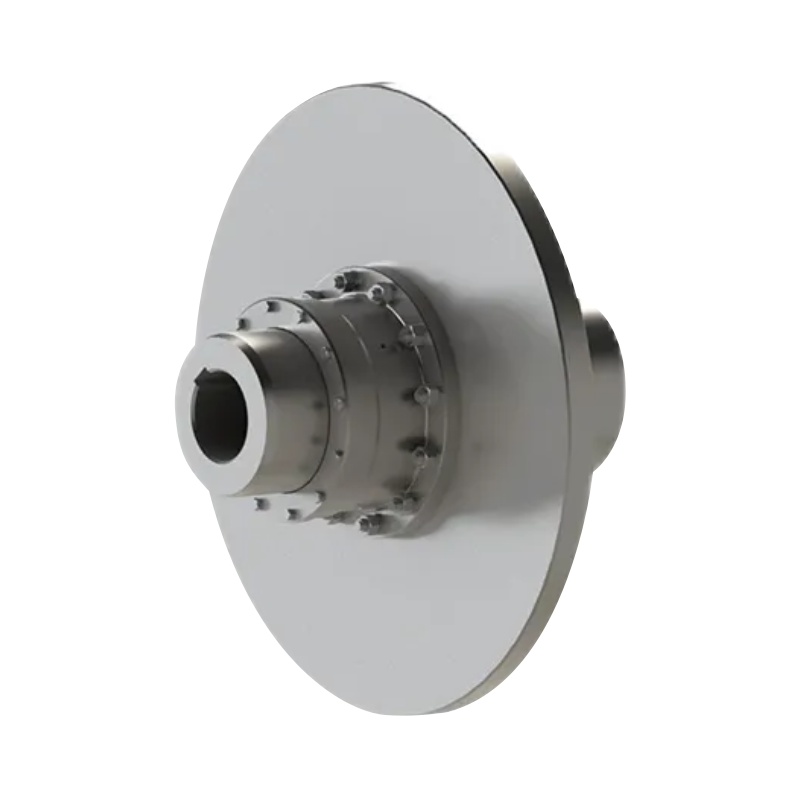
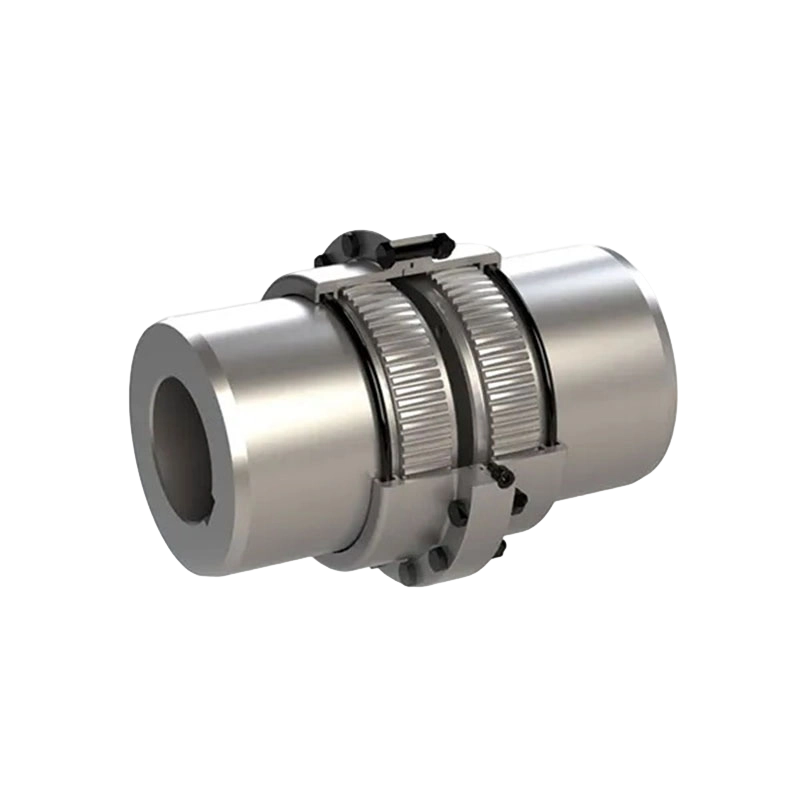
- 18 Product: GAZ Connected to intermediate shaft drum gear coupling(Q/YG 12007X-2018)
Introduction
Modern heavy-duty transmission systems require more than a rigid connection between two shafts. They must transmit high torque, tolerate installation and operating errors, absorb the effects of changing loads, and continue working reliably in environments containing dust, moisture, vibration, and temperature variation. The GAZ intermediate shaft drum gear coupling is designed for precisely this role. It connects driving and driven shafts through an intermediate shaft while combining high torque capacity with flexible compensation of angular, radial, and axial displacement.
As a flexible coupling with non-elastic elements, the GAZ series uses engineered gear engagement rather than rubber, polymer, or metallic spring elements to transmit torque. Its principal flexible action comes from the geometry and controlled movement of the drum-shaped gear teeth. This arrangement enables the coupling to accommodate shaft misalignment while maintaining a positive mechanical drive. It is therefore suitable for transmission systems in metallurgical equipment, mining machinery, lifting systems, port equipment, water treatment plants, paper-making machinery, and vehicle-related powertrains.
The series is manufactured in a broad range of sizes, from GAZ1 through GAZ30. Nominal torque ratings range from 800 N·m to 3,500,000 N·m, while allowable speeds range from high-speed operation in the smaller models to controlled low-speed transmission in the largest sizes. This wide selection allows engineers to choose a coupling according to torque, speed, shaft diameter, available installation space, and service conditions instead of relying on a single standardized design.
This article examines the construction, operating principle, technical advantages, manufacturing capabilities, application suitability, selection considerations, maintenance requirements, and quality strengths associated with the GAZ intermediate shaft drum gear coupling.
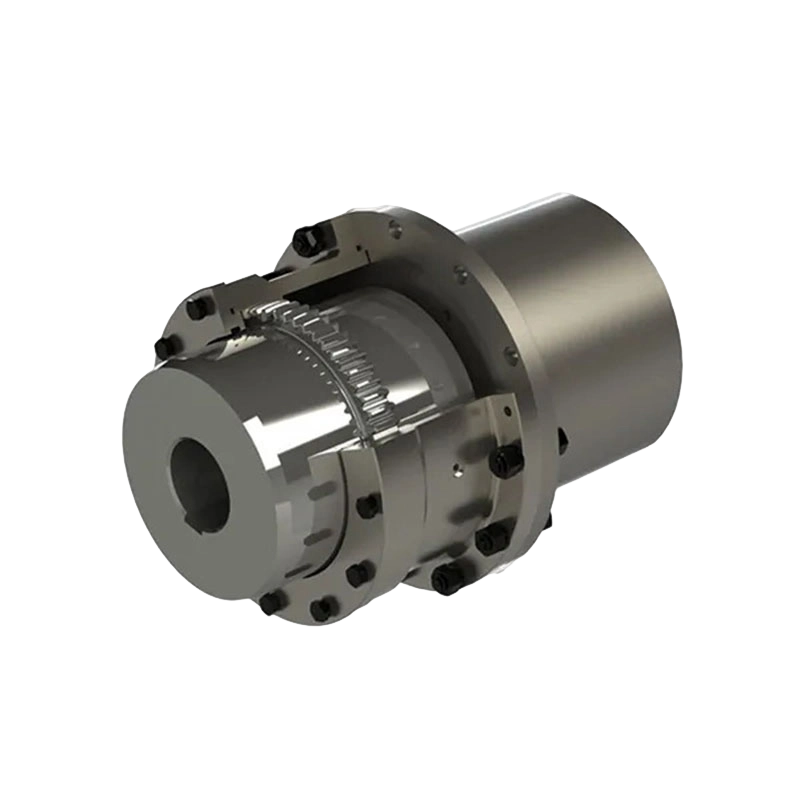
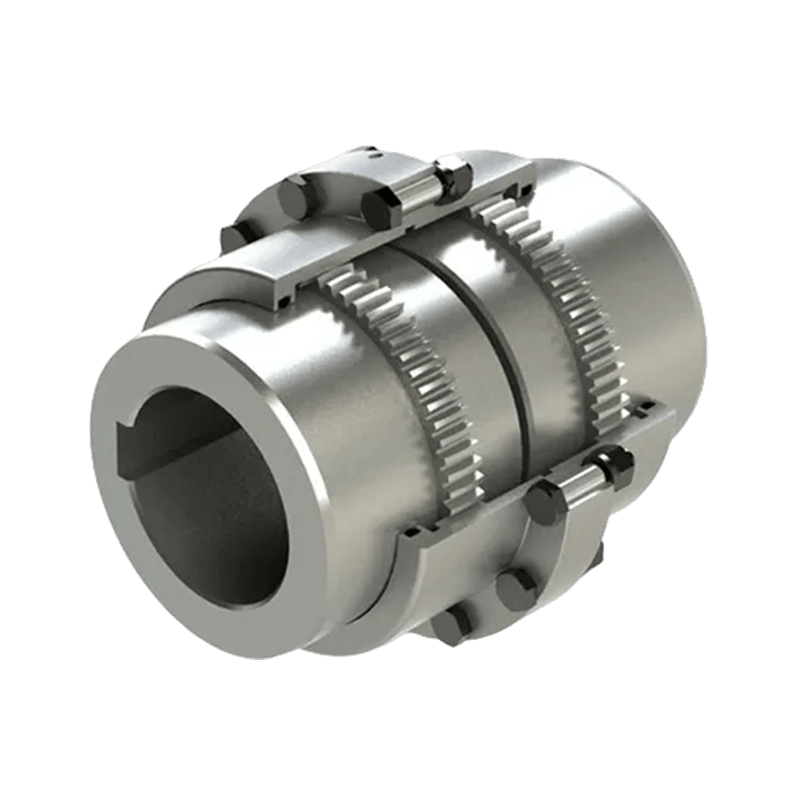
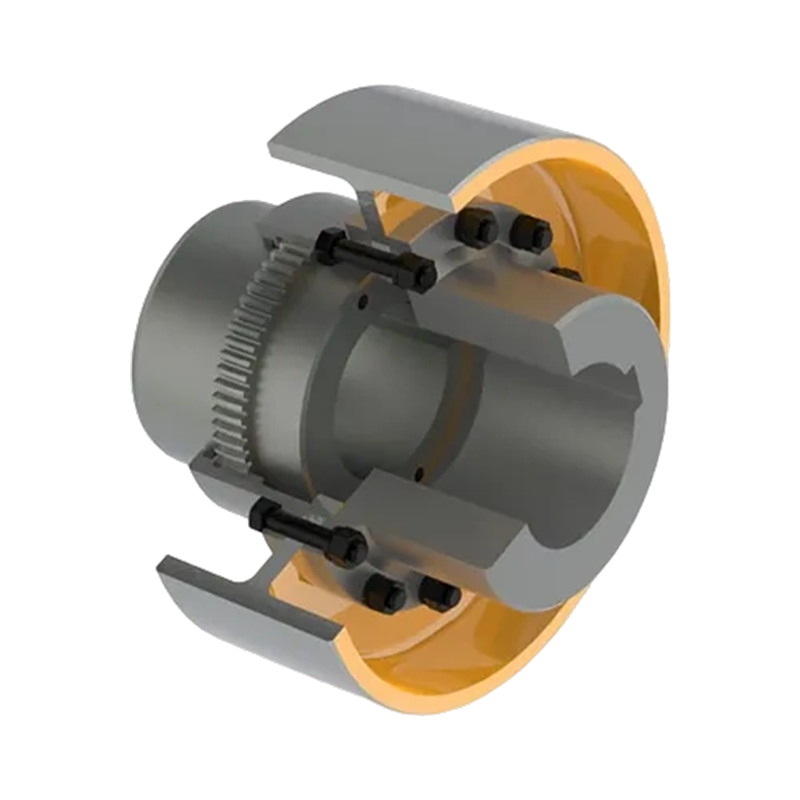
GAZ Connected to intermediate shaft drum gear coupling(Q/YG 12007X-2018)
Product Definition and Operating Principle
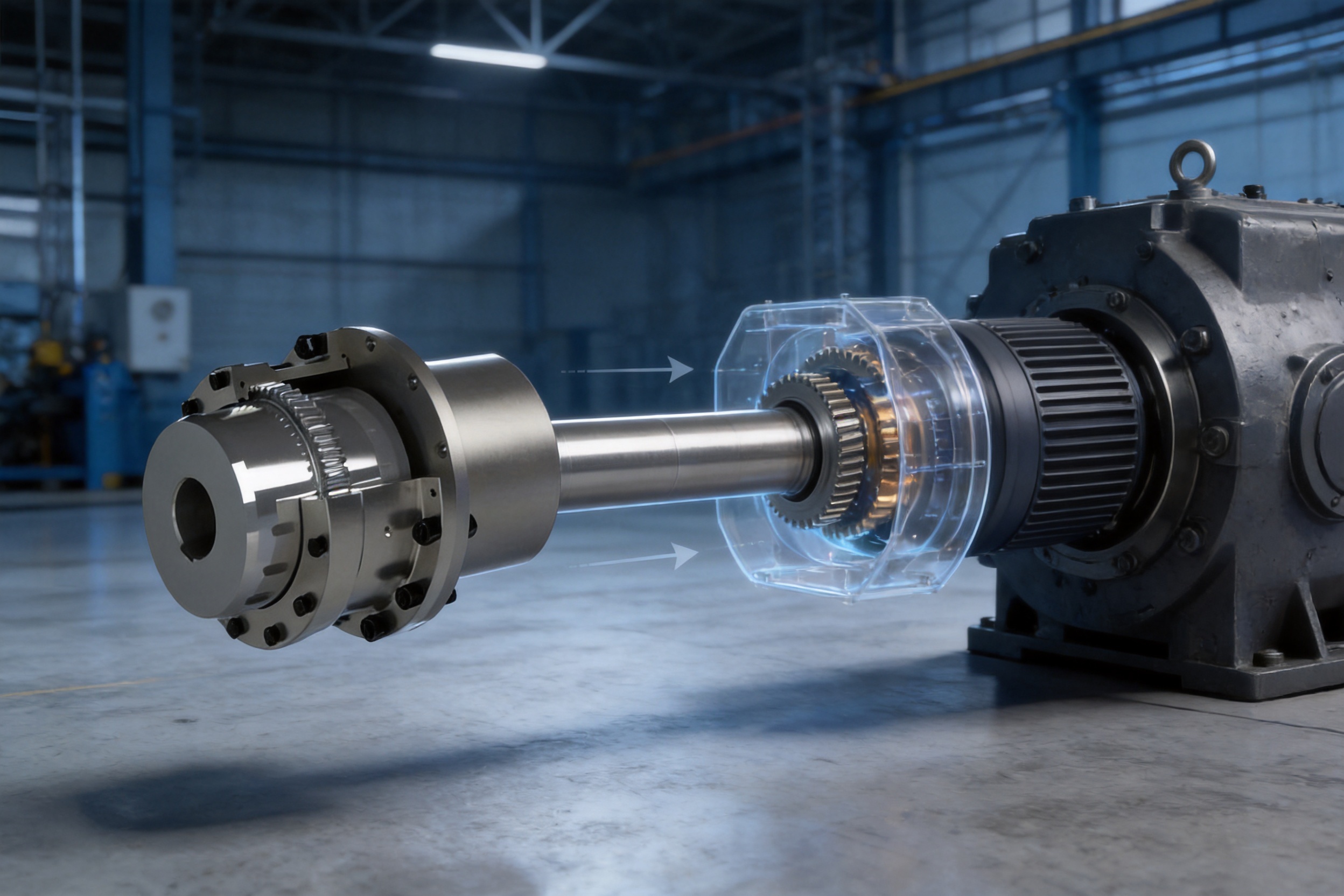
An intermediate shaft drum gear coupling is a mechanical device used to join two shafts that are separated by a certain distance or require a shaft arrangement with additional flexibility. The coupling normally consists of gear hubs, outer sleeves, sealing components, and an intermediate shaft connection. Torque is transmitted through the engagement of external and internal gear teeth. The intermediate shaft bridges the distance between the two coupling ends, allowing the complete assembly to connect the driving machine with the driven machine.
The GAZ design uses drum-shaped gear teeth. Unlike a conventional straight-tooth gear connection, a drum gear has a crowned or barrel-like tooth profile. When the connected shafts operate with a small angular offset, the curved tooth surfaces maintain a more favorable contact pattern. This helps distribute load across the tooth width and reduces the concentration of contact stress that can occur at the edge of a straight tooth.
The coupling does not depend on an elastic insert to compensate for displacement. Instead, flexibility is generated by the movement between the gear teeth and sleeves, supported by carefully designed clearances, tooth curvature, lubrication, and sealing. This gives the coupling a high level of torsional stiffness and a dependable positive drive, while still permitting the relative movement required by a long-shaft transmission system.
During operation, torque passes from the driving shaft into one gear hub, through the meshing gear teeth and coupling sleeve, across the intermediate shaft, and then through the second coupling assembly to the driven shaft. The gear mesh must remain properly lubricated because lubrication reduces friction, limits wear, and helps remove heat from the contact surfaces.
The GAZ series is available in different structural layouts. GAZ1 through GAZ14 generally use one arrangement of the intermediate shaft connection, while GAZ15 through GAZ30 use a larger-scale structural configuration appropriate for substantially higher torque and larger shaft systems. The availability of multiple layouts helps designers adapt the coupling to different equipment frames, shaft spacing requirements, and installation conditions.
Structural Design Features
Intermediate Shaft Connection
The central feature of the product is its ability to connect shafts through an intermediate shaft. This is especially useful where the distance between the driving and driven machines is too large for a compact coupling or where the system requires a floating or extended shaft arrangement. The intermediate shaft can be designed according to the required length, rotational speed, balance condition, and mechanical interface.
In vehicle transmission systems, an intermediate shaft arrangement can support the transfer of power from the engine or gearbox to a remote axle or driven assembly. In industrial machinery, the same principle can be applied to long transmission lines, conveyor drives, rolling equipment, lifting systems, and other powertrains in which direct shaft connection is impractical.
Drum Gear Tooth Profile
The drum-shaped tooth profile is engineered to improve contact behavior when the shafts are not perfectly collinear. Its curved form helps prevent severe edge loading and permits the gear teeth to remain engaged over a useful contact area. Compared with a basic rigid gear connection, this can improve the coupling’s ability to manage angular displacement and operating deflection.
The tooth profile also supports high torque transmission in a compact radial envelope. Because the drive is transferred through multiple gear teeth, the load can be shared across the engaged teeth rather than concentrated at one isolated mechanical point. Correct tooth geometry, material selection, heat treatment, machining accuracy, and lubrication are all necessary to obtain this performance.
Sealing and Lubrication Arrangement
Gear couplings require protection against lubricant loss and contamination. The GAZ series uses sealing arrangements designed to retain grease within the gear chamber and help prevent the entry of dust and moisture. For larger models with D₂ equal to or greater than 465 mm, the O-ring uses a bonded circular-section rubber strip arrangement. This detail is important when selecting replacement sealing components and planning maintenance procedures.
The coupling is supplied with a specified grease quantity for each model. The required amount increases significantly with coupling size, reflecting the larger internal gear chamber and greater tooth contact area. Correct grease selection and filling are essential. Excessive grease can increase churning losses and temperature, while insufficient grease can accelerate tooth wear and raise operating noise.
High-Strength Mechanical Construction
The coupling is manufactured using high-strength materials and precision-machined components. The specific material grade should be confirmed for the application and purchase specification, but the design objective is clear: the coupling must withstand high transmitted torque, variable loads, impact, starting loads, and repeated operating cycles.
For demanding applications, the gear tooth surfaces can be nitrided or surface-hardened. According to the provided technical data, the nominal torque value may be multiplied by 1.3 when the tooth surfaces receive nitriding or surface-hardening treatment. This enhanced version can be considered where load intensity, duty cycle, wear resistance, or service life requirements exceed those of the standard configuration.
Performance Advantages
High Torque Capacity
The most important advantage of the GAZ range is its exceptionally broad torque capability. The smallest listed model, GAZ1, has a nominal torque of 800 N·m. At the other end of the range, GAZ30 is rated at 3,500,000 N·m. This allows the same basic product family to serve compact high-speed transmission systems as well as very large, low-speed industrial drives.
High torque capacity is achieved through a combination of gear geometry, tooth engagement, shaft connection strength, housing dimensions, material quality, and manufacturing precision. The larger models use substantially larger shaft holes and gear dimensions, allowing them to handle the high mechanical loads associated with steel-processing equipment, mining machinery, heavy lifting systems, and other large industrial installations.
Misalignment Compensation
Operating machinery rarely remains perfectly aligned throughout its entire service life. Thermal expansion, foundation movement, bearing clearance, shaft deflection, manufacturing tolerances, and installation errors may produce angular, radial, or axial displacement. A coupling that cannot accommodate these effects may transfer excessive forces into shafts, bearings, gearboxes, and motor housings.
The drum gear design allows the GAZ coupling to compensate for angular displacement while its overall flexible arrangement helps manage radial and axial movement within the permitted design limits. This does not mean that unlimited misalignment is acceptable. Alignment remains essential, and the actual allowable displacement must be checked against the engineering drawing and operating conditions. Nevertheless, the coupling reduces the sensitivity of the transmission system to unavoidable movement.
By reducing misalignment-related forces, the coupling can help lower bearing loads, reduce shaft bending stress, improve running stability, and extend the service interval of connected equipment. These benefits are particularly valuable in long-shaft systems, where even a small angular error can produce meaningful movement at the remote end of the transmission line.
Positive Mechanical Transmission
Some flexible couplings use elastomeric elements that can absorb vibration and torsional shock but may be affected by heat, aging, oil, ozone, or chemical exposure. The GAZ coupling belongs to a different category. Its torque transmission depends on mechanical gear engagement rather than a flexible polymer element. This provides high torsional stiffness and a stable transmission relationship.
The absence of a non-metallic elastic insert can be advantageous in applications where temperature, oil contamination, high torque density, or long operating periods make elastomer replacement undesirable. It also allows the coupling to transmit substantial power without relying on the shear strength or fatigue behavior of a rubber component.
Load Adaptability
Heavy machinery often experiences variable or shock loading. Rolling equipment may accelerate and decelerate repeatedly. Lifting machinery may start under load. Mining equipment may encounter sudden resistance. Port machinery may operate in cycles with frequent reversals or interruptions. The GAZ coupling is designed for these demanding conditions through its robust gear structure and high-strength construction.
Its performance can be adapted through model selection, shaft diameter selection, gear tooth treatment, lubrication, and application-specific engineering. Where the standard table does not provide a suitable combination, a customized design may be considered. The final selection should account for nominal torque, peak torque, operating speed, duty cycle, start-stop frequency, reversing loads, shaft dimensions, and misalignment.
Speed Range
The smaller models offer high allowable speeds. GAZ1 is listed with an allowable speed of up to 7,100 r/min, while GAZ2 is listed at 6,300 r/min and GAZ3 at 5,900 r/min. As coupling size increases, allowable speed decreases because larger rotating components generate greater centrifugal forces and require more stringent balancing and dynamic stability control.
The largest models are intended primarily for high-power, low-speed transmission. For example, GAZ20 has an allowable speed of 1,200 r/min, GAZ25 has an allowable speed of 850 r/min, and GAZ30 has an allowable speed of 700 r/min. This progression demonstrates why selection must consider torque and speed together rather than choosing a model based only on nominal torque.
Representative Technical Specifications
The following table summarizes representative data from the GAZ series. It is intended as a preliminary selection reference. Complete ordering should be based on the manufacturer’s dimensional drawing, shaft fit, operating conditions, and confirmation of all applicable notes.
| Model | Nominal Torque (N·m) | Allowable Speed (r/min) | Representative Shaft Hole Range (mm) | Approximate Mass (kg) |
|---|---|---|---|---|
| GAZ1 | 800 | 7100 | 16–50 | 5.4 |
| GAZ2 | 1400 | 6300 | 25–60 | 9.2 |
| GAZ3 | 2800 | 5900 | 30–70 | 16.4 |
| GAZ5 | 8000 | 5000 | 40–90 | 36.2 |
| GAZ8 | 21200 | 4000 | 65–130 | 81.1 |
| GAZ10 | 42500 | 3200 | 80–160 | 147 |
| GAZ14 | 160000 | 2100 | 160–250 | 582.2 |
| GAZ17 | 400000 | 1500 | 220–320 | 1210 |
| GAZ20 | 710000 | 1200 | 280–380 | 2033 |
| GAZ24 | 1250000 | 875 | 380–480 | 3639 |
| GAZ27 | 1800000 | 800 | 450–560 | 5484 |
| GAZ30 | 3500000 | 700 | 560–670 | 9264 |
The complete data table provides additional dimensions, including shaft-hole lengths, outer diameters, sleeve diameters, flange dimensions, grease quantities, moments of inertia, and mass. The listed shaft-hole values may be supplied in multiple groups because each model can support different shaft diameters with corresponding shaft-hole lengths. Some shaft-hole dimensions marked with an asterisk are suitable only for selection of d₂. The maximum d₂ diameter is 220 mm according to the supplied notes, although the table also contains larger dimensional entries that require confirmation against the applicable drawing and designation system.
When the tooth surfaces are nitrided or surface hardened, the stated nominal torque can be increased by a factor of 1.3, subject to the applicable engineering conditions. The mass and moment of inertia in the technical data are approximate values calculated according to the maximum shaft-hole length of the minimum shaft-hole diameter for each model. Actual values may vary according to bore size, intermediate shaft length, flange details, balancing requirements, and customization.
Comparison with Other Coupling Types
Compared with Rigid Couplings
A rigid coupling provides a fixed connection and is appropriate only when the connected shafts are accurately aligned and remain stable during operation. It offers high torsional stiffness, but it cannot compensate for meaningful angular, radial, or axial displacement. Any movement is transferred directly to the shafts and bearings.
The GAZ coupling provides a more forgiving solution. It retains a mechanically positive drive while allowing controlled displacement compensation. This makes it better suited to long shaft systems, equipment with thermal movement, and heavy machinery where alignment can change under load. The trade-off is that the GAZ coupling requires lubrication, sealing inspection, and more careful maintenance than a simple rigid flange.
Compared with Elastomeric Couplings
Elastomeric couplings are effective where vibration damping, low noise, and torsional compliance are primary requirements. However, their elastic elements can age or degrade under excessive heat, oil exposure, ultraviolet radiation, ozone, or repeated shock loading. Their torque capacity may also be limited relative to the overall coupling size.
The GAZ coupling is generally preferable when high torque density, high torsional stiffness, and resistance to demanding industrial duty are more important than significant torsional damping. It uses a metal gear transmission rather than a rubber or polymer element, which can provide greater durability in heavy-load applications. If the equipment requires substantial vibration isolation, an engineer may need to evaluate the complete drivetrain and possibly combine the gear coupling with other vibration-control measures.
Compared with Disc or Diaphragm Couplings
Disc and diaphragm couplings compensate for misalignment through the flexing of thin metallic elements. They can offer low backlash and are often used in high-speed precision systems. However, their allowable displacement, fatigue life, and sensitivity to installation conditions depend strongly on the diaphragm or disc pack design.
The GAZ drum gear coupling uses meshing teeth and is especially strong in high-torque, heavy-duty applications. Its structure is generally more tolerant of the harsh mechanical conditions found in mining, metallurgy, lifting, and port machinery. Conversely, disc and diaphragm couplings may be more suitable where dry operation, low maintenance, high-speed precision, or very low backlash is the overriding priority.
Compared with Chain and Grid Couplings
Chain and grid couplings can provide useful flexibility and may be economical for moderate-duty drives. They typically require guards, lubrication, and periodic inspection. Their performance may be affected by chain wear, grid fatigue, or contamination.
The GAZ coupling is designed for substantially higher torque ranges and more demanding shaft connection requirements. Its enclosed gear chamber and sealed construction can provide a more integrated solution for large industrial drives. Selection should still be based on the actual load spectrum, speed, environmental conditions, and maintenance resources.
Manufacturing Process and Engineering Strengths
Application-Based Product Engineering
Zhongye Heavy Industry Technology (Zhenjiang) Co., Ltd. integrates research and development, manufacturing, and sales. This integration is important for complex coupling products because the engineering team must understand not only the component design but also the operating conditions of the complete transmission system.
For an intermediate shaft coupling, engineering work may include torque calculation, shaft diameter verification, tooth-load analysis, misalignment evaluation, speed assessment, balancing requirements, seal selection, grease selection, and installation review. A manufacturer with in-house technical capabilities can coordinate these stages more effectively than a supplier that only distributes standard components.
Material Preparation and Forging or Casting Control
The load-bearing parts of a large gear coupling must be produced from suitable high-strength material with controlled chemical composition and mechanical properties. Depending on the component and selected design, material preparation may involve forging, casting, or other approved forming processes. The objective is to obtain sound material with sufficient strength, toughness, fatigue resistance, and dimensional stability.
Large components require particular attention to internal quality, heat treatment response, residual stress, and machining allowance. Process records, material certificates, and inspection documentation support traceability from raw material through final assembly. This is especially important for large couplings used in equipment where unplanned downtime can create substantial production losses.
Precision Gear Manufacturing
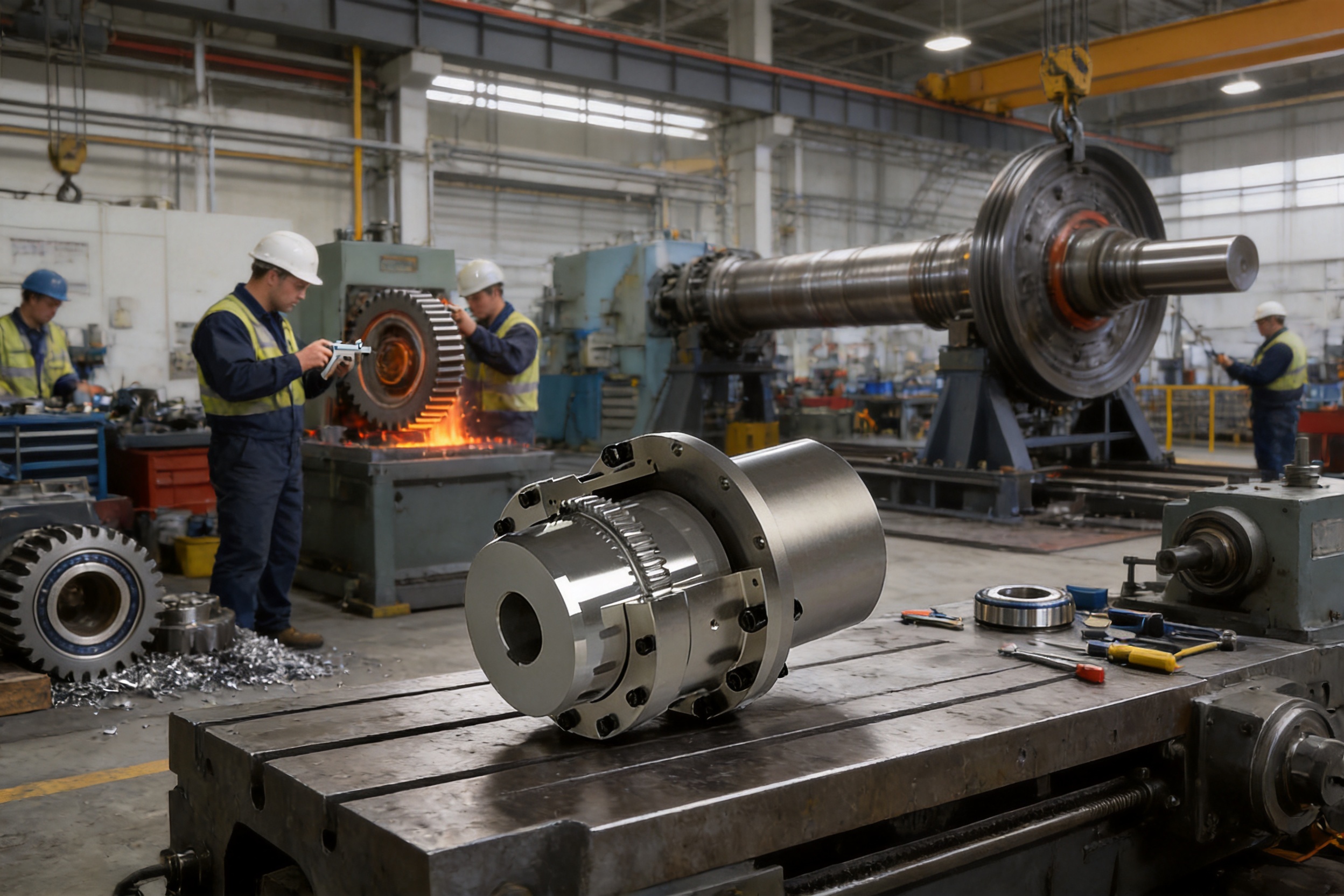
The gear teeth are the functional heart of the coupling. Tooth profile accuracy influences load distribution, running smoothness, wear rate, noise, and allowable misalignment. Manufacturing may include turning, gear hobbing or shaping, profile finishing, keyway machining, and final inspection. The drum profile must be controlled consistently across the tooth width and circumference.
Machining accuracy is particularly important for large gear couplings because small geometric errors can become significant when multiplied across a large diameter. The manufacturing process must control tooth form, pitch, concentricity, runout, surface finish, bore accuracy, and relationship between the gear teeth and mounting faces.
Heat Treatment and Surface Hardening
Gear tooth surfaces experience repeated contact stress and sliding action. Heat treatment can increase hardness, improve wear resistance, and support higher load capacity. Standard heat treatment and optional nitriding or surface hardening may be selected according to the intended duty.
Nitriding creates a hard surface layer while retaining a comparatively tough core. Surface hardening can similarly improve resistance to pitting, scuffing, and abrasive wear. The correct process must be controlled for hardness depth, distortion, surface quality, and compatibility with subsequent finishing operations. The supplied technical note indicates that the nominal torque rating may be increased by 1.3 for nitrided or surface-hardened gear teeth, but the final rating should always be confirmed for the specific design and operating conditions.
Dimensional Inspection
Quality inspection should verify the principal dimensions shown on the product drawing, including shaft-hole diameter, shaft-hole length, outside diameter, gear sleeve dimensions, flange dimensions, mounting bolt circles, keyways, sealing grooves, and assembly interfaces. For large couplings, coordinate measuring equipment and specialized gauges may be used to verify geometric relationships.
Inspection of the bore and keyway is essential because poor fit can cause fretting, backlash, stress concentration, or installation difficulty. Concentricity and runout must also be controlled to support smooth rotation and reduce vibration in service.
Dynamic Balancing and Rotational Testing
Smaller GAZ models may operate at speeds up to several thousand revolutions per minute. At these speeds, balance quality has a direct impact on vibration, bearing load, noise, and service life. The coupling and intermediate shaft assembly may require dynamic balancing according to the operating speed, shaft length, and system configuration.
A responsible manufacturing program may include dimensional checks, tooth contact verification, sealing checks, rotational inspection, and final review before shipment. The exact test scope should be agreed with the customer, especially for custom intermediate shaft assemblies, high-speed units, and critical equipment.
Company Capabilities and Customer Support
Zhongye Heavy Industry Technology (Zhenjiang) Co., Ltd. is located in Zhenjiang, Jiangsu Province, China, and focuses on the research, manufacture, and sale of industrial couplings. Its product range includes toothed couplings, elastic sleeve pin couplings, elastic pin couplings, gear couplings with elastic pins, universal couplings, tire couplings, jaw couplings, star couplings, diaphragm couplings, drum couplings, grid couplings, Oldham couplings, flange couplings, clip-shell couplings, roller chain couplings, safety couplings, and non-standard coupling products.
This broad product portfolio gives the company experience across flexible couplings with non-elastic elements, metal elastic elements, non-metallic elastic elements, safety couplings, rigid couplings, and customized transmission components. Such experience is valuable when a customer is comparing different coupling principles. Instead of recommending a single product category for every application, the supplier can review the operating conditions and identify a technically appropriate design.
The company’s new workshop covers approximately 16,463.52 square meters. The facilities include a heavy workshop, precision workshop, office building and gymnasium, dining hall, warehouse, and supporting roads, green areas, and parking facilities. The stated workshop arrangement reflects the different manufacturing requirements of large heavy-duty components and precision-machined coupling parts.
Its reported strengths include research and development capability, manufacturing capacity, testing facilities, quality control, complete specifications, customization support, pre-sale technical assistance, non-standard design solutions, and after-sales service. These capabilities are especially relevant to intermediate shaft drum gear couplings because the product may need to be adapted to a particular shaft spacing, bore configuration, balance class, gear treatment, seal arrangement, or installation limitation.
The company operates under an ISO 9001 quality management framework and supplies products for metallurgical, mining, water, lifting, paper, port, and other industrial sectors. Certification and quality systems do not replace application engineering, but they help establish a structured approach to documentation, process control, inspection, corrective action, and customer communication.
Industrial Applications
Metallurgical Equipment
Metallurgical plants contain rolling mills, conveyors, shears, straighteners, cooling beds, furnaces, and auxiliary drives. These systems may experience high torque, impact loading, repeated acceleration, and thermal movement. A drum gear coupling can provide a strong mechanical connection while accommodating shaft displacement caused by foundation movement, bearing clearance, and temperature changes.
In rolling equipment, selection must consider peak rolling torque, shock factors, reversing operation, motor starting characteristics, and the possibility of torsional oscillation. The coupling model should not be selected solely on the basis of average motor power. Peak load and duty cycle are equally important.
Mining Machinery
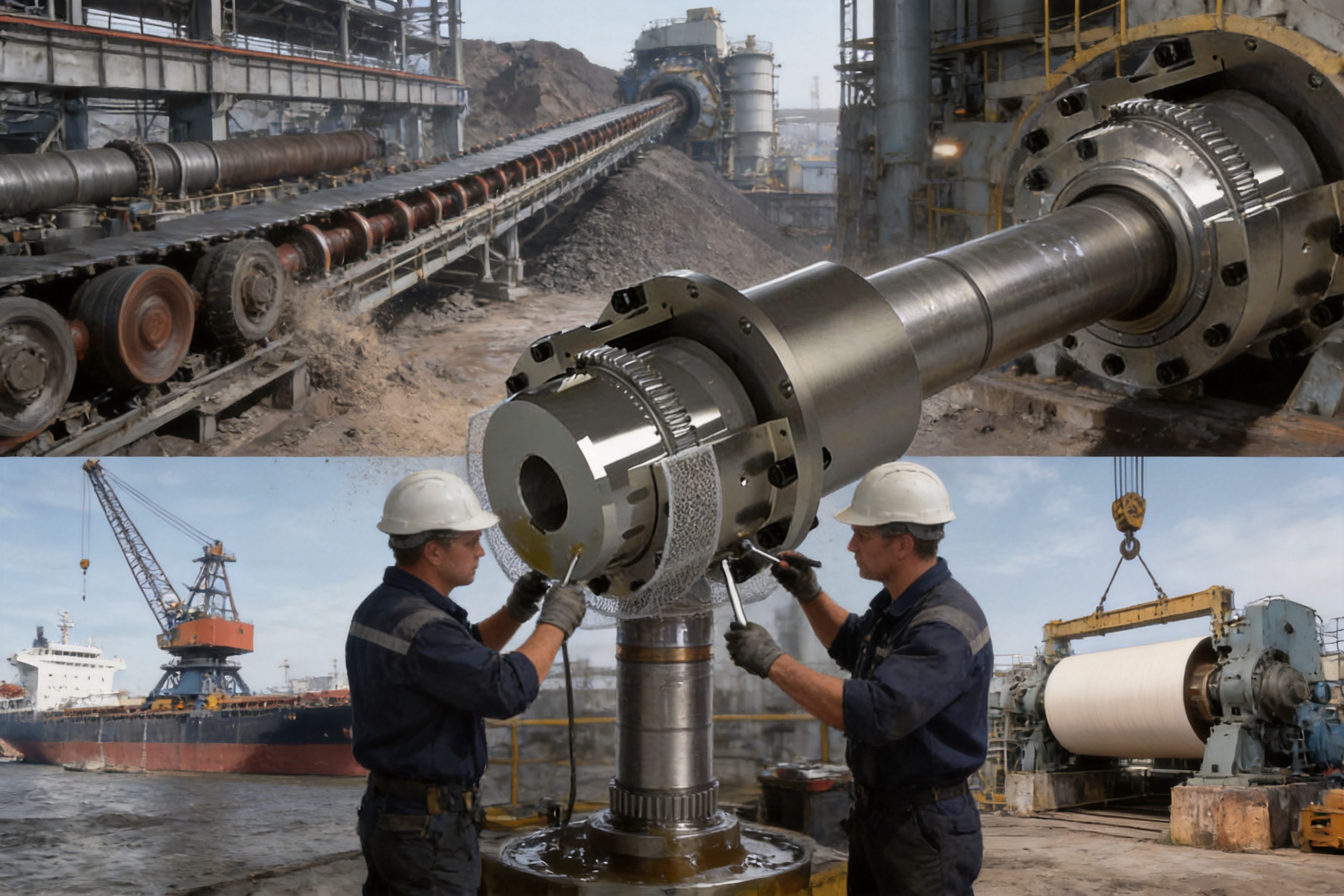
Mining machinery operates under severe conditions involving dust, vibration, shock, and variable resistance. Crushers, conveyors, hoists, feeders, and material-handling systems often require high torque and robust mechanical construction. The enclosed and lubricated gear arrangement of the GAZ coupling can be advantageous where contamination and mechanical impact are common.
Protective guards, sealing inspection, correct grease selection, and scheduled maintenance remain necessary. In dusty environments, a damaged seal can allow abrasive particles to enter the gear chamber and accelerate tooth wear. Maintenance planning should therefore include seal condition and lubricant cleanliness, not only visible coupling damage.
Lifting and Transportation Equipment
Cranes, hoists, winches, transfer cars, and other lifting or transportation systems may operate with frequent starts, stops, reversals, and load changes. The coupling must transmit torque reliably while avoiding excessive force transfer into the motor and gearbox shafts.
The GAZ series can be considered for high-load lifting drives where a positive gear connection and controlled misalignment compensation are required. Safety factors should reflect the lifting classification, load spectrum, braking behavior, emergency stops, and possible overload conditions.
Port Machinery
Port equipment such as ship loaders, unloaders, conveyors, stacker-reclaimers, and transfer systems may combine large physical dimensions with continuous outdoor operation. Wind, moisture, salt-bearing air, and dust can create additional challenges for seals and lubricants.
A suitable GAZ coupling can support long shaft connections and high torque transmission. Corrosion protection, coating quality, sealing design, storage protection, and maintenance intervals should be specified according to the site environment.
Water Treatment Equipment
Water treatment systems include mixers, pumps, sludge-handling equipment, screens, and conveyors. These applications may require long operating periods, low noise, corrosion resistance, and stable performance under intermittent or continuous duty.
Coupling selection should consider the motor speed, pump or mixer torque, starting conditions, shaft arrangement, and exposure to water or chemicals. The coupling should be protected from direct water ingress, and the selected grease and sealing material should be compatible with the service environment.
Paper-Making Machinery
Paper-making lines contain many rotating sections, including rollers, dryers, calendars, winders, and material-handling systems. Some sections operate at high speed, while others require substantial torque and careful control of vibration. The smaller GAZ models may be considered for higher-speed applications when the complete assembly is correctly balanced and aligned.
For paper machinery, cleanliness and planned lubrication are important. Excessive grease leakage can contaminate production areas, while insufficient grease can damage gear teeth. The coupling should therefore be installed with suitable seals and an accessible maintenance arrangement.
Vehicle and Long-Shaft Transmission Systems
The product description identifies vehicle transmission systems as one possible application area. In front-wheel, rear-wheel, or all-wheel drive configurations, an intermediate shaft coupling can provide a mechanical connection between separated transmission components. It can accommodate the relative movement that occurs between the power unit, chassis, axles, and driven assemblies.
Vehicle applications require careful analysis of rotational speed, torsional vibration, shock loads, temperature, packaging space, balance, and noise. A coupling suitable for stationary industrial equipment is not automatically suitable for a vehicle. The final design must be validated against the specific drive cycle and dynamic behavior of the vehicle system.
Selection Guide
Step One: Determine Design Torque
Begin with the actual transmitted torque rather than the motor nameplate power alone. For a rotating machine, torque can be estimated from power and speed, but the design value must also include service factors for starting, impact, reversing, load fluctuation, and operating environment.
The selected nominal torque should exceed the calculated design torque with an appropriate engineering margin. If the application includes severe impact or frequent starts, the required margin may be higher than for a smooth, continuously running drive. A final selection should be reviewed by a qualified mechanical engineer.
Step Two: Check Speed
Verify that the operating speed does not exceed the allowable speed of the selected model. Speed affects centrifugal force, balance, gear lubrication behavior, temperature, and overall dynamic stability. The intermediate shaft length also influences critical speed and bending behavior, so the shaft assembly must be evaluated as a complete rotating system.
Smaller models support higher speeds, while larger models are intended for lower-speed, high-torque service. If the required speed is near the listed limit, additional balancing, dynamic analysis, or a different coupling design may be necessary.
Step Three: Confirm Shaft Diameters and Lengths
Confirm the driving shaft bore, driven shaft bore, intermediate shaft interface, keyway, shaft-hole length, and available axial space. The GAZ table lists multiple bore combinations for many models. The selected bore must provide adequate engagement length and sufficient wall thickness.
Special attention should be given to entries marked with an asterisk, as the supplied notes state that these shaft-hole sizes are only suitable for d₂ selection. The maximum d₂ diameter is also stated as 220 mm. These details should be verified with the current product drawing before production or purchase.
Step Four: Evaluate Misalignment
Estimate the expected angular, radial, and axial displacement under cold and hot operating conditions. Include foundation movement, bearing clearance, shaft deflection, and installation tolerance. The coupling should operate within the manufacturer’s allowable displacement values. A flexible coupling is not a substitute for basic alignment.
Step Five: Review Environment and Maintenance
Consider dust, water, chemicals, temperature, outdoor exposure, washdown procedures, and maintenance access. Select suitable sealing and lubrication arrangements. For larger models, confirm the correct bonded circular-section O-ring arrangement where applicable.
Step Six: Consider Surface Treatment
Where the duty is severe, ask whether nitrided or surface-hardened teeth are appropriate. The supplied technical note indicates a 1.3 multiplier for nominal torque when the gear teeth receive these treatments. The actual selection should also consider hardness, fatigue, lubrication, operating speed, and the expected service life.
Step Seven: Confirm Custom Requirements
Customers may require special shaft lengths, bore dimensions, keyways, flanges, coatings, balancing grades, materials, inspection documents, or installation tools. Zhongye provides non-standard coupling design and manufacturing support, allowing the GAZ concept to be adapted to equipment-specific requirements.
Installation Recommendations
Before installation, inspect all coupling components for transport damage, corrosion, contamination, burrs, and dimensional conformity. Confirm that the shaft ends, keys, keyways, bolts, nuts, seals, and mounting surfaces match the approved drawing. Do not force a component into position by hammering on gear teeth, sleeves, or sealing surfaces.
Clean the shaft and bore surfaces using an approved method. Check the fit between the hub and shaft, ensuring that the required interference, clearance, or keyed fit is used. Incorrect fit can cause fretting, looseness, excessive assembly force, or damage to the hub.
Align the driving and driven shafts according to the manufacturer’s installation instructions. Measure angular and offset alignment with appropriate tools. The intermediate shaft should be supported and positioned so that it does not impose unintended bending loads on the coupling. Long shafts may require separate balance and support verification.
Fill the coupling with the specified grease quantity and ensure that the grease is distributed through the gear chamber. Avoid mixing incompatible grease types. Install seals carefully, checking that O-rings and sealing strips are not twisted, cut, pinched, or contaminated.
After assembly, rotate the system manually if possible. Check for binding, unusual resistance, contact interference, and adequate axial movement. Install guards before operating the equipment. During the first run, monitor temperature, vibration, noise, lubricant leakage, and bolt condition.
Maintenance and Service Life
Routine maintenance is essential for preserving the performance of any gear coupling. The inspection interval should be based on operating speed, load severity, environment, duty cycle, and equipment criticality. Heavy-impact machinery and contaminated environments generally require more frequent inspection than smooth, enclosed drives.
Inspect the coupling for grease leakage, seal damage, loose fasteners, abnormal noise, excessive temperature, vibration, corrosion, and visible displacement. Grease leakage may indicate a damaged seal, excessive internal pressure, overfilling, or a worn sealing surface. Abnormal noise may be associated with insufficient lubrication, tooth wear, misalignment, or foreign material in the gear chamber.
During planned shutdowns, verify shaft alignment and inspect the gear teeth if access is available. Look for pitting, scoring, spalling, cracking, abnormal polishing, or uneven contact marks. Uneven tooth wear may indicate excessive angular or radial displacement, inadequate lubrication, incorrect assembly, or an overloaded operating condition.
Replace grease according to the maintenance schedule and operating conditions. When replacing grease, remove contaminated or degraded lubricant as far as practical and refill with the recommended quantity. The coupling should not be operated without an effective lubricant film at the gear contact surfaces.
Seals and O-rings are wear components. For couplings with D₂ equal to or greater than 465 mm, confirm the correct bonded circular-section rubber strip when replacing the O-ring. The sealing groove and mating surface should be cleaned and checked before installation.
Service life depends on more than the nominal torque rating. Alignment, lubrication, speed, impact loading, tooth hardness, environmental contamination, balance, and maintenance quality all influence durability. A correctly selected and maintained coupling can provide reliable service for many years, while an overloaded or poorly lubricated coupling may fail prematurely even when its nominal rating appears adequate.
Advantages of Customized Manufacturing
Standardized couplings simplify procurement, but industrial machinery often contains non-standard shaft spacing, limited installation access, unusual bore combinations, or special environmental requirements. Custom manufacturing can address these conditions without forcing the customer to redesign the entire machine.
Possible customization areas include intermediate shaft length, shaft-hole diameter, keyway configuration, flange geometry, bolt pattern, material grade, tooth treatment, sealing arrangement, protective coating, balancing requirements, inspection level, and packaging. Customization may also be used to integrate the coupling with existing shafts or replacement equipment.
Before a custom design is approved, the customer should provide drawings or measurements for the connected shafts, operating speed, rated and peak torque, shaft spacing, misalignment, ambient conditions, installation orientation, and maintenance limitations. The manufacturer can then assess the design and propose a technically appropriate solution.
Customization is particularly valuable for replacement projects. An older coupling may have a discontinued configuration, but the existing motor, gearbox, foundation, and shaft arrangement may still be usable. A replacement GAZ coupling can potentially be engineered to match the existing interfaces while improving tooth treatment, sealing, inspection access, or serviceability.
Why the GAZ Series Is a Competitive Industrial Solution
The GAZ intermediate shaft drum gear coupling combines several characteristics that are difficult to obtain simultaneously in one product. It provides a positive metal gear drive, substantial torque capacity, controlled misalignment compensation, intermediate shaft capability, a wide model range, and optional tooth surface enhancement.
Its broad size range is a practical advantage. Engineers can select from GAZ1 through GAZ30 according to the actual mechanical requirements rather than adapting a small number of limited-size products. The range covers high-speed, relatively compact applications and very large, low-speed industrial systems.
The drum gear tooth profile is another important advantage. By improving the way the teeth contact under angular displacement, it can reduce edge loading and support smoother operation than a basic straight-tooth arrangement. This can contribute to lower vibration, reduced wear, and improved bearing protection when the coupling is correctly aligned and lubricated.
The product is also supported by a manufacturer with experience in multiple coupling categories and non-standard design. This helps customers compare metal gear, elastic, rigid, safety, and customized coupling solutions through one technical resource. For complex power transmission projects, design support and after-sales communication can be as important as the component itself.
Finally, the company’s integrated R&D, manufacturing, testing, quality control, and service capabilities provide a foundation for consistent production. Heavy workshops support large components, precision workshops support accurate machining, and structured quality procedures help control the product from material preparation to final delivery.
Frequently Asked Questions
What is an intermediate shaft drum gear coupling?
It is a flexible mechanical coupling that connects driving and driven shafts through an intermediate shaft. Torque is transmitted through meshing internal and external gear teeth, while the drum-shaped tooth profile allows controlled compensation for shaft misalignment.
Is the GAZ coupling an elastic coupling?
The GAZ coupling is categorized as a flexible coupling with a non-elastic element. It does not rely on a rubber, polymer, or metallic spring element for torque transmission. Its flexibility comes mainly from the drum gear tooth geometry and controlled movement within the gear connection.
What is the torque range of the GAZ series?
The stated nominal torque range extends from 800 N·m for GAZ1 to 3,500,000 N·m for GAZ30. The correct model must be selected according to design torque, peak torque, speed, duty cycle, misalignment, shaft size, and service factor.
Can the coupling compensate for angular, radial, and axial misalignment?
The product is designed to accommodate angular, radial, and axial displacement within specified limits. Alignment is still required, and the allowable values must be confirmed from the applicable technical drawing and operating conditions.
Does the coupling require lubrication?
Yes. The gear teeth require suitable grease to reduce friction, control wear, and support reliable operation. Each model has a listed approximate grease quantity. Maintenance personnel should use compatible lubricant and follow the recommended inspection and replenishment schedule.
What happens if the gear teeth are nitrided or surface hardened?
According to the supplied technical notes, the nominal torque value may be multiplied by 1.3 when the gear teeth are nitrided or surface hardened. The final rating should be confirmed for the selected material, treatment, speed, lubrication, and operating duty.
Which GAZ models are suitable for high-speed applications?
The smaller models are generally more suitable for high-speed service. GAZ1 has a listed allowable speed of 7,100 r/min, while GAZ2 and GAZ3 are listed at 6,300 and 5,900 r/min respectively. The complete intermediate shaft assembly must also be evaluated for balance and critical speed.
What are the largest GAZ models used for?
GAZ20 through GAZ30 are intended for very high-torque, comparatively low-speed industrial applications. They may be considered for large metallurgical equipment, mining machinery, heavy lifting systems, conveyors, port equipment, and other substantial power transmission systems.
Can the coupling be customized?
Yes. Custom options may include bore sizes, shaft-hole lengths, intermediate shaft dimensions, flange interfaces, keyways, material, heat treatment, seals, coatings, balance requirements, and inspection documentation. Engineering information should be supplied before the final design is approved.
How should the coupling be maintained?
Maintenance should include inspection of grease leakage, seals, fasteners, vibration, temperature, noise, alignment, and gear tooth condition. Grease should be replaced or replenished at suitable intervals, and damaged seals should be replaced before contamination reaches the gear teeth.
What information is needed for a product quotation?
Useful information includes transmitted power, operating speed, rated torque, peak torque, duty cycle, shaft diameters, shaft-hole lengths, shaft spacing, misalignment, ambient conditions, installation orientation, required surface treatment, balancing requirements, and any dimensional drawing of the existing equipment.
Conclusion
The GAZ intermediate shaft drum gear coupling is a heavy-duty flexible transmission component designed for applications that require high torque, intermediate shaft connection, mechanical reliability, and controlled misalignment compensation. Its drum-shaped gear teeth improve contact behavior, while the broad GAZ1–GAZ30 range covers systems from compact high-speed drives to ultra-heavy low-speed machinery.
Compared with rigid couplings, the GAZ design provides greater tolerance of operating displacement. Compared with elastomeric couplings, it offers a high-torque metal gear transmission without depending on a polymer element. Compared with smaller general-purpose coupling types, it provides a stronger solution for demanding industrial powertrains.
Its performance depends on correct selection, accurate installation, adequate lubrication, effective sealing, and regular inspection. Optional nitriding or surface hardening can increase tooth capacity where severe duty requires additional resistance to wear and contact stress.
Zhongye Heavy Industry Technology (Zhenjiang) Co., Ltd. supports the product with integrated research, manufacturing, testing, quality management, and customized design capabilities. Its broad coupling portfolio and experience in metallurgical, mining, water, lifting, paper, port, and other industries allow it to provide both standard GAZ products and application-specific transmission solutions.
For a technically demanding shaft connection, the GAZ series offers a balanced combination of torque density, structural strength, displacement compensation, serviceability, and customization potential. Final selection should always be confirmed through detailed engineering review and the current manufacturer’s drawings.
References
1. Q/YG 12007X-2018, technical data for GAZ intermediate shaft drum gear couplings.
2. GAZ series product dimensional and performance tables supplied for engineering selection.
3. General principles of industrial gear coupling design, lubrication, alignment, and maintenance.
4. ISO 9001 quality management system principles for manufacturing and service organizations.
5. Manufacturer-provided information concerning materials, heat treatment, sealing, customization, and industrial applications.
Product: GAZ Connected to intermediate shaft drum gear coupling(Q/YG 12007X-2018)
- Quick Links
- About
- Products
- Our Service
- News & Events
- Contact
- Products Series
- Flexible Couplings with Non-Elastic Elements
- Flexible Couplings with Metal Elastic Elements
- Flexible Couplings with Non-Metallic Elastic Elements
- Safety Coupling
- Rigid Coupling
- Contact Us
- Tel : +86 511 8572 3800 +86 511 8572 3900
- Mobile : +86 15106109009
- Email : sales@couplingzy.com
- Add:No.1 Zhongye Yingbin Avenue, Gaozi Street, Dantu Economic Development Zone, Zhenjiang City, Jiangsu Province, China.


