:+86 15106109009
:sales@couplingzy.com


 English
 русский
 Español
 عربى
 Português
 Deutsch
 Türk
 Indonesia


MC Plum Shaped Elastic Coupling: Technical Performance, Manufacturing Quality, and Industrial Applications
Content
- 1 1. Product Overview
- 2 2. Compliance with the Q/YM 35012X-2018 Standard
- 3 3. Construction and Operating Principle
- 4 4. Technical Specification Range
- 5 5. Performance Advantages Compared with Competing Coupling Designs
- 6 6. Operating Temperature and Environmental Adaptability
- 7 7. Manufacturing Process and Quality Control
- 8 8. Application Areas
- 9 9. Coupling Selection Guidelines
- 10 10. Installation and Maintenance Recommendations
- 11 11. Manufacturing Strengths and Customization Capability
- 12 12. Why the MC Coupling Is a Practical Industrial Choice
- 13 13. Frequently Asked Questions
- 13.1 13.1 What is an MC plum shaped elastic coupling?
- 13.2 13.2 Is the MC coupling also called a jaw coupling?
- 13.3 13.3 What standard does the product comply with?
- 13.4 13.4 What torque range is available?
- 13.5 13.5 What is the maximum allowable speed?
- 13.6 13.6 Can the elastic element be replaced separately?
- 13.7 13.7 Does the coupling require lubrication?
- 13.8 13.8 What is the standard operating temperature range?
- 13.9 13.9 Can the coupling compensate for shaft misalignment?
- 13.10 13.10 Which industries use the MC coupling?
- 13.11 13.11 Can custom shaft holes be produced?
- 13.12 13.12 How should the correct model be selected?
- 13.13 13.13 What causes early failure of the elastic element?
- 13.14 13.14 Does the manufacturer provide technical assistance?
- 14 14. Conclusion
- 15 References
- 16 Product: MC plum shaped elastic coupling(Q/YM 35012X-2018)

The MC plum shaped elastic coupling is a flexible shaft coupling designed for reliable torque transmission, vibration reduction, and convenient maintenance in industrial machinery. Manufactured in accordance with the Q/YM 35012X-2018 standard, this coupling is also widely known as a jaw coupling or spider coupling. Its compact structure, replaceable elastic element, broad torque range, and strong adaptability make it suitable for metallurgical equipment, mining machinery, hydraulic systems, lifting equipment, paper machinery, port equipment, and many other demanding applications.
Unlike rigid couplings, the MC coupling is capable of accommodating limited angular, radial, and axial misalignment between connected shafts. Unlike many complex flexible couplings, it uses a relatively simple construction consisting primarily of two toothed or jaw-type hubs and one elastomeric element. This arrangement allows torque to be transmitted while reducing shock loads, torsional vibration, and noise generated by the drive system.
The coupling is available in fourteen sizes, from MC1 to MC14. The nominal torque range extends from 28 newton meters to 14,000 newton meters, while the maximum torque range extends from 50 newton meters to 25,200 newton meters. Depending on the model, the allowable speed can reach 15,300 revolutions per minute. Shaft hole diameters range from 12 millimeters to 160 millimeters, allowing the product to serve both compact drive systems and large industrial machinery.
As a professional coupling manufacturer, Zhongye Heavy Industry Technology (Zhenjiang) Co., Ltd. combines product design, material selection, machining, assembly, inspection, and technical support. The company provides standard couplings as well as customized and non-standard transmission solutions for equipment manufacturers, maintenance contractors, and industrial end users.
1. Product Overview
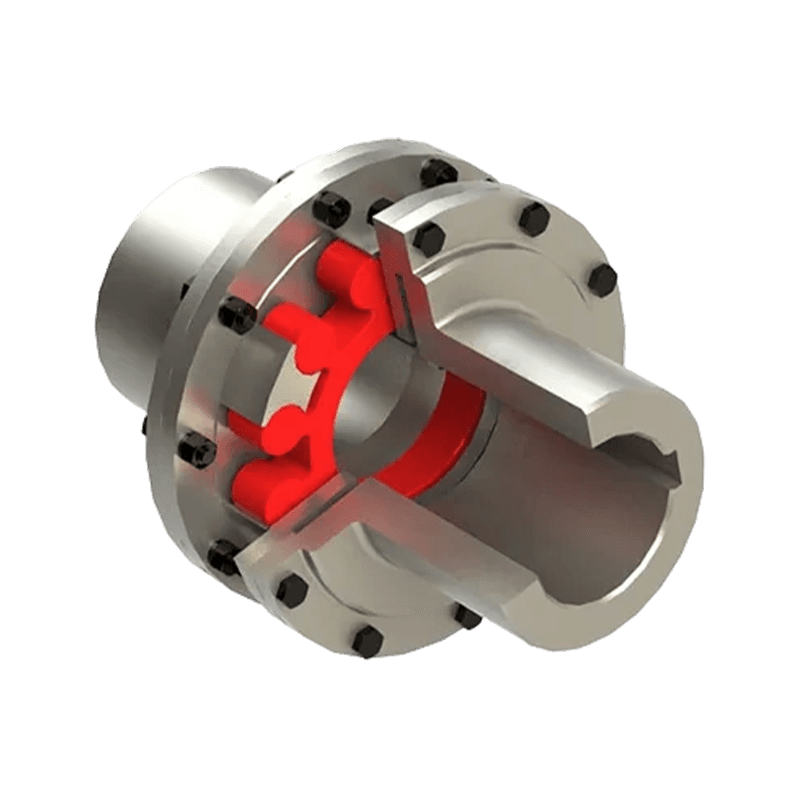
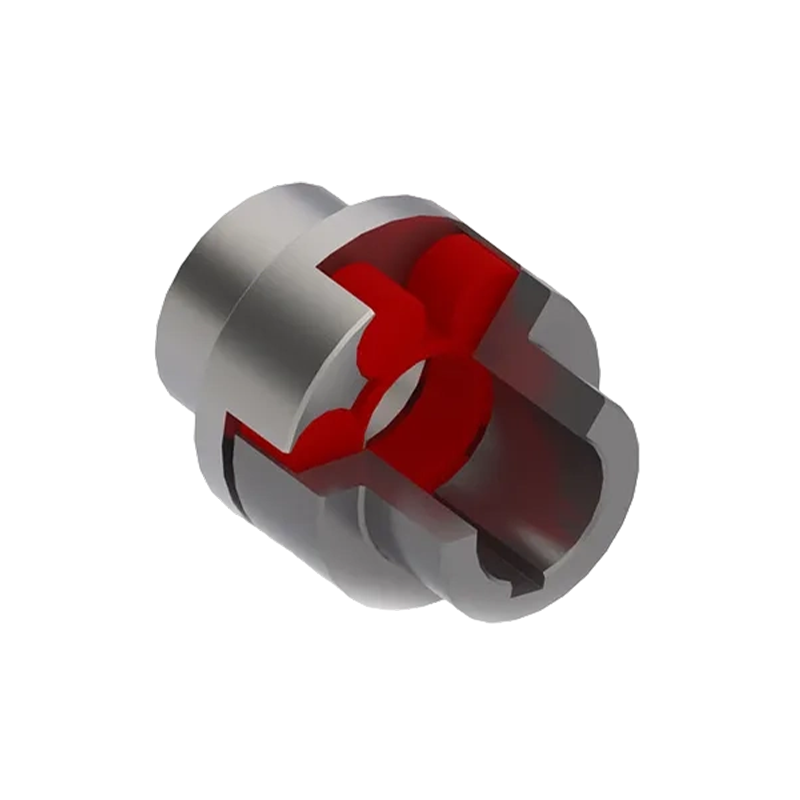
The MC plum shaped elastic coupling consists of two metallic half couplings and a flexible plum shaped element installed between them. Each half coupling has evenly distributed convex jaws around its outer circumference. The elastic element contains corresponding lobes that fit into the spaces between the jaws. When one shaft rotates, the first hub transfers torque through the elastic element to the second hub and then to the driven shaft.
This torque transmission principle provides a balanced combination of flexibility and mechanical strength. The metallic hubs carry the primary structural load, while the elastic element performs the damping and compensation functions. Because the elastomer is not bonded permanently to the hubs, it can generally be removed and replaced during maintenance without replacing the complete coupling assembly.
The product is classified as a flexible coupling with a non-metallic elastic element. This classification distinguishes it from gear couplings, grid couplings, diaphragm couplings, and other products that use metallic flexible components. It also distinguishes the MC coupling from rigid flange couplings, which do not provide intentional misalignment compensation or significant vibration isolation.
The MC design is especially valuable where the connected shafts require a compact coupling with moderate flexibility and straightforward installation. It is frequently selected for electric motor drives, pumps, fans, conveyors, compressors, machine tools, hydraulic power units, and general industrial gearboxes.
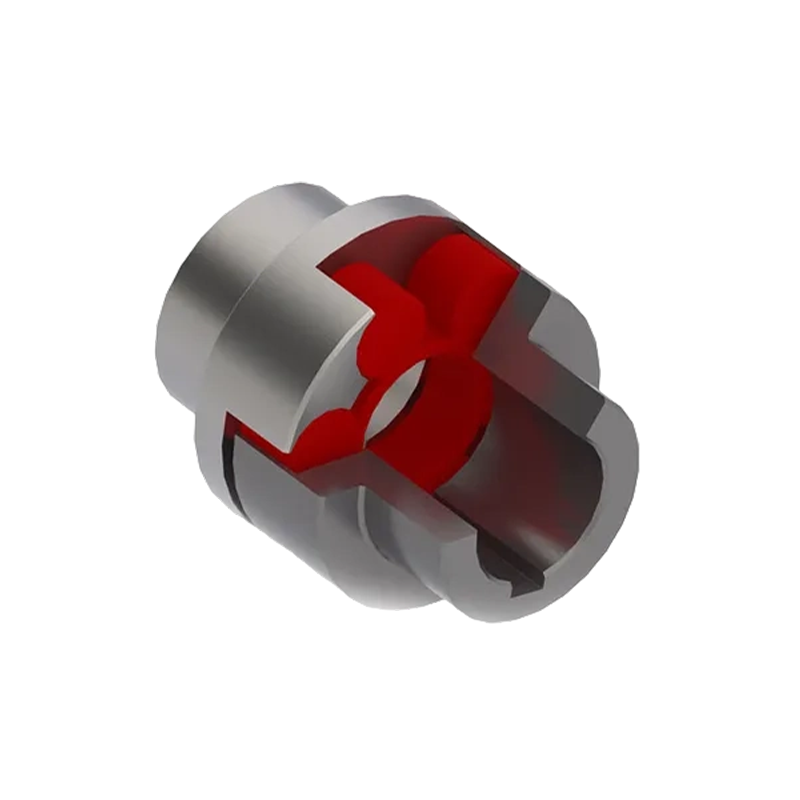
MC plum shaped elastic coupling(Q/YM 35012X-2018)
2. Compliance with the Q/YM 35012X-2018 Standard
Manufacturing according to a defined technical standard provides a consistent foundation for product dimensions, performance ratings, material selection, and quality inspection. The MC series complies with Q/YM 35012X-2018, allowing users and equipment designers to select a coupling based on documented technical parameters rather than relying only on nominal size or visual appearance.
Standardized design is important because a coupling must operate as part of a complete transmission system. The motor power, operating speed, starting characteristics, driven equipment, shaft dimensions, service factor, ambient temperature, and alignment condition all influence coupling selection. A standard product table helps engineers compare the available sizes and verify whether a selected model meets the required torque and speed conditions.
The standard product range also supports repeatability. When a replacement coupling is required, the user can identify the required model, shaft hole diameter, elastic element type, overall dimensions, and rated performance. This reduces replacement uncertainty and simplifies spare-parts planning for plants that operate multiple machines.
Although a standard coupling provides a reliable starting point, the actual operating conditions must still be evaluated. The listed nominal torque and maximum torque should not be treated as interchangeable values. Nominal torque represents the normal rated transmission capacity, while maximum torque indicates a higher allowable or peak value under specified conditions. Continuous operation near the maximum value may shorten the service life of the elastic element and should be assessed carefully.
3. Construction and Operating Principle
3.1 Metallic Half Couplings
The two half couplings are the load-carrying components of the assembly. They are installed on the driving and driven shafts and secured using the appropriate bore, keyway, clamping, or shaft connection arrangement. The external jaws are arranged symmetrically to distribute torque around the coupling circumference.
The metallic hubs are designed to resist torsional stress and maintain dimensional stability during operation. Their geometry must provide sufficient tooth strength, hub strength, bore strength, and resistance to deformation. Manufacturing accuracy is important because uneven jaw spacing, excessive runout, or poor concentricity can increase vibration and cause premature wear of the elastic element.
The available shaft hole diameters cover a wide range. Smaller models use bore sizes from 12 millimeters, while larger models support shaft holes up to 160 millimeters. Certain marked bore diameters may be suitable for Z-type shaft holes. The required shaft hole length should be confirmed with the manufacturer when it is specified according to GB/T 3852 or another shaft connection standard.
3.2 Non-Metallic Elastic Element
The plum shaped elastic element is the functional center of the coupling. It fits between the jaws of the two hubs and transfers torque through compression and deformation of the elastomer. The element is available in corresponding types from MT1 through MT14 for MC1 through MC14 couplings.
During normal operation, the element absorbs a portion of the torsional fluctuations produced by the motor and driven machine. It also helps reduce the transfer of impact loads from one shaft to the other. This effect is beneficial in systems with intermittent loading, frequent starts and stops, moderate shock, or equipment whose operating torque varies over time.
The elastic element also permits a limited amount of shaft misalignment. Angular misalignment occurs when the centerlines of two shafts form an angle. Radial misalignment occurs when the centerlines are parallel but offset. Axial movement occurs when the shafts move along their own centerlines. The coupling can compensate for limited values of these conditions, but it is not intended to correct poor installation or large alignment errors.
The actual compensation capacity depends on the elastomer type, coupling size, speed, torque, temperature, and installation condition. Excessive misalignment increases deformation and heat generation in the elastic element. For this reason, shaft alignment should always be performed as accurately as practical, even when a flexible coupling is used.
3.3 Replaceable and Serviceable Design
A major practical advantage of the MC structure is the serviceability of the elastic element. In many applications, the elastomer is a wear component. It may eventually lose elasticity, develop cracks, become permanently deformed, or experience surface deterioration due to heat, chemicals, overload, or misalignment.
When the element reaches the end of its service life, maintenance personnel can inspect the hubs and replace the element rather than replacing the complete coupling. This reduces downtime and lowers the cost of routine maintenance. It also allows the metallic hubs to remain in service when their bores, keyways, jaws, and surfaces remain within acceptable condition.
The replacement element must match the coupling size and the operating requirements. Mixing an incorrect element type with a different coupling size may change torque capacity, damping characteristics, and dimensional fit. Spare parts should therefore be identified by the complete coupling model and elastomer type.
4. Technical Specification Range
The MC series provides a structured selection range for different transmission requirements. The main technical values are summarized below.
| Model | Nominal Torque, N·m | Maximum Torque, N·m | Allowable Speed, r/min | Overall Length L, mm | Reference Length L0, mm | Outside Diameter D, mm | Elastic Element | Approximate Mass, kg |
|---|---|---|---|---|---|---|---|---|
| MC1 | 28 | 50 | 15,300 | 35 | 86 | 50 | MT1 | 1.00 |
| MC2 | 50 | 100 | 12,000 | 38 | 95 | 60 | MT2 | 1.50 |
| MC3 | 112 | 200 | 10,900 | 40 | 103 | 70 | MT3 | 2.50 |
| MC4 | 160 | 288 | 9,000 | 45 | 114 | 85 | MT4 | 3.42 |
| MC5 | 355 | 640 | 7,300 | 50 | 127 | 105 | MT5 | 5.15 |
| MC6 | 450 | 810 | 6,100 | 55 | 143 | 125 | MT6 | 10.10 |
| MC7 | 710 | 1,280 | 5,300 | 60 | 159 | 145 | MT7 | 13.10 |
| MC8 | 1,250 | 2,250 | 4,500 | 70 | 181 | 168 | MT8 | 21.20 |
| MC9 | 2,000 | 3,600 | 3,750 | 80 | 208 | 198 | MT9 | 33.00 |
| MC10 | 3,150 | 5,670 | 3,250 | 90 | 230 | 228 | MT10 | 45.50 |
| MC11 | 5,000 | 9,000 | 3,000 | 100 | 260 | 258 | MT11 | 75.20 |
| MC12 | 7,100 | 12,780 | 2,500 | 115 | 297 | 298 | MT12 | 99.20 |
| MC13 | 12,500 | 22,500 | 2,150 | 125 | 323 | 358 | MT13 | 148.10 |
| MC14 | 14,000 | 25,200 | 1,900 | 135 | 333 | 400 | MT14 | 197.50 |
The mass and moment of inertia values are approximate and are calculated on the basis of cast steel construction and the largest shaft hole for each model. Actual values may vary according to material, bore configuration, keyway, surface treatment, and customized design.
The moment of inertia increases as the coupling size increases. This value is important in high-speed drives and systems with frequent acceleration or deceleration because coupling inertia affects motor starting performance, braking response, and dynamic load. Engineers should consider the coupling inertia together with the rotor inertia and driven-machine inertia during system design.
5. Performance Advantages Compared with Competing Coupling Designs
5.1 Effective Vibration Damping
The non-metallic elastic element gives the MC coupling a clear advantage over rigid couplings in systems where vibration and shock must be controlled. A rigid coupling transmits torque directly and provides little protection against torsional fluctuation or installation error. The MC coupling introduces an elastic buffer between the shafts, helping reduce the transmission of sudden torque changes.
This damping behavior can protect motors, gearboxes, pumps, shafts, bearings, and connected equipment. It is particularly useful when the drive experiences starting torque, cyclic loading, load reversal, or intermittent operation. Reduced vibration may also contribute to lower noise, improved operator comfort, and longer service intervals for adjacent components.
5.2 Simpler Maintenance than Many Metal Flexible Couplings
Metallic flexible couplings, such as diaphragm, grid, or gear couplings, can provide excellent performance, but they may involve more components, more demanding inspection procedures, or more complicated maintenance. The MC coupling has a comparatively simple construction and a limited number of primary parts.
The elastic element can be inspected visually for cracking, wear, hardening, deformation, or missing material. Replacement is generally straightforward after the shafts are safely isolated and the coupling guards are removed. This simplicity can be valuable in plants where maintenance time is limited or where replacement parts must be stocked for many machines.
5.3 No Routine Lubrication of the Elastic Element
Unlike gear couplings and some grid couplings, the MC coupling does not depend on a lubricating grease film within the elastic element to operate. The absence of routine coupling lubrication reduces maintenance tasks and avoids grease leakage or contamination around clean equipment.
Although the hubs and shaft connection must still be installed correctly and protected as required, the elastic element itself is designed to function through controlled deformation rather than sliding contact requiring continuous lubrication. This can be beneficial in pumps, food-related auxiliary systems, paper machinery, and other equipment where lubricant management is important. Application-specific hygiene and material requirements should always be confirmed separately.
5.4 Compact Dimensions and Low Part Count
The MC coupling offers a compact radial envelope for its torque capacity. The outside diameter ranges from 50 millimeters for MC1 to 400 millimeters for MC14, while the axial dimensions remain practical for many standard drive arrangements. A compact coupling can simplify equipment layout, reduce guard size, and provide more installation space around the shaft line.
The low part count also reduces the number of potential failure points. There are no multiple layers of laminated elements, complicated gear teeth requiring grease, or numerous small fasteners in the basic coupling structure. A simple design does not eliminate the need for correct engineering, but it can make the product easier to understand, inspect, install, and replace.
5.5 Broad Selection Range
The MC1 to MC14 range covers small auxiliary drives as well as high-torque industrial systems. This breadth gives equipment designers access to a consistent coupling concept across multiple machine sizes. A plant can often standardize its maintenance procedures around a family of couplings while selecting the appropriate model for each torque and speed requirement.
The combination of nominal torque values from 28 to 14,000 newton meters and maximum torque values from 50 to 25,200 newton meters gives the series a wider application range than many small, general-purpose jaw coupling families. The selection still requires verification of speed, bore, temperature, service factor, and misalignment, but the available sizes support a wide variety of industrial applications.
5.6 Balanced Flexibility and Transmission Efficiency
The MC coupling is designed to provide useful flexibility without converting a large portion of transmitted energy into heat during normal operation. The metallic hubs maintain the torque path, while the elastic element accommodates limited movement and absorbs disturbance.
This balance makes the coupling suitable for systems that need more protection than a rigid connection but do not require the high axial or angular flexibility of a specialized floating-shaft or universal-joint arrangement. The result is a practical solution for many direct-coupled machines.
6. Operating Temperature and Environmental Adaptability
The standard operating temperature range of the MC plum shaped elastic coupling is approximately -30 degrees Celsius to +80 degrees Celsius. Within this range, the elastic element can maintain its designed flexibility and damping characteristics when the coupling is correctly selected and operated.
Temperature affects elastomer behavior. At low temperatures, the material may become harder and less flexible. At high temperatures, it may soften, lose strength, age more quickly, or experience permanent deformation. Heat can be generated by ambient conditions, nearby bearings, motor housings, braking systems, excessive misalignment, overload, or high cyclic frequency.
For applications outside the standard temperature range, users should consult the manufacturer regarding alternative elastic materials, special compounds, protective arrangements, or revised performance limits. Chemical exposure must also be considered. Oils, solvents, acids, alkalis, cleaning fluids, and process chemicals may affect elastomer life depending on their concentration and temperature.
The coupling is suited to many industrial environments, but environmental adaptability should not be confused with unlimited resistance. The selection process should identify dust, moisture, corrosive vapors, washdown requirements, radiation, outdoor exposure, and any contact with process materials. Protective guards and suitable coatings may be necessary for the hubs and shaft connections.
7. Manufacturing Process and Quality Control
7.1 Engineering and Product Development
Reliable coupling manufacturing begins with engineering control. The design must consider torque transmission, stress distribution, jaw geometry, bore dimensions, keyway requirements, rotational balance, elastomer compression, heat generation, and service conditions.
A professional manufacturer develops standardized drawings, process documents, inspection plans, and product data for each coupling model. These documents allow production personnel to manufacture repeatable parts and enable quality personnel to verify critical dimensions. The use of controlled technical documentation is especially important when the coupling is supplied for replacement equipment or integrated into an original machine design.
The manufacturer also supports non-standard design. Shaft dimensions, installation space, bore length, keyway configuration, material, surface treatment, balancing grade, and special environmental requirements may differ from the standard table. Custom engineering allows the coupling to be adapted to a specific transmission system rather than forcing the machine to accept an unsuitable standard arrangement.
7.2 Material and Casting Control
The coupling data identifies approximate mass and inertia values based on cast steel construction and the largest shaft hole. Cast steel provides a practical combination of strength, toughness, machinability, and cost for medium and large coupling hubs.
Material control should begin with approved raw materials and traceable incoming inspection. Depending on the project requirements, chemical composition, mechanical properties, casting quality, and heat treatment condition may be verified. Proper control of the casting process helps reduce defects such as shrinkage, porosity, cracks, inclusions, and dimensional distortion.
For demanding industrial applications, non-destructive testing may be incorporated into the quality plan. Methods can include visual inspection, dimensional inspection, magnetic particle testing, ultrasonic testing, or other methods selected according to material, geometry, and customer requirements. The specific inspection method should be agreed during technical review when required.
7.3 Precision Machining
After casting or forging preparation, the hubs undergo machining to establish the required outside diameter, hub length, jaw profile, bore, keyway, face runout, and concentricity. CNC turning, milling, boring, drilling, and other precision operations can be used according to the component geometry and production volume.
Accurate machining of the bore is essential because the bore determines how the coupling fits the shaft. An incorrect bore tolerance may cause excessive looseness, difficult installation, stress concentration, or difficulty removing the coupling. Keyways must also be correctly positioned and sized to transmit torque without damaging the shaft or hub.
The jaw profile requires careful control because the elastic element must fit consistently between the two hubs. Uneven jaw dimensions can create localized stress in the elastomer, increase vibration, or reduce the available torque capacity. The machining process must therefore control tooth spacing, jaw height, profile geometry, and the relationship between the bore axis and outer profile.
7.4 Surface Treatment and Protection
Industrial couplings may be exposed to moisture, dust, condensation, and corrosive atmospheres. Surface treatment options can be selected to improve corrosion resistance, appearance, and service life. Depending on the application, treatments may include protective painting, oil preservation, blackening, plating, or other specified finishes.
Surface treatment must not interfere with critical fits, bore dimensions, keyways, or the contact relationship between the hubs and elastic element. Masking, post-treatment machining, or dimensional verification may be required for precision areas.
7.5 Assembly and Inspection
Assembly inspection confirms that the two hubs and elastic element correspond to the designated model. Inspectors verify dimensions, surface condition, fit, markings, and packaging. The elastic element should be free from visible cracks, cuts, air bubbles that affect performance, severe flash, or other defects that could reduce service life.
Final inspection may include bore measurement, outside diameter measurement, axial dimension measurement, runout inspection, hardness checks, material verification, and visual examination. When requested, the manufacturer can prepare inspection records or quality documentation for the customer.
Testing facilities are an important part of professional coupling production. A manufacturer with appropriate testing capabilities can evaluate dimensional accuracy, material condition, balancing, torque behavior, and other characteristics more systematically than a workshop relying only on visual inspection. Quality control is most effective when it is integrated throughout the process rather than performed only after final assembly.
7.6 ISO-Based Quality Management
The company states that its products comply with international standards and certifications such as ISO 9001. An ISO 9001 quality management system supports controlled purchasing, documented production, inspection records, corrective actions, customer communication, and continuous improvement.
Certification alone does not replace technical evaluation, but it demonstrates that the organization has established a formal framework for managing product quality. For industrial buyers, this can improve confidence in batch consistency, documentation, complaint handling, and traceability.
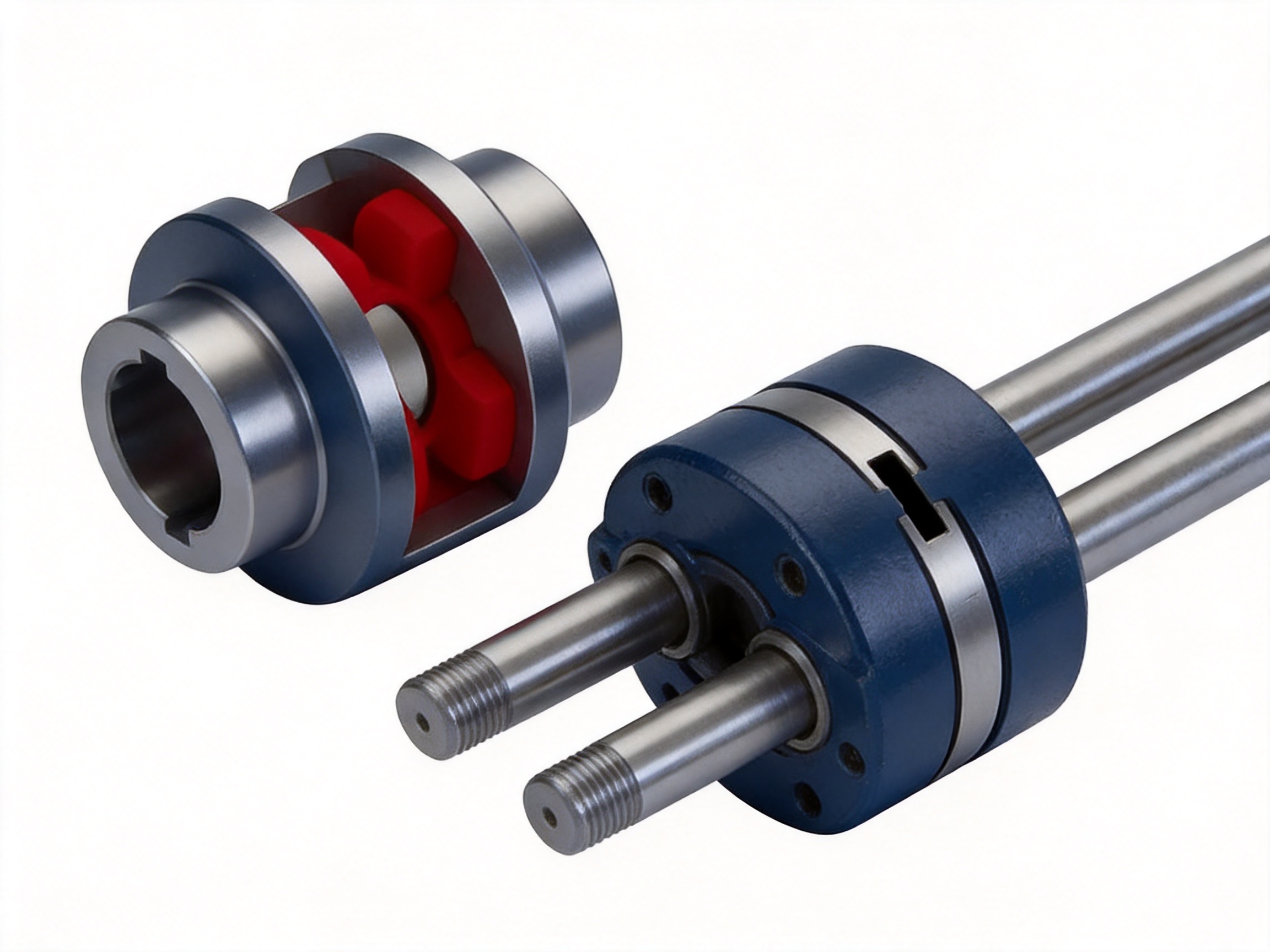
8. Application Areas
8.1 Metallurgical Equipment
Metallurgical equipment often operates under high loads, frequent shock, elevated dust levels, and demanding production schedules. Conveyors, rolling equipment, cooling systems, pumps, fans, and auxiliary drives may experience fluctuating torque and repeated starts.
The MC coupling helps isolate moderate torsional shocks and can reduce the transmission of vibration between motors, gearboxes, and driven equipment. Its replaceable elastic element is useful in production environments where maintenance teams need to restore equipment quickly.
8.2 Mining Machinery
Mining machinery must withstand dust, impact, variable loads, and difficult access conditions. Crushers, feeders, conveyors, pumps, and material handling equipment may impose severe starting and stopping loads on the drive system.
Coupling selection for mining applications should include an appropriate service factor and careful consideration of peak torque. The MC coupling provides a flexible connection that can help protect drive components from moderate shock, but it should not be used as a substitute for correct sizing or overload protection.
8.3 Hydraulic Equipment
Hydraulic power units and water equipment commonly use electric motors to drive pumps. These systems benefit from compact couplings because the coupling is often installed within a restricted frame or between a motor and pump adapter.
The MC design can accommodate limited alignment variation between the motor and pump shafts while reducing the transfer of vibration. Correct alignment remains essential because pump bearings and seals may be sensitive to excessive radial or angular forces.
8.4 Lifting and Transportation Equipment
Cranes, hoists, winches, conveyors, and other lifting or transportation systems may experience repeated acceleration, braking, reversing, and shock loading. The coupling must be selected for the actual operating cycle, not simply the motor nameplate power.
The elastic element can help absorb short-duration torque fluctuations and reduce mechanical impact. For safety-related lifting applications, coupling selection must be integrated with brake design, gearbox capacity, shaft strength, guarding, inspection procedures, and applicable safety regulations.
8.5 Paper Machinery
Paper machinery requires stable speed, low vibration, and dependable operation over long production periods. Fans, pumps, rolls, agitators, dryers, and auxiliary drives may operate continuously and may be sensitive to alignment and vibration.
The MC coupling offers a practical option where compact dimensions, low maintenance, and vibration damping are required. The operating environment should be reviewed for moisture, elevated temperature, washdown chemicals, and paper dust. The selected elastomer must be compatible with those conditions.
8.6 Port and Material Handling Equipment
Port equipment operates outdoors and may be exposed to humidity, salt-laden air, rain, dust, and changing temperatures. Conveyors, winches, pumps, hoists, and transfer systems can experience variable loads and frequent duty cycles.
For these installations, hub surface protection, suitable guarding, drainage, corrosion control, and routine inspection are important. The MC coupling provides a serviceable flexible connection, while the manufacturer can discuss special materials and coatings for more aggressive environments.
9. Coupling Selection Guidelines
9.1 Calculate the Required Torque
The first step is to determine the operating torque of the drive. A basic calculation can be made from power and speed, but the result must be adjusted for the actual duty cycle. Starting torque, acceleration torque, reversing torque, cyclic loading, shock, and load variation can all increase the required coupling capacity.
The selected model should normally have a nominal torque rating greater than the calculated continuous operating torque after the appropriate service factor is applied. The maximum torque rating should be checked against transient loads. If the machine has a high-inertia load or frequent starts, the selection should be reviewed by an experienced engineer.
9.2 Verify Speed
The allowable speed decreases as coupling size increases. MC1 has an allowable speed of 15,300 revolutions per minute, while MC14 has an allowable speed of 1,900 revolutions per minute. The operating speed must remain within the limit for the selected model and bore configuration.
High-speed applications require attention to concentricity, balance, shaft fit, installation accuracy, and guard design. Even a coupling with a suitable catalog speed can produce excessive vibration if the hubs are eccentric, the shaft is bent, the key is improperly fitted, or the coupling is misaligned.
9.3 Check Shaft Holes and Connection Details
The shaft diameters must fall within the available bore range for the selected MC model. The shaft hole list should be checked together with the required keyway, bore length, shoulder arrangement, retaining method, and installation access.
Some bore sizes marked with an asterisk may be used for Z-type shaft holes. If the shaft hole length is to follow GB/T 3852, the requirement should be communicated to the manufacturer before production. Custom bore dimensions may be available, but they must be approved through a technical drawing and confirmed for strength.
9.4 Consider Temperature and Chemicals
The standard temperature range is -30 degrees Celsius to +80 degrees Celsius. The actual temperature at the elastic element may be higher than the surrounding air because of nearby heat sources or internal hysteresis. The selection should therefore use the highest expected service temperature, not only the average ambient temperature.
Chemical compatibility should be confirmed when the coupling is exposed to oil, solvents, cleaning agents, acids, alkalis, or process fluids. The appropriate elastomer can vary according to resistance requirements.
9.5 Allow for Installation and Maintenance Space
Although the MC coupling is compact, the machine must provide enough room to install the hubs, insert the elastic element, tighten fasteners, inspect the coupling, and remove the element later. The coupling guard must also provide sufficient clearance and safe access for maintenance.
Installation access is especially important on large MC models, where the mass may require lifting equipment. The approximate mass ranges from 1 kilogram for MC1 to 197.5 kilograms for MC14. Actual mass depends on bore size and material configuration.
10. Installation and Maintenance Recommendations
Before installation, verify the coupling model, bore dimensions, shaft diameters, key dimensions, elastic element type, and installation drawings. Confirm that the shafts are clean, free from burrs, and properly supported. Never force a hub onto a shaft by striking the elastic element or by applying uncontrolled impact to the coupling.
Align the shafts as accurately as possible using suitable measuring equipment. A flexible coupling is designed to accommodate limited misalignment, not to compensate for poor shaft positioning. Excessive misalignment increases elastic deformation, heat, and wear.
Install the hubs to the specified axial positions and ensure that the elastic element is correctly seated between the jaws. Fasteners should be tightened according to the required torque and locking method. The coupling must be guarded before operation to prevent contact with rotating parts.
After installation, rotate the shaft by hand when practical to check for interference or abnormal resistance. During the initial run, observe vibration, noise, temperature, and any movement of the coupling. Stop the machine immediately if the elastic element appears to expand abnormally, if the hubs contact the guard, or if unusual vibration occurs.
Routine inspections should check for cracking, hardening, tearing, deformation, discoloration, missing pieces, and excessive wear of the elastic element. Inspect the hubs for damaged jaws, bore fretting, loose fasteners, corrosion, and keyway damage. Check alignment when the element wears unusually quickly.
Typical causes of premature elastic element failure include overload, excessive misalignment, incorrect element type, excessive temperature, chemical attack, inadequate shaft insertion, loose hubs, and repeated operation beyond the coupling rating. Replacing the element without correcting the underlying cause may lead to another early failure.
Maintenance personnel should isolate electrical and mechanical energy before removing the coupling guard or handling the coupling. Large couplings may require lifting equipment. Replacement parts should be stored in a clean, dry location away from direct sunlight, ozone-generating equipment, excessive heat, and chemicals that may affect the elastomer.
11. Manufacturing Strengths and Customization Capability
Zhongye Heavy Industry Technology (Zhenjiang) Co., Ltd. integrates research and development, manufacturing, sales, and technical service. Its product portfolio includes toothed couplings, elastic sleeve pin couplings, elastic pin couplings, universal couplings, tire couplings, jaw couplings, star couplings, diaphragm couplings, drum couplings, grid couplings, Oldham couplings, flange couplings, roller chain couplings, safety couplings, and other transmission products.
This broad product range gives the technical team experience across multiple coupling principles. When a customer is uncertain whether a plum shaped elastic coupling is the best choice, the manufacturer can compare it with a metal elastic coupling, gear coupling, diaphragm coupling, rigid coupling, or customized design.
The company operates a new workshop covering approximately 16,463.52 square meters. The facility includes a heavy workshop of approximately 5,500 square meters, a precision workshop of approximately 4,600 square meters, an office building and gymnasium of approximately 2,000 square meters, a dining hall, warehouse space, roads, landscaping, and parking areas.
The separation of heavy and precision workshop areas supports efficient organization of different production operations. Large coupling components can be handled in a suitable space, while precision machining and inspection can be performed in an environment designed for dimensional control and repeatable production.
Customization may include special bore sizes, extended or shortened hubs, alternative keyways, special shaft hole lengths, different materials, surface protection, balancing requirements, modified dimensions, or integration with a particular machine frame. Non-standard designs should be supported by approved drawings, clearly defined tolerances, and confirmation of the required operating conditions.
The company also provides pre-sale technical support, non-standard design solutions, production guarantees, quality control, and after-sale service. These services are important because coupling performance depends on the complete drive system rather than on the coupling alone.
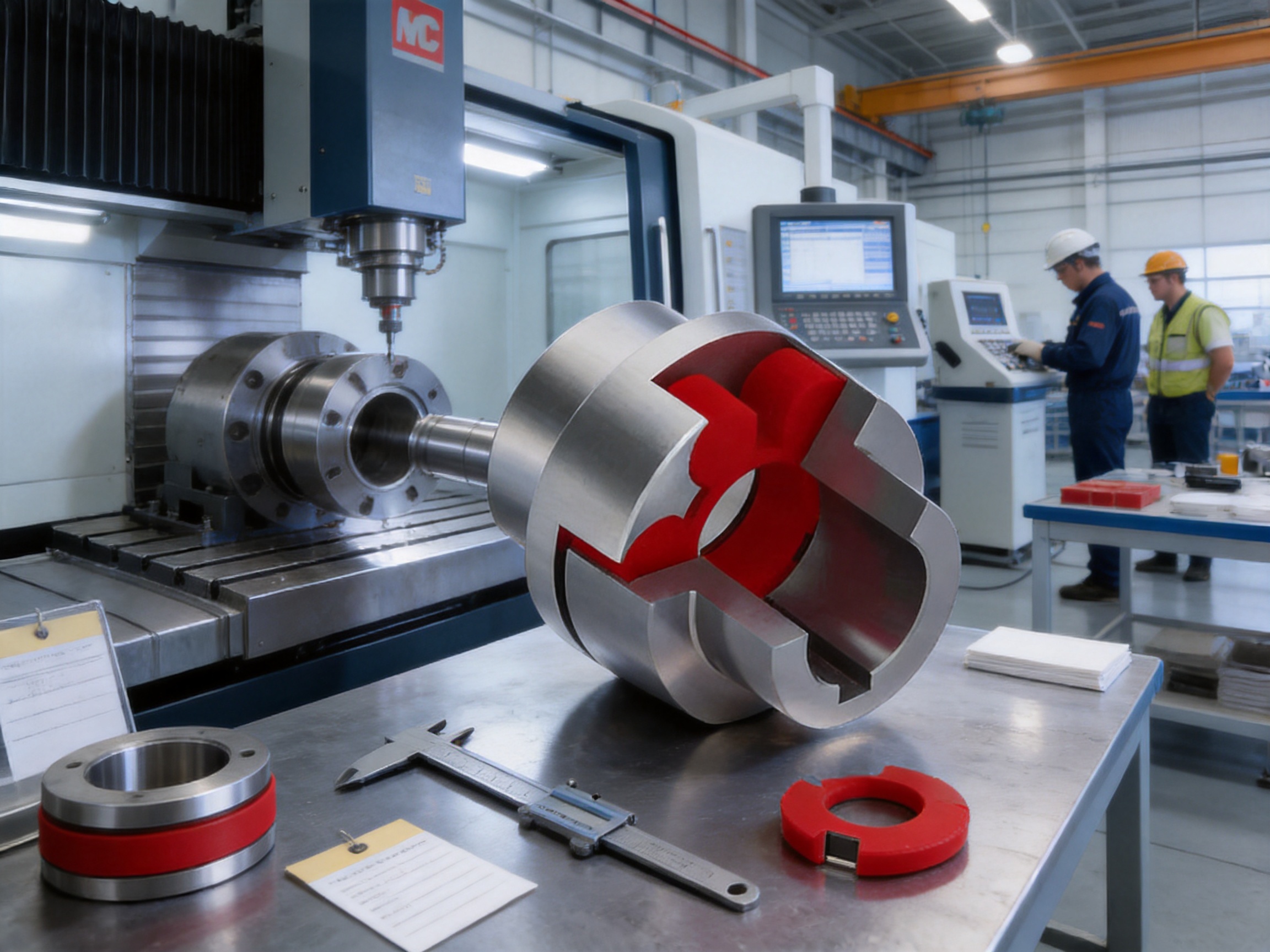
12. Why the MC Coupling Is a Practical Industrial Choice
The MC plum shaped elastic coupling combines several characteristics that are valuable in industrial equipment: a simple mechanical structure, replaceable elastomer, broad size range, moderate misalignment compensation, vibration damping, low routine maintenance, and compatibility with many standard shaft arrangements.
Its advantages are strongest in applications that need a reliable general-purpose flexible connection without the complexity of a heavily lubricated gear coupling or the higher cost of a specialized metallic coupling. The design is also more protective than a rigid coupling when the machine experiences vibration, shock, or minor alignment movement.
Compared with less structured low-cost couplings, the MC series benefits from defined performance data, standardized dimensions, controlled manufacturing, and professional technical support. Compared with oversized couplings selected without calculation, the fourteen-model range allows users to choose a more appropriate balance of torque, speed, mass, inertia, and installation dimensions.
The coupling should nevertheless be selected responsibly. No flexible coupling can compensate for unlimited misalignment, eliminate all shock loads, or correct an undersized shaft. Correct torque calculation, speed verification, temperature evaluation, material compatibility, alignment, guarding, and maintenance remain essential.
13. Frequently Asked Questions
13.1 What is an MC plum shaped elastic coupling?
It is a flexible shaft coupling consisting of two metallic hubs and a non-metallic plum shaped elastic element. The element fits between the jaws of the hubs and transmits torque while absorbing vibration and accommodating limited shaft misalignment.
13.2 Is the MC coupling also called a jaw coupling?
Yes. In industrial markets, plum shaped elastic couplings are commonly called jaw couplings, spider couplings, or star couplings. The names refer to the shape and arrangement of the elastic element and hub jaws.
13.3 What standard does the product comply with?
The MC series is manufactured in accordance with the Q/YM 35012X-2018 standard. Specific dimensions, shaft hole requirements, and special configurations should be confirmed against the applicable technical documentation.
13.4 What torque range is available?
The nominal torque range is 28 to 14,000 newton meters. The maximum torque range is 50 to 25,200 newton meters, depending on the selected model from MC1 to MC14.
13.5 What is the maximum allowable speed?
The highest listed allowable speed is 15,300 revolutions per minute for MC1. The allowable speed decreases for larger models and reaches 1,900 revolutions per minute for MC14. The actual application must also satisfy balance, alignment, bore, and installation requirements.
13.6 Can the elastic element be replaced separately?
Yes. The elastic element is a replaceable component when the metallic hubs remain suitable for continued use. The replacement must match the coupling model and the required MT elastic element type.
13.7 Does the coupling require lubrication?
The non-metallic elastic element does not normally require routine lubrication for torque transmission. This is an advantage over many gear or grid couplings. The shaft connection and surrounding equipment must still be maintained according to the machine manufacturer's instructions.
13.8 What is the standard operating temperature range?
The standard operating temperature range is approximately -30 degrees Celsius to +80 degrees Celsius. For temperatures outside this range or for chemically aggressive environments, the elastomer and coupling configuration should be reviewed with the manufacturer.
13.9 Can the coupling compensate for shaft misalignment?
It can compensate for limited angular, radial, and axial misalignment. However, it should not be used to correct poor installation. Excessive misalignment increases stress and heat in the elastic element and can significantly reduce service life.
13.10 Which industries use the MC coupling?
Typical industries include metallurgy, mining, hydraulic engineering, water equipment, lifting and transportation, paper machinery, port equipment, conveyors, pumps, fans, compressors, and general industrial automation.
13.11 Can custom shaft holes be produced?
Customized shaft holes and other non-standard features may be available. The customer should provide shaft diameter, keyway information, bore length, hub position, operating torque, speed, temperature, and installation drawings for technical review.
13.12 How should the correct model be selected?
Selection should consider operating torque, maximum transient torque, speed, shaft diameter, service factor, ambient temperature, misalignment, duty cycle, installation space, and environmental exposure. The selected model should satisfy all relevant conditions rather than torque alone.
13.13 What causes early failure of the elastic element?
Common causes include overload, repeated shock, excessive misalignment, high temperature, chemical exposure, incorrect element selection, loose hubs, improper bore fit, insufficient shaft engagement, and operation above the rated speed.
13.14 Does the manufacturer provide technical assistance?
The company provides pre-sale technical support, custom design assistance, non-standard coupling solutions, product manufacturing, quality control, and after-sale service. Technical data should be supplied early so that the coupling can be evaluated as part of the complete drive system.
14. Conclusion
The MC plum shaped elastic coupling is a versatile and serviceable solution for industrial shaft connection. Its Q/YM 35012X-2018-compliant design combines metallic torque-transmitting hubs with a replaceable non-metallic elastic element that reduces vibration, buffers shock, and accommodates limited misalignment.
With fourteen sizes, nominal torque ratings from 28 to 14,000 newton meters, maximum torque ratings up to 25,200 newton meters, allowable speeds up to 15,300 revolutions per minute, and shaft hole options from 12 to 160 millimeters, the series supports a broad range of machinery.
The principal advantages over rigid or more complicated coupling designs include compact construction, low part count, convenient maintenance, no routine lubrication for the elastomer, useful damping performance, and broad application flexibility. These advantages are strengthened by professional manufacturing processes involving engineering control, material management, precision machining, assembly inspection, testing, and ISO-based quality management.
Zhongye Heavy Industry Technology (Zhenjiang) Co., Ltd. supports the MC product with integrated research and development, manufacturing capability, customization, technical consultation, and after-sale service. By combining standardized products with non-standard design support, the company can address both common replacement requirements and specialized industrial transmission systems.
For reliable performance, users should select the coupling according to actual torque, speed, temperature, environment, shaft dimensions, and duty cycle. Proper alignment, correct installation, protective guarding, and regular inspection are equally important. When these factors are controlled, the MC plum shaped elastic coupling can provide efficient, stable, and economical service in demanding industrial applications.
References
Q/YM 35012X-2018, Technical Standard for Plum Shaped Elastic Couplings.
GB/T 3852, Basic Parameters and Dimensions of Shaft Ends, Keys, and Coupling Bores.
ISO 9001, Quality Management Systems, Requirements.
Manufacturer Technical Data, Basic Parameters and Main Dimensions of MC Plum Shaped Elastic Couplings.
Industrial Coupling Selection Principles, Torque, Speed, Alignment, and Service Factor Guidance.
Elastomeric Coupling Maintenance Practices, Inspection, Replacement, and Environmental Compatibility.
Product: MC plum shaped elastic coupling(Q/YM 35012X-2018)

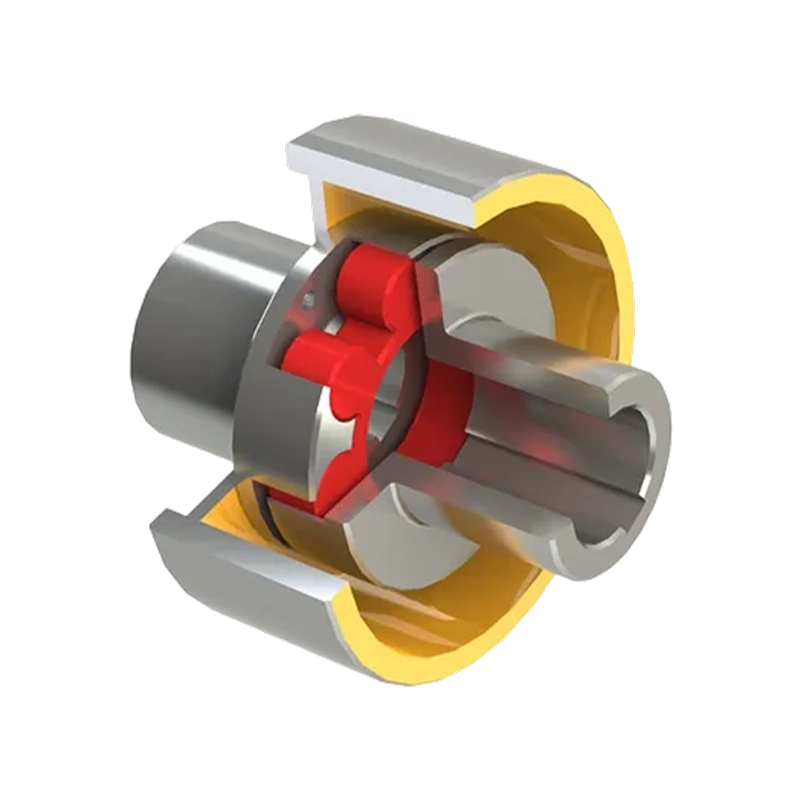
- Quick Links
- About
- Products
- Our Service
- News & Events
- Contact
- Products Series
- Flexible Couplings with Non-Elastic Elements
- Flexible Couplings with Metal Elastic Elements
- Flexible Couplings with Non-Metallic Elastic Elements
- Safety Coupling
- Rigid Coupling
- Contact Us
- Tel : +86 511 8572 3800 +86 511 8572 3900
- Mobile : +86 15106109009
- Email : sales@couplingzy.com
- Add:No.1 Zhongye Yingbin Avenue, Gaozi Street, Dantu Economic Development Zone, Zhenjiang City, Jiangsu Province, China.


