:+86 15106109009
:sales@couplingzy.com


 English
  русский
  Español
  عربى
عربى  Português
  Deutsch
  Türk
Türk  Indonesia

LCB Type Tire Coupling: High-Load, High-Speed Flexible Power Transmission
Content
- 1 1. Product Overview
- 2 2. Reinforced Tire Construction
- 3 3. Operating Principle and Torque Transmission
- 4 4. Main Advantages Over Conventional Flexible Couplings
- 5 5. Technical Parameters
- 6 6. Material and Manufacturing Considerations
- 7 7. Advanced Manufacturing Strengths
- 8 8. Application Areas
- 9 9. Selection Guide
- 10 10. Installation and Alignment
- 11 11. Maintenance and Service Life
- 12 12. Custom Engineering Support
- 13 13. Competitive Value of the LCB Design
- 14 14. Frequently Asked Questions
- 14.1 What is an LCB type tire coupling?
- 14.2 How is the LCB design different from a frameless tire coupling?
- 14.3 Does the coupling require lubrication?
- 14.4 Can the coupling compensate for all types of misalignment?
- 14.5 What torque range is available?
- 14.6 What speeds can the LCB coupling handle?
- 14.7 Can the LCB coupling be used in high-temperature areas?
- 14.8 Is the product suitable for pumps?
- 14.9 Can special shaft holes be manufactured?
- 14.10 What should be checked before placing an order?
- 14.11 How often should the tire be replaced?
- 14.12 What industries does the manufacturer serve?
- 15 15. Conclusion
- 16 References
- 17 Product: LCB type tire coupling(Q/YC 34010X-2018)
Reliable torque transmission is essential in industrial equipment that operates continuously under high loads, frequent starts and stops, vibration, shock, and shaft misalignment. A coupling must do more than connect two shafts. It must transmit torque efficiently, compensate for installation and operating errors, protect connected equipment from impact, and continue working reliably when maintenance opportunities are limited. The LCB type tire coupling, manufactured according to Q/YC 34010X-2018, is designed to meet these demanding requirements through a reinforced tire structure, strong damping capability, multi-directional flexibility, and a lubrication-free operating design.
The LCB type belongs to the category of flexible couplings with non-metallic elastic elements. Its flexible tire element is supported by an integrated skeleton reinforcement structure. Compared with frameless tire coupling designs, this construction improves the tensile strength, load-bearing capacity, and high-speed stability of the flexible element. The result is a coupling suitable for metallurgical equipment, petroleum machinery, heavy-duty pumping systems, mining equipment, water equipment, lifting machinery, paper-making equipment, and other industrial applications where dependable power transmission is critical.
This article explains the construction, operating principle, technical advantages, manufacturing capabilities, selection considerations, maintenance requirements, and application value of the LCB type tire coupling. It also presents representative technical parameters and answers common questions from equipment designers, maintenance engineers, and purchasing teams.
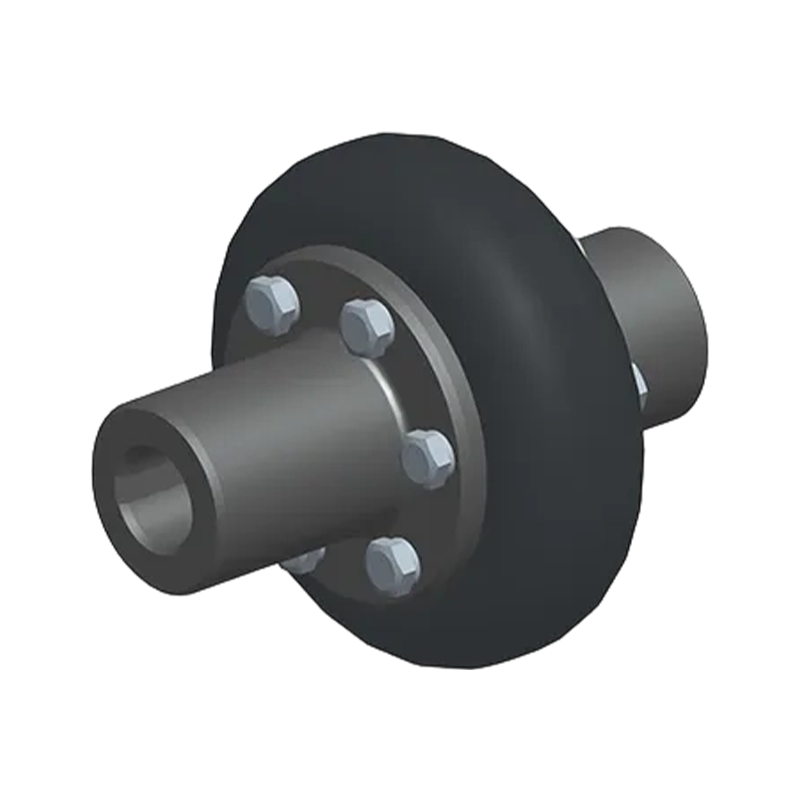
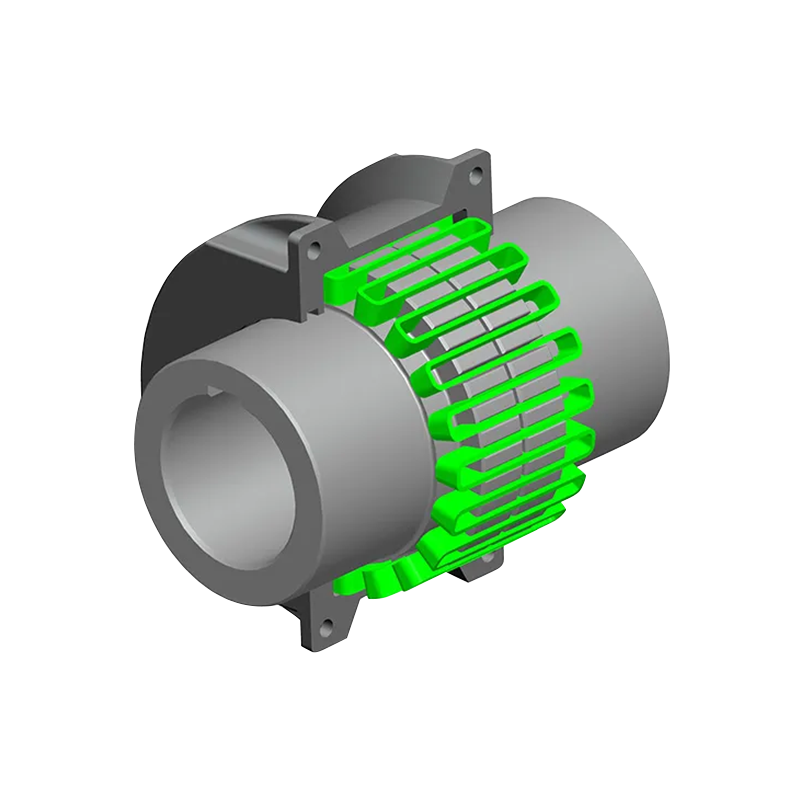
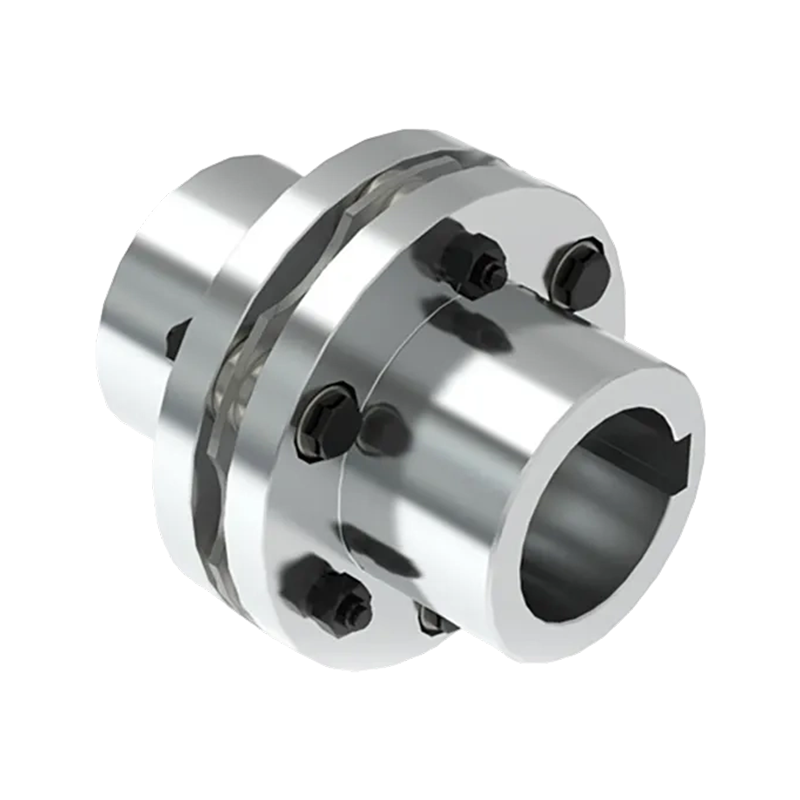
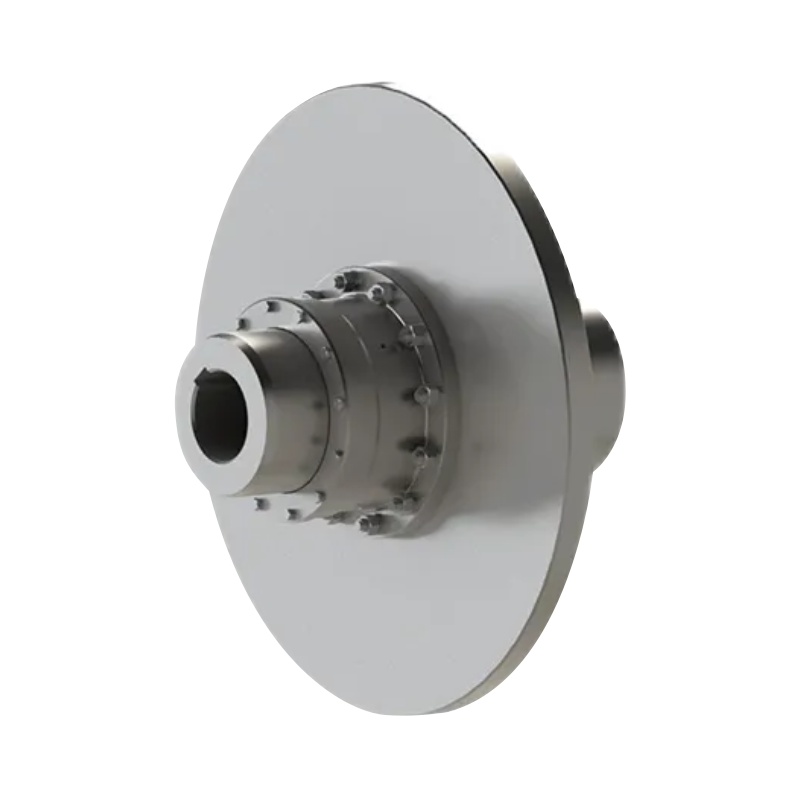
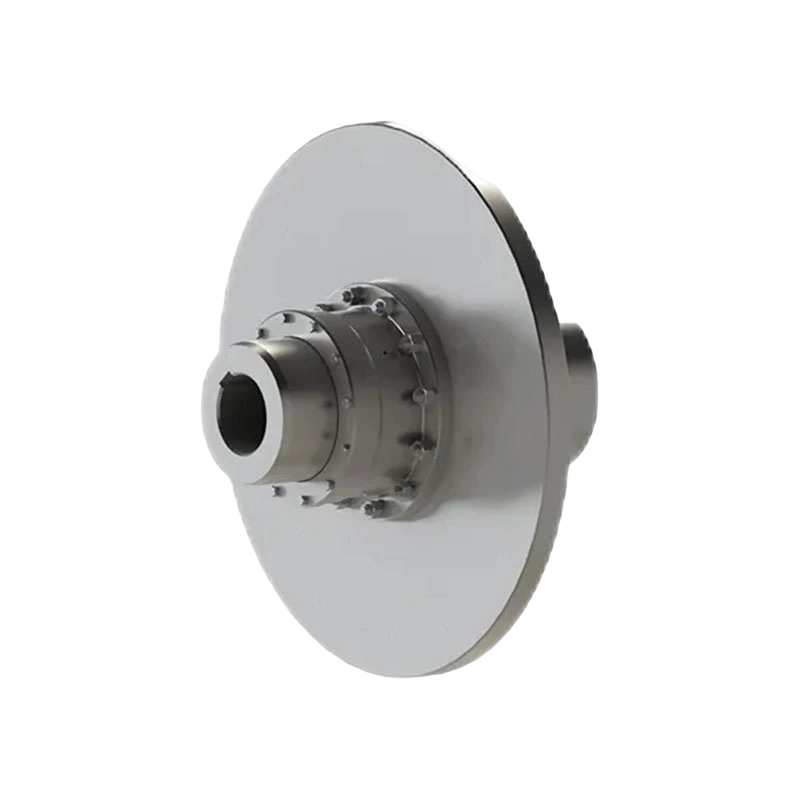
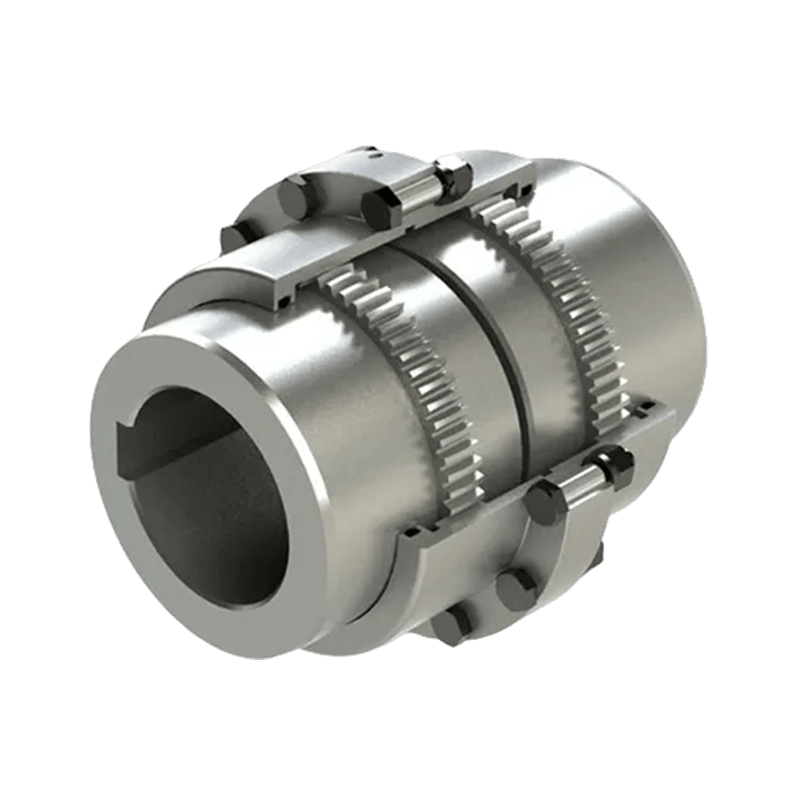
LCB type tire coupling(Q/YC 34010X-2018)
1. Product Overview
A tire coupling is a flexible shaft coupling that uses an elastic ring or tire-shaped element to connect two hubs. The hubs are mounted on the driving and driven shafts, while the tire element bridges the two sides and transfers torque through its reinforced body. When the shafts rotate, the tire is subjected primarily to shear, compression, and tensile forces. Its elasticity permits a controlled amount of movement between the shafts without interrupting torque transmission.
The LCB type tire coupling adds an internal skeleton reinforcement structure to the tire body. This reinforcement is an important distinction from a simple frameless design. It supports the elastic material, improves its resistance to deformation, and allows the coupling to handle greater mechanical stress. The reinforced construction is particularly valuable when the coupling operates at relatively high rotational speed or when the connected machinery produces substantial starting torque and impact loading.
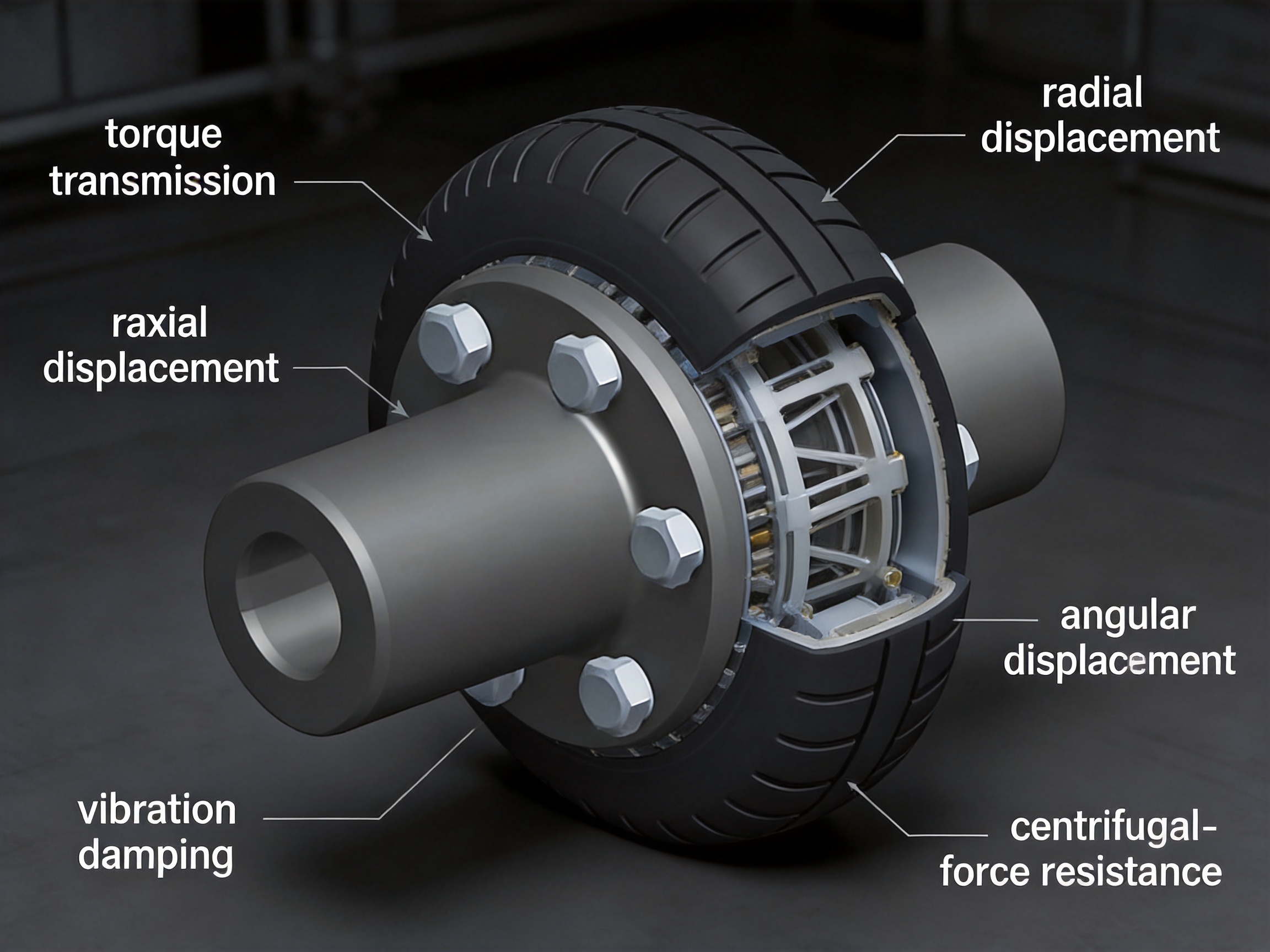
The coupling is designed to compensate for three major forms of shaft displacement:
Radial displacement occurs when the centerlines of the two connected shafts are parallel but offset from one another. The flexible tire deforms to accommodate this offset while continuing to transmit torque.
Axial displacement occurs when the shafts move toward or away from one another along their common axis. Thermal expansion, bearing movement, assembly tolerances, or changes in machine position can create this condition.
Angular displacement occurs when the two shaft centerlines intersect at an angle rather than remaining perfectly collinear. The flexible element bends and deforms to permit this movement.
In real industrial installations, these forms of displacement often occur simultaneously. The LCB coupling is therefore not simply a torque-transmitting component; it is also a mechanical buffer between two shafts whose positions may change during operation.
2. Reinforced Tire Construction
The main functional component of the LCB coupling is its reinforced tire element. The tire combines an elastic non-metallic material with a built-in skeleton. The elastic material provides flexibility and vibration isolation, while the skeleton provides structural support and resistance to excessive stretching.
This combination produces a balanced mechanical response. A completely soft flexible element may compensate for misalignment effectively, but it may also experience excessive deformation under high torque or high speed. A very rigid element may transmit torque efficiently, but it can transfer vibration and impact directly into the connected machines. The LCB design addresses this trade-off by combining a flexible body with reinforcement that controls its deformation.
The reinforced tire structure provides several important benefits:
First, it increases tensile strength. During operation, the tire experiences circumferential and radial forces. The internal skeleton helps distribute these forces over a wider area, reducing localized stress concentration.
Second, it improves load-bearing capacity. The tire can support higher torque and more severe transient loads without excessive elongation or distortion.
Third, it improves resistance to centrifugal force. At high rotational speeds, every flexible component is subjected to outward force. Excessive radial expansion can alter the geometry of the coupling, increase heat generation, and accelerate material fatigue. Reinforcement helps the tire retain its designed shape.
Fourth, it improves operational stability. A stable tire geometry reduces unbalanced running, helps maintain consistent contact conditions, and lowers the probability of abnormal vibration caused by flexible element deformation.
Finally, the reinforced body contributes to longer service life when the coupling is correctly selected and installed. It does not eliminate the effects of overload, excessive misalignment, high temperature, or chemical exposure, but it provides a stronger structural foundation than an unreinforced or frameless design.
3. Operating Principle and Torque Transmission
When the driving shaft rotates, its hub applies torque to the reinforced tire. The tire transfers this torque to the opposite hub and then to the driven shaft. Because the tire is elastic, the transfer is accompanied by a small amount of controlled deformation. This deformation allows the coupling to absorb torsional fluctuation and accommodate shaft movement.
The flexible element is not intended to slide during normal operation. Torque is transmitted through the elastic deformation of the tire and the secure connection between the tire and hubs. Proper fastening, accurate hub installation, and correct shaft fit are therefore essential for reliable performance.
During a sudden load change, the tire deflects and absorbs part of the energy. Instead of allowing the entire impact to pass instantly into the motor, gearbox, pump, or driven machine, the coupling moderates the change in torque. This can reduce stress on shafts, keys, bearings, gears, and other transmission components.
The same effect is useful during motor starting. Electric motors can produce starting torque substantially higher than their steady operating torque. A coupling with suitable damping can reduce the severity of the torque impulse and help the driven machine accelerate more smoothly.
In reciprocating, pumping, crushing, rolling, and lifting machinery, torque may fluctuate repeatedly during every operating cycle. The LCB tire coupling absorbs a portion of these fluctuations, helping to reduce noise, vibration, and fatigue in the complete drive system.
4. Main Advantages Over Conventional Flexible Couplings
4.1 Higher Structural Strength Than Frameless Tire Designs
The most direct advantage of the LCB type is the built-in skeleton reinforcement. A frameless tire coupling relies mainly on the elastic material itself to resist tensile and centrifugal forces. The LCB design adds internal structural support, making it better suited to applications where the tire must withstand high torque, high speed, or repeated impact.
This does not mean that every LCB coupling should be operated at the maximum listed speed or torque. Selection must still consider service factor, alignment, ambient conditions, shaft diameter, and duty cycle. However, the reinforced construction gives designers a broader and more reliable operating margin when compared with a basic unreinforced structure of similar general size.
4.2 Excellent Multi-Directional Misalignment Compensation
Rigid couplings require accurate alignment and provide little tolerance for movement. Many metal flexible couplings compensate for certain types of misalignment, but their performance may depend strongly on precise installation and the condition of metallic components. The LCB tire coupling offers flexible compensation in radial, axial, and angular directions.
This capability is valuable in large equipment foundations, where thermal expansion, settlement, bearing clearance, and structural deflection can change shaft alignment after installation. It is also useful in systems where the motor and driven machine are mounted on separate baseplates or where equipment must be periodically removed and reinstalled.
Misalignment compensation should not be used as a substitute for alignment. Excessive displacement causes additional flexing, heat generation, and fatigue. The correct approach is to align the shafts as accurately as practical and allow the coupling to absorb normal operating movement and unavoidable residual error.
4.3 Strong Damping and Vibration Isolation
The non-metallic elastic tire provides damping that is not available in a completely rigid connection. It absorbs part of the vibratory energy generated by the drive and driven machines. This reduces the transmission of torsional oscillation and mechanical shock through the shaft line.
Strong damping is particularly useful in heavy-duty pumping, rolling, conveying, lifting, and process equipment. It can help suppress resonance, moderate cyclic loads, and reduce the risk that a transient vibration will become amplified throughout the system.
Lower vibration can also provide indirect benefits. Bearings may experience less dynamic loading, fasteners may be less likely to loosen, and connected machine housings may suffer less fatigue. The coupling therefore contributes not only to shaft connection but also to the operating life of the broader mechanical system.
4.4 Lubrication-Free and Easy to Maintain
The LCB tire coupling does not require routine lubrication of the flexible element. This simplifies maintenance planning and avoids the contamination, leakage, and lubricant compatibility concerns associated with some gear or grid couplings.
Lubrication-free operation is especially valuable in installations where access is difficult, such as pump stations, elevated conveyors, steel production lines, and large process systems. Maintenance personnel can focus on visual inspection, fastening condition, alignment, and the condition of the tire rather than scheduling periodic grease replenishment.
Although the coupling is lubrication-free, it is not maintenance-free. The flexible element should be inspected for cracks, cuts, hardening, swelling, abrasion, exposed reinforcement, or abnormal deformation. Bolts, hubs, keys, and shaft fits should also be checked according to the equipment maintenance schedule.
4.5 Stable High-Speed Operation
Centrifugal force becomes increasingly important as rotational speed rises. If the tire expands unevenly or loses its designed shape, the coupling may develop vibration, heat, and accelerated material wear. The LCB reinforcement helps maintain geometric stability during rotation.
The product range includes allowable speeds from approximately 2,600 to 5,000 revolutions per minute, depending on the coupling size. Smaller models are generally capable of higher allowable speeds, while larger models are rated for lower speeds because of their greater mass and diameter. Actual selection must always follow the applicable size rating and operating conditions.
Maintaining stability at speed depends on more than the tire structure. Correct balancing, concentric hub installation, proper shaft fit, accurate alignment, and secure fastening are equally important. A well-designed coupling can only perform as intended when the complete installation is executed correctly.
5. Technical Parameters
The following table summarizes representative basic parameters for the LCB type tire coupling. Several shaft-hole options are grouped together in the source technical data. The shaft-hole length and dimensional values can vary with the selected bore arrangement, hub configuration, and applicable manufacturing drawing. Final dimensions should therefore be confirmed before ordering.
| Type | Nominal torque (N·m) | Allowable speed (r/min) | Representative shaft bore range (mm) | Representative shaft-hole length L (mm) | D (mm) | D1 (mm) | H (mm) | Moment of inertia (kg·m²) | Mass (kg) |
|---|---|---|---|---|---|---|---|---|---|
| LCB1 | 10 | 5,000 | 6–11 | 16–25 | 63 | 20 | 26 | 0.0003 | 0.4 |
| LCB2 | 50 | Not separately stated in source data | 10–19 | 25–42 | 100 | 36 | 32 | 0.0035 | 1.5 |
| LCB3 | 100 | 4,500 | 16–24 | 44–52 | 120 | 39 | Not separately stated | 0.010 | 2.2 |
| LCB4 | 160 | 4,200 | 22–35 | 52–82 | 140 | 50 | 45 | 0.021 | 3.1 |
| LCB5 | 224 | 4,000 | 25–38 | 62–82 | 160 | 60 | 51 | 0.028 | 5.0 |
| LCB6 | 315 | 3,600 | 30–45 | 70–112 | 185 | 58 | Not separately stated | 0.070 | 8.1 |
| LCB7 | 500 | 3,200 | 35–56 | 82–112 | 220 | 85 | 68 | 0.150 | 13.0 |
| LCB8 | 800 | 2,600 | 40–65 | 112–142 | 265 | 100 | 82 | 0.300 | 22.0 |
The technical table should be used for preliminary model identification rather than as a replacement for a final engineering drawing. When selecting a coupling, the user should confirm the actual shaft diameters, shaft extensions, keyway dimensions, hub arrangement, available installation space, service factor, operating speed, ambient temperature, and required dynamic performance.
A specific product note states that two half couplings cannot use Z1 shaft holes at the same time. This restriction should be observed during bore selection and assembly planning. If a special bore, keyway, hub extension, or non-standard mounting arrangement is required, the manufacturer can evaluate the design and provide a customized solution.
6. Material and Manufacturing Considerations
Manufacturing a reliable tire coupling requires more than machining two hubs and fitting an elastic ring. The performance of the finished coupling depends on material selection, reinforcement placement, dimensional control, curing or forming conditions, machining accuracy, assembly quality, and final inspection.
The tire material must provide a suitable balance of elasticity, tensile strength, fatigue resistance, damping, environmental resistance, and dimensional stability. The correct compound depends on speed, torque, temperature, chemical exposure, and operating duty. A material that performs well in a clean indoor environment may not be appropriate for petroleum equipment, outdoor pumping stations, or hot metallurgical machinery.
The internal skeleton must be positioned consistently within the tire body. Uneven placement can create non-uniform stiffness and imbalance. Controlled forming and curing processes help ensure that the reinforcement remains properly embedded and that the tire maintains a stable shape under load.
The hubs are manufactured with controlled dimensions for the outside diameter, bore, shaft-hole length, keyway, bolt arrangement, and mating surfaces. Machining accuracy affects concentricity and balance. Poor concentricity may produce vibration even when the tire itself is in good condition.
Manufacturing quality control should include incoming material inspection, process inspection, dimensional inspection, visual inspection, hardness or material-property verification where applicable, and finished-product testing. Depending on the order and application, the manufacturer may also evaluate balance, runout, assembly fit, torque capability, and other performance characteristics.
7. Advanced Manufacturing Strengths
Zhongye Heavy Industry Technology (Zhenjiang) Co., Ltd. integrates research and development, manufacturing, sales, and technical service. Its product portfolio includes tire couplings as well as toothed couplings, elastic sleeve pin couplings, elastic pin couplings, universal couplings, jaw couplings, star couplings, diaphragm couplings, drum couplings, grid couplings, Oldham couplings, flange couplings, clip-shell couplings, roller chain couplings, safety couplings, and other transmission products.
This broad product range is an advantage when customers need several coupling technologies within one industrial project. Engineers can compare non-metallic elastic, metal elastic, rigid, safety, and customized designs through one technical channel. The supplier can also recommend a different coupling structure when the operating conditions are not suitable for a tire coupling.
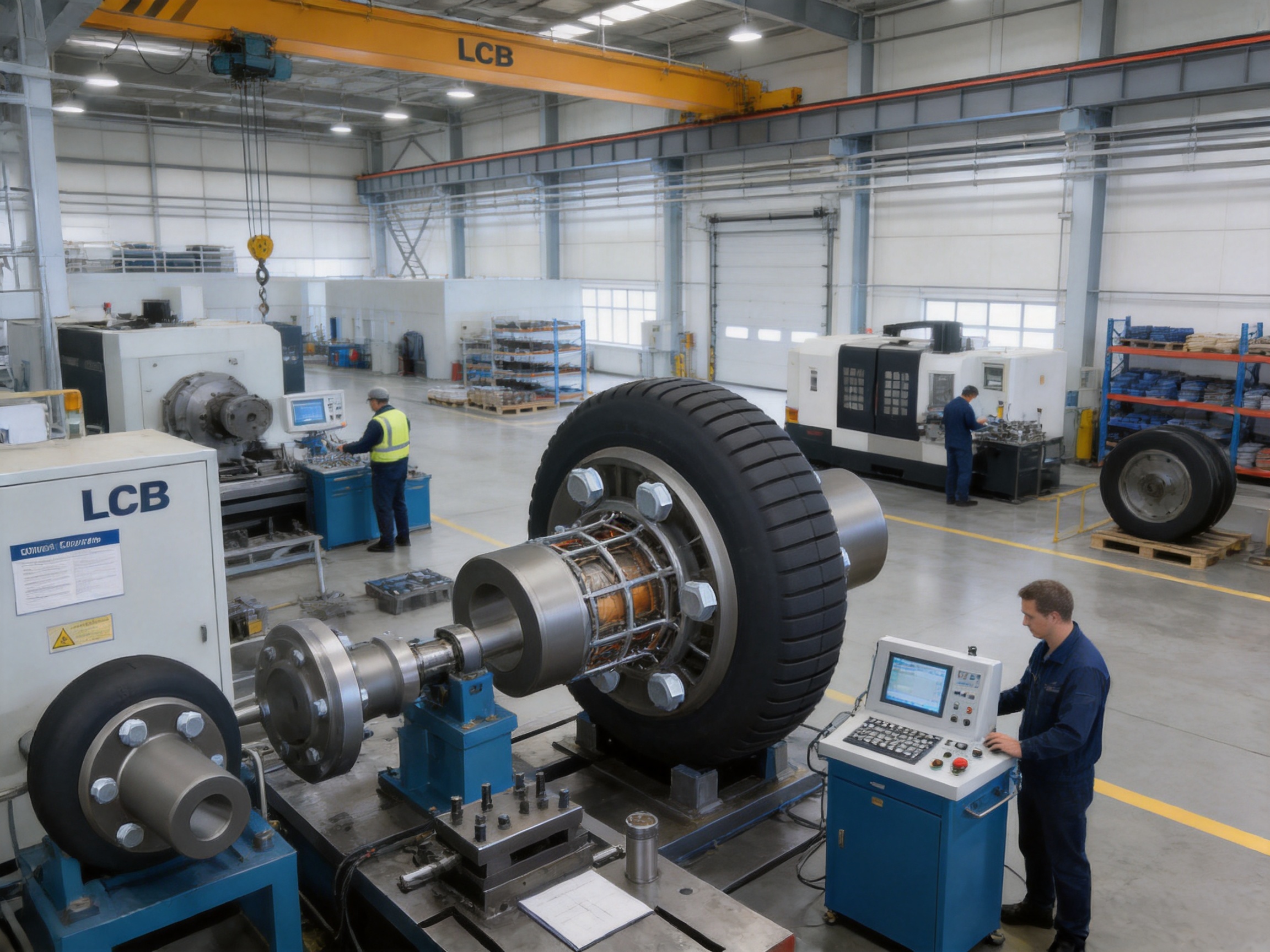
The company’s new workshop covers approximately 16,463.52 square meters. It includes a heavy workshop of approximately 5,500 square meters, a precision workshop of approximately 4,600 square meters, an office building and gymnasium, a dining facility, a warehouse, and supporting roads, green areas, and parking facilities.
The heavy workshop supports the production of larger coupling components and other industrial transmission parts. Large machining capacity is important because heavy-duty couplings require stable handling, accurate positioning, and sufficient equipment capacity for large hubs and assemblies.
The precision workshop supports the machining and inspection of components that require closer dimensional control. Coupling hubs must maintain accurate concentricity, bore geometry, face runout, and mating dimensions. Precision machining improves assembly quality and reduces the risk of vibration caused by dimensional variation.
A dedicated warehouse helps organize raw materials, semi-finished parts, flexible elements, finished goods, and replacement components. Proper material identification and storage are particularly important for elastomeric parts, which should be protected from inappropriate temperature, ultraviolet exposure, ozone, oils, solvents, and mechanical damage.
The company also emphasizes testing facilities and quality control. Testing is essential because coupling performance cannot be judged by appearance alone. A product may have correct external dimensions yet still suffer from material defects, poor balance, unsuitable hardness, incorrect reinforcement placement, or inadequate assembly. A systematic inspection process helps identify these risks before delivery.
7.1 Research and Development Capability
Coupling design is application-dependent. A coupling for a high-speed pump has different requirements from one for a steel rolling line, a mining conveyor, or a lifting machine. Research and development capability allows the supplier to evaluate torque, speed, misalignment, transient loads, temperature, installation space, and environmental conditions as a complete system.
The company supports the design and manufacture of non-standard couplings. This is important when standard catalog dimensions do not match an existing machine. Customized options may include special bore sizes, modified hub lengths, non-standard shaft-hole arrangements, different connection dimensions, altered installation clearances, or application-specific material requirements.
Customization should begin with complete operating data. The customer should provide motor power, speed, starting method, driven-machine torque, shaft diameters, shaft extensions, keyway details, alignment conditions, ambient temperature, and any chemical or environmental exposure. Accurate information helps the design team select a suitable size and avoid unnecessary oversizing or under-sizing.
7.2 Production and Quality Assurance
Consistent production depends on controlled procedures from order review to final shipment. The process may include technical confirmation, drawing review, material preparation, rough machining, heat treatment where applicable, precision machining, elastic-element production, cleaning, assembly, inspection, marking, packaging, and documentation.
Each stage influences final performance. For example, incorrect bore machining can create a poor shaft fit. Inadequate cleaning can affect assembly. Incorrect bolt tightening can cause uneven tire loading. Improper storage can damage the elastic element before the product reaches the customer. A strong quality system must therefore address the entire production chain rather than focus only on final appearance.
The company states that its products comply with international standards and certifications such as ISO 9001. A quality management system supports traceability, process consistency, corrective action, and continuous improvement. For industrial users, these controls can help reduce unplanned downtime and simplify supplier evaluation.
8. Application Areas
8.1 Metallurgical Equipment
Metallurgical machinery often combines high torque, shock loading, heat, dust, and continuous operation. Rolling mills, conveyors, fans, pumps, and auxiliary drives can all experience fluctuating loads and structural movement. The LCB coupling provides damping and misalignment compensation while the reinforced tire supports demanding mechanical conditions.
When used near hot equipment, the actual ambient and radiation temperature must be checked carefully. The coupling should be shielded from excessive heat and selected with a suitable elastic material. Proper guarding is also required to protect personnel from rotating parts and to prevent hot scale or debris from damaging the tire.
8.2 Petroleum and Process Equipment
Petroleum machinery and process equipment frequently operate continuously, making maintenance access and production reliability important. Pumps, compressors, fans, and auxiliary drives benefit from a coupling that does not require routine lubrication and that can damp torsional vibration.
In chemically aggressive environments, material compatibility must be confirmed. Oil, solvents, fuels, cleaning agents, and process chemicals may affect elastomeric materials. The tire should be protected from direct exposure where necessary, and the selected compound should match the environmental conditions specified by the equipment designer.
8.3 Heavy-Duty Pumping Systems
Pumping systems may experience hydraulic transients, frequent starts, motor torque fluctuations, and piping-induced movement. The LCB coupling can absorb part of the mechanical shock and accommodate small changes in shaft alignment. Its lubrication-free structure is suitable for pump stations where regular access to the coupling is inconvenient.
For vertical or unusual pump arrangements, the coupling orientation, axial load, guard design, and support conditions should be reviewed. A standard horizontal installation cannot automatically be transferred to every other configuration without engineering confirmation.
8.4 Mining and Conveying Machinery
Mining equipment is exposed to dust, impact, uneven loading, and difficult maintenance conditions. Crushers, conveyors, fans, pumps, and screening machines may place significant transient loads on the drive line. The damping characteristics of the tire help reduce shock transmission, while the reinforced structure improves resistance to deformation.
Protective covers should be used to limit contact with abrasive dust, stones, and external objects. Inspection intervals may need to be shortened where abrasive contamination or severe vibration is present.
8.5 Lifting Equipment
Lifting machinery requires controlled acceleration, reliable torque transmission, and protection against shock. The coupling can help moderate torque changes between the motor, gearbox, drum, and other drive components. However, lifting applications require a complete safety assessment. The coupling must be selected according to applicable lifting-equipment requirements, braking conditions, duty class, and failure consequences.
8.6 Paper and Water Equipment
Paper-making lines, water-treatment systems, and water-pumping installations often operate continuously and include numerous motor-driven machines. A low-maintenance coupling can reduce routine service requirements and help maintain stable operation. Its ability to compensate for displacement is useful where long equipment trains experience thermal or structural movement.
9. Selection Guide
Correct selection begins with the transmitted torque. The nominal torque of the coupling should not be matched directly to the motor’s average torque without applying an appropriate service factor. Starting torque, braking torque, load variation, shock, frequency of starts, and operating hours must all be considered.
The basic selection process should include the following information:
Motor or driver power and rated speed.
Driven-machine power demand and operating torque.
Starting, stopping, reversing, braking, and overload conditions.
Required coupling speed and direction of rotation.
Driving and driven shaft diameters.
Shaft extension lengths and available installation space.
Keyway, spline, shrink-fit, or other shaft connection requirements.
Expected radial, axial, and angular misalignment.
Ambient temperature and possible heat radiation.
Exposure to oil, solvents, water, dust, ozone, ultraviolet radiation, or corrosive chemicals.
Required service life, inspection interval, and replacement conditions.
After the torque and service conditions are established, the allowable speed must be checked. The selected coupling must operate below the applicable size rating. If the machine runs near the allowable speed, balance, runout, installation accuracy, and tire condition become especially important.
The shaft-hole diameter and length must then be verified. The bore must match the shaft without excessive clearance, and the keyway or other locking arrangement must transmit the required torque. The hub should not be forced onto the shaft by uncontrolled impact, because such installation can damage bearings or distort coupling components.
Installation space is another important consideration. The outside diameter, overall length, hub projections, guard dimensions, and access requirements should be checked against the machine layout. A coupling that fits the shaft may still be unsuitable if there is insufficient room for assembly or future tire replacement.
When the application involves unusual temperature, severe shock, vertical mounting, frequent reversing, or a high-consequence drive, technical review should be requested before final selection.
10. Installation and Alignment
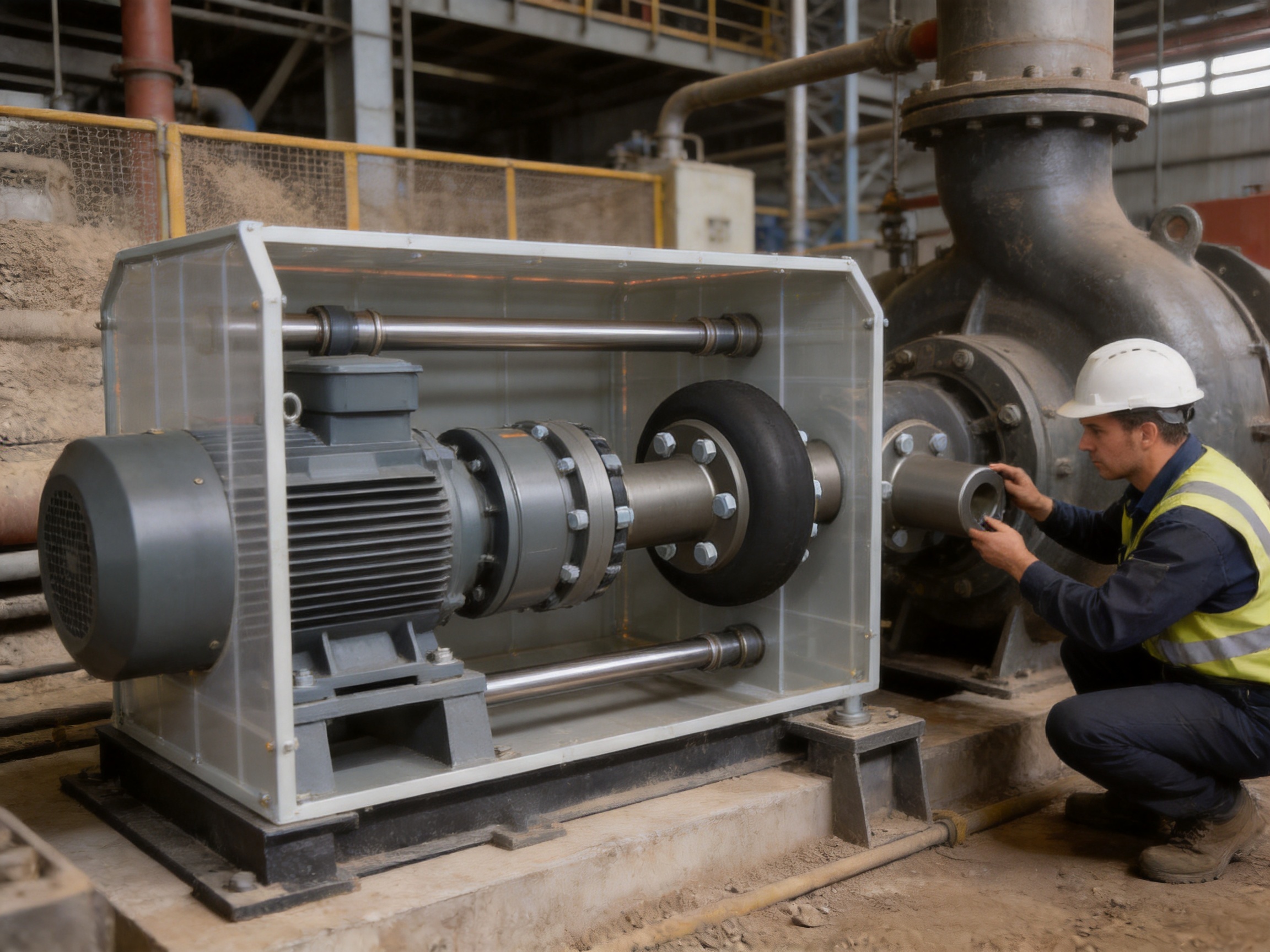
Before installation, inspect the hubs, tire, fasteners, shafts, keyways, and mounting surfaces. Remove rust, burrs, oil residues, and foreign particles from the shaft and bore. Confirm that the supplied parts correspond to the approved drawing and that the tire has not been damaged during storage or transport.
Install the hubs according to the specified shaft position and length. The hubs should be aligned with the required spacing between their faces or connection points. Do not rely on the coupling to correct large assembly errors. Excessive initial misalignment increases tire deformation and may significantly reduce service life.
Angular and parallel alignment should be checked using appropriate instruments. Dial indicators, laser alignment systems, straightedges, feeler gauges, or other suitable tools may be used depending on the equipment size and accuracy requirement. The alignment target should consider operating temperature, thermal growth, and manufacturer recommendations.
Fasteners should be tightened in a controlled sequence and to the specified torque. Uneven tightening can create non-uniform loading in the tire and may cause premature wear. After initial operation, the assembly should be rechecked for unusual noise, vibration, heat, loosening, or visible deformation.
Every rotating coupling must be fitted with an appropriate guard. The guard should prevent contact with rotating components while allowing sufficient ventilation and inspection access. It must not press against the tire or restrict the natural movement required for misalignment compensation.
11. Maintenance and Service Life
The LCB coupling is designed to reduce maintenance requirements, but periodic inspection remains necessary. The inspection interval should reflect the application severity, speed, operating hours, vibration level, and consequences of failure.
Inspect the tire for surface cracks, cuts, abrasion, hardening, softening, swelling, discoloration, exposed reinforcement, and abnormal wear. Small surface changes may indicate aging or chemical attack. Deep cracks, visible reinforcement, serious deformation, or separation between the tire and its connection area requires immediate technical evaluation.
Check the hubs for cracks, corrosion, fretting, keyway damage, and abnormal contact marks. Inspect bolts and locking devices for looseness. Confirm that there is no evidence of hub movement on the shafts.
Monitor operating temperature and vibration. A gradual rise in temperature may indicate excessive misalignment, overload, material deterioration, insufficient clearance, or abnormal tire deformation. A sudden change in vibration may indicate damage, imbalance, loosened fasteners, or a shaft-line problem.
Replacement should be based on condition as well as operating time. A tire may require replacement earlier than expected if the coupling has experienced overload, a blocked machine, severe misalignment, chemical contamination, excessive heat, or an impact event.
Replacement components should match the original specification. Mixing tires, hubs, fasteners, or materials from incompatible designs can change the stiffness, balance, and torque capability of the assembly.
12. Custom Engineering Support
Standard LCB sizes cover a useful range of nominal torque and shaft bores, but industrial machinery often includes unique constraints. Custom engineering is available for non-standard applications that require special dimensions or performance considerations.
Possible customization areas include special shaft diameters, non-standard bore combinations, alternative keyways, extended hubs, modified face dimensions, special mounting arrangements, and application-specific materials. The actual feasibility depends on torque, speed, available space, production capability, and quality requirements.
A professional technical review can also compare the LCB design with other coupling types. A metal elastic coupling may be more suitable for very high temperature or certain torsional stiffness requirements. A diaphragm coupling may be appropriate where low backlash and high torsional precision are essential. A safety coupling may be required where overload disconnection is a priority. A rigid coupling may be selected where shafts are permanently aligned and no flexibility is required.
The appropriate coupling is therefore determined by the complete operating system, not by nominal torque alone. The supplier’s experience across multiple coupling categories supports more balanced recommendations and reduces the risk of selecting a product only because it appears mechanically similar.
13. Competitive Value of the LCB Design
The LCB type tire coupling offers a practical combination of features that is difficult to achieve with a single rigid or lightly flexible connection. Its reinforced tire supports high load and high-speed stability, while the non-metallic elastic body provides damping and misalignment compensation.
Compared with rigid couplings, it is more tolerant of installation and operating displacement. Compared with many metallic flexible couplings, it provides stronger elastic damping and simpler lubrication requirements. Compared with an unreinforced tire coupling, the built-in skeleton improves tensile strength, resistance to centrifugal force, and geometric stability.
Its value is especially clear in equipment where unplanned downtime is expensive. A coupling that reduces vibration, tolerates normal shaft movement, and requires no routine lubrication can reduce both direct maintenance work and secondary damage to bearings, shafts, gears, and machine foundations.
At the same time, responsible engineering requires recognizing the limits of the product. The LCB coupling is not a solution for severe misalignment, uncontrolled overload, unsuitable temperature, incompatible chemicals, or inadequate guarding. Its advantages are realized when the size, material, installation, and operating environment are correctly matched.
14. Frequently Asked Questions
What is an LCB type tire coupling?
An LCB type tire coupling is a flexible shaft coupling with a non-metallic elastic tire element and an integrated skeleton reinforcement structure. It connects two shafts, transmits torque, compensates for radial, axial, and angular displacement, and helps absorb vibration and shock.
How is the LCB design different from a frameless tire coupling?
The LCB design includes a built-in skeleton reinforcement structure inside the tire body. This reinforcement improves tensile strength, load-bearing capacity, resistance to centrifugal force, and geometric stability during high-speed operation.
Does the coupling require lubrication?
No routine lubrication of the tire element is required. However, the coupling still requires periodic inspection of the tire, hubs, fasteners, shaft connections, alignment, and operating condition.
Can the coupling compensate for all types of misalignment?
The LCB coupling can compensate for radial, axial, and angular displacement. It should not be used to correct large installation errors. Shafts should be aligned as accurately as possible so that the coupling handles normal operating movement rather than excessive permanent misalignment.
What torque range is available?
The listed LCB range includes nominal torque values from approximately 10 N·m for LCB1 to 800 N·m for LCB8. The correct model depends on service factor, speed, load variation, shaft size, and the complete operating environment.
What speeds can the LCB coupling handle?
The listed allowable speeds range from approximately 2,600 to 5,000 r/min, depending on size. Smaller models generally have higher allowable speeds, while larger models have lower speed ratings. The selected model must remain within its specified allowable speed.
Can the LCB coupling be used in high-temperature areas?
It may be used in warm environments if the tire material and actual operating temperature are suitable. Heat radiation, surrounding temperature, and contact with hot surfaces must be evaluated. A special material or protective arrangement may be required for severe thermal conditions.
Is the product suitable for pumps?
Yes. The coupling is suitable for many heavy-duty pumping systems because it provides damping, misalignment compensation, and lubrication-free operation. Pump alignment, hydraulic transients, shaft dimensions, temperature, and installation orientation should be reviewed before selection.
Can special shaft holes be manufactured?
Customized shaft holes and other non-standard dimensions can be evaluated. Customers should provide shaft diameters, keyway information, shaft extensions, required hub dimensions, torque, speed, and installation constraints.
What should be checked before placing an order?
Confirm the required torque, service factor, speed, shaft diameters, shaft-hole lengths, keyways, shaft spacing, allowable misalignment, ambient conditions, chemical exposure, installation orientation, and available guard space. The restriction concerning the simultaneous use of Z1 shaft holes should also be considered.
How often should the tire be replaced?
There is no universal replacement interval because service life depends on load, speed, alignment, temperature, environment, starts and stops, and maintenance quality. Replace the tire when inspection reveals cracking, severe wear, hardening, swelling, exposed reinforcement, abnormal deformation, or other evidence of deterioration.
What industries does the manufacturer serve?
The manufacturer serves metallurgical, mining, petroleum, water, lifting, paper, port, and general industrial equipment sectors. It also provides design and manufacturing support for non-standard coupling requirements.
15. Conclusion
The LCB type tire coupling is a robust solution for industrial power transmission where high load, vibration, shaft movement, and maintenance limitations must be addressed together. Its reinforced tire structure provides greater tensile strength and resistance to centrifugal deformation than a frameless design. Its elastic non-metallic body compensates for radial, axial, and angular displacement while absorbing impact and suppressing torsional vibration.
The product range covers nominal torque values from 10 to 800 N·m and allowable speeds from approximately 2,600 to 5,000 r/min, depending on model size. Its lubrication-free design simplifies routine care, while its flexible construction helps protect connected equipment from shock and misalignment.
The manufacturing strength behind the product is equally important. Research and development capability, heavy and precision workshops, testing facilities, quality control procedures, customization support, and experience across many coupling categories enable the supplier to provide more than a standard catalog component. Customers can obtain technical assistance for model selection, special shaft arrangements, non-standard designs, and complete coupling solutions.
For the best result, the coupling should be selected as part of the complete drive system. Correct torque calculation, service-factor evaluation, speed verification, shaft measurement, alignment, material compatibility, guarding, and periodic inspection are essential. When these conditions are properly managed, the LCB type tire coupling can provide dependable, low-maintenance service in demanding industrial applications.
References
Q/YC 34010X-2018, Technical Specification for LCB Type Tire Couplings.
ISO 9001, Quality Management Systems—Requirements.
AGMA, Flexible Couplings—General Selection and Application Principles.
Machinery’s Handbook, Couplings, Shaft Alignment, and Mechanical Power Transmission Practices.
Industrial Rubber Products Engineering, Elastomer Selection, Fatigue, Aging, and Environmental Compatibility.
Manufacturer’s LCB Type Tire Coupling Basic Parameter Data and Product Information.
Product: LCB type tire coupling(Q/YC 34010X-2018)

- Quick Links
- About
- Products
- Our Service
- News & Events
- Contact
- Products Series
- Flexible Couplings with Non-Elastic Elements
- Flexible Couplings with Metal Elastic Elements
- Flexible Couplings with Non-Metallic Elastic Elements
- Safety Coupling
- Rigid Coupling
- Contact Us
- Tel : +86 511 8572 3800 +86 511 8572 3900
- Mobile : +86 15106109009
- Email : sales@couplingzy.com
- Add:No.1 Zhongye Yingbin Avenue, Gaozi Street, Dantu Economic Development Zone, Zhenjiang City, Jiangsu Province, China.


