:+86 15106109009
:sales@couplingzy.com


 English
  русский
  Español
  عربى
عربى  Português
  Deutsch
  Türk
Türk  Indonesia

T31 Snake Spring Coupling with Double Flange: High-Reliability Torque Transmission for Demanding Industrial Systems
Content
- 1 What Is a T31 Snake Spring Coupling?
- 2 Core Construction and Operating Principle
- 3 Principal Technical Characteristics
- 4 Advantages Compared with Other Coupling Solutions
- 5 Torque Transmission and Shock Absorption
- 6 Vibration and Noise Reduction
- 7 Misalignment Compensation and Equipment Protection
- 8 Temperature Range and Industrial Adaptability
- 9 Applications Across Heavy Industry
- 10 Modular Design and Maintenance Benefits
- 11 Manufacturing Process and Quality Strengths
- 12 Quality Management and Production Reliability
- 13 Selection Guide for Engineers and Buyers
- 13.1 Step One: Determine the Required Torque
- 13.2 Step Two: Check Rotational Speed
- 13.3 Step Three: Measure Shaft and Installation Dimensions
- 13.4 Step Four: Evaluate Misalignment
- 13.5 Step Five: Review the Environment
- 13.6 Step Six: Consider Maintenance Access
- 13.7 Step Seven: Confirm Documentation and Support
- 14 Installation Recommendations
- 15 Maintenance and Troubleshooting
- 16 Customization and Non-Standard Engineering
- 17 Why Choose an Experienced Coupling Manufacturer?
- 18 Total Cost of Ownership
- 19 Safety Considerations
- 20 Frequently Asked Questions
- 20.1 What type of coupling is the T31?
- 20.2 What is the stated torque range?
- 20.3 How much misalignment can it compensate for?
- 20.4 Is the T31 suitable for high-shock applications?
- 20.5 How does it compare with an elastomeric coupling?
- 20.6 How does it compare with a rigid coupling?
- 20.7 Does the coupling eliminate the need for shaft alignment?
- 20.8 What temperature range is specified?
- 20.9 Can the T31 be customized?
- 20.10 What information should be supplied for a quotation?
- 20.11 What maintenance is required?
- 20.12 Where is the coupling manufactured and supplied from?
- 21 Conclusion
- 22 References
- 23 Product: T31 snake spring coupling with double flange
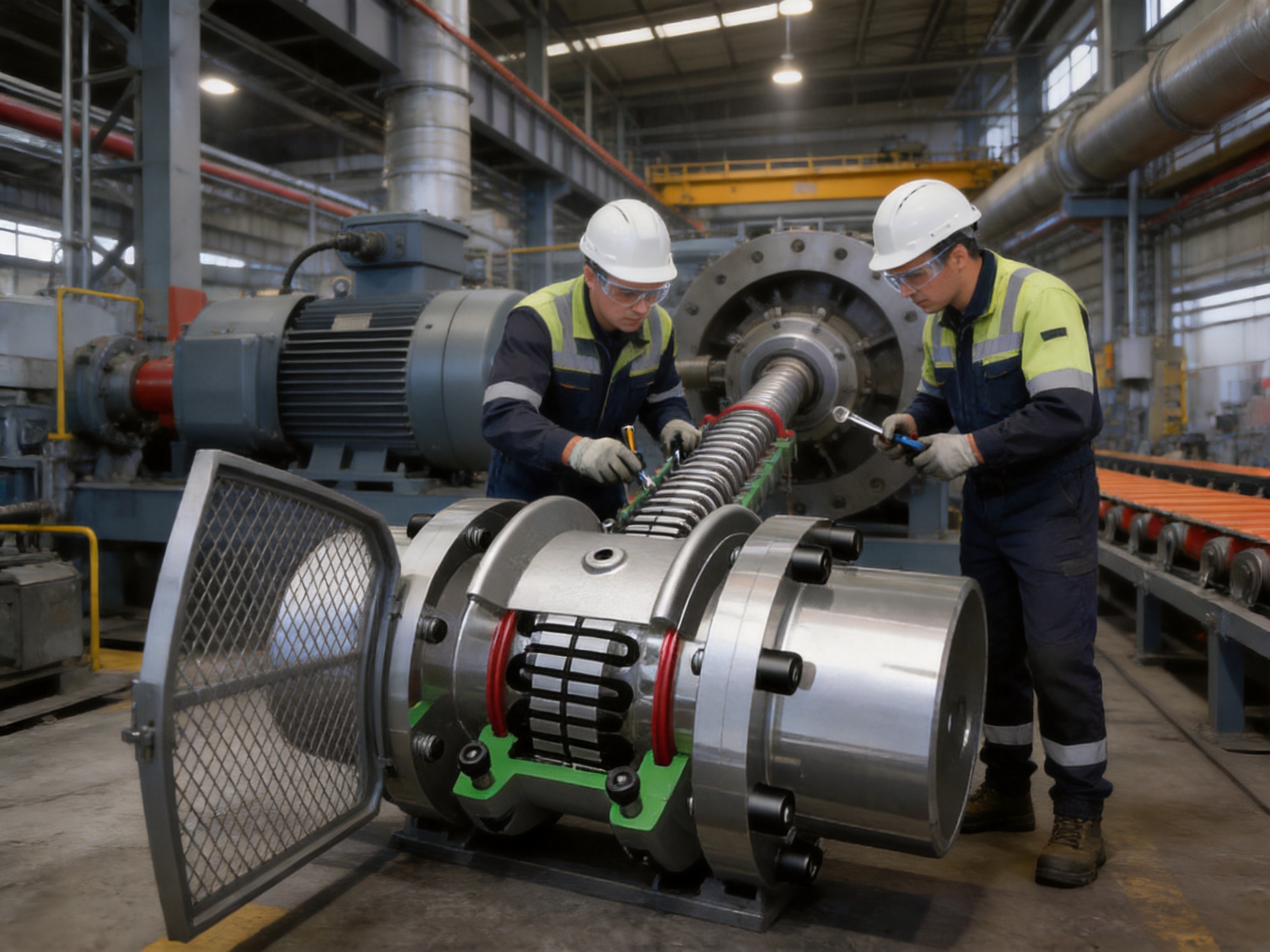
Industrial power transmission systems must operate reliably despite vibration, shock loads, shaft misalignment, temperature changes, and repeated start-stop cycles. A coupling is positioned between two shafts, but its influence extends throughout the entire machine. The correct coupling can protect motors, pumps, reducers, compressors, mixers, crushers, conveyors, and other connected equipment from damaging loads. The wrong coupling may increase vibration, accelerate bearing wear, create excessive noise, and cause unplanned downtime.
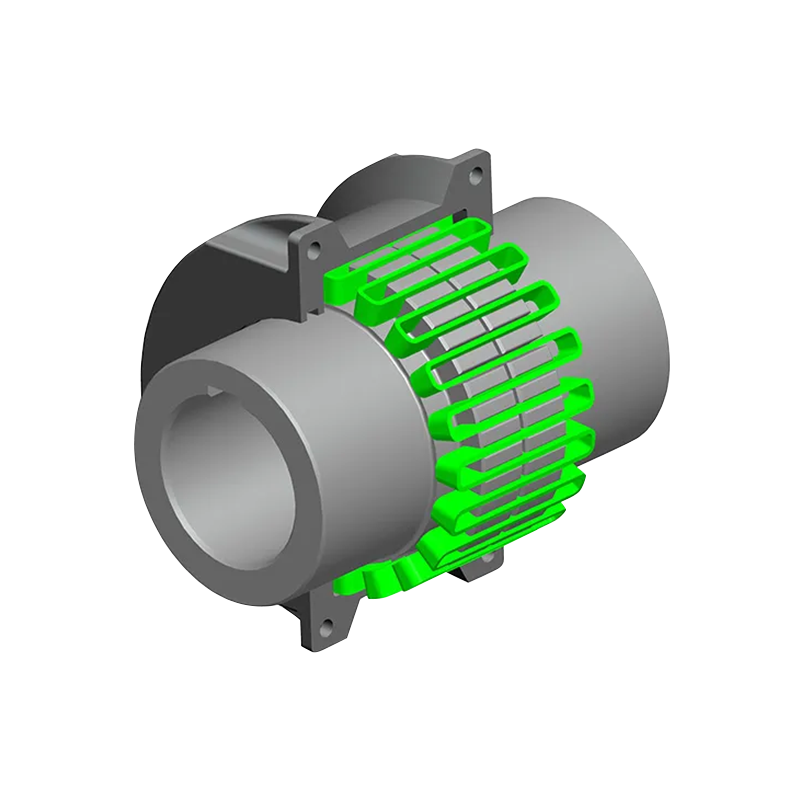
The T31 snake spring coupling with double flange is a flexible coupling with a metal elastic element developed for demanding industrial applications. It combines a serpentine spring with a robust double-flange construction to transmit torque while accommodating shaft misalignment and absorbing mechanical shock. With a stated torque range of approximately 100 Nm to 10,000 Nm, the coupling is suitable for a broad selection of medium- and heavy-duty drive systems.
Unlike a rigid coupling, the T31 is not intended to force two shafts into perfect alignment under every operating condition. Instead, it permits controlled movement between the driving and driven shafts. Unlike many couplings that depend on soft non-metallic components, its spring element is made from high-strength steel or alloy material, giving it strong fatigue resistance and improved suitability for industrial environments. This combination of flexibility, durability, and maintainability makes the T31 a practical choice for equipment manufacturers, plant engineers, maintenance teams, and industrial coupling buyers.
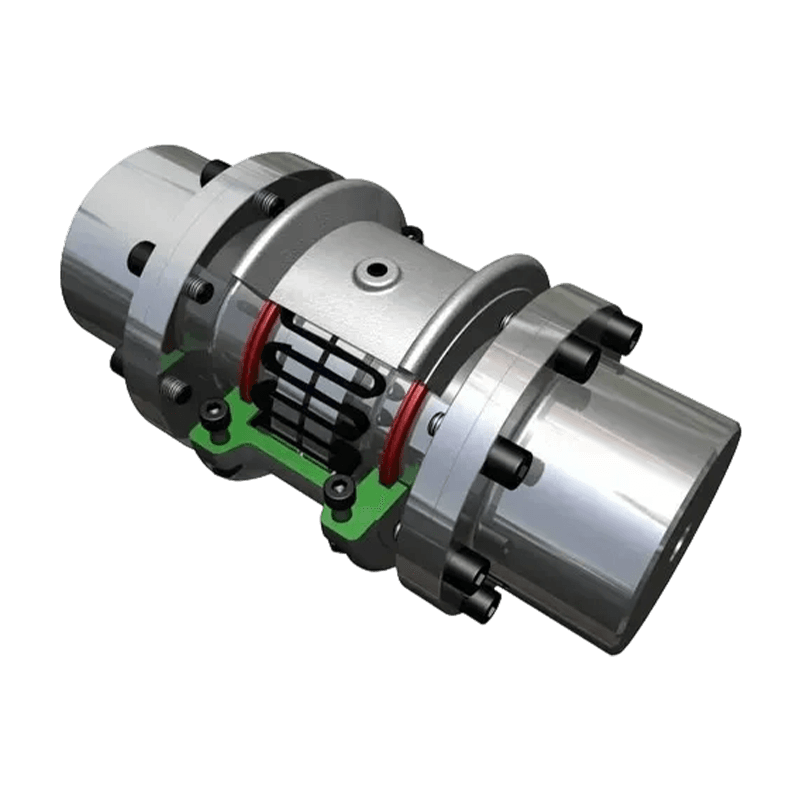
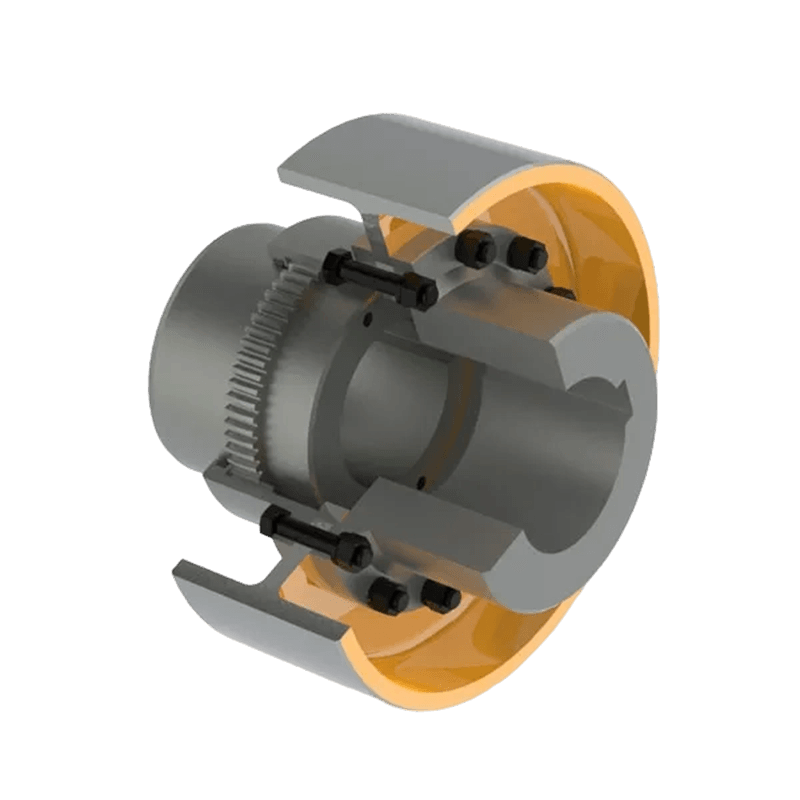
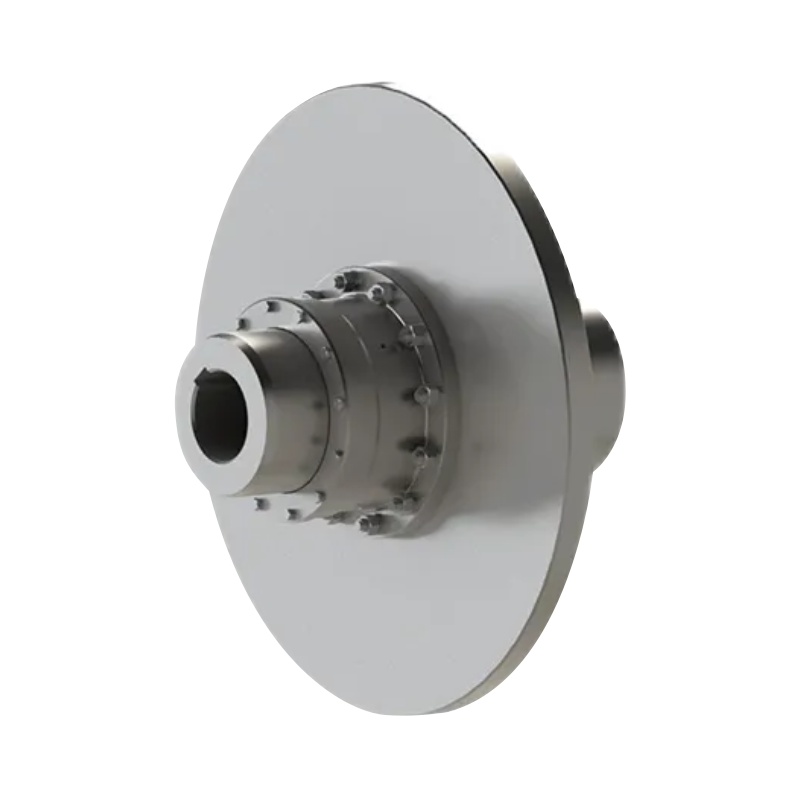
T31 snake spring coupling with double flange
What Is a T31 Snake Spring Coupling?
A snake spring coupling is a mechanical shaft coupling that uses a specially formed spring grid or serpentine spring as its flexible transmission element. The spring is positioned between two hubs or flanges. When torque is applied, the spring transmits rotational force from the driving shaft to the driven shaft. At the same time, the spring can flex slightly to absorb torsional shock and accommodate limited angular, radial, and axial movement.
The T31 configuration uses a double-flange structure. This design provides two substantial connection interfaces around the flexible spring element. The flanges help support the transmission components, maintain the relative position of the hubs, and provide a stable connection between the shafts. The resulting assembly is appropriate for systems in which the coupling must withstand substantial torque and repeated mechanical loading.
The serpentine spring is the central functional component. Its curved shape allows it to deform elastically rather than transmitting every sudden load as a rigid impact. When equipment starts, stops, reverses, or experiences a temporary load increase, the spring can absorb part of the resulting energy. This reduces the severity of torque spikes and helps protect connected machinery.
The coupling is therefore more than a simple shaft connector. It functions as a mechanical interface that supports torque transmission, vibration control, misalignment compensation, and protection of the overall drive train. The coupling does not eliminate the need for correct shaft alignment, but it provides a valuable operating margin when small alignment changes occur during installation or service.
Core Construction and Operating Principle
Double-Flange Architecture
The double-flange arrangement gives the T31 a strong and stable mechanical structure. Each flange is connected to one side of the drive system, while the spring element bridges the two sides. The flanges distribute transmitted forces across the assembly and help maintain a secure connection between the shafts.
Compared with a light-duty single-interface coupling, a double-flange configuration can offer better structural support for applications involving significant torque, frequent load variation, or high equipment inertia. The arrangement also makes it easier to adapt the coupling to different shaft ends, bore dimensions, keyways, and installation arrangements when customized engineering is required.
Serpentine Metal Spring
The serpentine spring is manufactured from high-strength steel or alloy material. Its geometry is designed to combine flexibility with load-carrying capacity. The spring can deflect under changing loads, while the metal construction provides resistance to fatigue, wear, and temperature-related deterioration.
The spring element also serves as a vibration-damping interface. When torsional oscillation travels through the drive train, the spring can absorb and redistribute part of the energy. This helps reduce the transmission of sharp torque impulses to the motor, gearbox, pump, or other driven equipment.
A metal spring is particularly useful in industrial installations where oil mist, dust, heat, or continuous operation may challenge elastomeric components. While every application must be evaluated according to its environmental conditions, a properly selected metal spring coupling can offer a long service life where non-metallic elastic elements may require more frequent replacement.
Controlled Flexibility
The T31 is designed to provide controlled flexibility rather than unrestricted movement. The stated compensation capabilities are up to 3 degrees of angular misalignment, 1 mm of radial displacement, and 2 mm of axial displacement. These values should be treated as application guidance and verified against the final size, speed, torque, operating conditions, and manufacturer data before selection.
Angular misalignment occurs when the centerlines of the two shafts intersect at an angle. Radial misalignment occurs when the centerlines are parallel but offset. Axial displacement occurs when the shafts move toward or away from one another along their common axis. These conditions can develop because of installation tolerances, thermal expansion, foundation movement, bearing clearance, or changes in operating load.
By allowing limited compensation, the coupling reduces the amount of bending and additional bearing load generated by small shaft-position changes. It is important to understand that flexibility is not a substitute for alignment. Excessive misalignment can overload the spring, increase wear, and shorten the service life of both the coupling and the connected equipment.
Principal Technical Characteristics
| Characteristic | Stated or Typical Value | Engineering Significance |
|---|---|---|
| Product type | Flexible coupling with metal elastic element | Provides torque transmission with controlled flexibility and shock absorption |
| Configuration | T31 double-flange snake spring coupling | Offers a stable, robust connection for industrial drive systems |
| Torque range | Approximately 100 Nm to 10,000 Nm | Supports a wide range of medium- and heavy-duty applications |
| Angular compensation | Up to 3 degrees | Accommodates limited angular shaft misalignment |
| Radial displacement | Up to 1 mm | Allows limited parallel offset between shafts |
| Axial displacement | Up to 2 mm | Allows limited movement along the shaft axis |
| Operating temperature | Approximately -30 °C to 120 °C | Supports use across a broad industrial temperature range |
| Elastic element | High-strength steel or alloy serpentine spring | Provides strength, fatigue resistance, and long-term mechanical stability |
| Maintenance approach | Modular inspection and replacement | Helps reduce service time and equipment downtime |
The values in this table summarize the supplied product information. Final operating limits depend on coupling size, rotational speed, load pattern, bore arrangement, environmental conditions, and the technical specification approved for a particular order.
Advantages Compared with Other Coupling Solutions
Compared with Rigid Couplings
Rigid couplings provide a solid connection between two shafts and are suitable when the shafts are precisely aligned and expected to remain aligned. They are simple and can transmit torque efficiently, but they offer little or no capacity to absorb misalignment or torsional shock. Even small installation errors may create additional loads on bearings and connected equipment.
The T31 provides a more forgiving connection. Its spring element can accommodate limited angular, radial, and axial movement while reducing the transmission of sudden torque changes. This is especially valuable in systems where thermal expansion, foundation movement, or changing process loads make perfect alignment difficult to maintain throughout the operating cycle.
Compared with Non-Metallic Elastomeric Couplings
Elastomeric couplings use rubber, polyurethane, or another flexible non-metallic material. They are often compact and effective in moderate-duty applications. However, the performance of an elastomer can be influenced by temperature, chemical exposure, aging, compression set, and repeated loading.
The T31 uses a metal elastic element instead of relying primarily on an elastomer. This can improve resistance to fatigue and temperature variation in demanding industrial service. The stated temperature range of approximately -30 °C to 120 °C makes the design suitable for many indoor and outdoor operating environments, subject to confirmation of the specific material and application conditions.
A metal spring coupling may also be preferable when the drive system experiences frequent starts, stops, impact loads, or high inertia. The spring can flex repeatedly while maintaining its mechanical function. Correct sizing remains essential, because even a durable metal element will be damaged by excessive torque, speed, misalignment, or improper installation.
Compared with Diaphragm Couplings
Diaphragm couplings use thin metallic diaphragms to transmit torque and accommodate misalignment. They are valued for high-speed operation, low backlash, and precise motion transmission. They can be an excellent choice for turbines, compressors, and other specialized systems.
The T31 snake spring coupling has a different design emphasis. Its serpentine spring is particularly suited to absorbing torsional vibration and shock in industrial machinery with variable loads. Applications such as crushers, mixers, conveyors, pumps, and heavy process equipment may benefit from the spring’s damping action and accessible modular construction.
The preferred coupling should be selected according to speed, torque, misalignment, torsional behavior, maintenance requirements, and environmental conditions. The T31 is not intended to replace every coupling type; its advantage is the combination of robust torque transmission, metal spring flexibility, shock absorption, and practical serviceability.
Compared with Gear Couplings
Gear couplings can transmit high torque in a compact package, but their gear teeth and lubrication requirements may increase maintenance demands. Tooth wear, inadequate lubrication, contamination, and seal deterioration can influence service life.
The T31 can offer a simpler maintenance routine because its flexible spring element provides the required compensation without relying on a large number of sliding gear teeth. Depending on the specific design and enclosure, inspection and replacement of the spring can be more straightforward. This is a major consideration for plants that prioritize reduced downtime and predictable maintenance scheduling.
Torque Transmission and Shock Absorption
The primary responsibility of a coupling is to transmit torque reliably. The T31’s stated torque range of approximately 100 Nm to 10,000 Nm covers many industrial power transmission requirements. However, nominal torque alone is not sufficient for selection. Engineers must consider service factors, starting torque, peak torque, braking loads, reversing operation, motor characteristics, driven inertia, and the number of operating cycles.
A motor may produce a different torque profile during acceleration than during steady operation. A crusher may experience sudden impact loading when material enters the crushing chamber. A mixer may require additional torque as product viscosity changes. A pump may experience transient loads during startup or valve operation. The coupling must be capable of handling these conditions without excessive spring deflection or fatigue.
The serpentine spring helps moderate these events. During a sudden torque increase, the spring flexes and absorbs part of the impact. This can reduce the peak torque transmitted to the connected shafts. During normal operation, the spring returns toward its original position and continues to transmit rotational force.
Shock absorption can provide several system-level benefits. It may reduce coupling and shaft stress, lower the likelihood of keyway damage, protect gearbox teeth, reduce bearing loading, and improve the operating smoothness of the machine. It can also help reduce audible mechanical noise created by sudden changes in torque.
These benefits depend on correct selection. A coupling that is too small may fatigue prematurely, while one that is significantly oversized may provide less effective flexibility or create unnecessary cost and installation difficulty. The best selection balances torque capacity, speed, bore size, misalignment, service factor, and the desired torsional response.
Vibration and Noise Reduction
Vibration is one of the most common causes of industrial equipment deterioration. Excessive vibration can damage bearings, loosen fasteners, reduce seal life, create shaft fatigue, and interfere with the operation of sensors or precision components. It can also increase noise levels and make it more difficult for operators to identify developing faults.
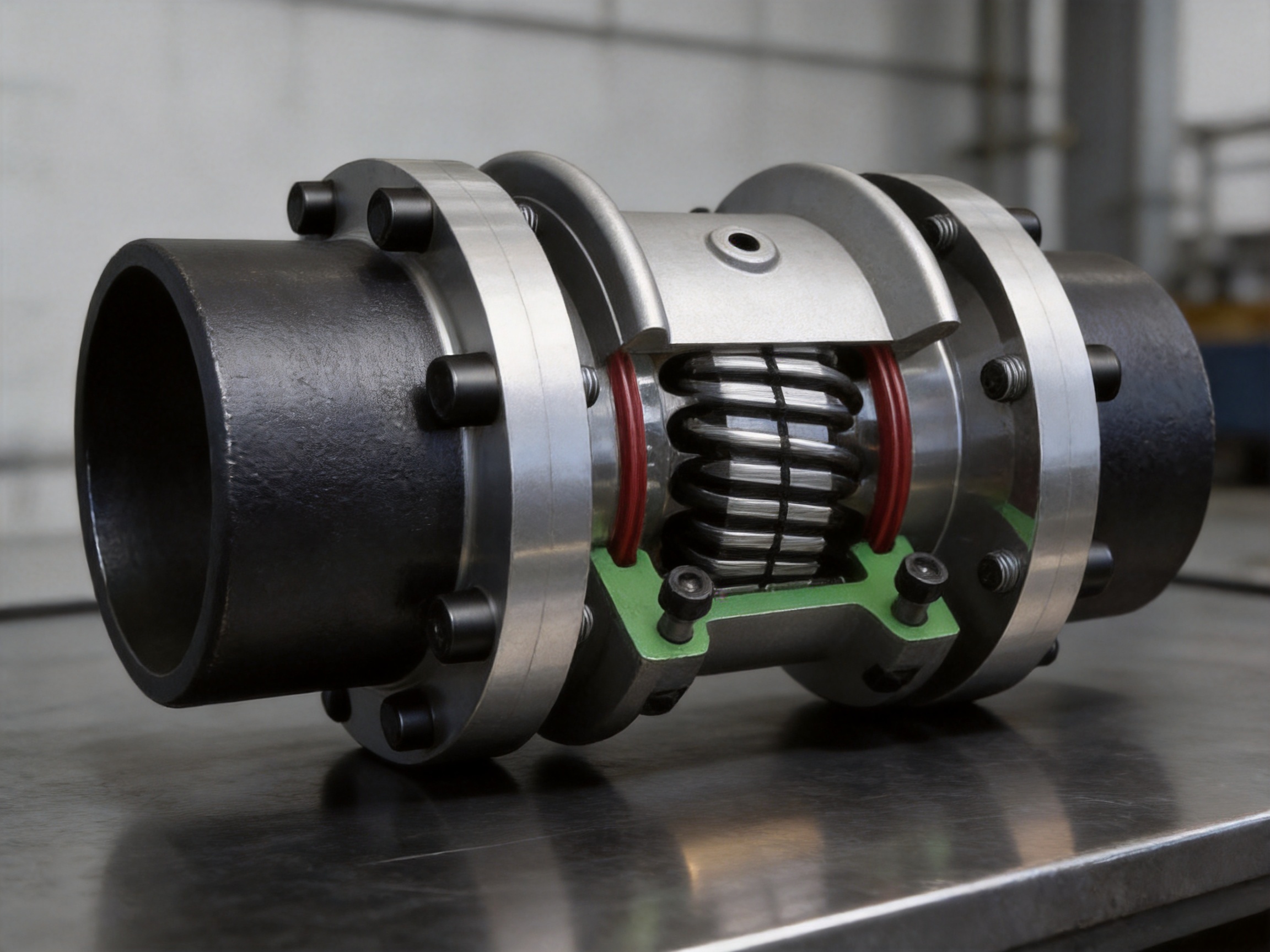
The T31 contributes to vibration control through the elastic deformation of its metal spring. Rather than passing every torsional fluctuation directly from one shaft to the other, the spring provides a degree of mechanical compliance. This helps smooth the transfer of power and reduce the severity of intermittent load changes.
Noise reduction is a related benefit. When impact loads and torsional oscillations are moderated, the connected machinery may operate with less rattling, knocking, and structural resonance. The actual noise level depends on the complete machine, including the motor, gearbox, foundation, bearings, guards, and process conditions. Nevertheless, a properly selected flexible coupling can make an important contribution to quieter operation.
For condition monitoring, reduced vibration also has practical value. A stable coupling can make it easier to distinguish normal operating vibration from abnormal signatures caused by imbalance, misalignment, bearing damage, or gear defects. The coupling should not be used to conceal a serious alignment or equipment problem, but it can reduce the background mechanical disturbance in a properly maintained system.
Misalignment Compensation and Equipment Protection
Perfect shaft alignment is difficult to maintain in real industrial environments. During installation, the motor may shift slightly as foundation bolts are tightened. During operation, the motor and driven machine may expand at different rates. A pump casing may move under thermal or hydraulic forces. A long shaft train may experience small changes caused by load, temperature, or structural movement.
The T31 is designed to accommodate up to 3 degrees of angular deviation, 1 mm of radial displacement, and 2 mm of axial displacement. These capabilities provide a degree of tolerance for normal operating movement. They also reduce the risk that small alignment changes will immediately generate excessive forces at the shaft ends.
Misalignment compensation protects more than the coupling itself. It can help lower additional radial and axial loading on motor bearings, pump bearings, reducer bearings, and other support components. It can also reduce bending stress in the shafts and help protect mechanical seals and connected housings.
Although the coupling can compensate for limited misalignment, alignment procedures remain essential. Shafts should be aligned using suitable measuring equipment, and the final alignment should consider the expected operating temperature. Flexible couplings perform best when they are used within their specified compensation range rather than being treated as a solution for poor installation.
Temperature Range and Industrial Adaptability
The stated operating temperature range of approximately -30 °C to 120 °C allows the T31 to serve in many industrial settings. This range covers cold outdoor installations, general factory environments, and equipment exposed to moderate process heat.
Temperature affects all mechanical components. Lubricants may change viscosity, clearances may vary, and materials may expand or contract. The metal spring element is well suited to applications where consistent mechanical performance is needed across changing temperatures. The flange, hub, fastener, coating, and any enclosure or lubricant must also be selected for the actual environment.
In cold environments, installation and startup procedures should account for material contraction and increased lubricant viscosity where applicable. In hot environments, engineers should evaluate heat transfer from nearby equipment, radiant heat, process temperature, and ventilation. If the coupling is installed in an area exposed to chemicals, water, abrasive dust, or corrosive atmosphere, suitable materials and protective finishes should be specified.
The broad operating range increases application flexibility, but it does not remove the need for a complete environmental review. A coupling used in a steel plant, mining installation, port facility, water-treatment plant, or oil and gas application may require different surface treatments, sealing provisions, materials, or inspection intervals.
Applications Across Heavy Industry
Manufacturing Equipment
Manufacturing lines often contain motors, gear reducers, conveyors, rollers, pumps, fans, and mixers. Many of these machines operate continuously and are expected to maintain stable production output. The T31 can help connect drive components while accommodating small alignment changes and reducing load shocks.
Its modular construction is useful in plants where maintenance teams need to replace a flexible element without dismantling an extensive shaft train. Faster service can reduce production losses and improve maintenance planning.
Power and Utility Equipment
Power-related equipment may include pumps, fans, auxiliary drives, cooling systems, and material-handling machinery. Reliable coupling performance is important because the failure of an auxiliary drive can affect the availability of a larger system.
The T31’s metal spring and robust flange arrangement can support applications involving repeated operation and fluctuating loads. The final choice should consider rotational speed, motor starting characteristics, emergency shutdown loads, and the consequences of coupling failure.
Oil and Gas Equipment
Oil and gas facilities commonly use pumps, compressors, mixers, fans, and transfer equipment. These systems may operate in challenging environments with temperature variation, dust, vibration, and strict maintenance requirements.
The T31 may be selected for suitable non-hazardous or properly certified equipment applications where its torque, temperature, and material specifications meet project requirements. For hazardous areas, buyers must confirm all applicable requirements for equipment classification, guarding, static control, certification, and site safety procedures.
Mining and Mineral Processing
Mining machinery is frequently exposed to heavy loads, impact, dust, and difficult access. Crushers, conveyors, screens, feeders, mills, and mixers can generate substantial torque changes during operation. A flexible metal spring coupling can help absorb these changes and protect the drive train.
The T31 is particularly relevant to systems where shock loading and maintenance access are major concerns. Its application should be based on the actual duty cycle and not only on the motor’s rated power. Equipment such as crushers may require a high service factor because material entry can generate short-duration torque peaks.
Water and Pumping Equipment
Pumps used in water supply, wastewater treatment, irrigation, cooling, and industrial processes may experience frequent starts and stops. Misalignment can develop because of pipe strain, foundation movement, temperature change, or maintenance activity.
The T31 can provide a flexible connection between a motor and pump while helping reduce the transmission of torsional shocks. Proper pipe support, baseplate alignment, soft-foot correction, and coupling installation remain important for reliable pump operation.
Port, Marine, and Shipboard Systems
Port equipment and shipboard machinery may require compact and dependable power transmission components. Conveyors, winches, pumps, mixers, and propulsion-related auxiliary systems can all benefit from controlled flexibility and shock absorption.
Marine applications require special consideration of corrosion, humidity, vibration, classification rules, and available maintenance space. The material, coating, fasteners, and installation method should be agreed upon during the engineering stage.
Modular Design and Maintenance Benefits
One of the practical strengths of the T31 design is its modular construction. A coupling is often installed in a location where downtime is expensive and access is restricted. If maintenance requires removal of multiple machines or extensive shaft disassembly, even a small component failure can lead to a major production interruption.
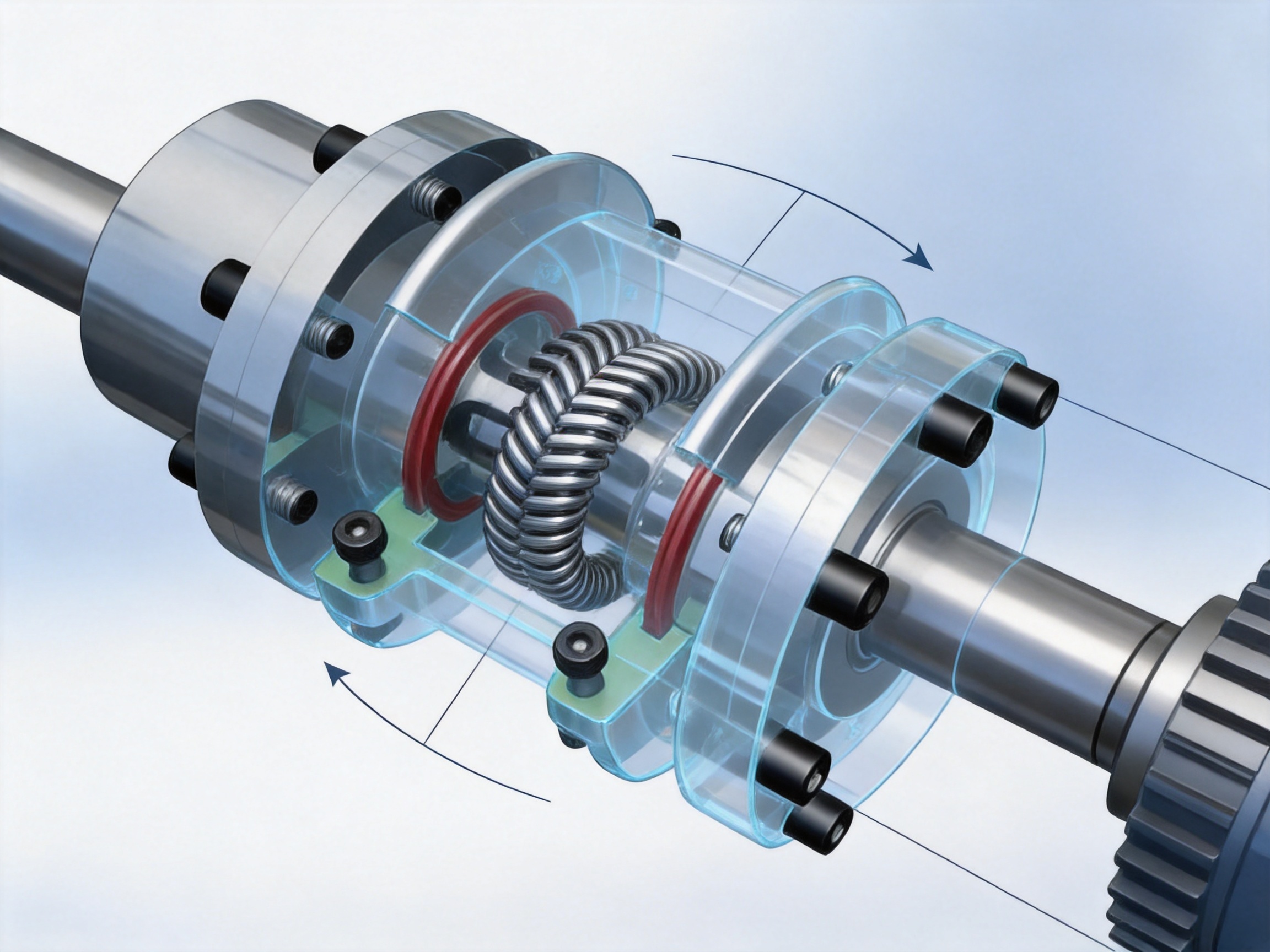
A modular coupling allows maintenance teams to inspect the spring, flanges, hubs, fasteners, and associated components in an organized manner. Depending on the installation arrangement, the spring element may be replaceable without removing the motor or driven machine from its foundation. This can shorten repair time and simplify the restoration of production.
Routine maintenance should include visual inspection for spring deformation, cracks, corrosion, unusual wear, loose fasteners, fretting, contact marks, and evidence of excessive misalignment. The coupling guard should be removed only under appropriate lockout and safety procedures. Inspection frequency should be based on operating hours, load severity, vibration history, environmental exposure, and the criticality of the machine.
Maintenance teams should also inspect the connected shafts and keyways. Damage in a shaft or keyway may be incorrectly attributed to the coupling. A complete inspection helps identify the true cause of abnormal operation and prevents repeated failures.
Manufacturing Process and Quality Strengths
The performance of a snake spring coupling depends on much more than its design concept. Material quality, dimensional accuracy, heat treatment, machining, spring forming, balancing, surface protection, and final inspection all influence service life. A manufacturer with integrated research, development, production, and sales capabilities can coordinate these stages more effectively.
Engineering and Product Development
The manufacturing organization behind the T31 integrates research and development with production and technical sales. This structure supports the development of standard and customized couplings for metallurgical equipment, mining machinery, water equipment, lifting systems, paper machinery, port equipment, and other industrial applications.
Engineering work begins with understanding the application. Important inputs include transmitted power, rated torque, peak torque, rotational speed, shaft diameter, bore and keyway requirements, shaft spacing, misalignment, ambient temperature, installation orientation, operating cycle, and maintenance expectations.
For non-standard applications, the manufacturer can develop coupling arrangements adapted to the equipment layout. Customization may include bore dimensions, keyway standards, flange dimensions, materials, coatings, spacers, special guards, mounting arrangements, and application-specific connection details.
Material Selection
The spring is manufactured from high-strength steel or alloy material selected for mechanical strength and fatigue resistance. The flange and hub materials must also be appropriate for the required torque, speed, temperature, and environment. Material selection should consider yield strength, tensile strength, toughness, fatigue behavior, machinability, corrosion resistance, and heat-treatment requirements.
For heavy-duty equipment, consistent material quality is essential. Traceability records, incoming material inspection, and controlled processing help reduce variation between production batches. Customers requiring special documentation can request applicable material certificates and inspection records during the procurement process.
Precision Machining
The coupling’s bores, keyways, flange faces, bolt holes, and locating surfaces must be produced within controlled dimensional tolerances. Accurate machining supports concentricity and helps minimize imbalance during rotation. It also ensures that the coupling can be installed correctly on the shaft ends.
Modern precision workshops support the production of coupling components with repeatable dimensions. Machining processes may include turning, milling, drilling, boring, keyway cutting, grinding, and other operations appropriate to the component design. Process control is especially important for high-speed or high-torque applications, where dimensional errors can become significant sources of vibration.
Spring Forming and Heat Treatment
The serpentine spring must have a consistent geometry along its length. Variations in thickness, curvature, spacing, or surface condition can influence the load distribution and fatigue behavior of the spring. Controlled forming processes help achieve repeatable geometry.
Heat treatment may be used to obtain the desired strength, hardness, toughness, and elastic behavior. The exact process depends on the selected material and spring design. Excessive hardness may reduce toughness, while insufficient strength may reduce load capacity. Quality control therefore requires a suitable balance of mechanical properties.
Assembly and Inspection
During assembly, the manufacturer verifies the correct fit between hubs, flanges, spring elements, fasteners, and other parts. Assembly procedures help confirm that contact surfaces are clean, fasteners are correctly installed, and the spring is positioned as designed.
Inspection may include dimensional checks, hardness testing, visual examination, runout measurement, balancing verification, and functional evaluation. The inspection plan should be appropriate to the coupling’s size, speed, duty, and customer requirements.
Factory Infrastructure
The company’s new workshop covers approximately 16,463.52 square meters. It includes a heavy workshop of about 5,500 square meters, a precision workshop of approximately 4,600 square meters, an office building and gymnasium of approximately 2,000 square meters, a dining hall of about 500 square meters, a warehouse of approximately 1,000 square meters, and additional roads, landscaping, and parking areas.
This infrastructure provides dedicated space for heavy fabrication, precision manufacturing, storage, administration, and employee support. A clear separation between heavy and precision work can help improve workflow, protect sensitive machining operations, and support better production organization.
Quality Management and Production Reliability
Industrial buyers need more than a product description. They need confidence that every coupling supplied will meet the approved specification. Quality management should therefore cover the complete production chain, from technical review and raw-material control to machining, assembly, inspection, packaging, and after-sales support.
The company’s products comply with international standards and certifications such as ISO 9001. A quality management system provides a framework for document control, process monitoring, corrective action, supplier evaluation, inspection records, and continual improvement.
Production reliability is also supported by testing facilities and experienced technical personnel. A professional team with years of coupling technology experience can identify application risks early, recommend suitable coupling types, and support customers when standard products require modification.
For buyers, useful quality documents may include approved drawings, technical data sheets, material certificates, dimensional inspection reports, balancing records, test reports, installation instructions, and maintenance recommendations. The exact documentation package should be confirmed before order placement, particularly for major projects and critical equipment.
Selection Guide for Engineers and Buyers
Step One: Determine the Required Torque
Start with motor power and rotational speed, then calculate the nominal torque. The coupling should be selected using the actual operating torque together with a suitable service factor. Systems with high inertia, frequent starts, reversing operation, impact loads, or variable process resistance require additional consideration.
For example, a steady-duty pump may have a different service requirement from a crusher or mixer even when the motor power is similar. The coupling must be able to withstand the real load pattern rather than only the average operating condition.
Step Two: Check Rotational Speed
Rotational speed affects balancing, vibration, centrifugal forces, and the dynamic behavior of the flexible element. Confirm that the selected T31 size is rated for the required speed and that the complete assembly is suitable for the application.
High-speed applications may require additional balancing or stricter installation tolerances. Low-speed, high-torque systems may place greater emphasis on spring capacity and impact resistance.
Step Three: Measure Shaft and Installation Dimensions
Record the shaft diameters, keyway dimensions, shaft separation, available radial space, axial space, and mounting arrangement. Confirm whether the coupling can be installed without moving the connected equipment. These measurements are essential for selecting the correct bore, flange, spacer, and fastener arrangement.
Step Four: Evaluate Misalignment
Measure angular, radial, and axial alignment during installation. Consider how thermal growth and operating loads may change these values. The T31 can accommodate limited movement, but all expected misalignment must remain within the approved limits.
Step Five: Review the Environment
Identify the ambient temperature, humidity, dust, water, oil, chemicals, corrosive substances, outdoor exposure, and hazardous-area classification. Select appropriate materials, coatings, seals, guards, and inspection intervals.
Step Six: Consider Maintenance Access
Determine how the coupling will be inspected and serviced. If downtime is expensive, a modular design with accessible spring replacement may provide a significant operational advantage. Maintenance personnel should also confirm whether lifting equipment, special tools, or temporary shaft support will be necessary.
Step Seven: Confirm Documentation and Support
Before purchasing, request a technical drawing, performance data, installation instructions, material information, inspection requirements, and recommended spare parts. Technical support before the sale can prevent incorrect selection and reduce later installation problems.
Installation Recommendations
Installation should be performed by qualified personnel following the approved drawing and instructions. Before beginning work, isolate the equipment, apply lockout and tagout procedures, and confirm that the shafts cannot rotate unexpectedly.
Inspect the shaft ends, keyways, hubs, flanges, spring, and fasteners. Remove burrs, dirt, rust, paint buildup, and other contaminants from mating surfaces. Check that the shaft dimensions match the coupling bore and that the keys fit correctly without excessive looseness.
Set the shaft spacing according to the approved installation dimension. Align the shafts using a suitable straightedge, dial indicator, laser alignment system, or another appropriate method. Correct soft foot, pipe strain, base movement, and other conditions that may affect alignment.
Install the hubs and spring carefully. Do not force components into position with uncontrolled impact. Tighten fasteners in the specified sequence and to the specified torque. After assembly, rotate the shaft manually when possible to check for interference, binding, or abnormal resistance.
Install the coupling guard before operation. The guard should prevent contact with rotating parts while allowing adequate ventilation and inspection access. Conduct a controlled test run, observe vibration and noise, and stop the machine immediately if unusual movement, rubbing, knocking, or heating occurs.
Maintenance and Troubleshooting
Excessive Vibration
Excessive vibration may result from misalignment, imbalance, loose fasteners, damaged spring elements, worn bearings, bent shafts, foundation problems, or process-induced loads. Begin with a complete inspection rather than replacing the coupling without identifying the cause.
Unusual Noise
Rattling or knocking may indicate loose components, spring wear, incorrect installation, inadequate clearance, or a problem in the connected equipment. A change in noise should be treated as an early warning. Stop and inspect the machine according to site safety procedures.
Spring Damage or Deformation
Cracks, permanent deformation, corrosion, broken sections, or abnormal contact marks on the spring indicate that the coupling may have been overloaded or operated outside its limits. Check the torque, service factor, speed, alignment, shaft spacing, and environmental conditions before installing a replacement spring.
Fastener Loosening
Loose fasteners can be caused by insufficient tightening, vibration, incorrect hardware, damaged threads, or repeated overload. Replace damaged components and follow the specified tightening procedure. Do not improvise with unapproved fasteners.
Repeated Coupling Failure
Repeated failures generally point to an unresolved system issue. Possible causes include undersizing, high peak torque, severe misalignment, torsional resonance, excessive speed, poor shaft condition, inadequate guarding, or incorrect installation. Consult the manufacturer with full operating data so that the coupling and the drive system can be reviewed together.
Customization and Non-Standard Engineering
Industrial machinery often has dimensions or operating conditions that do not match an off-the-shelf catalog configuration. The manufacturer undertakes the design and manufacture of non-standard couplings, supporting customers that require special bores, unusual shaft spacing, alternative materials, modified flanges, special coatings, or application-specific mounting arrangements.
Customization should begin with a complete technical data package. This may include a general arrangement drawing, shaft drawings, motor data, driven-machine information, torque and speed values, operating temperature, misalignment, installation limitations, environmental conditions, applicable standards, and required inspection documents.
A customized T31 coupling can be developed to fit existing machinery while retaining the basic benefits of the snake spring principle. Custom design should not be limited to dimensional changes; the spring capacity, flange strength, keyway design, fastener arrangement, balancing requirements, and service conditions must also be reviewed.
Technical collaboration between the customer and manufacturer helps reduce design risk. Pre-sale engineering support can identify potential interference, insufficient clearance, incorrect bore dimensions, inadequate torque margin, or maintenance-access problems before production begins.
Why Choose an Experienced Coupling Manufacturer?
An experienced manufacturer can provide value at every stage of the coupling life cycle. During selection, technical specialists can help match the product to the torque, speed, misalignment, environment, and maintenance requirements. During production, controlled processes and inspection systems help ensure consistency. During installation, drawings and instructions reduce errors. During operation, spare parts and after-sales support help maintain uptime.
The company described in the supplied information has a broad product portfolio covering toothed couplings, elastic sleeve pin couplings, elastic column pin couplings, gear couplings with elastic pins, universal couplings, tire couplings, jaw couplings, star couplings, diaphragm couplings, drum couplings, grid couplings, Oldham couplings, flange couplings, clip-shell couplings, GL-type roller chain couplings, safety couplings, and customized coupling designs.
This broad product range allows engineers to compare different coupling principles within one technical supply system. A project may require a snake spring coupling in one area, a diaphragm coupling in another, and a rigid or safety coupling elsewhere. Access to multiple coupling technologies can simplify sourcing and improve the consistency of technical support.
The company also emphasizes strong research and development, manufacturing capabilities, testing facilities, strict quality control, complete specifications, customization support, high transmission efficiency, pre-sale technical assistance, non-standard design solutions, and after-sale service. These capabilities are especially valuable for industrial customers that need dependable components rather than generic replacements.
Total Cost of Ownership
The purchase price is only one part of coupling economics. A coupling that costs less initially may create higher expenses if it requires frequent replacement, causes extended downtime, or contributes to damage in bearings, shafts, seals, or gearboxes.
The T31 can support lower total cost of ownership through its metal spring durability, shock absorption, misalignment compensation, and modular maintenance structure. Reduced vibration may help extend the service life of connected equipment. Easier spring replacement may reduce the duration of scheduled or corrective maintenance.
To evaluate total cost, buyers should consider purchase price, installation labor, spare parts, inspection time, lubrication requirements where applicable, expected service life, production losses during maintenance, and the consequences of a failure. The most economical coupling is usually the one that delivers reliable performance over the complete operating life of the machine.
Stocking critical spare springs, fasteners, and related components can further reduce downtime. The recommended spare-parts package depends on equipment criticality, delivery time, operating environment, and maintenance strategy.
Safety Considerations
Rotating couplings can cause serious injury if they are exposed during operation. A suitable guard must be installed and maintained. Personnel should never approach an unguarded rotating coupling, and inspection or adjustment must be performed only after the machine has been isolated and secured.
Couplings should not be operated above their specified speed, torque, temperature, or misalignment limits. Any unusual vibration, noise, smoke, heating, or visible damage requires immediate investigation. The coupling should be inspected after an overload event, collision, severe process upset, or unexpected shutdown.
For installations in hazardous environments, the complete assembly must meet the applicable site and regulatory requirements. This may include requirements for materials, surface temperature, static electricity, guarding, corrosion protection, certification, and inspection. The coupling’s suitability should be confirmed during the project design stage.
Frequently Asked Questions
What type of coupling is the T31?
The T31 is a flexible coupling with a metal elastic element. It uses a serpentine spring and double-flange construction to transmit torque while absorbing torsional shock and accommodating limited shaft misalignment.
What is the stated torque range?
The supplied product information states a torque range of approximately 100 Nm to 10,000 Nm. The correct size must be selected according to rated torque, peak torque, speed, service factor, misalignment, and the actual duty cycle.
How much misalignment can it compensate for?
The stated compensation capabilities are up to 3 degrees of angular deviation, 1 mm of radial displacement, and 2 mm of axial displacement. These figures should be checked against the final product size and approved technical specification.
Is the T31 suitable for high-shock applications?
Its serpentine metal spring is designed to absorb torsional shock and vibration, making it suitable for many applications with changing or impact loads. Crushers, mixers, conveyors, pumps, and heavy industrial machinery may benefit from this characteristic. The service factor and peak torque must be evaluated before selection.
How does it compare with an elastomeric coupling?
The T31 uses a metal spring rather than a primarily non-metallic elastic element. This can provide strong fatigue resistance and stable performance across a broad temperature range. An elastomeric coupling may still be preferable for some compact, low- or medium-duty applications, so selection should be based on the complete operating requirement.
How does it compare with a rigid coupling?
A rigid coupling provides little flexibility and requires highly stable shaft alignment. The T31 allows limited angular, radial, and axial movement, helping reduce additional loads caused by normal installation and operating changes.
Does the coupling eliminate the need for shaft alignment?
No. Flexible couplings accommodate limited misalignment; they do not correct poor installation. Accurate alignment is necessary to achieve long service life and protect the coupling, bearings, shafts, and connected equipment.
What temperature range is specified?
The supplied information states an operating range of approximately -30 °C to 120 °C. The actual allowable temperature should be confirmed for the selected materials, coupling size, surrounding equipment, and environmental conditions.
Can the T31 be customized?
Yes. The manufacturer undertakes non-standard coupling design and manufacture. Customization may include bore sizes, keyways, flange dimensions, materials, coatings, shaft spacing, mounting details, and other application-specific features.
What information should be supplied for a quotation?
Useful information includes motor power, rated and peak torque, speed, shaft diameters, keyway details, shaft separation, misalignment, operating temperature, environment, duty cycle, installation limitations, required standards, and any available equipment drawings.
What maintenance is required?
Maintenance generally includes scheduled inspection of the spring, hubs, flanges, fasteners, shaft ends, keyways, alignment, corrosion, wear, and vibration. The inspection interval should reflect operating severity and equipment criticality. Damaged components should be replaced with approved parts.
Where is the coupling manufactured and supplied from?
The supplying company is Zhongye Heavy Industry Technology (Zhenjiang) Co., Ltd., located in Zhenjiang City, Jiangsu Province, China. The company integrates research and development, manufacturing, sales, technical support, and after-sales service.
Conclusion
The T31 snake spring coupling with double flange is designed for industrial drive systems that require reliable torque transmission, controlled flexibility, vibration reduction, and practical maintenance. Its high-strength metal serpentine spring provides a durable elastic element, while the double-flange structure supports stable connection and effective load distribution.
With a stated torque range of approximately 100 Nm to 10,000 Nm, compensation of up to 3 degrees angular, 1 mm radial, and 2 mm axial displacement, and an operating temperature range of approximately -30 °C to 120 °C, the T31 can serve a wide variety of manufacturing, power, oil and gas, mining, water, port, marine, and heavy-equipment applications.
Its advantages over rigid couplings include improved misalignment tolerance and shock absorption. Compared with many non-metallic elastomeric couplings, its metal spring can provide strong fatigue resistance and broader industrial adaptability. Compared with other flexible designs, its modular construction and serviceable spring element can help reduce maintenance time and long-term operating costs.
The final performance of any coupling depends on correct selection, accurate alignment, suitable installation, regular inspection, and operation within the approved limits. Supported by integrated research and development, precision and heavy manufacturing workshops, quality management, testing facilities, customization capabilities, and technical service, the T31 represents a dependable option for customers seeking a flexible metal coupling for demanding machinery.
For a project-specific recommendation, engineers should provide complete operating data and equipment drawings. This enables the manufacturer to verify torque, speed, bore, shaft spacing, misalignment, environment, service factor, and maintenance requirements before confirming the final coupling configuration.
References
1. Manufacturer-supplied product information for the T31 snake spring coupling with double flange.
2. Manufacturer-supplied company information for Zhongye Heavy Industry Technology (Zhenjiang) Co., Ltd.
3. ISO 9001, Quality Management Systems—Requirements.
4. General engineering principles for flexible shaft coupling selection, alignment, installation, and maintenance.
5. General industrial practices for rotating equipment safety, coupling guarding, vibration monitoring, and preventive maintenance.
6. General mechanical power transmission principles covering torque, torsional vibration, shaft misalignment, fatigue, and service factors.
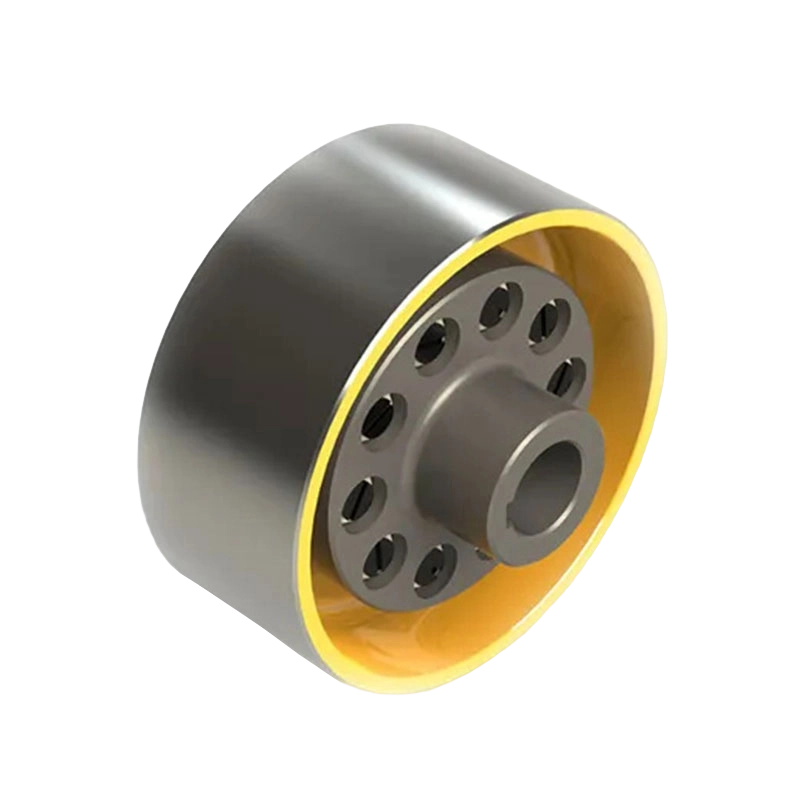
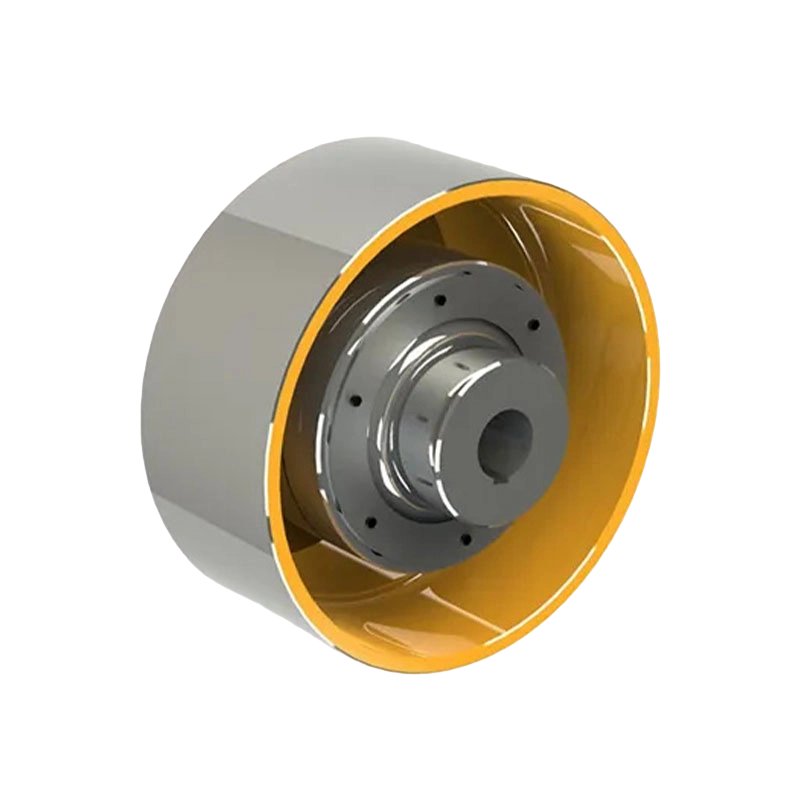
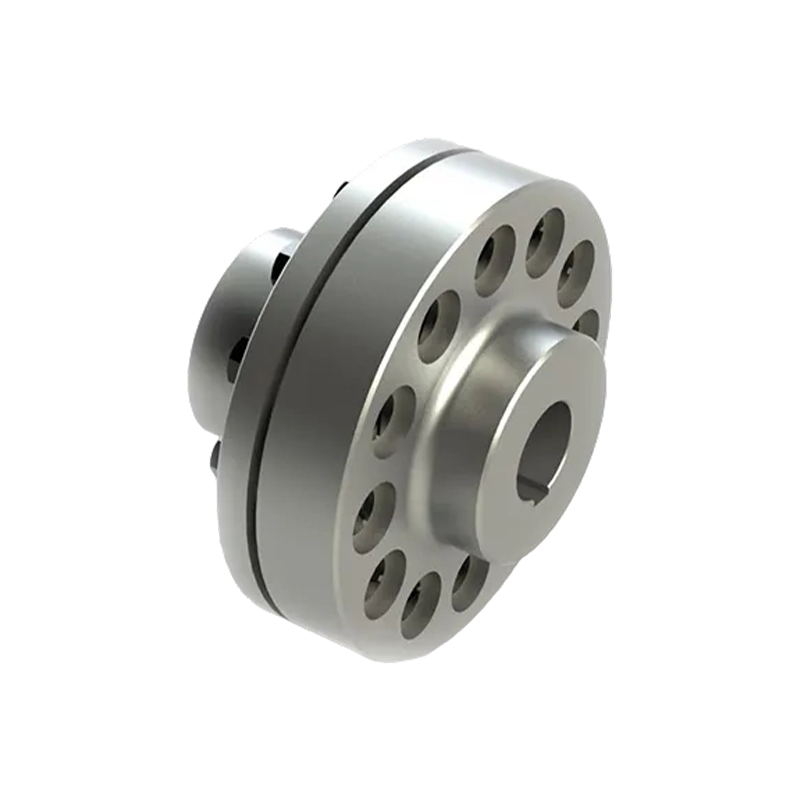
Product: T31 snake spring coupling with double flange

- Quick Links
- About
- Products
- Our Service
- News & Events
- Contact
- Products Series
- Flexible Couplings with Non-Elastic Elements
- Flexible Couplings with Metal Elastic Elements
- Flexible Couplings with Non-Metallic Elastic Elements
- Safety Coupling
- Rigid Coupling
- Contact Us
- Tel : +86 511 8572 3800 +86 511 8572 3900
- Mobile : +86 15106109009
- Email : sales@couplingzy.com
- Add:No.1 Zhongye Yingbin Avenue, Gaozi Street, Dantu Economic Development Zone, Zhenjiang City, Jiangsu Province, China.


