:+86 15106109009
:sales@couplingzy.com


 English
  русский
  Español
  عربى
عربى  Português
  Deutsch
  Türk
Türk  Indonesia

LC Roller Chain Coupling: High-Performance Power Transmission for Demanding Industrial Applications
Content
- 1 Product Construction and Operating Principle
- 2 Principal Performance Advantages
- 3 LC Series Specifications
- 4 Comparison with Other Coupling Categories
- 5 Applications in Industrial Equipment
- 6 Engineering Selection Guidelines
- 7 Manufacturing Strengths and Quality Control
- 8 Installation and Maintenance Recommendations
- 9 Operating Limitations and Safety Considerations
- 10 Customized Coupling Solutions
- 11 Why Choose an Integrated Manufacturer
- 12 Selection Example
- 13 Q&A
- 13.1 What is an LC roller chain coupling?
- 13.2 What torque range does the LC series cover?
- 13.3 What is the maximum speed of the LC coupling?
- 13.4 Can the coupling compensate for shaft misalignment?
- 13.5 Is a protective cover necessary?
- 13.6 Can the chain be replaced without moving the shafts?
- 13.7 Is the LC coupling suitable for frequent reversing?
- 13.8 What maintenance does the coupling require?
- 13.9 Can the manufacturer provide customized couplings?
- 13.10 What information should be provided for a quotation?
- 14 Conclusion
- 15 References
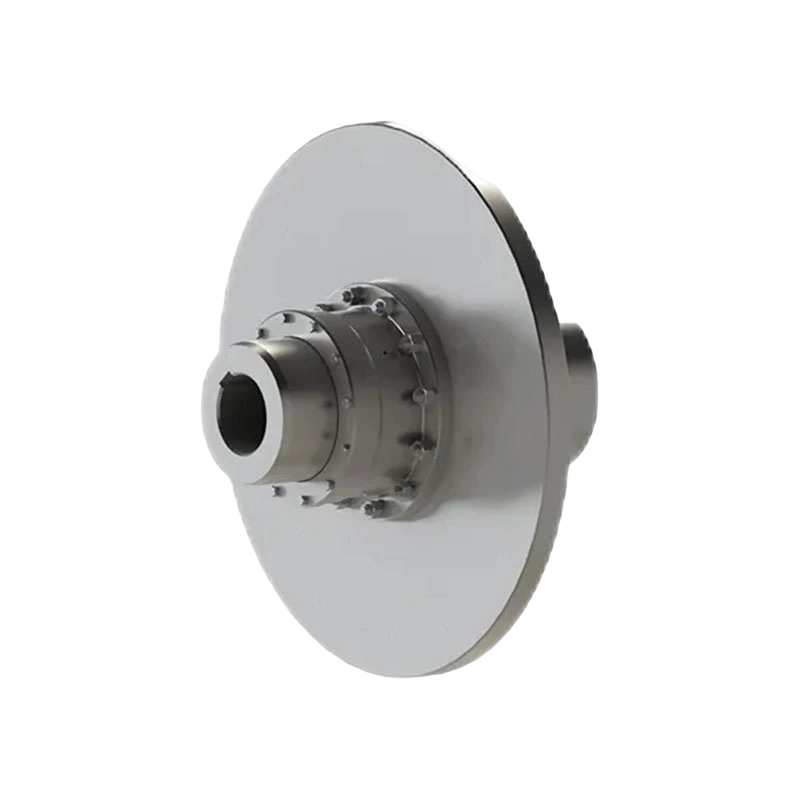
- 16 Product: LC roller chain coupling(Q/YL 17031X-2018)
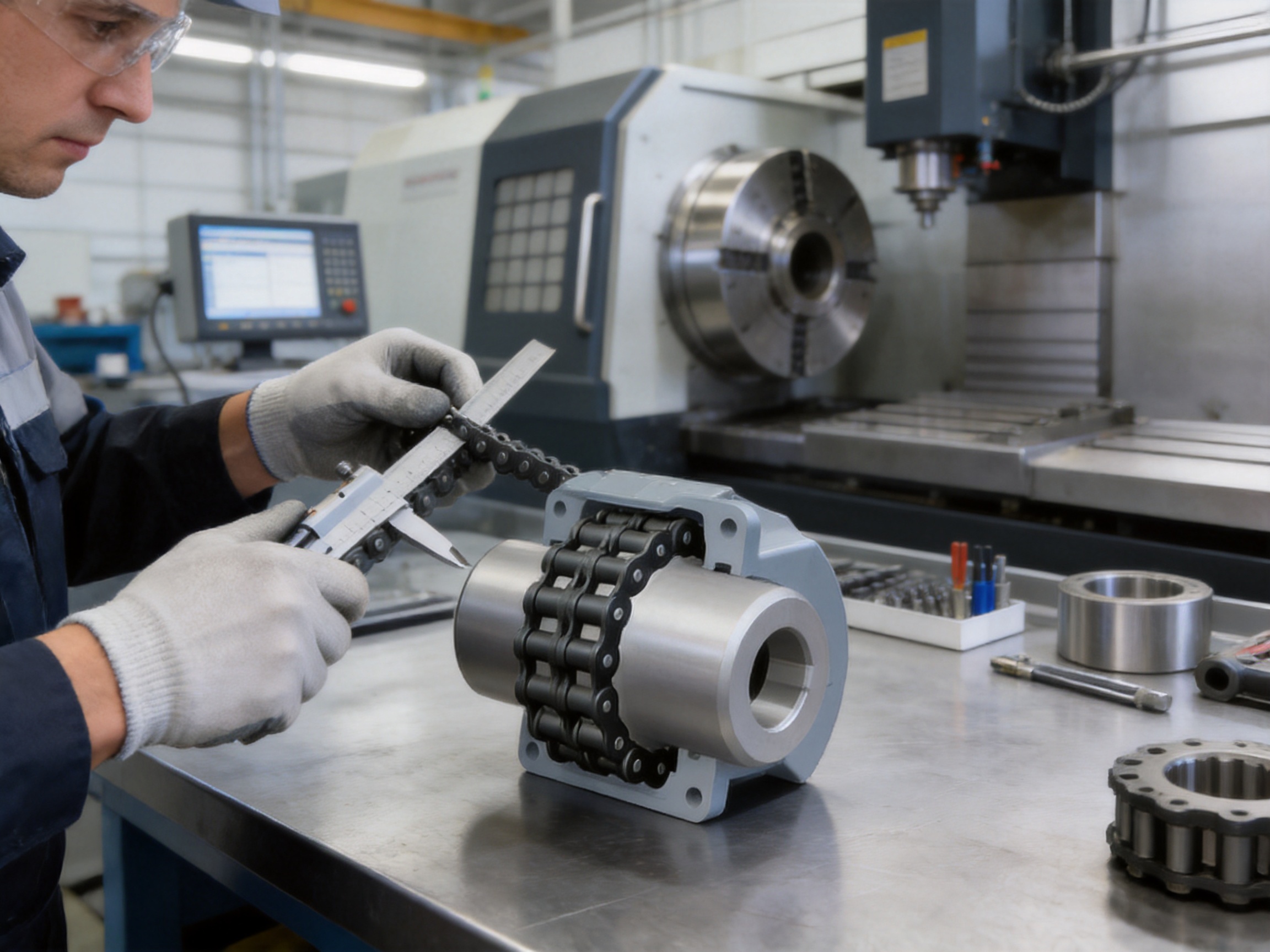
The LC roller chain coupling is a mechanical power transmission device designed to connect two shafts while transmitting torque through a double-row roller chain and two parallel sprockets. Its construction combines high torque capacity, practical installation, reliable service performance, and the ability to compensate for several types of shaft misalignment. These characteristics make it suitable for industrial machinery that operates under heavy loads, variable environmental conditions, and demanding maintenance schedules.
As a flexible coupling with a non-elastic transmission element, the LC roller chain coupling differs from couplings that rely on rubber, polyurethane, grids, or other flexible materials. Instead, torque is transmitted through accurately manufactured sprocket teeth and a roller chain. This design provides a direct and efficient transmission path while allowing controlled radial, axial, and angular displacement between connected shafts.
The LC series covers a broad range of applications. Nominal torque ratings extend from 40 to 25,000 N·m, while maximum allowable speeds reach 4,500 r/min for selected smaller sizes when equipped with a protective cover. Larger sizes are designed for high-torque, lower-speed applications. This wide range allows users to select a suitable coupling for pumps, conveyors, metallurgical equipment, mining machinery, lifting systems, paper-making equipment, port machinery, water equipment, and many other industrial installations.
The coupling is manufactured and supplied by Zhongye Heavy Industry Technology (Zhenjiang) Co., Ltd., a specialist manufacturer integrating product development, machining, assembly, sales, technical support, and after-sales service. The company also provides customized and non-standard coupling solutions for applications requiring special shaft dimensions, torque ratings, materials, protective arrangements, or installation conditions.
Product Construction and Operating Principle
The LC roller chain coupling consists primarily of two sprockets, a double-row roller chain, connecting components, and, where specified, a protective cover. Each sprocket is mounted on one of the shafts to be connected. The roller chain engages with both sprockets and transfers rotational motion from the driving shaft to the driven shaft.
Because the chain meshes with the sprocket teeth rather than depending on friction alone, the coupling can transmit substantial torque in a compact structure. The positive engagement between chain rollers and sprocket teeth also provides a dependable relationship between input and output rotation. This is particularly valuable in equipment where stable speed transmission is important.
The chain and sprocket arrangement permits limited relative movement between the two shafts. When the shafts experience small axial, radial, or angular deviations, the coupling can accommodate those movements within its rated limits. According to the supplied product information, the series provides radial compensation of up to 1.27 mm and axial compensation of up to 9.5 mm, depending on the selected size. Angular compensation can reach 1 degree for the listed models.
A protective cover is recommended where safety, lubrication retention, contamination control, or protection from rotating components is important. The cover helps reduce the possibility of accidental contact with the moving chain and sprockets. It also helps retain lubricant and limits the entry of dust, moisture, and other contaminants. For high-speed operation, the covered version is especially important because it supports safer and more controlled operation.
Principal Performance Advantages
High Torque Transmission Capacity
One of the primary advantages of the LC roller chain coupling is its ability to transmit high torque through a relatively straightforward mechanical structure. The product range begins with LC1 at a nominal torque of 40 N·m and extends through LC15 at 25,000 N·m. This allows the same general coupling concept to serve both light-duty and heavy-duty machinery.
The torque range is achieved through changes in sprocket size, chain pitch, chain width, gear number, shaft bore capacity, and overall dimensions. Smaller models use compact chains such as 06B, while larger models use chains such as 24A, 28A, 32A, and 40A. This graded design enables engineers to select a coupling according to torque, speed, bore size, and available installation space rather than relying on a single oversized configuration.
Compared with some flexible couplings that use elastomeric elements, the LC design does not depend on the long-term fatigue behavior of a rubber or polymer insert to carry the main torque load. This can be advantageous in applications where temperature, oil exposure, aging, or chemical contamination may affect non-metallic elastic materials.
Multi-Directional Misalignment Compensation
Shaft alignment is rarely perfect in practical industrial equipment. Thermal expansion, foundation movement, bearing wear, installation tolerances, and load-related deflection can create displacement between the driving and driven shafts. A rigid connection may transfer these movements directly into bearings, seals, shafts, and machine housings.
The LC roller chain coupling helps reduce these effects by accommodating limited movement in multiple directions. Radial compensation allows the connected shafts to operate with a controlled amount of parallel offset. Axial compensation allows limited movement along the shaft axis. Angular compensation enables the coupling to work when the shaft centerlines are not perfectly collinear.
These capabilities do not eliminate the need for proper alignment. Instead, they provide a practical tolerance for operating conditions and installation variation. Correct alignment remains essential for reducing chain wear, sprocket loading, vibration, and bearing reactions. The coupling should always be selected and installed within the compensation limits specified for the corresponding model.
Simple, Streamlined Structure
The LC coupling has a compact and streamlined configuration. Its basic construction contains fewer major functional components than many highly specialized coupling designs. This can simplify inspection, storage, assembly, and replacement.
A major practical benefit is that the chain can be installed or removed without moving the two connected shafts. During maintenance, technicians can separate the chain at the connecting point and remove it from the sprockets without dismantling the motor, gearbox, pump, or other connected equipment. This feature can reduce downtime and avoid the need for extensive shaft repositioning.
The simplified maintenance procedure is particularly useful in production lines where access is limited or where moving heavy equipment would require lifting tools, alignment work, or lengthy shutdowns. It also makes the coupling suitable for retrofit projects in which the existing shaft arrangement must remain in place.
Environmental Adaptability
The LC roller chain coupling is well suited to harsh industrial environments, including humid, dusty, and high-temperature locations. Its metal chain-and-sprocket transmission principle is not dependent on a soft elastic element that may deteriorate rapidly under severe environmental exposure.
When correctly lubricated and protected, the coupling can provide stable service in equipment exposed to industrial dust, moisture, vibration, and fluctuating temperatures. A cover can further improve environmental protection by helping retain lubricant and reducing contamination of the chain and sprockets.
Environmental adaptability does not mean that the coupling is maintenance-free. Lubricant selection, sealing, inspection, and cover condition remain important. In abrasive or corrosive environments, users should establish a regular inspection program and confirm that the selected materials and protection arrangements are appropriate for the actual operating conditions.
Efficient Power Transmission
Roller chain couplings transmit torque through positive mechanical engagement. Under suitable operating conditions, this can provide efficient power transfer with limited energy loss. The absence of a continuously deforming elastomeric element can also make the transmission response more direct.
This direct transmission behavior is useful in conveyors, pumps, gear-driven equipment, and other machines where the input and output shafts must maintain a predictable rotational relationship. The coupling can accommodate normal shaft movement while maintaining a mechanically reliable connection.
LC Series Specifications
The following table summarizes the principal information supplied for the LC roller chain coupling series. The values are intended for preliminary selection. Final selection should consider service factor, starting conditions, operating temperature, lubrication, shaft dimensions, installation alignment, and the specific application duty.
| Model | Nominal Torque (N·m) | Allowable Speed Without Cover (r/min) | Allowable Speed With Cover (r/min) | Chain Number | Chain Pitch (mm) | Maximum Radial Compensation (mm) | Maximum Axial Compensation (mm) |
| LC1 | 40 | 1,400 | 4,500 | 06B | 9.525 | 0.19 | 1.414 |
| LC2 | 63 | 1,250 | 4,500 | 06B | 9.525 | 0.19 | 1.414 |
| LC3 | 100 | 1,000 | 4,000 | 08B | 12.7 | 0.25 | 1.9 |
| LC4 | 160 | 1,000 | 4,000 | 08B | 12.7 | 0.25 | 1.9 |
| LC5 | 250 | 800 | 3,150 | 10A | 15.875 | 0.32 | 2.3 |
| LC6 | 400 | 630 | 2,500 | 10A | 15.875 | 0.32 | 2.3 |
| LC7 | 630 | 630 | Not specified | 12A | 19.05 | 0.38 | 2.8 |
| LC8 | 1,000 | 500 | 2,240 | 16A | 25.4 | 0.5 | 3.8 |
| LC9 | 1,600 | 400 | 2,000 | 16A | 25.4 | Not specified | 3.8 |
| LC10 | 2,500 | 315 | 1,600 | 20A | 31.75 | 0.63 | 4.7 |
| LC11 | 4,000 | 250 | 1,500 | 24A | 38.1 | 0.76 | 5.7 |
| LC12 | 6,300 | Not specified | 1,250 | 28A | 44.45 | 0.88 | 6.6 |
| LC13 | 10,000 | 200 | 1,120 | 32A | 50.8 | 1.0 | 7.6 |
| LC14 | 16,000 | 200 | 1,000 | 32A | 50.8 | 1.0 | 7.6 |
| LC15 | 25,000 | 200 | 900 | 40A | 63.5 | 1.27 | 9.5 |
The supplied dimensional data also includes shaft bore ranges, shaft hole lengths, sprocket outside diameters, chain widths, maximum coupling diameters, maximum coupling lengths, approximate mass, moment of inertia, and angular compensation values. These dimensions vary significantly by model. Engineers should consult the complete technical drawing before finalizing a coupling selection or machining a shaft.
For the smaller models, shaft bore options include common sizes such as 16, 18, 19, 20, 22, and 24 mm. Larger models provide bore ranges extending to 190 mm. The series therefore supports both compact power transmission assemblies and heavy industrial shafts.
Comparison with Other Coupling Categories
Compared with Rigid Couplings
Rigid couplings provide a fixed connection between two shafts and are appropriate when the shafts are accurately aligned and do not experience meaningful relative movement. However, they have little or no capacity to compensate for misalignment. Any shaft offset or angular error may increase bearing loads and transmit additional stress into the connected machinery.
The LC roller chain coupling offers greater installation tolerance and operating flexibility. Its displacement compensation capability helps protect the connected system from limited alignment variation. This makes it a more suitable choice than a rigid coupling where thermal growth, foundation movement, or periodic shaft displacement is expected.
Compared with Elastomeric Couplings
Elastomeric couplings use flexible rubber or polymer elements to transmit torque and absorb vibration. They can provide excellent damping and may be highly effective in systems with shock loads, torsional vibration, or frequent starting and stopping. However, elastomeric elements can be sensitive to temperature, oil, chemicals, ultraviolet exposure, and aging.
The LC coupling is based on metal chain and sprocket components. It can be advantageous where environmental durability, direct torque transmission, and simple replacement are more important than high torsional damping. Its metal construction reduces dependence on the service life of a polymer element.
At the same time, the LC coupling is not a universal replacement for elastomeric couplings. It should be avoided in applications involving frequent start-stop cycles, frequent reversal, or severe impact loads unless a detailed engineering assessment confirms suitability. These operating conditions can increase chain impact, polygonal action, tooth loading, vibration, and wear.
Compared with Gear Couplings
Gear couplings can transmit very high torque and often provide significant angular and axial movement capacity. They are commonly used in heavy-duty machinery. However, gear couplings may require more precise lubrication practices, more complex inspection procedures, and closer attention to tooth wear and sealing.
The LC roller chain coupling offers a simpler and more accessible construction. Chain replacement and inspection can be straightforward, and the coupling can often be serviced without moving the connected shafts. For applications within its torque and speed limits, this simplicity may reduce maintenance complexity and total service time.
Compared with Grid and Diaphragm Couplings
Grid couplings can provide useful damping and moderate misalignment compensation, while diaphragm couplings offer high-speed performance and low maintenance in carefully controlled applications. Each design has its own advantages, but selection depends on the required balance of speed, torque, damping, environmental resistance, maintenance, and cost.
The LC roller chain coupling is especially attractive when the application requires a robust metal transmission element, practical shaft connection, wide bore capacity, and convenient disassembly. It is a strong option for industrial equipment in which maintenance accessibility and environmental tolerance are important selection factors.
Applications in Industrial Equipment
Metallurgical Machinery
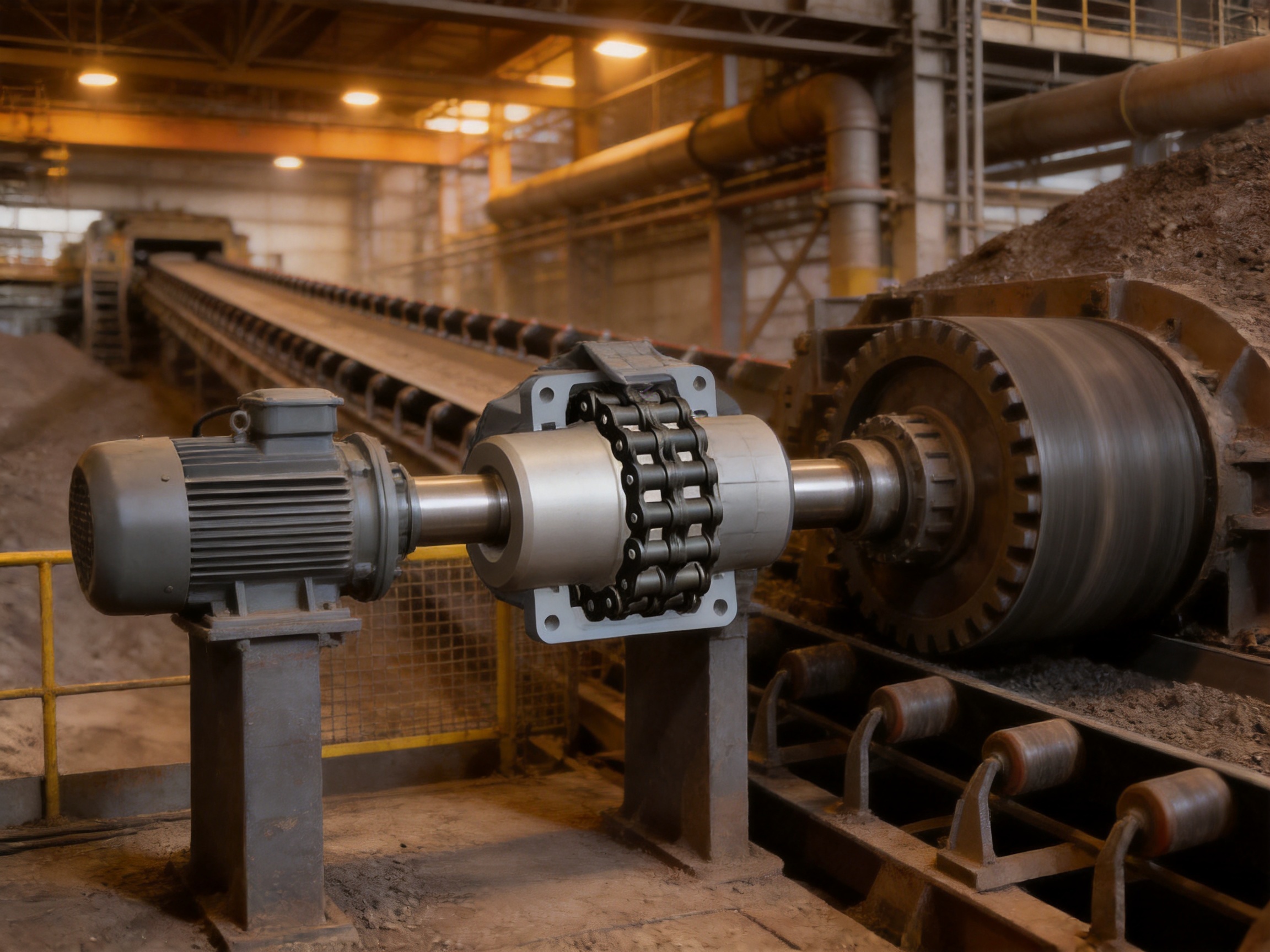
Metallurgical equipment often operates under high loads, elevated temperatures, vibration, dust, and difficult maintenance conditions. The LC coupling can be applied to auxiliary drives, conveyors, rollers, fans, pumps, and other equipment when the torque and speed requirements fall within the selected model’s limits.
In these installations, a protective cover can help shield the chain from metallic dust and retain lubricant. Proper alignment and scheduled inspection are essential because abrasive particles can accelerate wear at the chain and sprocket interfaces.
Mining Equipment
Mining machinery requires components capable of operating in dusty and mechanically demanding conditions. The LC coupling’s metal construction, broad torque range, and removable chain arrangement make it suitable for selected mining conveyors, crushers, feeders, pumps, and auxiliary drive systems.
For crushers and other machines subject to severe impact or highly irregular loads, the coupling must be evaluated carefully. A chain coupling may not be the preferred choice where shock loads are extreme. In such cases, a safety coupling, fluid coupling, or torsionally flexible design may provide better protection.
Pumps and Water Equipment
Pump systems commonly require a coupling that can accommodate small shaft alignment deviations caused by installation tolerances, pipe loads, foundation movement, or thermal effects. The LC coupling can support these requirements when its speed, torque, bore, and environmental ratings are suitable.
In humid or wet areas, the protective cover and appropriate lubrication are especially important. The installation should also prevent standing water from accumulating around the coupling. Material selection and surface treatment should be reviewed if the coupling is exposed to corrosive fluids or marine atmospheres.
Lifting and Hoisting Equipment
Lifting equipment requires dependable torque transmission and careful consideration of braking, acceleration, stopping, and reversing conditions. The LC coupling may be suitable for selected auxiliary drives and controlled transmission systems, but the duty cycle must be reviewed in detail.
Frequent reversing, repeated shock loading, and sudden torque changes can increase chain impact and fatigue. Where these conditions exist, the coupling should be selected only after checking the complete load spectrum and applying an appropriate service factor.
Paper-Making Equipment
Paper machinery often operates continuously and requires stable power transmission, reliable alignment tolerance, and resistance to humid conditions. The LC coupling can be used in suitable drive locations where its speed rating and maintenance requirements match the production process.
Continuous operation makes preventive maintenance particularly valuable. Routine checks of chain lubrication, sprocket tooth condition, cover fastening, shaft keyways, and coupling alignment can help prevent unexpected shutdowns.
Port and Material-Handling Machinery
Port machinery and bulk material-handling equipment may be exposed to dust, moisture, wind, salt air, and large load variations. The LC coupling can provide a practical connection for conveyors, winches, pumps, and other industrial drives when properly protected.
For outdoor installations, users should consider weather-resistant covers, corrosion protection, sealing, drainage, and lubricant compatibility. A customized surface treatment or material specification may be appropriate for marine or coastal environments.
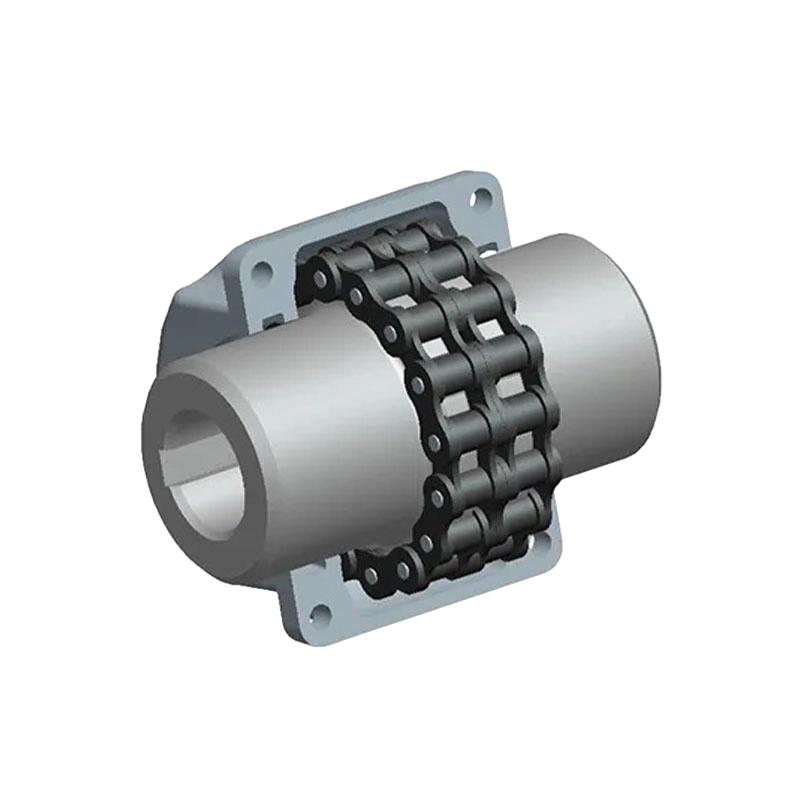
LC roller chain coupling(Q/YL 17031X-2018)
Engineering Selection Guidelines
Determine the Required Torque
The first step in coupling selection is to determine the actual transmitted torque. Motor power and speed can be used to calculate nominal torque, but the selection should not be based on nominal torque alone. Starting torque, acceleration torque, load fluctuation, braking, shock, and duty cycle must also be considered.
A practical calculation is:
Torque in N·m equals 9550 multiplied by power in kW and divided by speed in r/min.
The calculated operating torque should then be multiplied by a service factor appropriate to the driven machine. Smoothly operating pumps may require a lower factor than conveyors, crushers, mixers, or equipment with intermittent loading. The selected LC model should have a nominal torque rating greater than the design torque.
Check Operating Speed
Allowable speed is a critical selection parameter. The maximum speed differs between versions with and without a protective cover and also varies by model. Smaller couplings generally permit higher speed, while larger couplings are designed for higher torque and lower rotational speed.
The operating speed must remain below the allowable value for the exact configuration. If a cover is required, the covered speed rating must be used. High-speed operation also requires careful attention to balance, alignment, lubrication, cover clearance, and installation security.
Confirm Shaft Bores and Lengths
The shaft bore diameters and available shaft lengths must match the coupling dimensions. The LC series includes multiple bore options for each model, but not every bore is available in every size. Keyways, set screws, clamping arrangements, and other shaft connection details should be confirmed before ordering.
The shaft extension must be long enough to achieve the required engagement without creating interference with the chain, sprocket hubs, cover, bearings, seals, or adjacent machine parts. A complete dimensional drawing should be reviewed for each project.
Evaluate Misalignment
Radial, axial, and angular compensation values are operating limits, not target installation values. The two shafts should be aligned as accurately as possible during installation. Compensation capacity should be reserved for normal movement caused by operation, thermal expansion, and structural deflection.
Excessive misalignment can cause uneven chain loading, sprocket tooth wear, chain elongation, vibration, noise, and increased bearing loads. If the required displacement exceeds the LC coupling’s rated capability, another coupling category or a customized design should be considered.
Consider the Environment
Environmental conditions influence chain life and maintenance intervals. Dust, water, corrosive chemicals, high temperature, low temperature, outdoor exposure, and washdown procedures should be identified during the selection process.
The protective cover is beneficial in many environments, but it does not replace proper sealing or maintenance. The cover type, material, ventilation, lubricant, and corrosion protection should be selected according to the application. Where the coupling is exposed to unusual chemicals or extreme temperatures, engineering confirmation is recommended.
Manufacturing Strengths and Quality Control
Zhongye Heavy Industry Technology operates as an integrated coupling manufacturer with capabilities covering research and development, production, inspection, sales, and technical service. This structure allows product requirements to be reviewed across the entire manufacturing process rather than being treated only as a final assembly task.
The company’s new workshop covers approximately 16,463.52 square meters. It includes a heavy workshop of approximately 5,500 square meters, a precision workshop of approximately 4,600 square meters, an office building and gymnasium of approximately 2,000 square meters, a dining hall of approximately 500 square meters, a warehouse of approximately 1,000 square meters, and additional roads, green areas, and parking facilities.
The separate heavy and precision workshop arrangement supports different production requirements. Heavy machining and handling operations can be organized for large coupling components, while precision areas can focus on dimensional control, finishing, assembly, and inspection. This division helps support a product range that includes compact couplings as well as large industrial models.
Research and Development Capability
Coupling performance depends on the relationship between torque, speed, misalignment, material strength, lubrication, and installation conditions. A strong technical team can evaluate these factors during product development and custom design.
The company has a professional team with experience in coupling technology and provides both standard products and non-standard engineering solutions. This capability is important when the customer’s shafts, space limitations, speed requirements, or operating environment do not correspond exactly to a standard catalog model.
Customization may involve modified bore dimensions, special keyways, different hub lengths, alternative materials, protective covers, surface treatments, special tolerances, or changes to the connection arrangement. Each modification should be reviewed for its effect on torque capacity, balance, strength, and service life.
Precision Manufacturing
Accurate sprocket geometry is essential for smooth chain engagement and stable load distribution. Manufacturing control should address tooth profile, pitch accuracy, concentricity, bore diameter, keyway position, hub dimensions, and surface condition.
Chain coupling performance also depends on the quality and consistency of the chain components. Correct chain pitch, roller dimensions, plate geometry, pin fit, and assembly condition help ensure that the chain engages properly with both sprockets.
For larger couplings, dimensional accuracy becomes even more important because small errors can create significant peripheral variation and uneven loading. Precision machining, process inspection, and final verification help maintain reliable performance across the product range.
Testing and Inspection
Quality control for roller chain couplings should include incoming material inspection, machining inspection, component verification, assembly checks, and final dimensional inspection. Depending on the order and application, inspection may include shaft bore measurement, sprocket runout, tooth profile verification, keyway inspection, chain engagement, cover clearance, and visual examination.
The company states that it has advanced testing facilities and strict quality control procedures. These resources support consistent manufacturing and help identify defects before shipment. Quality documentation can also assist customers with installation records, maintenance planning, and traceability.
Standards and Technical Compliance
The product information identifies the LC roller chain coupling with Q/YL 17031X-2018 and provides basic parameters and main dimensions under GB/T 6069-2002. Standards and technical references should always be confirmed with the manufacturer for the exact order, because product revisions, customer specifications, and regional requirements may affect the applicable documentation.
International customers may also require quality systems, material certificates, inspection reports, dimensional records, or project-specific compliance documents. The manufacturer can review these requirements during the quotation and engineering stage.
Installation and Maintenance Recommendations
Preparation Before Installation
Before installation, verify the coupling model, shaft bore, keyway dimensions, chain number, cover arrangement, rotation direction, and available installation space. Inspect all components for transport damage, corrosion, contamination, or burrs.
The shaft ends should be clean and free from oil, scale, and sharp projections that could interfere with hub seating. Check that the shafts are supported correctly and that bearing conditions are satisfactory. Coupling installation cannot compensate for defective bearings, loose foundations, or improperly supported equipment.
Alignment
Align the two shafts using suitable measurement equipment. Check parallel offset and angular alignment before tightening the hubs. The coupling should be installed with sufficient clearance to accommodate the specified axial movement without causing contact with the cover or adjacent components.
After tightening, rotate the assembly manually where possible and confirm that the chain moves freely. Check for tight spots, interference, abnormal resistance, or visible eccentricity. Any problem should be corrected before the equipment is started.
Lubrication
Lubrication is essential for reducing friction between rollers, pins, bushings, plates, and sprocket teeth. The lubricant should be suitable for the operating temperature, speed, load, and environmental conditions. Excessive lubricant can attract dust, while insufficient lubricant can accelerate wear and increase temperature.
Maintenance personnel should establish a lubrication interval based on actual operating conditions. High-speed, high-load, dusty, humid, or high-temperature installations may require more frequent inspection and relubrication. The lubricant should be applied in a way that reaches the chain joints and contact surfaces without creating a safety hazard.
Inspection
Regular inspection should include chain elongation, sprocket tooth wear, loose fasteners, cover condition, lubricant condition, corrosion, vibration, and operating noise. Chain elongation may indicate wear at the pins and bushings. Uneven tooth wear may indicate misalignment, inadequate lubrication, excessive loading, or contamination.
Any abnormal noise, vibration, temperature rise, or visible chain movement should be investigated promptly. Operating a worn coupling beyond its service limit can damage shafts, bearings, seals, and connected machinery.
Replacement
The chain should be replaced when elongation, cracking, corrosion, or wear exceeds the acceptable limit. Sprockets should also be inspected because installing a new chain on severely worn sprockets may produce poor engagement and shorten the new chain’s service life.
One of the LC coupling’s maintenance advantages is that chain removal can generally be completed without moving the connected shafts. This helps reduce service time and simplifies replacement in fixed installations.
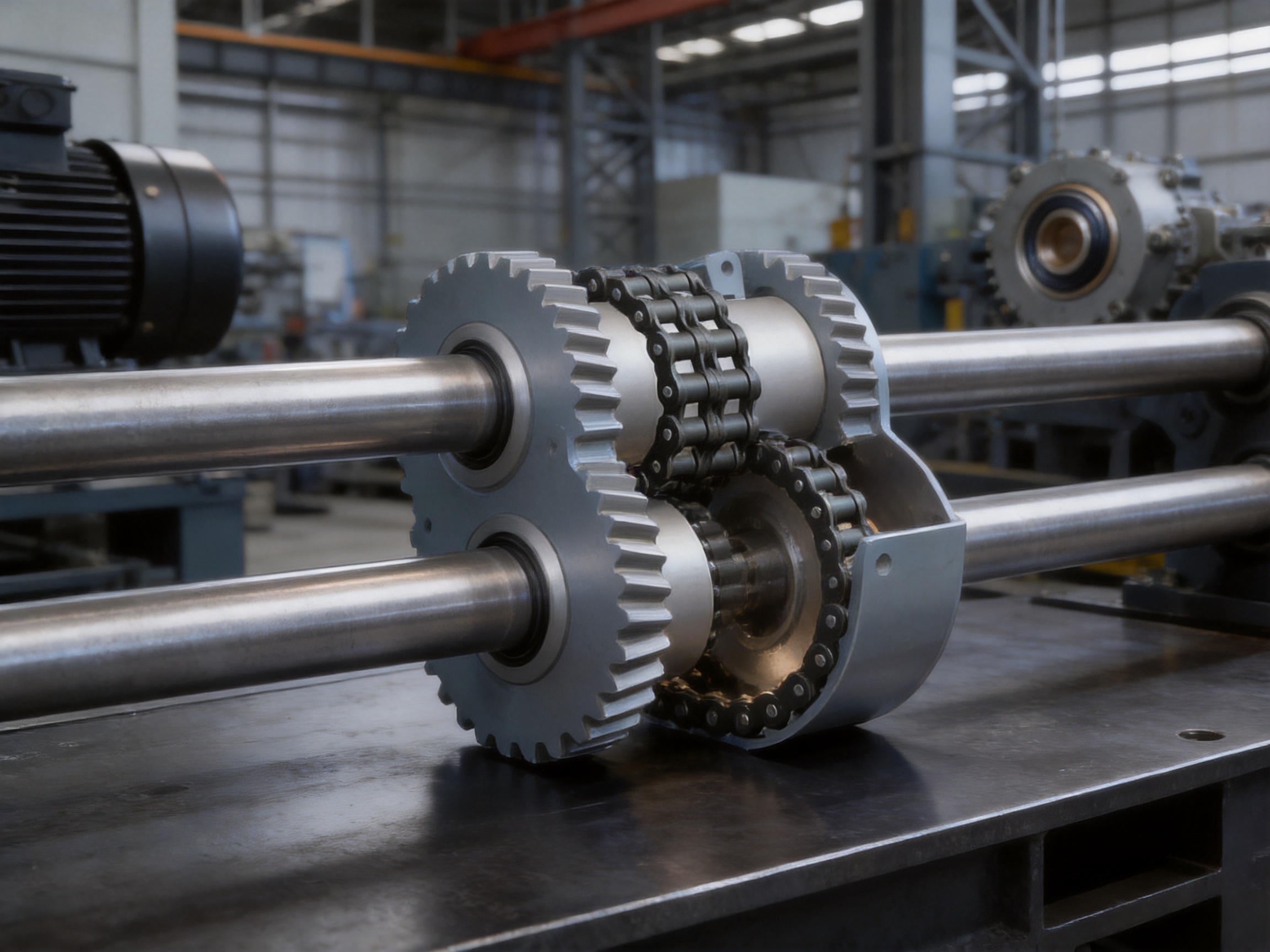
Operating Limitations and Safety Considerations
The LC roller chain coupling should not be treated as a universal solution for every rotating machine. The supplied product information specifically recommends avoiding conditions involving frequent start-stop operation, frequent reversal, or severe impact loads. These duties can produce repeated dynamic loading at the chain joints and sprocket teeth.
Where frequent starting and stopping is unavoidable, the application should be reviewed by a qualified engineer. A higher service factor, a different coupling type, a torque-limiting device, or a customized chain coupling may be required.
A protective cover should be used where personnel could come into contact with rotating parts. The cover should be securely fastened and should provide adequate clearance from the chain and sprockets. It should not be removed while the machine is operating.
Before inspection or maintenance, the machine must be shut down, isolated from all energy sources, and secured against unexpected startup. Rotating equipment can cause serious injury even when it is moving slowly. Maintenance should be performed only by trained personnel following the site’s safety procedures.
The coupling must not be operated above its rated torque or speed. A correct selection should consider the motor, gearbox, driven equipment, starting method, load pattern, ambient temperature, lubrication, and alignment. If the application changes after installation, the coupling selection should be reviewed again.
Customized Coupling Solutions
Standard LC models are suitable for many industrial applications, but certain projects require customized engineering. Examples include unusual shaft diameters, restricted axial space, special mounting arrangements, elevated temperatures, corrosive environments, non-standard covers, or specific connection standards.
Zhongye Heavy Industry Technology undertakes the design and manufacture of non-standard couplings. Customization begins with collection of operating data, including transmitted power, speed, torque characteristics, shaft dimensions, keyway details, center distance, misalignment, ambient conditions, duty cycle, and maintenance requirements.
The technical team can then evaluate the appropriate coupling size, chain type, sprocket configuration, materials, cover arrangement, and dimensional modifications. Where necessary, the design can be reviewed for strength, speed, balance, clearance, and serviceability.
Custom manufacturing is particularly valuable for replacement projects. An existing machine may have a legacy coupling with a non-standard bore or hub length. Replacing it with a standard model may require expensive shaft modification. A customized LC coupling can preserve the existing shaft arrangement while improving availability and maintenance convenience.
Why Choose an Integrated Manufacturer
Purchasing from an integrated coupling manufacturer offers benefits beyond the supply of a single mechanical component. Product selection, dimensional confirmation, manufacturing, inspection, packaging, and technical support can be coordinated through one organization.
This approach helps reduce communication errors between separate design and production suppliers. It also allows application data to be considered throughout the order process. If the customer requires a special bore, cover, material, or documentation package, the change can be reviewed by the same technical organization responsible for manufacturing.
Zhongye Heavy Industry Technology supports customers in metallurgical, mining, water, lifting, paper, port, and other industrial sectors. Its product portfolio includes toothed couplings, elastic sleeve pin couplings, elastic pin couplings, gear couplings with elastic pins, universal couplings, tire couplings, jaw couplings, star couplings, diaphragm couplings, drum couplings, grid couplings, Oldham couplings, flange couplings, clip-shell couplings, roller chain couplings, safety couplings, and customized coupling products.
The breadth of this product range allows the company to compare different coupling principles for a specific application. If an LC roller chain coupling is not appropriate because of shock, torsional vibration, speed, or reversing requirements, another coupling category may provide a better solution.
Selection Example
Consider a machine transmitting 250 kW at 1,000 r/min. The approximate operating torque is calculated as follows:
Torque equals 9550 multiplied by 250 and divided by 1,000, giving approximately 2,387.5 N·m.
If the machine has a service factor of 1.5, the design torque becomes approximately 3,581 N·m. Based only on nominal torque, LC10, rated at 2,500 N·m, would not be sufficient. LC11, rated at 4,000 N·m, may be a preliminary candidate, provided its speed, shaft bore, alignment, duty cycle, and environmental conditions are acceptable.
However, if the machine experiences frequent reversing, severe impact, or high starting torque, the selection cannot be finalized from the nominal torque comparison alone. The service factor may need to be increased, or a different coupling design may be required.
This example demonstrates why coupling selection should be based on design torque rather than motor power alone. It also shows the importance of checking the allowable speed and shaft dimensions. The final decision should be supported by the manufacturer’s technical review.
Q&A
What is an LC roller chain coupling?
An LC roller chain coupling is a flexible shaft coupling that transmits torque through two sprockets connected by a double-row roller chain. It compensates for limited radial, axial, and angular shaft displacement while providing direct mechanical power transmission.
What torque range does the LC series cover?
The supplied LC series has nominal torque ratings from 40 to 25,000 N·m. The correct model depends on design torque, speed, shaft bore, duty cycle, environmental conditions, and required displacement compensation.
What is the maximum speed of the LC coupling?
The maximum listed speed reaches 4,500 r/min for selected small models with a protective cover. Allowable speed decreases as coupling size and torque capacity increase. Always use the rating for the exact model and cover configuration.
Can the coupling compensate for shaft misalignment?
Yes. The LC coupling provides limited radial, axial, and angular compensation. The maximum values depend on the model, with the series reaching approximately 1.27 mm radial compensation, 9.5 mm axial compensation, and 1 degree angular compensation. Proper alignment is still required.
Is a protective cover necessary?
A protective cover is strongly recommended when personnel safety, lubricant retention, contamination control, or high-speed operation is important. The cover must be correctly installed and must not contact the rotating chain or sprockets.
Can the chain be replaced without moving the shafts?
Yes. The LC design allows chain installation and removal without moving the two connected shafts. This can simplify maintenance and reduce equipment downtime.
Is the LC coupling suitable for frequent reversing?
The supplied product information recommends avoiding frequent reversing, frequent start-stop operation, and severe impact loads. If these conditions exist, the application should receive a detailed engineering review before an LC coupling is selected.
What maintenance does the coupling require?
Maintenance normally includes lubrication, alignment checks, inspection of chain elongation, sprocket tooth wear, cover condition, fasteners, corrosion, vibration, and operating noise. Inspection intervals should reflect the actual load, speed, environment, and duty cycle.
Can the manufacturer provide customized couplings?
Yes. Zhongye Heavy Industry Technology provides customized and non-standard coupling design and manufacturing. Custom work may include special shaft bores, hub lengths, keyways, materials, covers, surface treatments, and dimensional arrangements.
What information should be provided for a quotation?
Useful information includes motor or engine power, operating speed, nominal and peak torque, starting method, duty cycle, shaft diameters, shaft lengths, keyway dimensions, center distance, expected misalignment, ambient conditions, cover requirements, and applicable standards or documentation requirements.
Conclusion
The LC roller chain coupling is a practical and robust solution for industrial shaft connection where high torque transmission, multi-directional displacement compensation, environmental adaptability, and convenient maintenance are required. Its double-row chain and parallel sprocket construction provides a direct mechanical transmission path, while the removable chain arrangement allows service without moving the connected shafts.
The series offers a broad selection range from 40 to 25,000 N·m and supports shaft bore sizes extending from compact equipment dimensions to large industrial shafts. Covered versions can provide higher allowable speeds for selected models and improve protection against rotating components, contamination, and lubricant loss.
Its advantages are most valuable in carefully selected applications such as conveyors, pumps, metallurgical machinery, mining equipment, water systems, paper machinery, port equipment, and other industrial drives. The coupling should not be selected for frequent reversing, repeated shock loading, or severe impact service without additional engineering analysis.
With integrated research and development, heavy and precision manufacturing facilities, testing resources, quality control, and customized design capability, Zhongye Heavy Industry Technology supports both standard LC coupling requirements and specialized transmission projects. Customers can obtain technical assistance for model selection, dimensional confirmation, material requirements, protective covers, non-standard designs, and after-sales service.
For a reliable result, the coupling should be selected according to design torque, operating speed, shaft geometry, alignment, environment, and duty cycle. When these factors are properly evaluated, the LC roller chain coupling can provide efficient power transmission, practical serviceability, and dependable performance in demanding industrial equipment.
References
1. Product technical information for the LC roller chain coupling series, including nominal torque, allowable speed, shaft bore ranges, chain specifications, dimensions, mass, moment of inertia, and displacement compensation data.
2. GB/T 6069-2002, technical reference for basic parameters and main dimensions of roller chain couplings.
3. Q/YL 17031X-2018, product standard reference identified for the LC roller chain coupling.
4. General engineering principles for mechanical power transmission, shaft alignment, coupling selection, lubrication, and rotating equipment maintenance.
5. Industrial machinery safety practices for rotating couplings, protective guards, energy isolation, inspection, and maintenance.
Product: LC roller chain coupling(Q/YL 17031X-2018)

- Quick Links
- About
- Products
- Our Service
- News & Events
- Contact
- Products Series
- Flexible Couplings with Non-Elastic Elements
- Flexible Couplings with Metal Elastic Elements
- Flexible Couplings with Non-Metallic Elastic Elements
- Safety Coupling
- Rigid Coupling
- Contact Us
- Tel : +86 511 8572 3800 +86 511 8572 3900
- Mobile : +86 15106109009
- Email : sales@couplingzy.com
- Add:No.1 Zhongye Yingbin Avenue, Gaozi Street, Dantu Economic Development Zone, Zhenjiang City, Jiangsu Province, China.


