:+86 15106109009
:sales@couplingzy.com


 English
  русский
  Español
  عربى
عربى  Português
  Deutsch
  Türk
Türk  Indonesia

T50 Snake Spring Coupling with Connecting Shaft: Flexible, Reliable Power Transmission for Industrial Machinery
Content
- 1 Product Overview
- 2 How a Snake Spring Coupling Works
- 3 Principal Construction Features
- 4 Performance Advantages
- 5 Advantages Compared with Alternative Coupling Designs
- 6 Manufacturing Strengths and Engineering Capabilities
- 7 Applications in Industrial Equipment
- 8 Customization Options
- 9 Selection Guidelines for the T50 Coupling
- 10 Installation Recommendations
- 11 Maintenance and Inspection
- 12 Quality Assurance and Customer Support
- 13 Why the T50 Is a Practical Industrial Choice
- 14 Frequently Asked Questions
- 14.1 What is a snake spring coupling?
- 14.2 What does the connecting shaft do?
- 14.3 Can the T50 accommodate shaft misalignment?
- 14.4 Is the T50 suitable for heavy-duty machinery?
- 14.5 Does the coupling require lubrication?
- 14.6 What information is needed for product selection?
- 14.7 Can the coupling be customized?
- 14.8 How does the T50 compare with an elastomeric coupling?
- 14.9 How does the T50 compare with a rigid coupling?
- 14.10 What causes premature grid coupling wear?
- 14.11 Is a cover necessary?
- 14.12 Where is the manufacturer located?
- 15 Conclusion
- 16 References
- 17 Product: T50 snake spring coupling with connect shaft
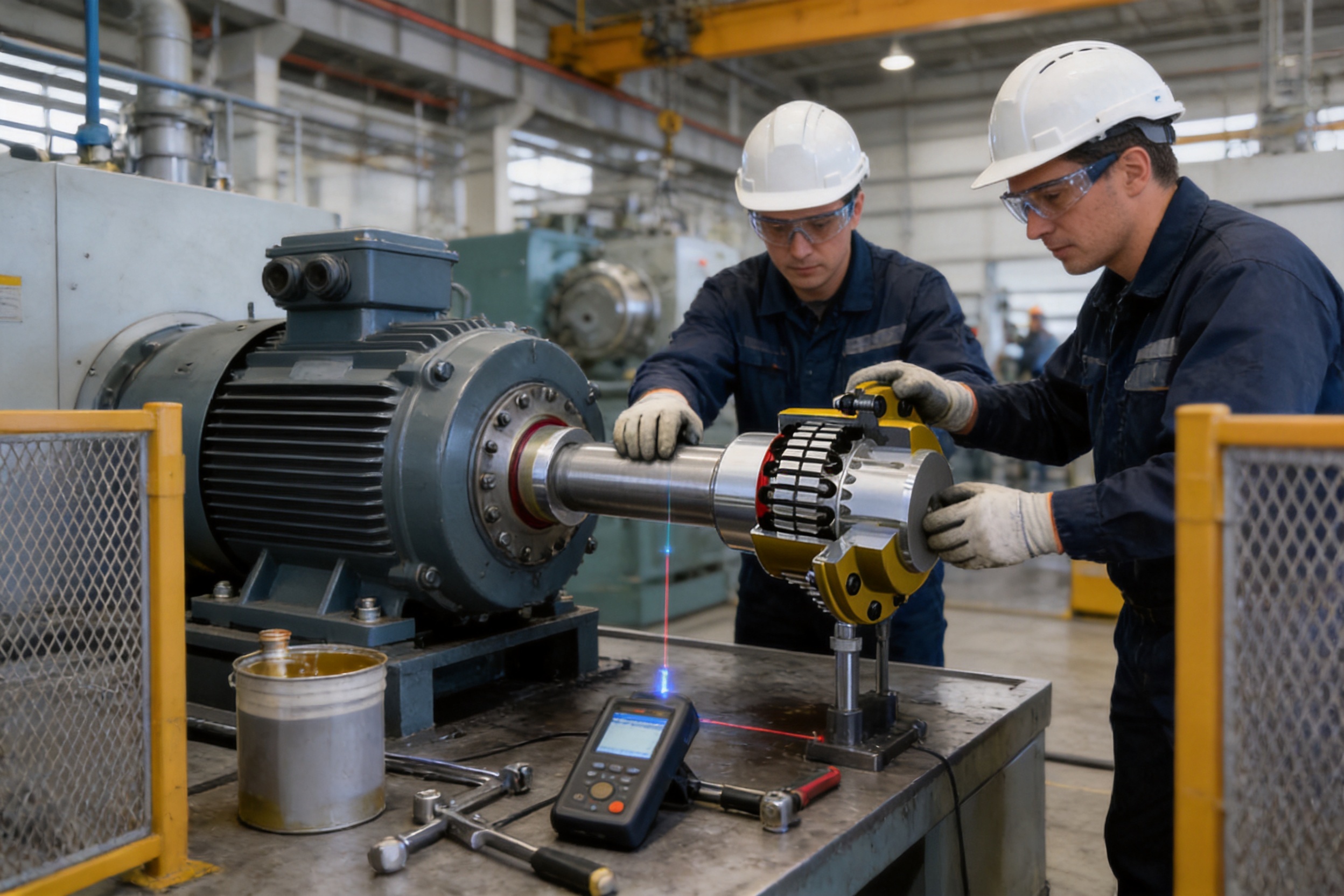
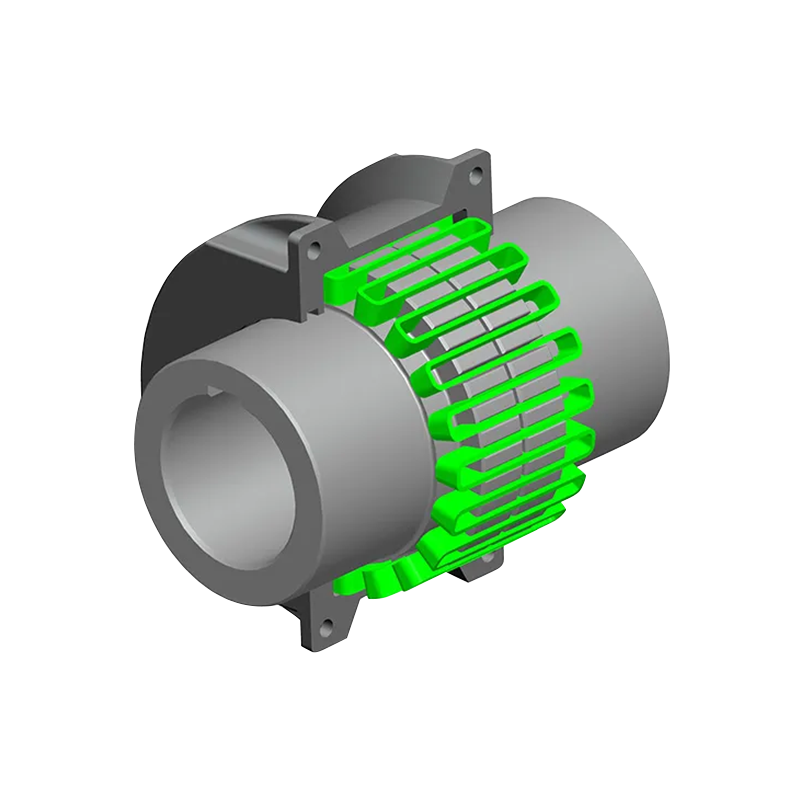
The T50 snake spring coupling with connecting shaft is a robust mechanical power transmission solution designed to connect rotating shafts while accommodating operational misalignment, vibration, shock loading, and other movement irregularities. Also known as a grid coupling, the snake spring coupling uses a specially formed metallic spring element installed between toothed hubs. This construction combines torsional flexibility with dependable torque transmission, making the coupling suitable for demanding industrial machinery.
In a typical drive system, the motor, gearbox, pump, conveyor, fan, mixer, or other prime mover does not always remain perfectly aligned with the driven shaft. Thermal expansion, foundation movement, installation tolerances, bearing wear, and fluctuating loads can cause angular, parallel, or axial displacement. A rigid connection can transfer these forces directly into the connected equipment, increasing vibration and accelerating wear. The T50 coupling helps manage these conditions by allowing controlled movement through its metallic snake spring element while continuing to transmit rotational power.
The design is especially valuable where machinery requires a balance of flexibility, torsional stiffness, durability, and serviceability. Unlike many simple flexible couplings that rely on a non-metallic insert, the T50 uses a high-strength metal spring grid. This enables it to withstand demanding operating conditions and repeated load cycles while providing useful damping characteristics. When correctly selected, installed, lubricated, and maintained, the coupling can help protect shafts, bearings, gears, and other connected components.
Product Overview
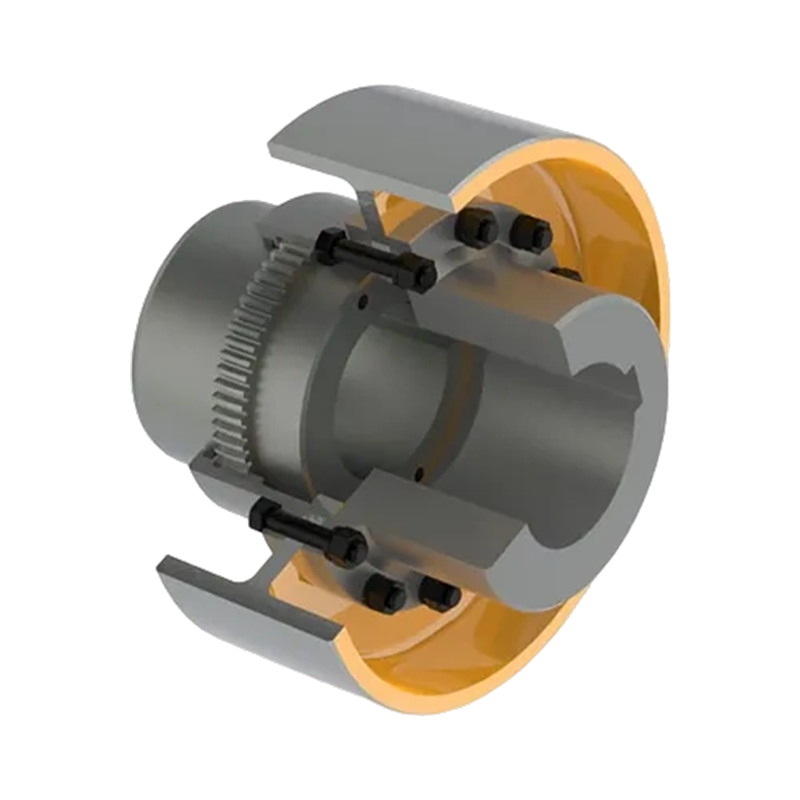
The T50 snake spring coupling with connecting shaft consists of a metallic spring element, two toothed hubs or flanges, covers, fasteners, and a connecting shaft arrangement adapted to the intended installation. The hubs are mounted on the shafts of the driving and driven machines. The spring grid fits into the teeth of both hubs, creating a flexible mechanical connection. The connecting shaft transfers torque between the coupling interfaces and can be configured to suit the required distance, shaft arrangement, or equipment layout.
The spring element is the core working component. It is formed from high-strength spring steel or another suitable fatigue-resistant alloy. Its continuous or serpentine configuration enables the coupling to flex under angular, parallel, and limited axial displacement. At the same time, the spring remains engaged with the hub teeth so that torque can pass from one shaft to the other.
The hubs are generally produced from durable steel, stainless steel, or other engineering metals selected according to the application. Their tooth geometry is designed to maintain secure engagement with the spring. Depending on the customer’s requirements, hub bores may be manufactured with keyways, interference fits, special shaft interfaces, or other connection details. The connecting shaft can also be customized in length, diameter, material, and end configuration.
The T50 designation identifies a particular coupling size within the product range. The final selection should be based on the actual operating torque, speed, shaft diameter, service factor, bore arrangement, misalignment, ambient conditions, and installation space. Product size alone should never be used as the only selection criterion.
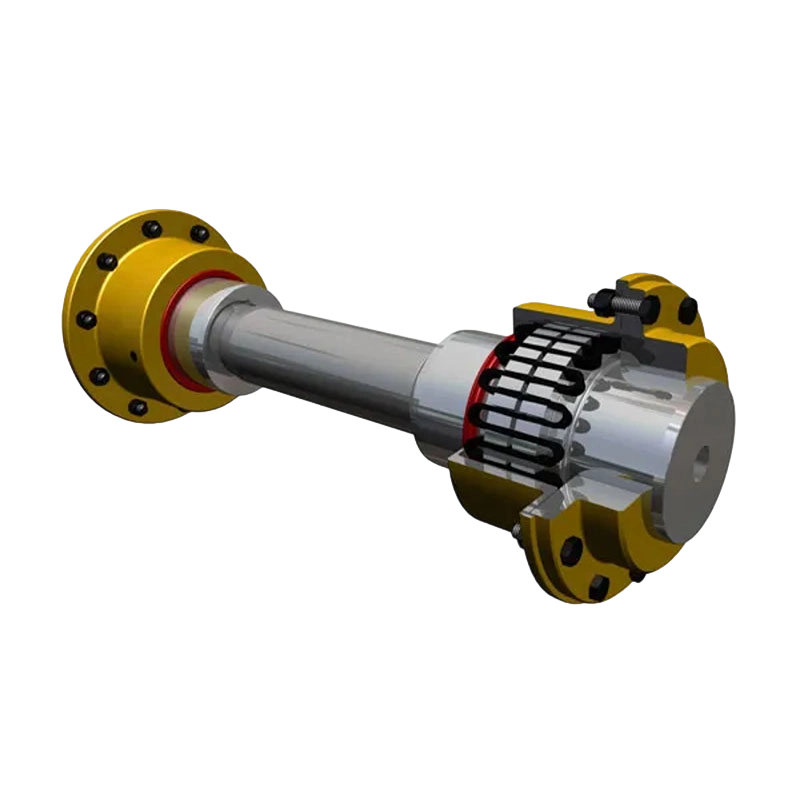
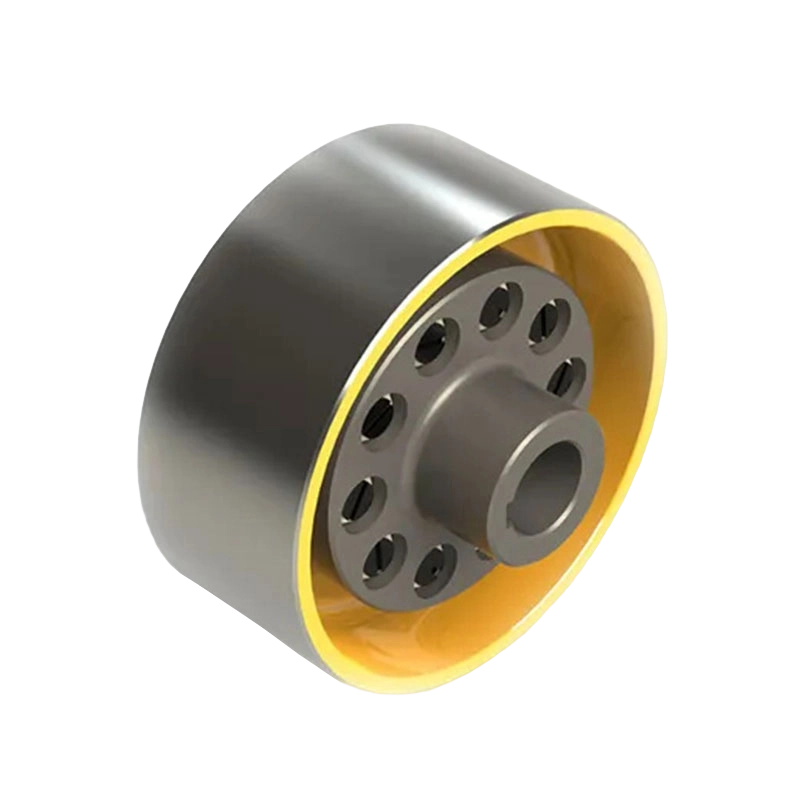
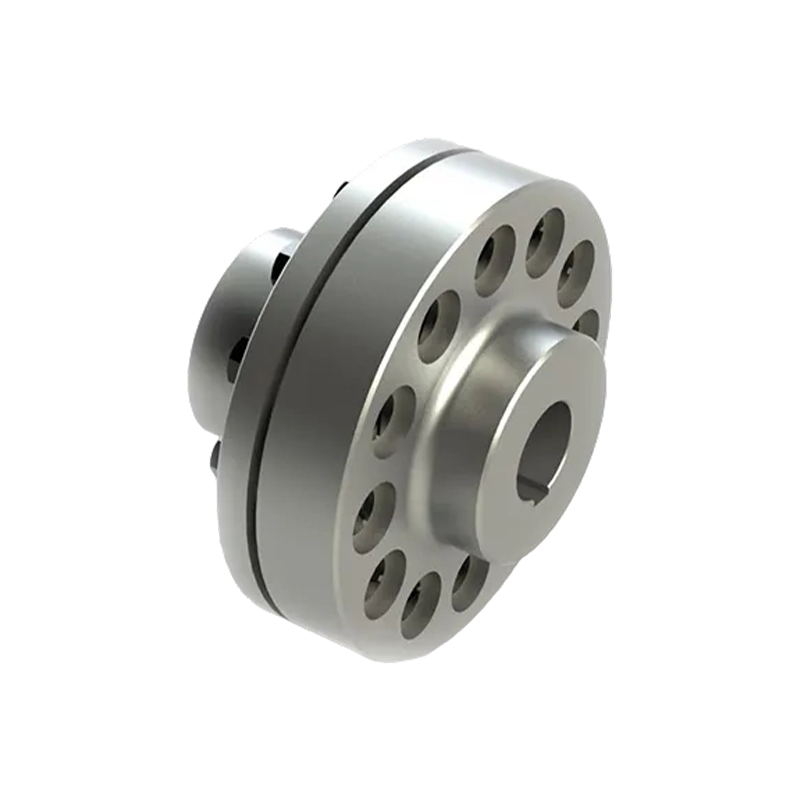
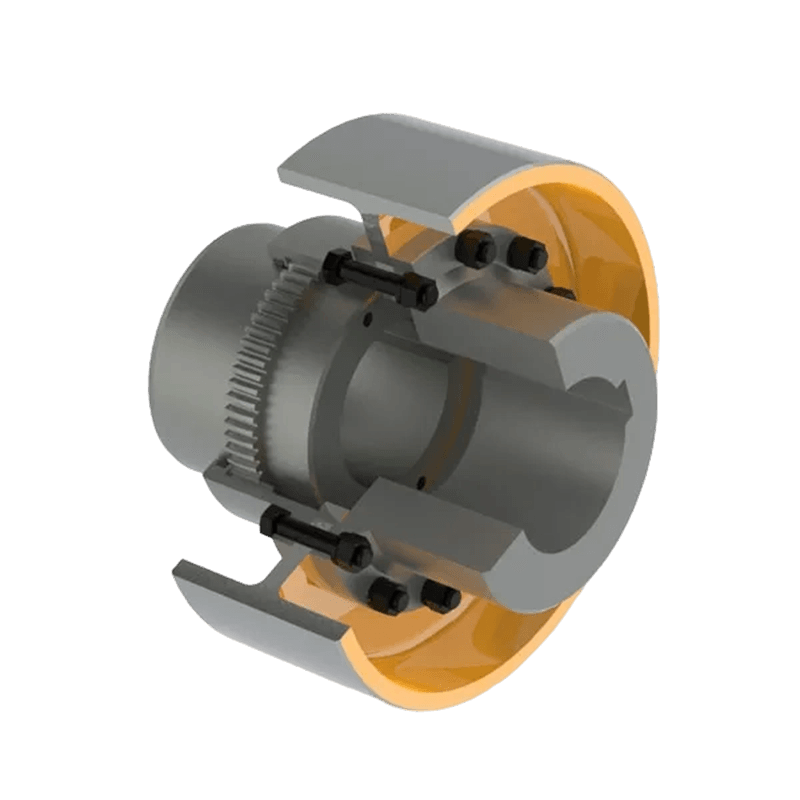
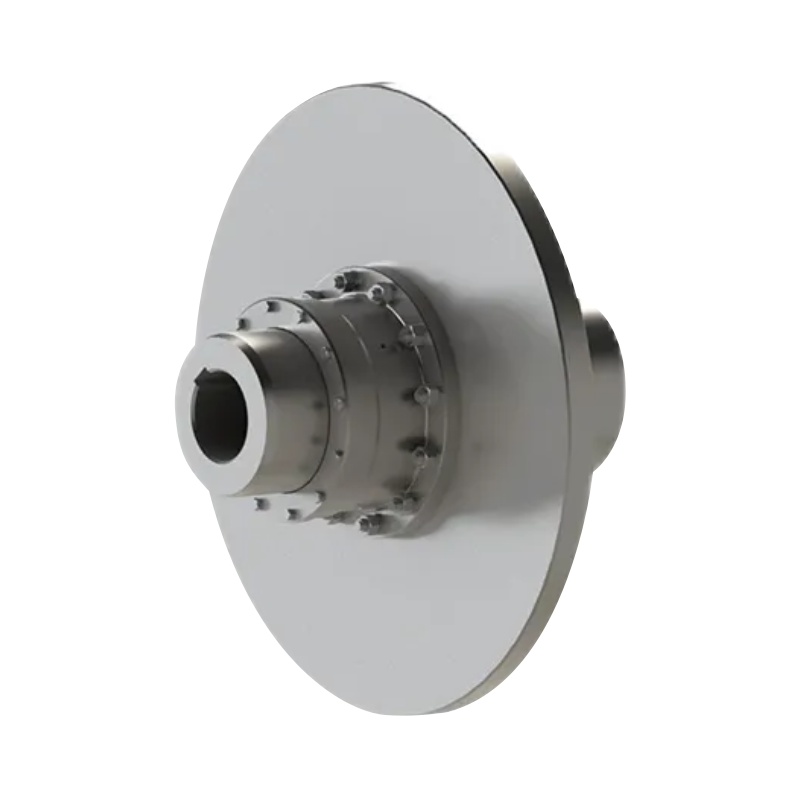
T50 snake spring coupling with connect shaft
How a Snake Spring Coupling Works
When the driving shaft rotates, its hub transmits torque into the metallic spring grid. The spring then transfers this torque to the teeth of the opposite hub and into the driven shaft or connecting shaft assembly. Because the spring has controlled flexibility, it can deform slightly as the shafts move relative to one another.
Under normal operation, the spring element is loaded primarily in bending and shear around the hub teeth. This allows it to absorb a portion of torsional shock and vibration instead of passing every load fluctuation directly into the driven machine. The result is a smoother transmission path and reduced impact on the connected equipment.
Angular misalignment occurs when the centerlines of two shafts intersect at an angle rather than remaining parallel. Parallel misalignment occurs when the shafts are offset from one another but remain generally parallel. Axial movement occurs when the shafts move along their length. A properly designed grid coupling can accommodate limited amounts of all three conditions, although the permitted values depend on the coupling size, speed, load, installation quality, and manufacturer’s technical design.
Flexibility should not be confused with unlimited movement. A snake spring coupling is intended to compensate for normal, controlled displacement. Excessive misalignment increases spring stress, hub tooth loading, heat generation, and wear. Correct shaft alignment remains essential for long service life and reliable performance.
Principal Construction Features
Metallic Snake Spring Element
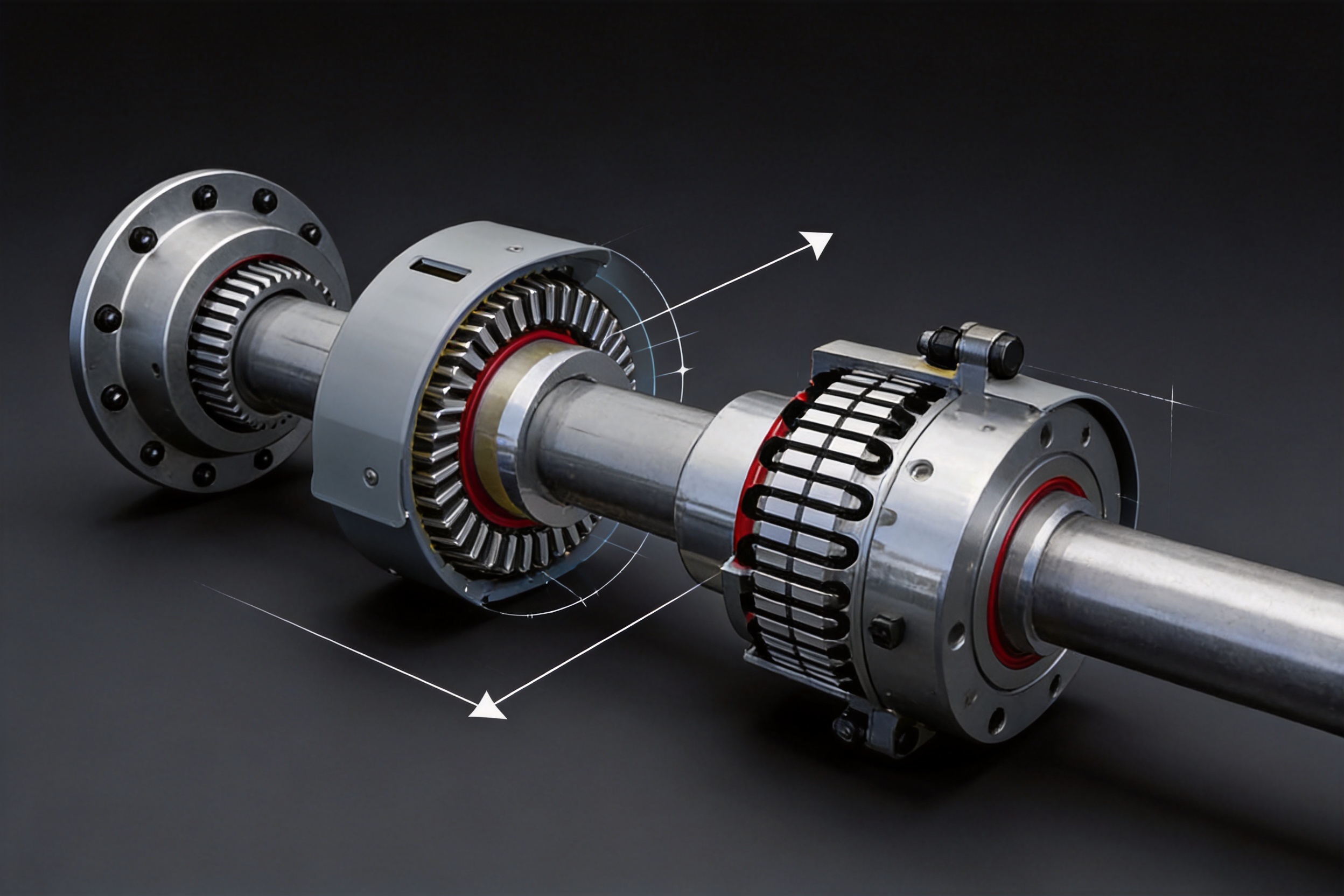
The metallic spring grid provides the coupling’s distinctive combination of strength and flexibility. Unlike an elastomeric element, a steel spring does not depend on a rubber-like material to carry the full torsional load. It can therefore offer strong resistance to fatigue and temperature-related deterioration when the correct material and heat treatment are used.
The spring’s serpentine profile allows it to flex in multiple directions while remaining engaged with both hubs. This construction contributes to shock absorption and vibration damping. It also allows the coupling to maintain a relatively high torsional stiffness compared with softer flexible coupling designs.
Toothed Hubs
The hubs provide the torque-transmitting interface between the shafts and the spring. Their teeth must be accurately formed and properly finished to ensure even contact with the spring element. Consistent tooth geometry helps distribute load, reduce localized stress, and support smooth operation.
Hub material and heat treatment are selected according to the intended duty. Carbon steel, alloy steel, stainless steel, and other suitable materials may be considered depending on torque, speed, corrosion exposure, temperature, and environmental requirements. Precision boring and keyway machining are important because an inaccurate shaft interface can create imbalance or excessive stress.
Connecting Shaft
The connecting shaft makes the T50 arrangement suitable for applications in which the driven and driving machines are separated by a specific distance or require an extended mechanical connection. It may be used between two coupling hubs or as part of a customized shaft assembly.
A connecting shaft must be designed with adequate torsional strength, bending resistance, critical-speed considerations, and dimensional accuracy. Its length and diameter influence the overall behavior of the transmission system. In high-speed applications, dynamic balance and natural frequency analysis may be necessary before production.
Cover and Fastening Arrangement
The cover helps retain the spring element and protect the internal components from dust, moisture, accidental contact, and contaminants. A properly secured cover also helps retain lubricant around the working spring and hub teeth where lubrication is required.
Fasteners, sealing details, and cover construction should be selected according to the operating environment. Equipment used in steel plants, mines, ports, paper mills, and other industrial locations may encounter abrasive dust, water, scale, chemicals, and fluctuating temperatures. The coupling configuration can be adapted to provide an appropriate level of protection for the application.
Performance Advantages
Effective Misalignment Compensation
The T50 coupling is designed to accommodate angular, parallel, and limited axial misalignment. This flexibility reduces the direct transfer of alignment-related forces into motor and driven-machine bearings. It also allows the system to tolerate small changes caused by thermal expansion, foundation movement, or normal mechanical wear.
Its misalignment capability is a major advantage over rigid couplings, which require highly accurate alignment and transmit displacement forces directly through the shaft line. The flexible design gives installation teams greater practical tolerance while still requiring proper alignment procedures.
Shock and Vibration Absorption
Industrial machines rarely operate under perfectly steady loads. Conveyors may start with material already on the belt, mixers may encounter uneven resistance, and crushers or rolling equipment may experience repeated impact loads. The spring grid can flex under these changing conditions, helping to reduce torque peaks and dampen vibration.
By moderating shock transmission, the coupling can help reduce stress on gear teeth, shafts, bearings, and motor components. This may contribute to improved equipment availability and lower maintenance costs over the operating life of the machinery.
High Torsional Strength
The T50’s metallic spring element provides a strong torque path while retaining controlled flexibility. This is useful in applications that require reliable power transmission but cannot tolerate a completely rigid connection. Compared with softer non-metallic flexible elements, a metal spring grid can provide higher resistance to permanent deformation under appropriate operating conditions.
High torsional strength does not eliminate the need for correct sizing. The coupling must be selected for continuous torque, peak torque, starting torque, reversing loads, braking conditions, and the service factor associated with the machine. A properly engineered selection is essential for safe and durable operation.
Resistance to Demanding Industrial Conditions
Metallic spring elements are suitable for many environments where temperature, oil exposure, or mechanical stress could affect non-metallic components. The selection of material, surface treatment, cover design, and lubricant allows the coupling to be adapted to a broad range of industrial conditions.
In applications involving water, scale, dust, or corrosive agents, the coupling should be specified with suitable protective measures. Stainless materials, coatings, seals, and specialized finishes may be considered when the standard configuration is not sufficient.
Low Backlash and Reliable Torque Transmission
The spring grid remains engaged with the hub teeth, creating a positive torque-transmitting connection. This design can provide low backlash compared with couplings that depend on loose or highly compliant elements. Low backlash is beneficial in drive systems that require consistent motion, stable torque transfer, and reduced impact during changes in load.
Actual backlash and torsional behavior depend on tooth geometry, spring clearance, assembly accuracy, wear condition, and the applied load. Regular inspection helps ensure that the coupling continues to perform as designed.
Serviceable and Economical Design
A snake spring coupling is generally straightforward to inspect and service. The spring element, hubs, cover, and fasteners can be examined without replacing the entire shaft connection. In many installations, planned lubrication and periodic inspection are sufficient to maintain the coupling.
The ability to replace selected components can reduce lifecycle cost. If the spring wears while the hubs remain within acceptable condition, replacing the spring may restore performance without removing the complete coupling assembly. This serviceability can be particularly valuable for large industrial drives where downtime and disassembly are expensive.
Advantages Compared with Alternative Coupling Designs
Every coupling type has a suitable operating range. The T50 should not be viewed as a universal replacement for all coupling designs, but it offers a strong combination of features in applications requiring metallic flexibility and dependable torque transmission.
| Coupling type | Typical characteristics | Potential advantage of the T50 snake spring design |
|---|---|---|
| Rigid flange coupling | High torsional rigidity and simple construction, but little or no misalignment compensation | Provides controlled flexibility and helps reduce alignment-related loads |
| Elastomeric jaw or star coupling | Compact and easy to install, with vibration damping through a non-metallic element | Offers a metallic spring element for demanding torque, fatigue, and industrial service conditions |
| Gear coupling | High torque density and misalignment capability, normally requiring careful lubrication | Provides a comparatively simple spring-grid arrangement with effective shock absorption and accessible servicing |
| Diaphragm coupling | High-speed, precise transmission with limited maintenance and specialized design | Can provide practical industrial flexibility and damping for general heavy-duty drive systems |
| Disc coupling | Low backlash and good precision, but sensitive to excessive displacement and installation conditions | Provides spring flexibility and shock absorption for applications with fluctuating loads |
| Tire coupling | Excellent flexibility and vibration isolation through a rubber tire element | Uses a metallic spring element where higher torsional stiffness or different environmental resistance is desired |
The principal competitive strength of the T50 is its balanced performance. It is more forgiving than a rigid coupling, more mechanically robust than many compact elastomeric couplings, and often simpler to maintain than more complex high-performance coupling systems. Its metallic construction makes it a practical choice for heavy equipment where repeated shock, high starting torque, or harsh working conditions are important design considerations.
Selection should always be based on the complete machine duty rather than a general comparison. Speed, torque, misalignment, temperature, space, maintenance practices, and safety requirements must all be reviewed before final approval.
Manufacturing Strengths and Engineering Capabilities
Zhongye Heavy Industry Technology (Zhenjiang) Co., Ltd. integrates research and development, manufacturing, and sales. Its product portfolio includes grid couplings, toothed couplings, elastic sleeve column pin couplings, elastic column pin couplings, gear couplings with elastic pins, universal couplings, tire couplings, jaw couplings, star couplings, diaphragm couplings, drum couplings, Oldham couplings, flange couplings, clip shell couplings, GL type roller chain couplings, safety couplings, and other transmission products.
This broad product range provides an important engineering advantage. Coupling selection can be based on the customer’s complete operating condition rather than on a single standard product. When a grid coupling is appropriate, the company can supply a suitable metallic spring design. When another coupling principle is better suited to the equipment, the engineering team can evaluate an alternative. This product knowledge supports more practical and technically consistent recommendations.
Research and Development
Effective coupling development requires knowledge of torque transmission, shaft alignment, fatigue, material behavior, vibration, machining, lubrication, and industrial equipment operation. The company’s engineering capability supports both standard products and non-standard designs. Customized solutions may include special bores, altered shaft lengths, different hub dimensions, modified covers, unique mounting arrangements, or application-specific materials.
For the T50 connecting shaft configuration, engineering review can consider the distance between shafts, shaft diameter, keyway requirements, installation space, operating speed, and the type of driven equipment. These details are important because the coupling and connecting shaft function as one transmission system.
Manufacturing Facilities
The company’s new workshop covers approximately 16,463.52 square meters. The facility includes a heavy workshop of about 5,500 square meters, a precision workshop of approximately 4,600 square meters, an office building and gymnasium of around 2,000 square meters, a dining hall, warehouse space, and areas for roads, greening, and parking.
The separation of heavy and precision production areas supports efficient organization of different manufacturing activities. Heavy machining and handling operations require appropriate space and equipment, while precision production requires controlled procedures for dimensional accuracy, surface finish, and assembly consistency.
A dedicated warehouse also helps support material control, component storage, production planning, and order fulfillment. For customized couplings, organized storage and traceability are especially important because non-standard components may differ from one order to another.
Material Preparation and Control
Material selection has a direct effect on coupling reliability. Hubs and shafts must have sufficient strength and toughness for the specified torque and operating conditions. Spring materials must resist repeated flexing and fatigue. Covers and fasteners must be compatible with the environment and service requirements.
Manufacturing quality begins with controlled incoming materials. Material identification, dimensional inspection, surface examination, and documentation help reduce the risk of using unsuitable stock. Depending on the order and technical requirements, material certificates or additional testing may be incorporated into the quality plan.
Precision Machining
Accurate machining is essential for coupling components. Hub bores must match the specified shaft interface. Keyways must be correctly positioned and sized. Tooth profiles must be consistent so that torque is distributed evenly through the spring grid. Connecting shafts require controlled diameter, concentricity, length, and end geometry.
Precision machining also contributes to balance. Eccentricity, uneven material removal, or poor concentricity can create vibration, especially as rotational speed increases. A disciplined machining process helps maintain the geometric relationship between the bore, outside diameter, tooth profile, and shaft axis.
Heat Treatment and Surface Protection
Where specified by the design, heat treatment can improve the strength, hardness, wear resistance, and fatigue performance of hubs, shafts, or spring components. The treatment method depends on the material and intended duty. Process control is important because excessive hardness can reduce toughness, while insufficient treatment may lead to premature wear or deformation.
Surface treatment and protective coatings may be considered for environments involving moisture, dust, chemicals, or corrosive exposure. The appropriate protection depends on the customer’s operating conditions and should be defined during technical communication.
Assembly and Inspection
Assembly quality affects the real-world performance of the coupling. The spring must be seated correctly in the hub teeth, the cover must be installed securely, and fasteners must be tightened according to the specified procedure. Incorrect assembly can produce uneven load distribution, excessive noise, rapid wear, or spring failure.
Inspection may include dimensional checks, bore and keyway verification, tooth inspection, spring examination, shaft runout checks, cover fit verification, and visual assessment of surface condition. For connecting shaft assemblies, concentricity and balance are particularly important.
The company emphasizes strict quality control, advanced testing facilities, reliable production guarantees, complete specifications, and support for customized manufacturing. These strengths help ensure that the supplied coupling corresponds to the approved drawing and technical requirements.
Applications in Industrial Equipment
Metallurgical Equipment
Metallurgical machinery often operates under high loads, fluctuating torque, shock, heat, dust, and continuous production schedules. Rolling mills, conveying systems, cooling equipment, and auxiliary drives can benefit from a coupling that accommodates small alignment changes while helping absorb torque fluctuations.
The T50 can be considered for suitable drive arrangements where the selected torque and speed ratings match the equipment. Protective covers, appropriate lubrication, and material choices should be reviewed for the specific mill or processing environment.
Mining Machinery
Mining equipment is exposed to abrasive dust, heavy starting loads, impact, and difficult maintenance access. Conveyors, crushers, feeders, pumps, fans, and material handling systems require reliable power transmission and components that can tolerate demanding service.
The metallic spring element provides a practical balance between flexibility and strength. Its ability to absorb shock can help reduce the impact of sudden load changes. However, contamination control and inspection remain important because abrasive particles can accelerate wear if they enter the working area.
Water and Pumping Equipment
Pumps and water-treatment machinery may experience frequent starts and stops, changes in flow resistance, pipe forces, and alignment shifts caused by thermal or foundation movement. A flexible connection can help isolate the motor from some of these effects.
For wet or corrosive installations, the coupling should be specified with suitable materials, coatings, sealing, and cover protection. Stainless steel or other corrosion-resistant options may be considered where the environment requires them.
Lifting Equipment
Cranes, hoists, winches, and other lifting equipment can experience acceleration, braking, reversing, and variable loads. These operating cycles create repeated torque changes that can stress rigid shaft connections.
A correctly selected grid coupling can help moderate shock during starting and stopping. Safety considerations are especially important in lifting systems. The coupling must be evaluated as part of the complete drive and braking system, and any required safety factor, guarding, or inspection schedule must be followed.
Paper and Pulp Equipment
Paper machinery often operates continuously at controlled speeds and may include rollers, fans, pumps, conveyors, and cutting or processing units. Reliability, low vibration, and easy maintenance are important because unplanned downtime can affect an entire production line.
The T50 can be used in suitable auxiliary and process drives where its torque, speed, and alignment capabilities meet the application. Balanced components and proper lubrication help support stable operation.
Port and Material Handling Equipment
Port machinery operates outdoors and may be exposed to humidity, salt air, dust, variable loads, and frequent movement. Conveyors, hoists, loaders, pumps, and auxiliary drives can benefit from a flexible coupling designed for practical maintenance and protection.
Environmental protection should be considered during specification. Covers, coatings, seals, and corrosion-resistant materials can improve suitability for coastal or exposed installations.
Customization Options
Industrial machinery frequently requires coupling dimensions that differ from standard catalog configurations. A connecting shaft may need a specific length to match the distance between the driver and driven machine. The hubs may require different bore diameters, keyways, splines, shrink-disc interfaces, or special mounting details.
Customization may include the following considerations:
- Special shaft diameters and bore tolerances.
- Keyway dimensions and orientation.
- Customized connecting shaft length and diameter.
- Different hub spacing or flange dimensions.
- Alternative materials for shafts, hubs, springs, or covers.
- Protective coatings for humid, dusty, or corrosive environments.
- Special balancing requirements for higher-speed operation.
- Modified covers or installation arrangements.
- Non-standard torque, speed, or misalignment requirements.
- Integration with existing equipment and replacement couplings.
Non-standard design should begin with accurate operating information. Customers should provide motor power, speed, starting method, driven-machine type, continuous and peak torque, shaft diameters, shaft distance, ambient temperature, alignment conditions, installation orientation, and maintenance limitations. Drawings, photographs, equipment manuals, or dimensional sketches can further improve design accuracy.
The company undertakes the design and manufacture of various non-standard couplings. This capability is valuable when a standard product cannot fit an existing machine or when a complete drive system requires a specialized shaft connection.
Selection Guidelines for the T50 Coupling
Determine the Required Torque
Continuous operating torque is only one part of coupling selection. The design should also consider motor starting torque, load fluctuations, reversing loads, braking torque, emergency stops, and impact conditions. A service factor is normally applied according to the type of machine and severity of operation.
Underestimating torque can cause excessive spring stress, tooth damage, shaft deformation, or premature fatigue. Over-specification may increase cost and size unnecessarily. Engineering review helps establish a practical balance between safety and economy.
Check Rotational Speed
Rotational speed affects centrifugal forces, balance, vibration, lubrication behavior, and the dynamic performance of the connecting shaft. Higher-speed applications may require tighter balance control and additional analysis of critical speed.
The coupling should be operated within the manufacturer’s approved speed range. If the connecting shaft is long, its natural frequency and support arrangement must be evaluated as part of the complete assembly.
Evaluate Shaft Dimensions
The available shaft diameter must be compatible with the hub bore and keyway. The shaft must also have sufficient strength to carry the transmitted torque. A coupling cannot compensate for an undersized or damaged shaft.
Customers should confirm shaft extension, keyway length, shoulder locations, axial movement, and the required method of locking the hub. These details are particularly important when replacing an existing coupling in a confined installation.
Review Misalignment
Expected angular, parallel, and axial movement should be identified during design. Alignment should be measured after installation and checked again after the equipment reaches operating temperature where thermal growth is significant.
Allowable misalignment values are not unlimited and may vary with speed and torque. Operating near the maximum permitted value can reduce service life. The best practice is to align the machinery as accurately as practical and use coupling flexibility as protection against normal movement rather than as a substitute for alignment.
Consider the Environment
Temperature, moisture, dust, chemicals, oil, salt spray, washdown procedures, and outdoor exposure can affect coupling materials and lubrication. The cover and spring element must be suitable for the actual environment.
Where the coupling is installed in a hazardous or publicly accessible area, guarding and applicable safety requirements must also be addressed. The rotating coupling should never be operated without an appropriate guard.
Installation Recommendations
Before installation, verify that the coupling received matches the approved drawing, order details, bore dimensions, shaft arrangement, and connecting shaft length. Inspect all parts for transport damage, corrosion, contamination, or burrs.
Clean the shaft surfaces and hub bores. Remove dirt, oil residues, sharp edges, and raised material that could prevent accurate seating. Do not force a hub onto a shaft by striking the coupling or spring element. Use suitable installation tools and methods that avoid damage to precision surfaces.
Install the hubs at the specified positions and confirm that the shaft ends do not impose unintended axial load. Align the driver and driven machine using appropriate instruments. Depending on the application, alignment may involve straightedge, dial indicator, laser alignment, or other approved methods.
Install the spring grid carefully so that it engages evenly with the teeth of both hubs. Apply the recommended lubricant if the design requires lubrication. Fit the cover and tighten fasteners evenly. The cover must be secure before operation.
After installation, rotate the assembly by hand where possible to identify interference, tight spots, abnormal resistance, or misalignment. Recheck the position of the hubs, fastener tightness, shaft runout, and guard clearance. Conduct a controlled trial run and observe noise, vibration, temperature, and any signs of lubricant leakage.
Maintenance and Inspection
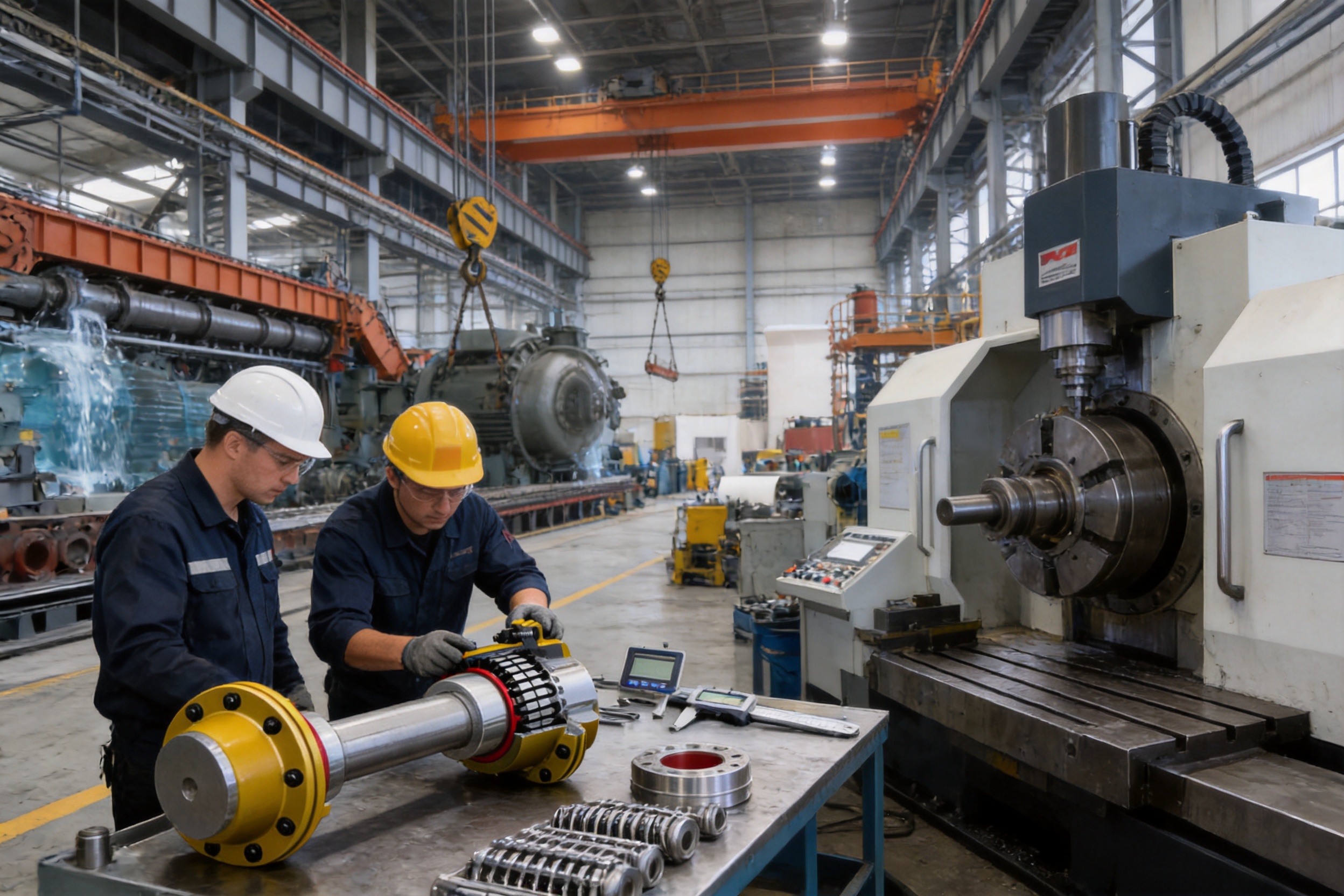
Routine maintenance is generally simple, but it should not be neglected. Inspection intervals depend on speed, load, environment, duty cycle, and equipment criticality. Heavy-duty or safety-related equipment may require more frequent checks than lightly loaded machinery in a clean indoor environment.
During inspection, examine the cover for looseness, damage, corrosion, or contact with rotating parts. Check for unusual noise, increased vibration, temperature rise, lubricant leakage, or visible movement at the hub. These symptoms can indicate misalignment, spring wear, loose fasteners, excessive load, or shaft problems.
When lubrication is required, use the recommended lubricant and quantity. Too little lubricant can increase wear and heat, while too much can create leakage or interfere with the cover. Lubrication intervals should be established according to operating conditions rather than treated as a fixed rule for every installation.
Inspect the spring grid for wear, cracks, deformation, corrosion, or loss of engagement. Examine hub teeth for excessive rounding, pitting, scoring, or localized damage. If the spring is worn but the hubs remain serviceable, replacement of the spring may be possible. Damaged hubs, shafts, fasteners, or covers should be replaced or repaired before returning the equipment to operation.
Always isolate and lock out the equipment before opening the coupling cover or entering the guarded area. Rotating machinery can cause severe injury even when operating at low speed. Maintenance should be performed only by trained personnel following the site’s safety procedures.
Quality Assurance and Customer Support
Reliable coupling performance depends on more than the shape of the final product. It requires control of materials, drawings, processes, machining, heat treatment, assembly, inspection, packaging, and technical communication. Zhongye emphasizes strict quality control and production guarantees throughout these stages.
The company’s products comply with international standards and certifications such as ISO 9001. Quality management provides a structured approach to documentation, process consistency, inspection, corrective action, and continuous improvement. For customers, this supports greater confidence that repeat orders and customized components will be produced according to defined requirements.
Pre-sale technical support helps customers identify a suitable coupling type and configuration. The engineering team can review operating data, recommend a flexible or rigid solution, and develop non-standard designs when required. During production, technical drawings and specifications help confirm that the coupling corresponds to the machine interface.
After-sale service support is also important. Installation questions, maintenance guidance, replacement spring requirements, and future coupling upgrades may arise after delivery. A supplier with broad coupling experience can provide assistance beyond the initial transaction and help customers manage the complete service life of the product.
The company’s professional and experienced team focuses on reliable products, practical engineering solutions, advanced testing, complete specifications, customization support, high transmission efficiency, and responsive service. These strengths distinguish a technically engaged manufacturer from a supplier that only provides a basic catalog component.
Why the T50 Is a Practical Industrial Choice
The T50 snake spring coupling with connecting shaft is well suited to customers seeking a dependable connection between rotating shafts without accepting the vibration and alignment sensitivity of a rigid coupling. Its metallic spring element provides a useful combination of torque capacity, torsional flexibility, shock absorption, and durability.
Its serviceable structure can simplify maintenance and reduce lifecycle cost. Its ability to accommodate normal misalignment can help protect connected machinery. Its connecting shaft arrangement supports installations with specific spacing requirements. Its steel-based construction can be adapted to demanding environments through suitable material, coating, cover, and lubrication choices.
The product is also supported by a manufacturer capable of producing many different coupling types. This provides a broader engineering perspective during selection and helps customers avoid choosing a coupling based only on initial purchase price. A correctly selected coupling can reduce downtime, maintenance interruptions, and premature damage to other drivetrain components.
Compared with competitors’ products, the most meaningful advantage is not simply a single design feature. It is the combination of flexible metallic performance, manufacturing control, customization capability, product variety, technical support, and after-sale service. These factors are especially important for metallurgical, mining, water, lifting, paper, port, and other industrial applications where operating conditions are demanding and equipment reliability is critical.
Frequently Asked Questions
What is a snake spring coupling?
A snake spring coupling is a flexible metallic coupling that uses a serpentine spring grid engaged with toothed hubs to transmit torque between two shafts. It is also commonly called a grid coupling or spring grid coupling.
What does the connecting shaft do?
The connecting shaft transfers torque between the coupling interfaces and allows the driver and driven machine to be connected across a specified distance or through a customized shaft arrangement. Its length, diameter, material, balance, and end connections must be designed for the operating conditions.
Can the T50 accommodate shaft misalignment?
Yes. The flexible spring element is designed to accommodate limited angular, parallel, and axial misalignment. However, the shafts must still be aligned carefully. Excessive misalignment can increase spring stress, wear, heat, and vibration.
Is the T50 suitable for heavy-duty machinery?
It can be suitable for heavy-duty machinery when the coupling is correctly sized for torque, speed, shock loading, shaft dimensions, and environmental conditions. Applications may include conveyors, pumps, mixers, fans, lifting equipment, metallurgical machinery, mining equipment, paper equipment, and port machinery.
Does the coupling require lubrication?
Many grid coupling designs use lubricant between the spring and hub teeth. The required lubricant type, quantity, and interval depend on the specific configuration and operating conditions. The manufacturer’s maintenance instructions should always be followed.
What information is needed for product selection?
Important information includes motor power, operating speed, continuous torque, peak torque, starting and braking conditions, shaft diameters, keyways, shaft distance, misalignment, operating temperature, environmental exposure, installation orientation, and available space.
Can the coupling be customized?
Yes. Customization may include special bores, keyways, hub dimensions, connecting shaft lengths, materials, covers, coatings, balancing requirements, and installation interfaces. Non-standard requirements should be reviewed using drawings and complete operating data.
How does the T50 compare with an elastomeric coupling?
The T50 uses a metallic spring element rather than a rubber-like elastomer. This can provide higher torsional stiffness, strong fatigue performance, and suitability for certain demanding industrial conditions. Elastomeric couplings may be preferred when compact size, electrical isolation, or particularly soft vibration isolation is the primary requirement.
How does the T50 compare with a rigid coupling?
A rigid coupling provides almost no compensation for misalignment and can transfer alignment forces directly into the shafts and bearings. The T50 provides controlled flexibility and shock absorption, making it more appropriate where normal machine movement or fluctuating torque is expected.
What causes premature grid coupling wear?
Common causes include excessive misalignment, overload, incorrect lubrication, inadequate guarding, loose fasteners, damaged shafts, poor installation, contamination, excessive speed, and operation beyond the selected coupling rating. Regular inspection can help identify these conditions before major failure occurs.
Is a cover necessary?
A cover protects the spring element and helps retain lubricant. It also provides important protection against accidental contact with rotating components. The coupling should be properly guarded in accordance with applicable workplace and machinery safety requirements.
Where is the manufacturer located?
Zhongye Heavy Industry Technology (Zhenjiang) Co., Ltd. is located in Zhenjiang City, Jiangsu Province, China. The company integrates research and development, manufacturing, sales, customization, technical support, and after-sale service.
Conclusion
The T50 snake spring coupling with connecting shaft is a flexible and durable power transmission component for industrial equipment. Its metallic spring grid accommodates controlled misalignment, absorbs shock, reduces vibration transmission, and maintains dependable torque transfer. The connecting shaft configuration allows the product to serve equipment layouts that require a defined distance or customized shaft connection.
Its advantages are strengthened by practical serviceability, low backlash, strong torsional performance, broad application potential, and adaptability to different materials and environmental conditions. Compared with rigid, elastomeric, gear, disc, diaphragm, and tire coupling alternatives, it offers a balanced solution for machinery requiring both flexibility and mechanical strength.
Zhongye Heavy Industry Technology (Zhenjiang) Co., Ltd. supports the product with integrated R&D, manufacturing, precision machining, quality control, testing facilities, customization, complete coupling specifications, and technical service. Its experience across metallurgical, mining, water, lifting, paper, port, and other industries enables it to provide application-focused solutions rather than one-size-fits-all products.
For the best result, customers should provide complete operating information and select the coupling through a technical review. Correct sizing, accurate alignment, suitable lubrication, effective guarding, and planned inspection are essential. When these practices are followed, the T50 coupling can contribute to reliable operation, reduced maintenance interruption, and longer service life for connected machinery.
References
1. Manufacturer product information for T50 snake spring coupling with connecting shaft.
2. Manufacturer technical information concerning grid couplings and flexible metallic coupling applications.
3. ISO 9001 quality management system principles and manufacturing quality practices.
4. General engineering principles for shaft alignment, torque transmission, flexible couplings, vibration control, and rotating machinery maintenance.
5. Industrial power transmission design practices for metallurgical, mining, pumping, lifting, paper, port, and material handling equipment.
6. General maintenance practices for spring grid couplings, including inspection, lubrication, guarding, and replacement of wear components.
Product: T50 snake spring coupling with connect shaft

- Quick Links
- About
- Products
- Our Service
- News & Events
- Contact
- Products Series
- Flexible Couplings with Non-Elastic Elements
- Flexible Couplings with Metal Elastic Elements
- Flexible Couplings with Non-Metallic Elastic Elements
- Safety Coupling
- Rigid Coupling
- Contact Us
- Tel : +86 511 8572 3800 +86 511 8572 3900
- Mobile : +86 15106109009
- Email : sales@couplingzy.com
- Add:No.1 Zhongye Yingbin Avenue, Gaozi Street, Dantu Economic Development Zone, Zhenjiang City, Jiangsu Province, China.


