:+86 15106109009
:sales@couplingzy.com


 English
 русский
 Español
 عربى
 Português
 Deutsch
 Türk
 Indonesia


SWC-CH Type Long Expansion Welded Universal Coupling: High-Capacity Compensation for Heavy-Duty Power Transmission
Content
- 1 1. The Role of Long Expansion Universal Couplings in Industrial Equipment
- 2 2. Product Overview
- 3 3. Main Structural and Functional Advantages
- 4 4. Model Range and Technical Parameters
- 5 5. Advantages Compared with Conventional Coupling Solutions
- 6 6. Application Fields
- 7 7. Manufacturing Strengths and Engineering Capabilities
- 8 8. Installation and Commissioning Recommendations
- 9 9. Maintenance and Service-Life Management
- 10 10. How to Specify an SWC-CH Coupling
- 11 11. Q&A
- 11.1 Q1: What is the main purpose of the SWC-CH type long expansion welding universal coupling?
- 11.2 Q2: How much axial expansion can the coupling accommodate?
- 11.3 Q3: What is the maximum axis angle?
- 11.4 Q4: What is the maximum nominal torque?
- 11.5 Q5: Is the SWC-CH an elastomeric coupling?
- 11.6 Q6: What are the benefits of welded construction?
- 11.7 Q7: Can the coupling be customized?
- 11.8 Q8: Which industries commonly use this type of coupling?
- 11.9 Q9: Does the coupling eliminate the need for shaft alignment?
- 11.10 Q10: What information is needed to select the correct model?
- 11.11 Q11: What maintenance does the coupling require?
- 11.12 Q12: Why choose a large expansion coupling instead of adding a separate sliding device?
- 12 12. Conclusion
- 13 References
- 14 Product: SWC-CH type long expansion welding universal coupling
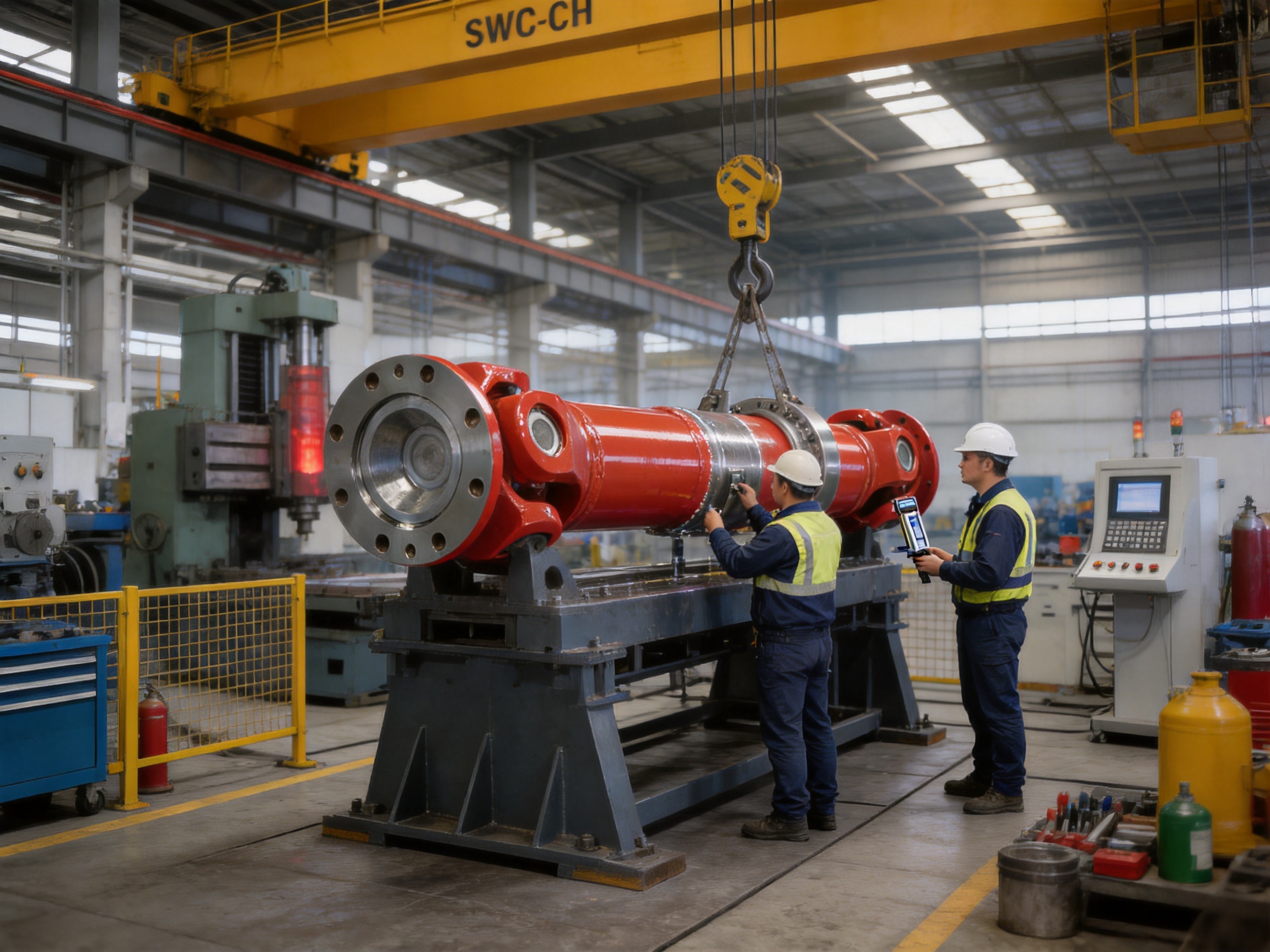
In large industrial machinery, the coupling is much more than a simple connection between two shafts. It is a critical mechanical component that must transfer torque reliably while accommodating shaft misalignment, thermal movement, installation tolerances, vibration, and changing operating conditions. When equipment operates over long distances or under severe thermal and mechanical loads, a conventional fixed coupling may not provide sufficient axial compensation. Excessive movement can then be transferred to bearings, gearboxes, motors, rolls, pumps, or other connected components, increasing wear and creating costly downtime.
The SWC-CH type long expansion welded universal coupling is designed for precisely this kind of demanding service. It combines universal-joint articulation with a long telescopic expansion structure and a welded construction. This arrangement allows the coupling to transmit substantial torque while accommodating axial expansion and contraction over a considerable working range. The design is especially suitable for metallurgical machinery, petrochemical equipment, heavy conveying systems, mining machinery, lifting systems, paper equipment, port machinery, and other industrial installations in which large distances, high loads, and thermal displacement must be managed simultaneously.
With nominal torque ratings reaching 1,000 kN·m and expansion and contraction capacity reaching 1,000 mm in the listed product range, the SWC-CH series provides a practical solution for large-scale power transmission. Its maximum permitted axis angle is up to 15 degrees, while the welded universal-joint structure provides a stable connection between shafts that are not perfectly aligned. The combination of axial compensation, angular flexibility, high torque capacity, and configurable dimensions makes this coupling particularly valuable in heavy industrial environments.
1. The Role of Long Expansion Universal Couplings in Industrial Equipment
Industrial drive systems rarely operate under perfectly static conditions. During operation, shafts may move because of thermal expansion, foundation settlement, structural deflection, machine vibration, or changes in load. In rolling mills and other metallurgical systems, the temperature difference between startup and full-load operation can produce significant dimensional changes. In conveying machinery, long shaft lines can experience installation deviations and structural movement. In petrochemical plants, connected equipment may expand at different rates because of temperature variations and different materials.
A coupling positioned between two shafts must manage these changes without creating excessive reaction forces. If axial displacement is not absorbed, the resulting thrust can overload bearings or impose stress on connected equipment. If angular misalignment is not accommodated, the coupling may experience uneven loading, increased friction, fatigue, and accelerated wear. If torque capacity is insufficient, overloads and shock loads may damage the coupling or interrupt production.
The SWC-CH type coupling addresses these operating challenges through three coordinated design features:
First, its long expansion structure provides a substantial telescopic stroke. This allows the coupling to compensate for axial movement rather than forcing the connected shafts or bearings to absorb the displacement.
Second, its universal-joint construction supports angular misalignment. The listed maximum axis angle is up to 15 degrees, providing flexibility for equipment with non-coaxial shafts or shafts that change position during operation.
Third, its welded structural design creates a strong and stable assembly suitable for high-load applications. Welded construction can reduce the number of bolted interfaces in the main load path and supports the development of a robust, compact transmission assembly when properly engineered and manufactured.
These characteristics make the SWC-CH more suitable for large displacement applications than ordinary rigid couplings and more appropriate for heavy loads than many light-duty flexible couplings.
2. Product Overview
The SWC-CH type is a large telescopic welded universal joint coupling classified as a flexible coupling with non-elastic elements. Unlike couplings that rely on rubber, polyurethane, or other elastic inserts, this design uses mechanical movement and universal-joint articulation to accommodate operating displacement. It is therefore well suited to high torque, elevated load, and industrial environments in which an elastic element may not provide the required strength, temperature resistance, or service life.
The product range includes models from SWC180CH1 and SWC180CH2 through SWC550CH1 and SWC550CH2. The series covers rotating diameters from 180 mm to 550 mm. Depending on the model, nominal torque ranges from 22.4 kN·m to 1,000 kN·m. The listed expansion and contraction quantity ranges from 200 mm to 1,000 mm, and the permitted axis angle is listed as no more than 15 degrees for the series.
The product is available in different length configurations and dimensional arrangements. The CH1 and CH2 variants allow the coupling to be selected according to the required installation length, displacement stroke, shaft arrangement, and load conditions. Final selection should be based on the actual torque, rotational speed, axial displacement, angular misalignment, bore requirements, operating environment, and fatigue duty of the application.
Because the coupling is a major rotating component, correct selection is essential. Nominal torque should not be considered in isolation. Starting torque, braking torque, impact loading, reversing operation, torsional vibration, duty cycle, and environmental temperature can all affect the required safety factor. The coupling manufacturer can provide technical guidance for non-standard dimensions and custom configurations.
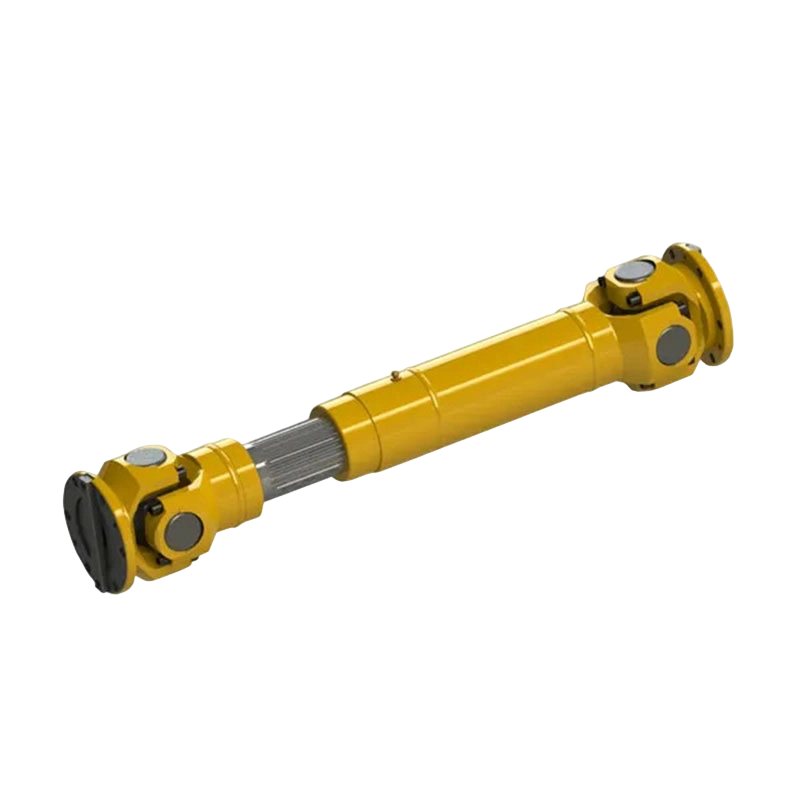
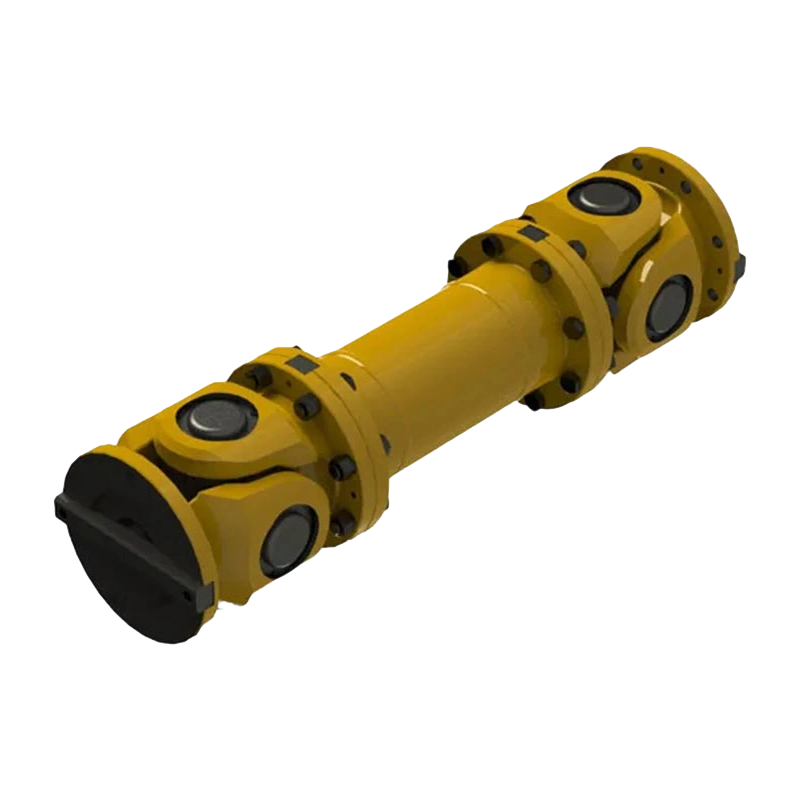
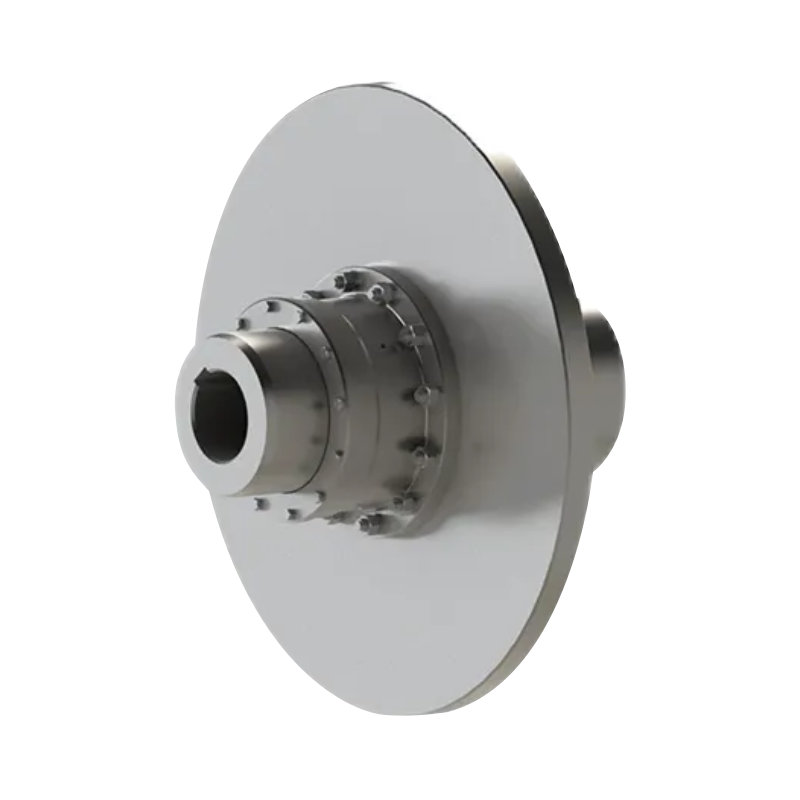
SWC-CH type long expansion welding universal coupling
3. Main Structural and Functional Advantages
3.1 Long Telescopic Compensation
The most prominent feature of the SWC-CH design is its long axial expansion and contraction capability. The listed stroke reaches up to 1,000 mm in the SWC550CH2 model, while several other models provide 200 mm, 220 mm, 300 mm, or 400 mm of movement. This is significantly more than the limited axial movement available from many conventional couplings.
Long telescopic compensation is valuable where the distance between connected machines changes during operation. Thermal expansion is one common cause. A long shaft, casing, frame, pipe, or machine body may expand as operating temperature rises. If the coupling cannot move axially, the expansion may be transmitted to bearings and machine housings. The telescopic section allows the coupling to follow this movement while continuing to transmit torque.
Axial compensation can also simplify installation. In some large systems, it is difficult to position all equipment with perfect precision before commissioning. A coupling with a suitable telescopic range can accommodate controlled installation variation and make equipment assembly more practical. However, the telescopic stroke must not be treated as a substitute for correct alignment. Proper alignment, support, lubrication, guarding, and inspection remain essential.
3.2 Angular Misalignment Capability
The universal-joint construction enables the coupling to operate with an axis angle of up to 15 degrees according to the supplied product information. This feature is important in equipment layouts where the driver and driven shaft cannot remain exactly collinear. It is also useful when connected equipment changes position under load or when the coupling must cross a varying distance between two mechanical assemblies.
Angular flexibility helps reduce bending stress caused by misalignment. Instead of forcing the connected shafts to operate as a rigid straight line, the universal joint allows controlled articulation. This protects the drive system from unnecessary reaction forces and helps maintain reliable torque transmission during movement.
The permitted angle is a design limit, not necessarily the recommended continuous operating angle for every speed and load. Operating conditions such as rotational speed, torque, lubrication, bearing condition, dynamic balance, and joint geometry should be reviewed before the coupling is used at or near the maximum angle. In applications with continuous high-speed operation, the actual working angle may need to be lower than the maximum listed value.
3.3 High Torque Transmission
The SWC-CH range is intended for large industrial loads. Its nominal torque capacity increases with the rotating diameter and model size. The SWC180CH1 model is listed at 22.4 kN·m, while the SWC550CH1 model is listed at 1,000 kN·m. These ratings allow the series to cover applications ranging from substantial auxiliary drives to very large primary transmission systems.
High torque capacity is particularly important in steel processing, mining, heavy conveying, and lifting equipment. These machines may experience high starting loads, sudden changes in resistance, or intermittent shock. A coupling must not only transmit the average running torque but also withstand transient conditions over the required service life.
The listed fatigue torque values provide an additional reference for evaluating repeated loading. Depending on the model, fatigue torque ranges from 11.2 kN·m to 500 kN·m. Engineers should compare the expected torque spectrum of the equipment with both nominal and fatigue ratings. For systems with frequent starts, stops, reversals, impacts, or cyclic loading, fatigue assessment is especially important.
3.4 Welded Construction
The welded design is one of the distinguishing features of the product. A welded structure can provide a strong and continuous connection between components when the joint design, material selection, welding procedure, and inspection process are properly controlled. In large couplings, welded construction can also support a favorable balance between strength, mass, manufacturability, and dimensional adaptability.
For heavy machinery, structural stiffness is important because deformation can influence alignment and load distribution. A stable welded body helps maintain the intended geometry of the universal-joint and telescopic assembly. It can also support the manufacture of large-size couplings that would be difficult or uneconomical to produce as a single forged or machined block.
Welding quality must be controlled throughout the manufacturing process. Important practices include material traceability, joint preparation, qualified welding procedures, control of heat input, welder qualification, distortion management, visual inspection, dimensional inspection, and any required non-destructive testing. Stress relief or other post-weld treatment may be considered according to material, thickness, design, and application requirements.
3.5 Non-Elastic Mechanical Compensation
The SWC-CH is categorized as a coupling with non-elastic elements. This means that its primary compensation mechanism is mechanical rather than based on deformation of an elastomeric insert. The absence of a rubber or polymer element can be beneficial in high-temperature, high-load, or severe industrial environments where elastic materials may age, soften, harden, crack, or lose performance.
Mechanical compensation also supports high torque density. Instead of depending on an elastic element to absorb torque and misalignment, the universal-joint and telescopic structure transmit load through engineered mechanical components. This can make the coupling appropriate for equipment where high torque and long axial travel are required at the same time.
Non-elastic construction does not mean that the coupling is maintenance-free. Universal-joint bearings, sliding or telescopic interfaces, fasteners, seals, and connected shaft surfaces must be inspected according to the duty cycle. Correct lubrication and protection from contamination are essential to achieve expected service life.
4. Model Range and Technical Parameters
The following table summarizes the principal data supplied for the SWC-CH type coupling. The information is intended for preliminary selection. Detailed engineering should confirm the complete dimensional drawing, bore configuration, shaft connection, speed limit, lubrication arrangement, balance grade, safety factor, and application-specific service conditions.
| Model | Rotating Diameter D (mm) | Nominal Torque Tn (kN·m) | Fatigue Torque Tf (kN·m) | Bearing Life Factor L | Axis Angle β | Expansion/Contraction Ls (mm) | Minimum Length Lmin (mm) |
| SWC180CH1 | 180 | 22.4 | 11.2 | 0.245 | ≤15° | 200 | 925 |
| SWC180CH2 | 180 | 22.4 | 11.2 | 0.245 | ≤15° | 700 | 1,425 |
| SWC200CH1 | 200 | 36 | 18 | 1.115 | ≤15° | 200 | 975 |
| SWC200CH2 | 200 | 200 | 18 | 1.115 | ≤15° | 700 | 1,475 |
| SWC225CH1 | 225 | 56 | 28 | 7.812 | ≤15° | 220 | 1,020 |
| SWC225CH2 | 225 | 225 | 28 | 7.812 | ≤15° | 700 | 1,500 |
| SWC250CH1 | 250 | 80 | 40 | 2.82×10¹ | ≤15° | 300 | 1,215 |
| SWC250CH2 | 250 | 250 | 40 | 2.82×10¹ | ≤15° | 700 | 1,615 |
| SWC285CH1 | 285 | 120 | 58 | 8.28×10¹ | ≤15° | 400 | 1,475 |
| SWC285CH2 | 285 | 285 | 58 | 8.28×10¹ | ≤15° | 800 | 1,875 |
| SWC315CH1 | 315 | 160 | 80 | 2.79×10² | ≤15° | 400 | 1,600 |
| SWC315CH2 | 315 | 315 | 80 | 2.79×10² | ≤15° | 800 | 2,000 |
| SWC350CH1 | 350 | 225 | 110 | 7.44×10² | ≤15° | 400 | 1,715 |
| SWC350CH2 | 350 | 350 | 110 | 7.44×10² | ≤15° | 800 | 2,115 |
| SWC390CH1 | 390 | 320 | 160 | 1.86×10³ | ≤15° | 400 | 1,845 |
| SWC390CH2 | 390 | 390 | 160 | 1.86×10³ | ≤15° | 800 | 2,245 |
| SWC440CH1 | 440 | 500 | 250 | 8.25×10³ | ≤15° | 400 | 2,110 |
| SWC440CH2 | 440 | 440 | 500 | 8.25×10³ | ≤15° | 800 | 2,510 |
| SWC490CH1 | 490 | 700 | 350 | 2.154×10⁴ | ≤15° | 400 | 2,220 |
| SWC490CH2 | 490 | 490 | 700 | 2.154×10⁴ | ≤15° | 800 | 2,620 |
| SWC550CH1 | 550 | 1,000 | 500 | 6.335×10⁴ | ≤15° | 400 | 2,585 |
| SWC550CH2 | 550 | 550 | 500 | 6.335×10⁴ | ≤15° | 1,000 | 3,085 |
The supplied source table contains several rows in which the CH2 line continues dimensional and mass information from the corresponding CH1 line, and some entries may require confirmation against the final technical drawing. For this reason, purchasers should use the table as a range overview rather than as a substitute for an approved product drawing. The manufacturer can confirm the exact nominal torque, dimensions, bore details, mass, moment of inertia, bearing arrangement, and working stroke for the selected configuration.
4.1 Diameter and Torque Selection
Rotating diameter is an important indicator of the coupling’s load capacity, but it is not the only selection criterion. A larger diameter may provide greater torque capacity and structural strength, while a smaller model may be more suitable where installation space or weight is limited. The selected model must also fit the available shaft diameter, guard arrangement, support structure, and maintenance access.
Nominal torque should be calculated from the motor or engine power and operating speed, then adjusted for service conditions. A common preliminary relationship is torque in newton-metres equals 9,550 multiplied by power in kilowatts and divided by speed in revolutions per minute. This calculated running torque must then be evaluated alongside starting torque, acceleration torque, impact loads, and the relevant service factor.
For low-speed, high-power machinery, torque can be extremely large even when the motor power appears moderate. This is one reason the SWC-CH series includes models with nominal torque ratings up to 1,000 kN·m. Heavy equipment designers should also review torsional vibration and transient resonance, especially when the coupling connects long shafts or rotating components with substantial inertia.
4.2 Expansion Stroke Selection
The required expansion and contraction quantity should be calculated from the maximum expected axial movement, not simply selected from the largest available value. Thermal growth, structural movement, installation tolerance, and dynamic displacement should be considered together. The coupling should retain adequate reserve stroke at both ends of the operating range to prevent bottoming out or excessive extension.
Where the application requires an unusually long stroke, the CH2 configurations may provide a useful solution. The listed CH2 expansion and contraction values are generally greater than those of the corresponding CH1 versions. This can help designers accommodate longer shaft distances and greater thermal movement without adding a separate sliding assembly.
4.3 Angular and Dynamic Considerations
Angular misalignment affects universal-joint operating behavior. As the angle increases, the rotational speed relationship between the connected shafts may fluctuate, and the universal-joint components may experience increased cyclic loading. Therefore, the maximum angle should be treated as a mechanical capability that requires application review rather than as a target operating value.
At higher speeds, dynamic balance and support arrangement become increasingly important. The long telescopic body should be supported and guarded appropriately. Bearing condition, lubrication, shaft alignment, and the stiffness of connected structures all influence vibration levels. A proper installation drawing should define the coupling centerline, working length, angular position, axial range, and support requirements.
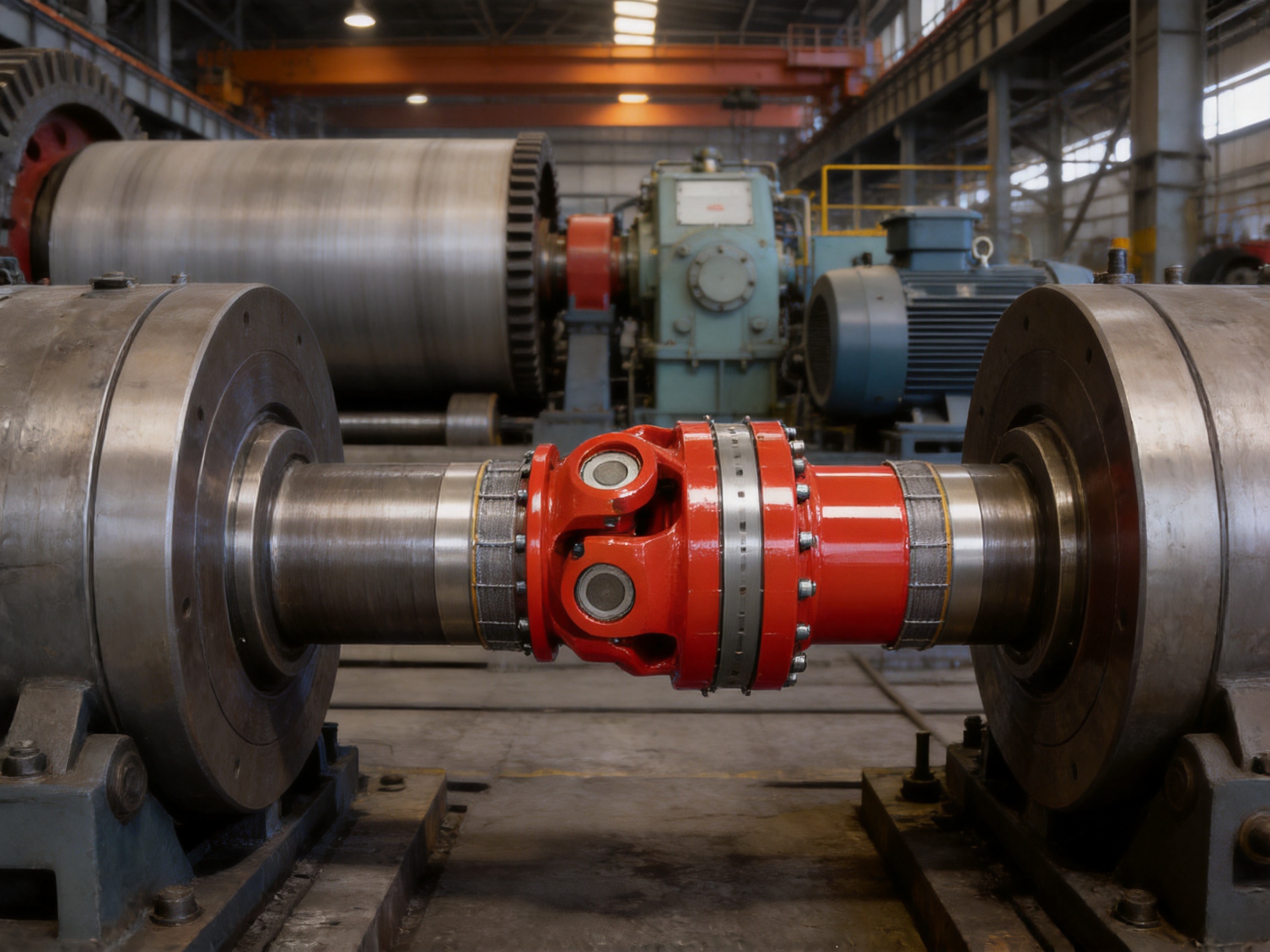
5. Advantages Compared with Conventional Coupling Solutions
5.1 Compared with Rigid Couplings
Rigid couplings provide a direct and stiff connection, but they are designed for applications where the connected shafts remain accurately aligned. They generally cannot absorb meaningful angular or axial displacement. When used in equipment with thermal movement or structural deflection, rigid couplings can transfer high reaction forces into bearings and machine housings.
The SWC-CH has a clear advantage in applications requiring movement. Its universal-joint structure allows angular articulation, while its long telescopic section absorbs axial displacement. This reduces the need for perfect alignment under all operating conditions and helps protect connected equipment from excessive mechanical stress.
Rigid couplings may still be suitable for short, accurately aligned shafts with stable operating temperatures. However, for large systems with long shaft spacing, changing geometry, or thermal expansion, the SWC-CH offers a more adaptable solution.
5.2 Compared with Short-Travel Flexible Couplings
Many flexible couplings can accommodate limited axial and angular movement, but their compensation range may be insufficient for heavy industrial systems with large displacement. When the required movement exceeds the coupling’s capacity, additional sliding shafts, expansion joints, or complex intermediate structures may be necessary.
The long expansion design of the SWC-CH reduces the need for separate axial compensation devices in suitable applications. A single integrated coupling can combine torque transmission, angular adjustment, and long telescopic movement. This can simplify the overall drive arrangement and reduce the number of interfaces that require alignment and maintenance.
5.3 Compared with Elastomeric Couplings
Elastomeric couplings are often effective for vibration damping and moderate misalignment. They can be economical and compact, but their performance may change with temperature, chemical exposure, aging, and repeated high-load cycles. Their elastic elements may require periodic replacement, particularly in demanding environments.
The SWC-CH uses a non-elastic mechanical compensation principle. This provides advantages where high torque, high temperature, large displacement, or severe operating conditions make elastomeric elements less suitable. The mechanical design can also support a much greater axial stroke than many compact elastomeric couplings.
The two types are not interchangeable in every application. Elastomeric couplings may be preferable where vibration isolation and low noise are primary requirements. The SWC-CH is particularly advantageous where structural strength, large expansion compensation, and high load capacity take priority.
5.4 Compared with Conventional Cardan or Universal Shafts
Traditional universal shafts can accommodate angular misalignment, but not all designs provide a long integrated telescopic stroke. The SWC-CH combines universal-joint articulation with an extended expansion and contraction structure. This makes it especially useful where the shaft distance changes substantially during operation.
Its welded construction also allows the coupling to be engineered for large dimensions and application-specific lengths. The result is a purpose-built transmission component rather than a basic universal shaft intended only for angular movement.
6. Application Fields
6.1 Metallurgical Equipment
Metallurgical machinery often operates under high loads, elevated temperatures, and frequent changes in material resistance. Rolling mills, finishing lines, straightening machines, continuous casting equipment, and heavy material handling systems may require long shaft connections with substantial torque capacity.
During operation, mill housings, rolls, frames, and drive components can experience thermal growth and structural movement. The SWC-CH coupling can accommodate these changes while transferring torque from the drive motor or gearbox to the working machinery. Its high fatigue torque capacity is also valuable in applications exposed to repeated loading cycles.
The coupling can be configured to match the available shaft spacing, angular relationship, and installation envelope. Because steel plants often require custom solutions, the availability of non-standard design and manufacturing support is an important advantage.
6.2 Petrochemical and Process Equipment
Petrochemical equipment may operate across a wide temperature range and may include long lines, pumps, compressors, mixers, and other rotating machinery. Thermal expansion can cause noticeable changes in the relative position of connected shafts. A coupling with axial compensation can reduce the force transmitted to equipment bearings and foundations.
Material selection, surface protection, sealing, lubrication, and environmental compatibility should be reviewed carefully in petrochemical applications. Where the equipment is installed in a hazardous area, the complete coupling assembly must be integrated into the site’s guarding, inspection, and safety requirements.
6.3 Mining and Heavy Conveying Systems
Mining machinery and heavy conveyors often face dust, impact loads, fluctuating resistance, and long operating hours. Drives may be installed over considerable distances, and the connected structures may move under changing loads. A coupling with high torque capacity and long telescopic movement can help maintain reliable transmission in these difficult conditions.
The coupling’s mechanical construction can be advantageous where resilient polymer components may be exposed to abrasion, heat, or contamination. Proper sealing and maintenance remain necessary to protect bearings and sliding elements from dust and abrasive particles.
6.4 Lifting and Port Equipment
Cranes, ship unloaders, stackers, reclaimers, and other port machinery require reliable power transmission under variable loads. Starting and braking cycles can create repeated torque changes, and structural deflection may alter the alignment of connected components.
The SWC-CH can be selected for high fatigue resistance and suitable axial and angular movement. The final design must consider emergency braking, load reversal, duty classification, suspended-load safety, and guarding. A coupling used in lifting equipment should be inspected at intervals appropriate to the operating duty and local safety regulations.
6.5 Paper and Water Equipment
Paper machinery includes long drive lines and rotating components that may require accurate, continuous transmission. Water equipment such as large pumps and process drives can also experience thermal or structural displacement. The SWC-CH design can be adapted to applications where conventional short flexible couplings do not provide enough axial travel.
For these industries, smooth operation and low unplanned maintenance are important. Correct dynamic balancing, alignment, lubrication, and protection from moisture or process contamination are essential to obtain reliable performance.
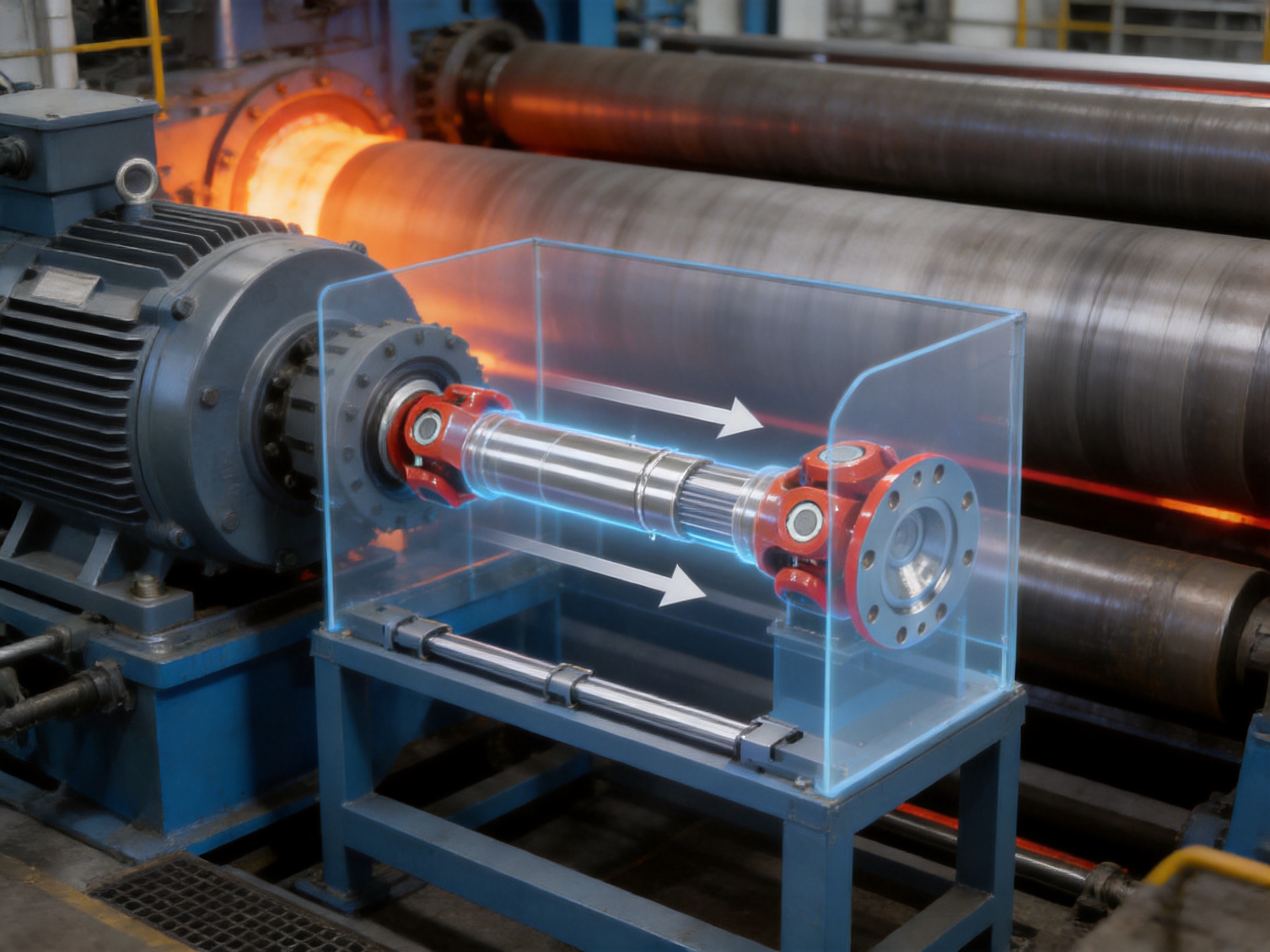
7. Manufacturing Strengths and Engineering Capabilities
Zhongye Heavy Industry Technology (Zhenjiang) Co., Ltd. integrates research and development, manufacturing, and sales. Its product portfolio includes universal couplings, gear couplings, elastic sleeve pin couplings, elastic pin couplings, tire couplings, jaw couplings, diaphragm couplings, drum couplings, grid couplings, Oldham couplings, flange couplings, roller chain couplings, safety couplings, and customized non-standard couplings.
This broad product experience is relevant to the manufacture of the SWC-CH because large universal couplings often need to be matched with other coupling types, gearboxes, motors, rolls, pumps, or drive shafts. A manufacturer with experience across multiple coupling families can evaluate the complete transmission system rather than treating the coupling as an isolated component.
7.1 Heavy-Duty Workshop Capacity
The company’s new workshop covers approximately 16,463.52 square metres. The facility includes a heavy workshop of approximately 5,500 square metres, a precision workshop of approximately 4,600 square metres, an office building and gymnasium, a dining hall, a warehouse, and supporting roads, landscaping, and parking areas.
A dedicated heavy workshop is important for large welded couplings. Manufacturing such components requires suitable lifting equipment, spacious assembly areas, large-scale machining capability, controlled welding operations, and adequate room for inspection. A precision workshop supports the dimensional accuracy required for bores, flanges, bearing seats, telescopic interfaces, and universal-joint components.
7.2 Integrated Design and Customization
Large coupling applications often differ from standard catalogue conditions. Customers may require special shaft diameters, unusual flange patterns, extended lengths, increased telescopic stroke, different materials, special coatings, modified lubrication arrangements, or integration with existing equipment.
The company’s stated capability includes non-standard design and manufacturing. This is valuable because the SWC-CH series can serve as a starting platform for an engineered solution rather than a fixed product limited to one dimension. Before production, the manufacturer can review the required torque, speed, angle, stroke, length, shaft connection, environmental conditions, and installation constraints.
Customization should be supported by controlled technical documentation. Important documents may include general arrangement drawings, dimensional drawings, material information, welding records, inspection reports, balancing records, lubrication instructions, installation procedures, and maintenance recommendations. The exact document package should be agreed during the quotation and order process.
7.3 Quality Control and Testing
Reliable performance depends on more than the nominal design. The manufacturing process should control materials, weld quality, machining tolerances, assembly accuracy, bearing installation, telescopic movement, and final dimensions. Inspection should verify that the finished coupling conforms to the approved drawing and that the universal joint moves smoothly throughout its specified range.
Depending on the application, quality control may include incoming material inspection, dimensional inspection, weld visual inspection, non-destructive testing, hardness verification, shaft and bore measurement, runout inspection, assembly testing, lubrication inspection, and dynamic balancing. Heavy-duty or safety-critical applications may require additional testing agreed between the purchaser and manufacturer.
The company identifies ISO 9001 and international standards and certifications among its quality commitments. Customers should request the applicable certificates and inspection records for the specific order, since the required documentation may vary according to project specifications and destination-market requirements.
7.4 Technical Support Before and After Sale
Correct coupling selection requires cooperation between the equipment user, system designer, and manufacturer. Technical support before sale can help determine the correct model, estimate the required service factor, confirm installation dimensions, and identify potential interference or maintenance issues.
After delivery, installation support and service information can help users establish proper alignment, lubrication, inspection, and replacement procedures. A well-prepared maintenance plan can extend service life and reduce the risk of unexpected shutdowns.
8. Installation and Commissioning Recommendations
Before installation, verify the coupling model, serial number, drawings, shaft dimensions, bore configuration, keyways or flanges, installation length, and required expansion range. Inspect the coupling for transport damage, corrosion, contamination, and missing components. Confirm that the telescopic section and universal joints move correctly before connecting the coupling to the equipment.
Check the connected shafts for runout, surface condition, alignment, and support rigidity. The shafts should be adequately supported so that the coupling is not forced to carry loads for which it was not designed. The coupling should transmit torque and accommodate specified movement; it should not be used as a substitute for missing shaft bearings or inadequate structural support.
Install the coupling according to the approved drawing. Maintain the specified minimum and maximum working lengths. Ensure that the coupling has sufficient free space for its complete axial movement and that no guard, frame, pipe, cable, or adjacent component can interfere with the rotating assembly.
After installation, rotate the system manually where possible to identify interference or abnormal resistance. Check the universal-joint angle, telescopic position, fastener tightness, lubrication, and guard arrangement. During initial commissioning, observe vibration, noise, temperature, axial movement, and bearing condition. Stop the equipment immediately if there is impact, binding, abnormal heating, or sudden vibration.
All rotating components must be properly guarded. Personnel should never approach an unguarded rotating coupling during operation. Lockout and isolation procedures must be followed before inspection, lubrication, adjustment, or maintenance.
9. Maintenance and Service-Life Management
Maintenance requirements depend on speed, torque, environment, operating hours, temperature, angle, dust, moisture, and the frequency of starts and stops. A regular inspection program should monitor lubrication condition, bearing noise, temperature, vibration, axial position, fastener security, sealing condition, surface wear, and evidence of cracking or deformation.
Lubrication should follow the manufacturer’s specification for lubricant type, quantity, interval, and application method. Over-lubrication can be harmful as well as under-lubrication, particularly in bearing assemblies. Contaminated or incompatible grease should not be mixed with the specified lubricant.
The telescopic section should be checked for smooth movement and signs of scoring, corrosion, excessive clearance, or contamination. If the coupling operates in a dusty or abrasive environment, inspection intervals may need to be shortened. Universal-joint bearings should be checked for play, roughness, overheating, and unusual noise.
Fatigue damage can develop gradually. Cracks around welds, flanges, bearing housings, or high-stress transitions should be treated as serious defects. If any crack, major deformation, excessive wear, or abnormal vibration is detected, the coupling should be removed from service until it has been inspected and approved by qualified personnel.
Keeping a maintenance record is recommended. The record should include operating hours, lubrication dates, inspection findings, measured vibration, replaced parts, alignment checks, and any overload or abnormal event. This information helps identify trends and supports preventive maintenance planning.
10. How to Specify an SWC-CH Coupling
When requesting a quotation or technical review, customers should provide as much application information as possible. The following data is typically useful:
Power and speed of the driving machine should be stated together with the normal operating torque and maximum transient torque. Starting method, braking method, reversing frequency, and load cycle should also be described.
The required axial movement should include thermal expansion, structural movement, installation tolerance, and any dynamic displacement. The maximum and minimum working lengths should be identified, together with the desired available stroke.
The shaft arrangement should include shaft diameters, keyways, flange dimensions, bolt patterns, shaft extension lengths, and the distance between connected equipment. The maximum angular misalignment and expected changes during operation should be specified.
Environmental information should cover temperature, humidity, dust, water, chemicals, corrosive atmosphere, outdoor or indoor installation, altitude, and any hazardous-area requirements. This information can influence materials, seals, coatings, lubrication, and inspection requirements.
Customers should also state the required standards, certificates, inspection plans, delivery documentation, spare parts, painting system, packaging method, and commissioning support. For a custom coupling, a complete interface drawing is particularly important because even a small dimensional error can delay installation.
11. Q&A
Q1: What is the main purpose of the SWC-CH type long expansion welding universal coupling?
Its main purpose is to transmit high torque between shafts while accommodating large axial expansion and contraction and angular misalignment. It is designed for heavy industrial systems in which shaft position changes during operation because of thermal growth, structural movement, or installation geometry.
Q2: How much axial expansion can the coupling accommodate?
The listed range provides expansion and contraction quantities from 200 mm to 1,000 mm, depending on the model and configuration. The SWC550CH2 model is listed with a maximum expansion and contraction quantity of 1,000 mm. The exact usable stroke must be confirmed from the final technical drawing and operating position.
Q3: What is the maximum axis angle?
The product information lists an axis angle of up to 15 degrees. The allowable continuous operating angle may depend on speed, torque, lubrication, bearing life, and duty cycle. Engineers should obtain application-specific confirmation before operating continuously near the maximum angle.
Q4: What is the maximum nominal torque?
The listed maximum nominal torque is 1,000 kN·m for the SWC550CH1 model. The appropriate model must be selected according to actual running torque, starting torque, impact load, fatigue duty, speed, and required service factor.
Q5: Is the SWC-CH an elastomeric coupling?
No. It is classified as a flexible coupling with non-elastic elements. Its compensation is achieved through a universal-joint and telescopic mechanical structure rather than a rubber or polymer insert.
Q6: What are the benefits of welded construction?
Welded construction can provide a strong and stable structural assembly, support large dimensions, and allow flexible manufacturing of custom lengths and configurations. The benefits depend on qualified welding procedures, controlled distortion, suitable materials, and effective inspection.
Q7: Can the coupling be customized?
Yes. The manufacturer states that it supports customized and non-standard coupling design and manufacturing. Custom requirements may include length, stroke, shaft connection, bore, flange, material, coating, lubrication, and special environmental conditions.
Q8: Which industries commonly use this type of coupling?
Typical applications include metallurgy, petrochemical processing, mining, heavy conveying, lifting, port machinery, paper equipment, water equipment, and other heavy industrial drive systems. The final suitability depends on the complete operating conditions.
Q9: Does the coupling eliminate the need for shaft alignment?
No. It accommodates specified axial and angular movement, but correct alignment remains necessary. Poor alignment beyond the design limits can increase vibration, bearing loads, wear, and fatigue. The coupling should be installed according to the approved technical drawing.
Q10: What information is needed to select the correct model?
Important information includes power, speed, normal and peak torque, starting and braking conditions, shaft dimensions, installation length, required axial stroke, angular misalignment, operating temperature, environmental conditions, duty cycle, and required standards or documentation.
Q11: What maintenance does the coupling require?
Maintenance generally includes lubrication, inspection of universal-joint bearings, checking telescopic movement, verifying fasteners, monitoring vibration and temperature, inspecting seals and weld areas, and confirming that guards remain secure. The exact maintenance interval depends on the application and manufacturer’s instructions.
Q12: Why choose a large expansion coupling instead of adding a separate sliding device?
An integrated long expansion universal coupling can combine torque transmission, angular compensation, and axial movement in one engineered assembly. This may simplify the drive system, reduce the number of interfaces, and provide a more coordinated solution. A comparison should consider total cost, space, maintenance, alignment, and the requirements of the complete machine.
12. Conclusion
The SWC-CH type long expansion welded universal coupling is engineered for industrial systems where ordinary couplings cannot provide enough axial compensation, angular flexibility, or torque capacity. Its long telescopic structure absorbs substantial expansion and contraction, while the universal-joint construction supports shaft angles of up to 15 degrees. The welded design provides a strong foundation for large, customized assemblies, and the product range extends to a nominal torque of 1,000 kN·m and an expansion and contraction quantity of up to 1,000 mm.
Compared with rigid couplings, the SWC-CH offers greater movement accommodation. Compared with many short-travel flexible couplings, it provides a substantially longer axial stroke. Compared with elastomeric couplings, its non-elastic mechanical construction is better suited to certain high-load, high-temperature, and severe industrial applications. These advantages make it a strong candidate for metallurgical, petrochemical, mining, conveying, lifting, port, paper, and water equipment.
Zhongye Heavy Industry Technology (Zhenjiang) Co., Ltd. supports the product with integrated research and development, manufacturing, sales, customized design, heavy workshop capacity, precision machining capability, quality control, and technical service. Its broad coupling portfolio and experience with non-standard designs help customers develop complete transmission solutions rather than relying only on standard catalogue dimensions.
For the best result, selection should be based on the complete operating profile. Torque, speed, fatigue duty, axial movement, angular misalignment, working length, environmental conditions, and maintenance requirements should all be evaluated before ordering. With correct engineering, installation, lubrication, guarding, and inspection, the SWC-CH type long expansion welding universal coupling can provide dependable power transmission and help reduce mechanical stress, downtime, and long-term maintenance costs.
References
1. Product technical information for the SWC-CH type long expansion welded universal coupling, including model range, torque ratings, expansion quantities, dimensions, moment of inertia, and mass data.
2. Manufacturer information for Zhongye Heavy Industry Technology (Zhenjiang) Co., Ltd., including product portfolio, manufacturing facilities, customization capability, quality management, and technical services.
3. General engineering principles for universal joints, telescopic shaft couplings, angular misalignment, axial compensation, fatigue torque, and rotating machinery maintenance.
4. General industrial practices for coupling selection, shaft alignment, lubrication, guarding, vibration monitoring, welding inspection, and preventive maintenance.
Product: SWC-CH type long expansion welding universal coupling

- Quick Links
- About
- Products
- Our Service
- News & Events
- Contact
- Products Series
- Flexible Couplings with Non-Elastic Elements
- Flexible Couplings with Metal Elastic Elements
- Flexible Couplings with Non-Metallic Elastic Elements
- Safety Coupling
- Rigid Coupling
- Contact Us
- Tel : +86 511 8572 3800 +86 511 8572 3900
- Mobile : +86 15106109009
- Email : sales@couplingzy.com
- Add:No.1 Zhongye Yingbin Avenue, Gaozi Street, Dantu Economic Development Zone, Zhenjiang City, Jiangsu Province, China.


