:+86 15106109009
:sales@couplingzy.com


 English
 русский
 Español
 عربى
 Português
 Deutsch
 Türk
 Indonesia


SWC-BH Standard Telescopic Welded Universal Coupling for Heavy-Duty Power Transmission
Content
- 1 Understanding the SWC-BH Coupling Design
- 2 Major Advantages in Heavy Industrial Applications
- 3 Comparison with Other Coupling Types
- 4 SWC-BH Product Range and Technical Data
- 5 Important Dimensions and Connection Features
- 6 Manufacturing Strengths and Production Capabilities
- 7 Application Areas
- 8 Installation Considerations
- 9 Maintenance and Service Practices
- 10 Selection Procedure for Engineers
- 10.1 Step One: Determine the Operating Torque
- 10.2 Step Two: Check the Angular Deviation
- 10.3 Step Three: Determine Axial Movement
- 10.4 Step Four: Confirm Shaft and Mounting Dimensions
- 10.5 Step Five: Evaluate Speed and Inertia
- 10.6 Step Six: Review the Environment
- 10.7 Step Seven: Confirm the Safety Requirements
- 11 Why Manufacturer Support Matters
- 12 Frequently Asked Questions
- 12.1 What is the SWC-BH standard telescopic welded universal coupling?
- 12.2 What is the maximum nominal torque of the series?
- 12.3 What is the maximum permitted shaft angle?
- 12.4 How much axial movement can the coupling accommodate?
- 12.5 Is this coupling suitable for harsh environments?
- 12.6 Does the coupling require lubrication?
- 12.7 Can the coupling be manufactured to a non-standard length?
- 12.8 Can the SWC-BH be used with other coupling types?
- 12.9 What information is needed for a quotation or technical evaluation?
- 12.10 How can the service life of the coupling be improved?
- 13 Conclusion
- 14 References
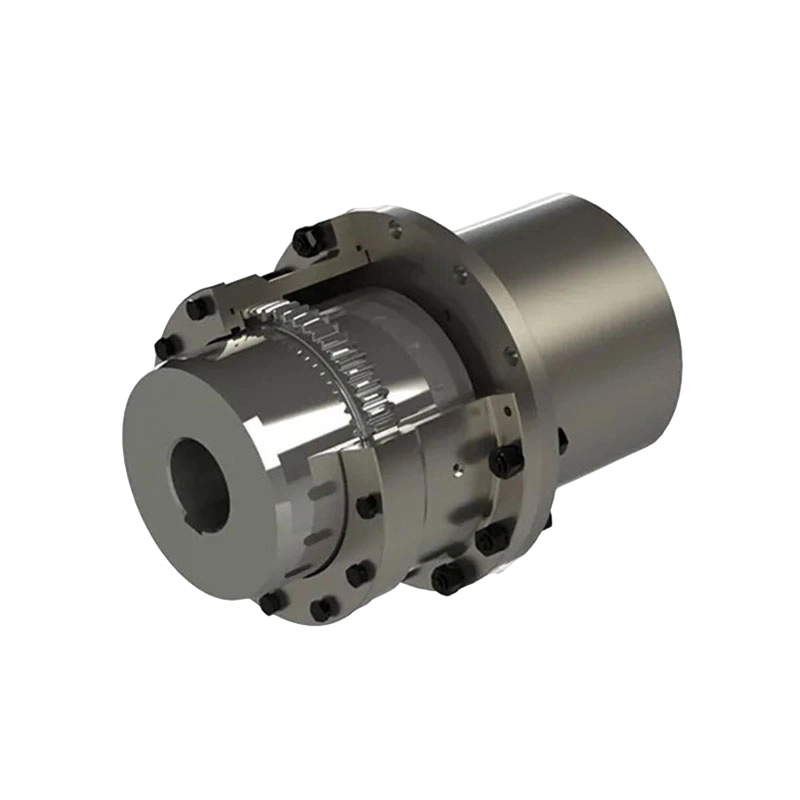
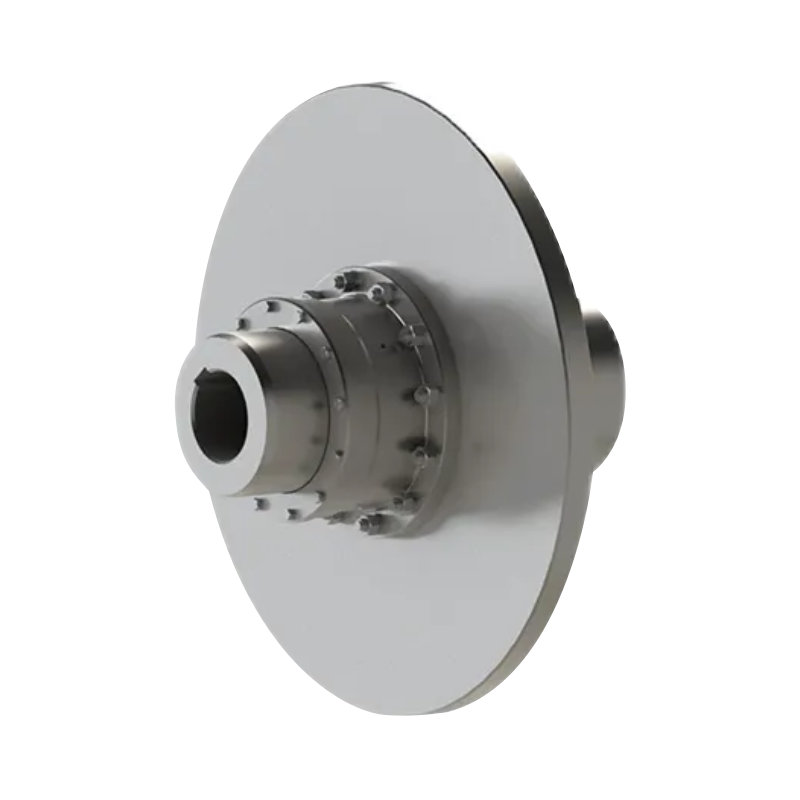
- 15 Product: SWC-BH standard expansion welded universal coupling
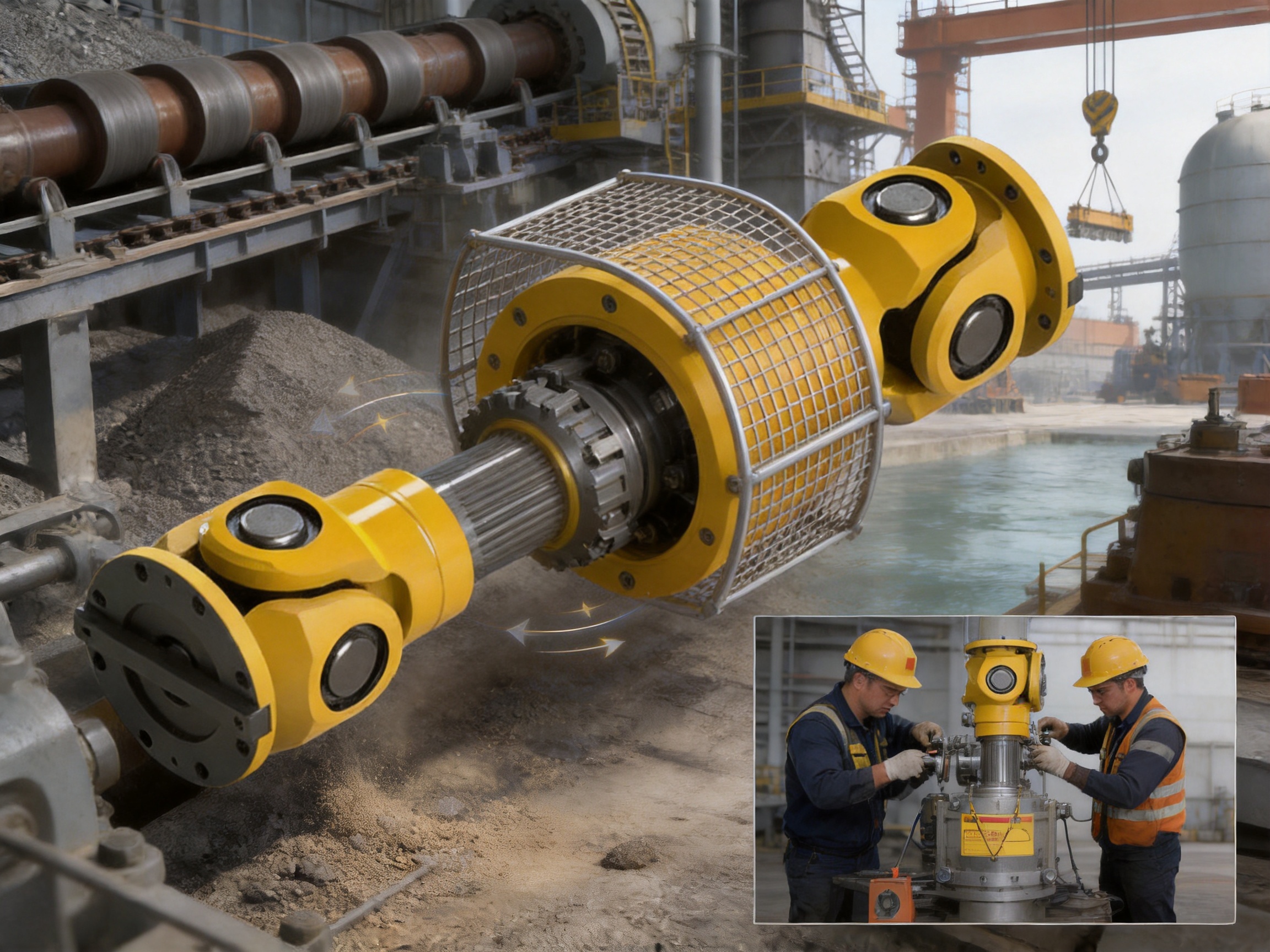
Heavy-duty industrial equipment often operates under demanding conditions in which shafts must transmit substantial torque while accommodating angular deviation, axial movement, vibration, installation tolerances, and changing operating loads. In these applications, a conventional rigid connection may transfer excessive stress into the shafts, bearings, gearboxes, and driven machinery. A flexible universal coupling provides a more practical solution by transmitting torque while allowing controlled movement between connected shafts.
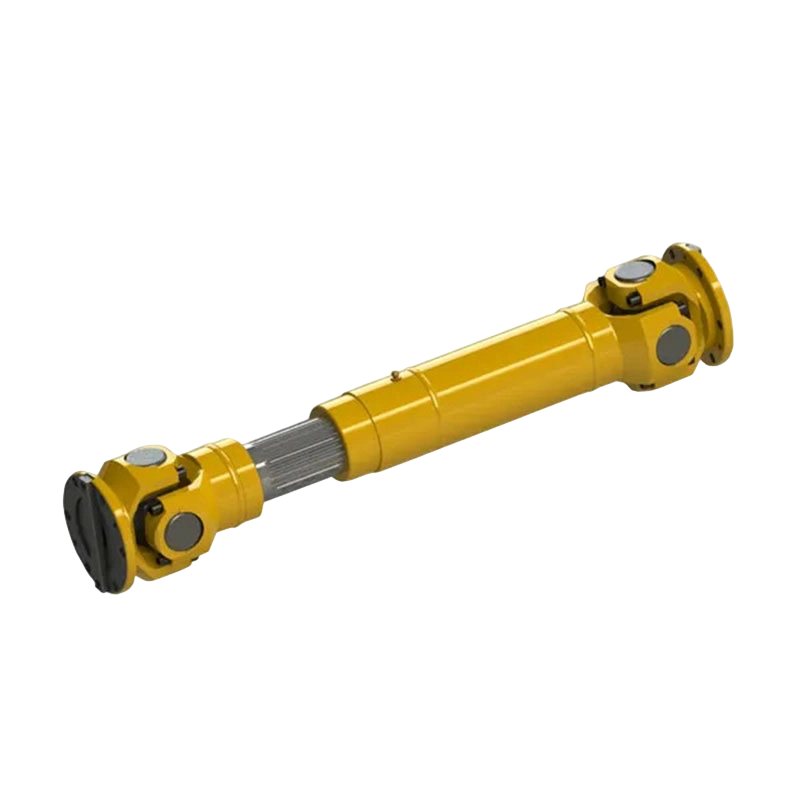
The SWC-BH standard telescopic welded universal coupling is designed for this type of service. It is a non-elastic flexible coupling developed for large-torque power transmission between shafts with angular misalignment. Its telescopic construction compensates for axial displacement, while its universal-joint arrangement accommodates significant angular deviation. The welded body provides a strong and durable structure suitable for metallurgy, mining, energy, material handling, lifting, paper production, water equipment, ports, and other industrial systems.
With nominal torque ratings extending from 2.5 kN·m to 1,000 kN·m, the SWC-BH series covers a broad range of equipment sizes. The maximum listed model has a 550 mm rotation diameter and a nominal torque capacity of 1,000 kN·m. Depending on the model, the permitted axis angle is up to 25 degrees or up to 15 degrees, and the telescopic expansion range extends from 55 mm to 240 mm. This combination makes the coupling suitable for transmission systems in which mechanical strength, installation flexibility, and reliable continuous operation are equally important.
Understanding the SWC-BH Coupling Design
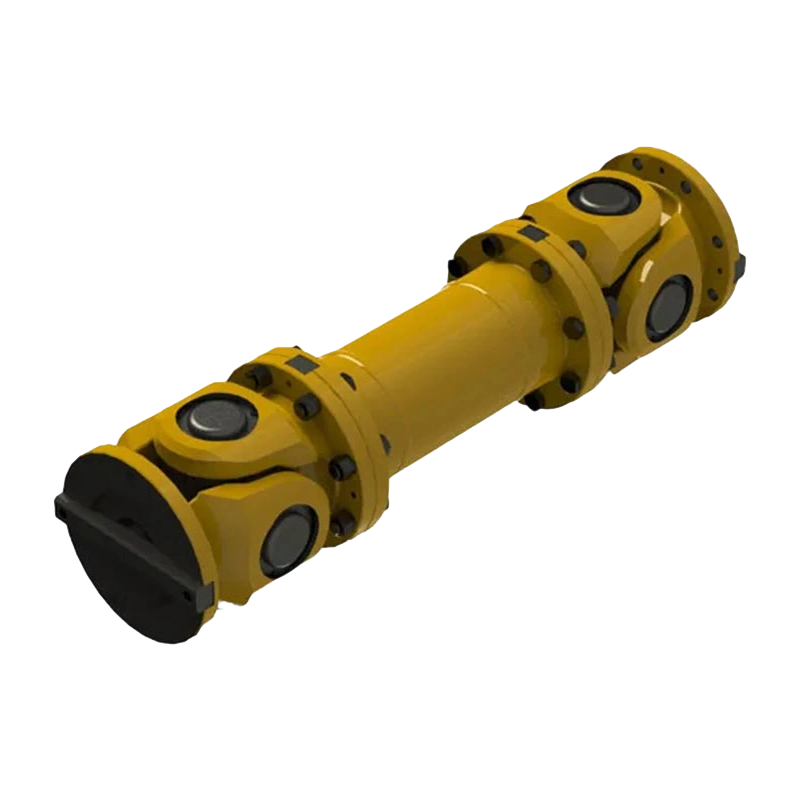
The SWC-BH is classified as a flexible coupling with non-elastic elements. Unlike couplings that depend on rubber, polyurethane, nylon, or other resilient materials to absorb misalignment, this design uses mechanical articulation and a telescopic shaft arrangement. Torque is transmitted through robust metallic components, while the universal-joint geometry allows the connected shafts to operate at an angle.
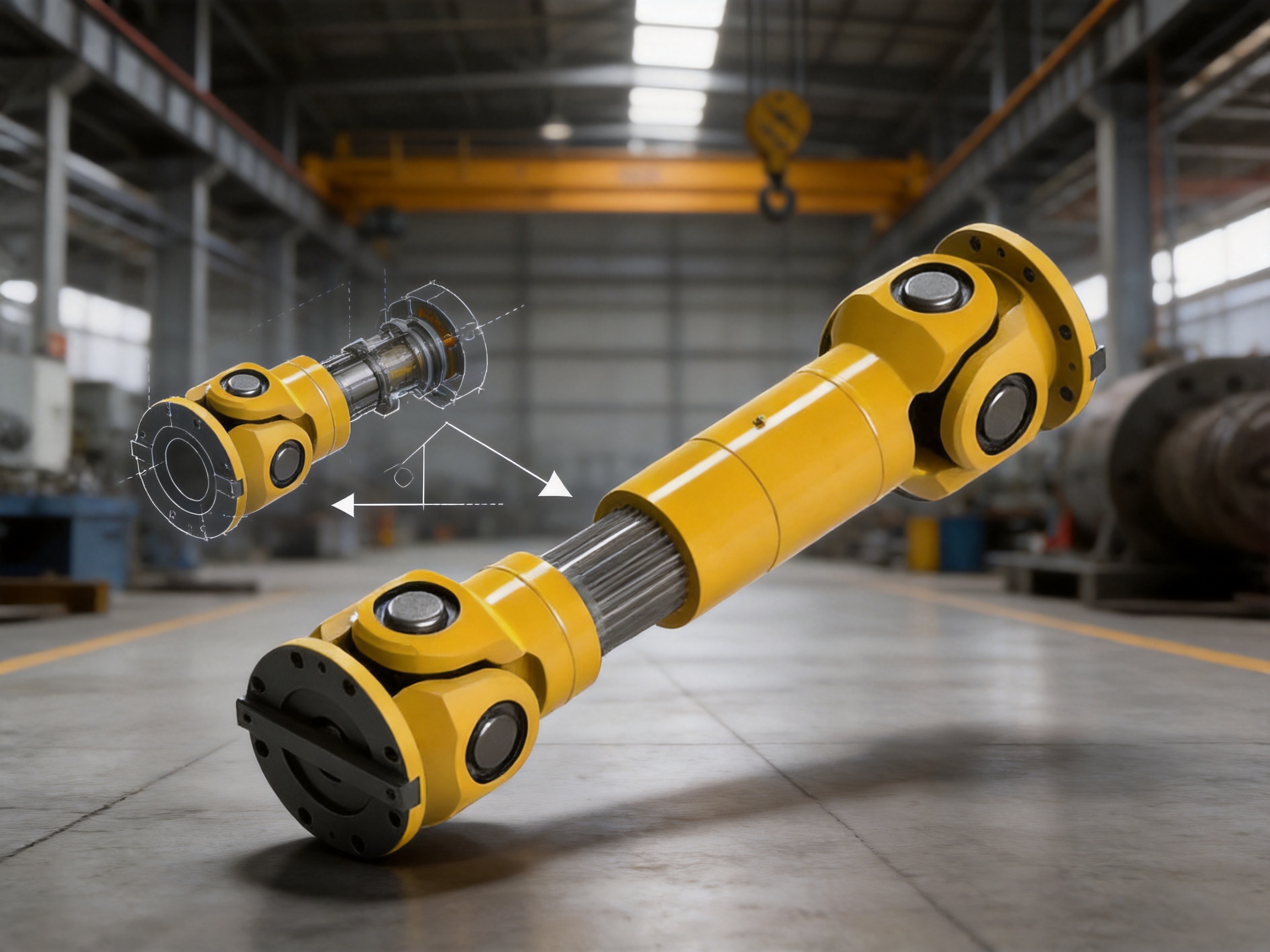
The main structural characteristics include a welded tubular body, universal-joint assemblies, telescopic sliding sections, shaft connection components, and precision-machined interfaces. These elements work together to maintain torque transmission when the input and output shafts are not perfectly collinear. The welded construction supports high structural rigidity and permits the use of large-diameter components for high torque applications.
The telescopic section is especially important in industrial equipment. During operation, connected machines may move relative to one another because of thermal expansion, foundation settlement, rolling equipment movement, lifting mechanisms, or changes in working position. The expansion and contraction capacity of the SWC-BH allows the coupling to follow this movement without forcing the connected shafts to carry excessive axial loads.
Angular flexibility is provided through the universal-joint arrangement. When the driving and driven shafts form an angle, the joint transfers rotational motion through the changing geometric position of the connecting members. This makes the coupling appropriate for equipment where shaft alignment is intentionally variable or where precise alignment is difficult to maintain throughout the operating cycle.
The design does not attempt to eliminate every form of movement through a soft elastic element. Instead, it manages movement mechanically. This gives the SWC-BH a high torque-to-size capability and allows it to operate in environments where elastomeric components may be unsuitable because of temperature, contamination, heavy shock loading, or long operating cycles.
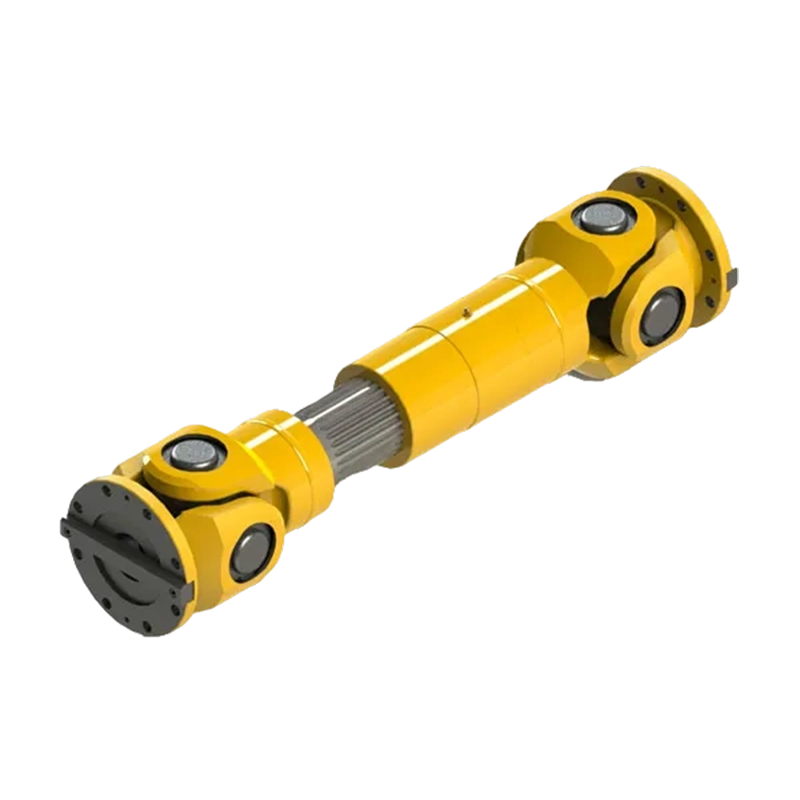
SWC-BH standard expansion welded universal coupling
Major Advantages in Heavy Industrial Applications
High Torque Transmission Capacity
The most prominent advantage of the SWC-BH series is its ability to transmit high torque. The range begins with the SWC100BH, rated at 2.5 kN·m, and extends to the SWC550BH, rated at 1,000 kN·m. This provides a continuous product family for applications ranging from medium-duty machinery to extremely large industrial drives.
High torque capacity is achieved through the use of substantial metallic load-bearing components, an engineered universal-joint structure, and a welded tubular body. Because the coupling does not rely on a soft flexible insert as the primary torque-transmitting element, the design can be scaled for demanding power systems. It is particularly useful in equipment where torque peaks, frequent starts, reversing operation, or high inertia loads would place severe demands on a conventional flexible coupling.
The fatigue torque values listed for the series range from 1.25 kN·m to 500 kN·m. These values provide an important reference for assessing repeated operating loads. Correct application still requires consideration of service factor, starting torque, braking torque, shock loading, speed, duty cycle, and the actual operating angle.
Compensation for Axial Displacement
The telescopic function allows the coupling to expand and contract along its axis. The listed expansion and contraction quantities range from 55 mm on the smaller models to 240 mm on the largest model. This capability can be valuable in systems where the distance between shafts changes during operation or where installation must allow a degree of axial movement.
Axial compensation reduces the risk of thrust being transferred into connected bearings and machine housings. It also simplifies installation because the coupling can be positioned within the shaft line without requiring every component to be assembled under a fixed and exact axial dimension. In large machinery, this can reduce installation time and make future maintenance more manageable.
Accommodation of Large Angular Misalignment
The SWC100BH, SWC120BH, and SWC150BH models are listed with an axis angle of up to 25 degrees. Larger models are listed with an axis angle of up to 15 degrees. These are significant angular capabilities compared with many ordinary shaft couplings, particularly when the application requires high torque transmission.
Angular movement may result from the layout of rolling mills, conveyors, lifting devices, mining machines, marine equipment, or other large mechanisms. The universal-joint arrangement allows the coupling to continue transmitting motion without requiring the connected shafts to remain perfectly aligned. Proper operating limits must always be observed, and the installation should be checked to ensure that the selected model is suitable for the actual angle, speed, and duty cycle.
Strong Welded Construction
The welded construction provides a robust load path between the coupling components. Precision welding can produce a strong tubular assembly while keeping the design practical for large diameters and long center distances. The structure is suitable for industrial equipment where shock, vibration, dust, and fluctuating loads are normal operating conditions.
A welded body also provides design flexibility. The coupling can be manufactured in different lengths and with different connection dimensions to suit the available installation space. The standard SWC-BH range provides a foundation for common applications, while customized designs can be developed for non-standard shaft spacing, special bore requirements, unusual mounting arrangements, or unique operating conditions.
Metallic Load-Bearing Performance
Because the SWC-BH is a non-elastic coupling, its primary load-bearing parts are metallic. This gives it an advantage in applications where temperature changes, oil exposure, dust, water, ultraviolet radiation, or chemical contamination could affect polymeric elements. Metallic components can also provide stable dimensional behavior over long operating periods when correctly lubricated, protected, and maintained.
This characteristic makes the coupling particularly relevant to steel production, mining, energy, ports, bulk handling, and heavy material processing. These industries often involve harsh environments in which a coupling must continue to transmit torque despite contamination and mechanical shock.
Reduced Stress on Connected Equipment
A properly selected universal coupling can reduce the harmful effects of misalignment. Instead of forcing shafts, bearings, or gearboxes to compensate for angular and axial movement, the coupling absorbs the required geometric change through its own articulated and telescopic structure.
Reducing unwanted loads can help protect connected equipment and support more stable operation. It may also reduce vibration caused by alignment errors, lower the risk of premature bearing wear, and improve the service life of shafts and machine housings. These benefits depend on correct installation, lubrication, operating speed, load selection, and regular inspection.
Comparison with Other Coupling Types
Compared with Rigid Couplings
A rigid coupling is appropriate when two shafts are accurately aligned and should behave as one continuous shaft. It offers a simple and stiff connection, but it has little or no ability to accommodate angular or axial movement. If used in a system with unavoidable misalignment, a rigid coupling can transfer additional bending and axial forces into the equipment.
The SWC-BH offers a clear advantage where shaft movement is part of the machine design or cannot be fully eliminated. Its universal and telescopic structure provides movement compensation without sacrificing the high torque capability required by heavy industrial drives.
Compared with Elastomeric Couplings
Elastomeric couplings use rubber, polyurethane, nylon, or similar materials to provide flexibility and sometimes vibration damping. They can be useful in moderate-duty applications and may offer relatively simple installation. However, their performance can be influenced by temperature, aging, chemical exposure, fatigue, and the condition of the elastic element.
The SWC-BH does not depend on an elastic insert for its primary flexibility. Its mechanical articulation is more suitable for very high torque, large angular movement, long operating cycles, and harsh industrial environments. It may not provide the same degree of torsional damping as a soft elastomeric coupling, but it is often preferred when load capacity, geometric movement, and structural durability are the dominant requirements.
Compared with Gear Couplings
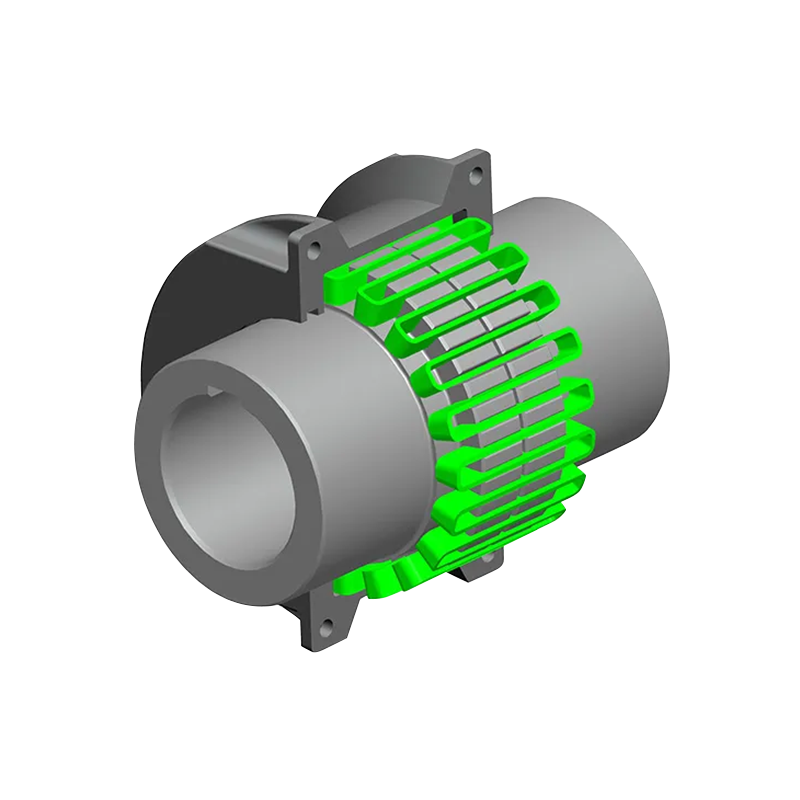
Gear couplings can transmit high torque and accommodate limited misalignment through meshing gear teeth. They are widely used in industrial drives, but they generally require accurate lubrication and careful attention to tooth wear. Their practical angular and axial movement capacity depends on the design and application.
The SWC-BH is especially advantageous when a larger operating angle or a greater telescopic range is needed. The universal-joint configuration offers a different method of accommodating misalignment and is well suited to long shaft lines or machines with changing geometry. In some transmission systems, a universal coupling can be used together with gear couplings, nylon gear couplings, or nylon sleeve gear couplings to combine different connection functions within one power train.
Compared with Diaphragm and Disc Couplings
Diaphragm and disc couplings are known for high-speed applications, low maintenance, and the ability to accommodate certain types of misalignment without lubrication. They are often selected for turbines, compressors, pumps, and other precision drives. However, their allowable angular movement and axial travel may be more limited than those of a telescopic universal coupling, particularly in very large and mechanically mobile equipment.
The SWC-BH is targeted more directly at heavy machinery where large angular deviation, axial expansion, and high torque are central design requirements. Application engineers should compare speed, balance, torsional stiffness, maintenance requirements, and environmental conditions before choosing between these technologies.
SWC-BH Product Range and Technical Data
The product range contains fourteen standard models from SWC100BH to SWC550BH. The rotation diameter increases from 100 mm to 550 mm, while the nominal torque rating increases from 2.5 kN·m to 1,000 kN·m. The table below summarizes key selection data. Detailed drawings, tolerances, connection arrangements, and application-specific calculations should be confirmed before production or installation.
| Model | Rotation Diameter D (mm) | Nominal Torque Tn (kN·m) | Fatigue Torque Tf (kN·m) | Maximum Axis Angle | Expansion or Contraction Ls (mm) | Minimum Length Lmin (mm) | Approximate Mass (kg) |
|---|---|---|---|---|---|---|---|
| SWC100BH | 100 | 2.5 | 1.25 | 25° | 55 | 405 | 6.1 |
| SWC120BH | 120 | 5 | 2.5 | 25° | 80 | 485 | 10.8 |
| SWC150BH | 150 | 10 | 5 | 25° | 80 | 590 | 24.5 |
| SWC180BH | 180 | 22.4 | 11.2 | 15° | 100 | 840 | 70 |
| SWC200BH | 200 | 36 | 18 | 15° | 110 | 860 | 98 |
| SWC225BH | 225 | 56 | 28 | 15° | 140 | 920 | 122 |
| SWC250BH | 250 | 80 | 40 | 15° | 140 | 1,035 | 172 |
| SWC285BH | 285 | 120 | 58 | 15° | 140 | 1,190 | 263 |
| SWC315BH | 315 | 160 | 80 | 15° | 140 | 1,315 | 382 |
| SWC350BH | 350 | 225 | 110 | 15° | 150 | 1,440 | 532 |
| SWC390BH | 390 | 320 | 160 | 15° | 170 | 1,590 | 738 |
| SWC440BH | 440 | 500 | 250 | 15° | 190 | 1,875 | 1,190 |
| SWC490BH | 490 | 700 | 350 | 15° | 190 | 1,985 | 1,542 |
| SWC550BH | 550 | 1,000 | 500 | 15° | 240 | 2,300 | 2,380 |
The table demonstrates the progression from compact models to large heavy-duty units. Smaller models provide higher listed angular flexibility, while larger models provide substantially greater torque capacity and axial travel. The selection should not be based on torque alone. A complete evaluation should include shaft diameter, bore and key dimensions, rotational speed, angle, axial displacement, installation length, environmental conditions, lubrication method, load fluctuations, and braking or starting requirements.
Important Dimensions and Connection Features
The technical data includes several dimensional parameters that support engineering selection. D1 is specified with a jS11 tolerance, while D2 is specified with an H7 tolerance. Other dimensions include the outer rotation diameter, mounting length, flange dimensions, bolt-hole arrangement, key dimensions, and additional connection details.
The smaller models use connection arrangements such as 6 × diameter 9 mm or 8 × diameter 11 mm. As the coupling size increases, the bolt patterns become larger, including 8 × diameter 17 mm, 10 × diameter 23 mm, 16 × diameter 28 mm, and 16 × diameter 31 mm configurations. The specific mounting arrangement must be matched to the connected shaft flanges and the required torque transmission path.
The listed minimum lengths range from 405 mm for the SWC100BH to 2,300 mm for the SWC550BH. The actual coupling length may be increased in 100 mm increments for many models. This feature gives designers useful flexibility when adapting the coupling to the center distance between machines.
Moment of inertia is also important, especially in systems with frequent acceleration, deceleration, reversing, or precise speed control. The listed moment of inertia increases with coupling size, from 0.004 kg·m² for the SWC100BH to 68.92 kg·m² for the SWC550BH at the minimum length. The drive motor, gearbox, brake, and control system should be evaluated together with the coupling inertia.
Manufacturing Strengths and Production Capabilities
Integrated Research, Design, Manufacturing, and Sales
Zhongye Heavy Industry Technology (Zhenjiang) Co., Ltd. integrates product research and development, manufacturing, and sales. This integrated structure enables the engineering team to connect customer requirements with design, production, inspection, delivery, and after-sales support. It is particularly valuable for large couplings because every application may involve different shaft spacing, load conditions, bore sizes, and installation constraints.
Rather than treating the coupling as an isolated catalog component, an integrated manufacturer can evaluate the complete power transmission system. This approach helps determine whether a standard model is appropriate or whether a customized version is needed. It also supports faster communication when customers require dimensional changes, special materials, modified mounting details, or application-specific technical documentation.
Purpose-Built Workshop Infrastructure
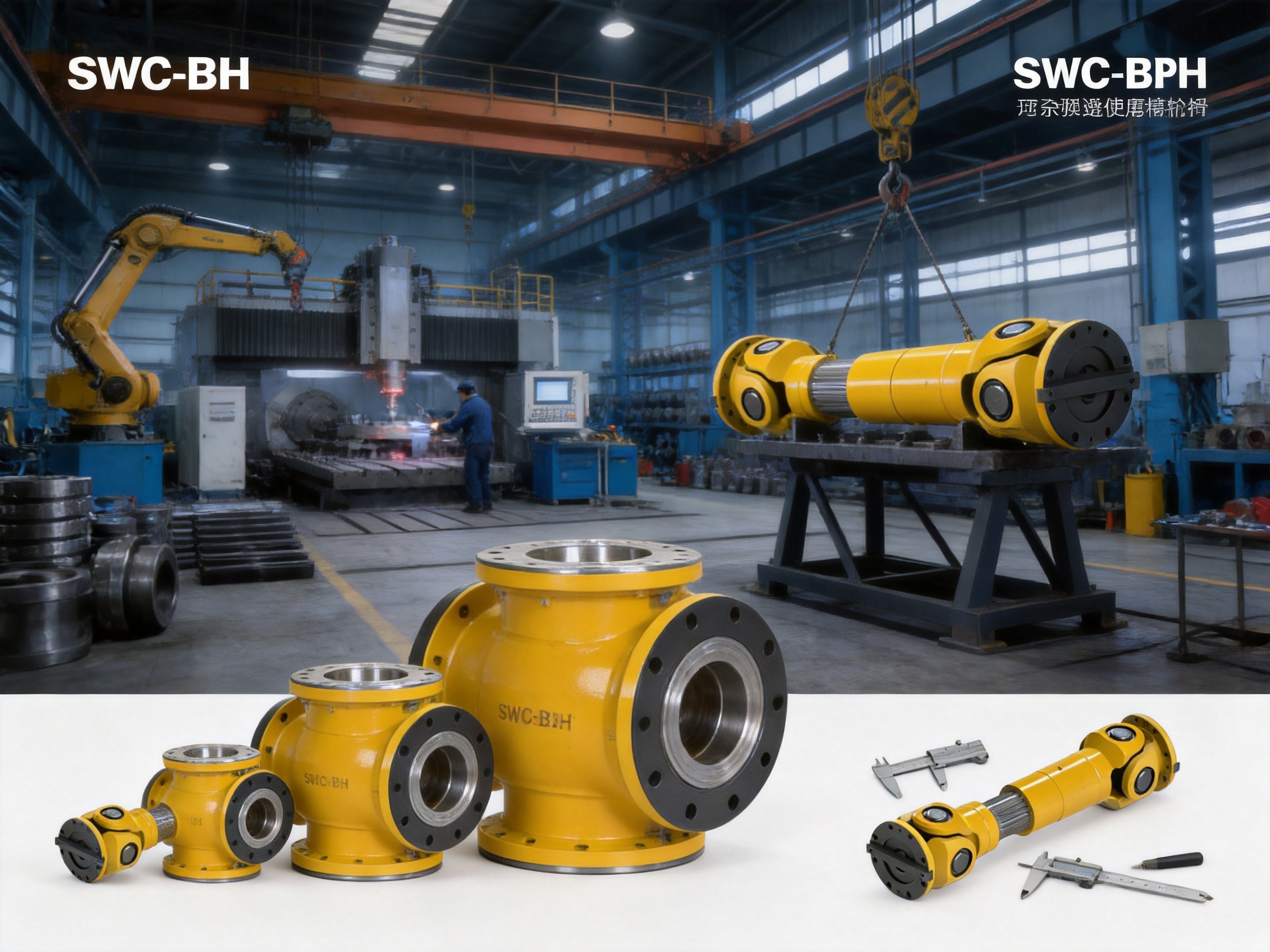
The company’s new workshop covers approximately 16,463.52 square meters. It includes a heavy workshop of about 5,500 square meters, a precision workshop of approximately 4,600 square meters, an office building and gymnasium, a dining hall, a warehouse, and dedicated roads, greening, and parking areas.
The separation of heavy and precision production spaces is well suited to coupling manufacturing. Large universal couplings require handling capacity, welding space, machining equipment, and assembly areas capable of supporting substantial components. At the same time, shaft bores, flange faces, keyways, bolt circles, and sliding elements require controlled machining and inspection.
A dedicated warehouse supports material organization, component protection, and production scheduling. For large couplings, proper storage is important because finished components can be heavy and may require protection from moisture, impact, contamination, and improper handling before installation.
Precision Welding and Machining
The SWC-BH series uses a welded structural concept. Precision welding is therefore a central manufacturing process. Weld preparation, alignment, heat control, penetration, dimensional stability, and post-weld inspection all influence the quality of the final coupling. A controlled welding process helps produce a durable tubular assembly with reliable geometry.
After welding, machining operations are required to achieve the necessary dimensional accuracy for bores, flange faces, keyways, and mounting interfaces. Precision machining is essential because an error at one connection can cause imbalance, uneven loading, difficult assembly, or accelerated wear. The combination of heavy structural fabrication and precision machining is one of the important capabilities required for large universal couplings.
The company’s manufacturing strengths include advanced testing facilities, strict quality control, complete product specifications, and support for non-standard design solutions. These capabilities help maintain consistency between drawings, manufactured components, and the final assembled product.
Quality Control and Testing
Quality control for a heavy-duty coupling should begin with material verification and continue through fabrication, machining, assembly, and final inspection. Critical checks may include dimensional inspection, bore and keyway verification, flange runout, weld appearance, component alignment, sliding function, lubrication condition, and overall assembly quality.
Testing facilities support the evaluation of finished products and help identify issues before shipment. For a universal coupling, inspection is especially important because the design must maintain both structural strength and geometric freedom. The coupling must be strong enough to carry torque while moving smoothly through its permitted angular and telescopic range.
The company states that its products comply with international standards and certifications such as ISO 9001. A quality management system provides a framework for documenting processes, controlling nonconforming products, improving traceability, and maintaining consistent production practices.
Customization for Non-Standard Applications
Standard couplings are efficient when the application matches an available model. However, heavy industrial equipment often has special requirements. The shaft center distance may be unusual, the available space may be restricted, the shaft bores may differ, or the machine may require a special flange, protective arrangement, material, coating, or lubrication solution.
Zhongye supports the design and manufacture of non-standard couplings. Customization may involve a modified length, altered bore, different keyway, special bolt pattern, custom flange, increased telescopic stroke, or adaptation to a specific equipment layout. The feasibility of any modification must be confirmed through engineering calculation and manufacturing review.
Customization is most effective when the customer provides complete operating information. Useful data includes motor power, operating speed, starting and braking conditions, nominal and peak torque, shaft dimensions, center distance, angular deviation, axial movement, ambient temperature, contamination, lubrication limitations, installation orientation, and expected service life.
Application Areas
Metallurgical Equipment
Metallurgical equipment often contains large rollers, drives, conveyors, shears, cooling systems, and material-handling mechanisms. These machines may experience high torque, shock loading, dust, heat, and movement between machine sections. The SWC-BH coupling can be used where a mechanically flexible connection is required between a motor, gearbox, rolling unit, or driven shaft.
Its telescopic function is helpful where the distance between shafts changes because of equipment movement or thermal effects. Its metallic construction is also appropriate for environments in which high temperature and contamination could reduce the service life of polymeric flexible elements.
Mining Equipment
Mining machinery operates under high loads and often experiences impact, vibration, dust, and irregular operating cycles. Conveyors, crushers, hoists, feeders, and processing equipment may require high-torque transmission with tolerance for shaft movement.
The SWC-BH range provides multiple sizes for mining drives. The larger models are suitable for substantial torque demands, while the welded structure is designed for durable service when combined with correct protection, lubrication, inspection, and maintenance procedures.
Energy and Water Equipment
Energy and water equipment may contain pumps, fans, turbines, auxiliary drives, gates, lifting systems, and large mechanical actuators. Some installations have long shaft lines or changing mechanical positions. A universal coupling can help bridge the connection between non-collinear shafts while maintaining torque transmission.
Selection for these applications must include speed and balance considerations. Although the SWC-BH is designed for heavy-duty service, every application must remain within the permitted rotational speed, angular range, torque, and structural limits.
Material Handling and Port Equipment
Port machinery, cranes, stackers, reclaimers, ship loaders, and bulk handling systems frequently use large drives and experience acceleration, braking, and movement of machine structures. A telescopic universal coupling can accommodate changes in shaft position and provide a reliable connection in a movable transmission system.
The coupling can be integrated into systems that use other coupling types at different locations. For example, a universal coupling may connect a moving shaft section, while a gear coupling or nylon sleeve gear coupling is used at a fixed gearbox interface.
Paper, Lifting, and General Industrial Machinery
Paper equipment and lifting machinery may require continuous operation, controlled movement, and dependable torque transmission. Long operating hours make preventive maintenance and coupling inspection especially important. The SWC-BH’s robust mechanical structure and broad size range support system designers who need to select a coupling according to both load and movement.
Installation Considerations
Installation quality has a direct effect on coupling performance. Before installation, the customer should confirm the model, torque rating, shaft dimensions, mounting dimensions, rotation direction, required length, and permitted operating angle. All mating surfaces should be clean and free from burrs, scale, paint buildup, and foreign material that could prevent proper seating.
The shafts and flanges should be inspected for damage or distortion. Bolt holes must align without forcing the coupling into position. Improperly forced assembly can introduce unwanted stress and may cause flange distortion or premature wear. Fasteners should be selected according to the engineering design and tightened using an appropriate sequence and torque procedure.
The telescopic section should be installed so that the available expansion and contraction range is not consumed before operation begins. Sufficient movement must remain in both directions to accommodate the expected machine displacement. The coupling should not be installed at an angle beyond the specified limit.
Where the coupling is lubricated, the correct lubricant and filling procedure should be followed. Lubricant selection should consider operating temperature, rotational speed, load, contamination, and manufacturer instructions. Protective guards should be installed wherever personnel could contact rotating components.
After installation, the system should be rotated manually where practical to confirm that there is no interference, binding, or abnormal resistance. A controlled test run should then be completed while monitoring vibration, temperature, noise, bolt security, telescopic movement, and lubrication leakage. Any abnormal condition should be investigated before the equipment enters continuous service.
Maintenance and Service Practices
Although the SWC-BH is designed for durability, regular maintenance remains necessary. Inspection intervals should be determined by operating hours, load severity, speed, environment, and the consequences of unexpected downtime. Equipment exposed to dust, water, heat, shock, or frequent reversing may require more frequent inspection than equipment operating under stable conditions.
Maintenance personnel should check for unusual noise, vibration, temperature rise, looseness, visible cracks, damaged guards, lubricant loss, corrosion, and restricted telescopic movement. The universal-joint components should be inspected for wear, and the sliding elements should be checked for contamination or binding.
Fasteners should be inspected for loosening, especially in systems exposed to vibration or reversing torque. Shafts and flange connections should be checked for fretting, fretting corrosion, abnormal contact marks, and changes in alignment. If the coupling shows signs of overload, the cause should be identified before the coupling is returned to service.
Lubrication should be maintained according to the operating requirements. Too little lubricant may increase wear and heat, while unsuitable or contaminated lubricant may damage contact surfaces. Lubrication should be performed using clean tools and materials, and old or contaminated grease should be removed when the maintenance procedure requires replacement.
During overhaul, all critical dimensions should be recorded. Comparing current measurements with original inspection records can help identify progressive wear and support decisions about repair or replacement. Components that have reached their allowable wear limit should not be reused merely because the coupling remains visually intact.
Selection Procedure for Engineers
Step One: Determine the Operating Torque
Begin with the actual transmitted torque rather than motor power alone. Calculate nominal torque from power and speed, then consider starting torque, braking torque, shock loads, overloads, and duty cycle. A service factor should be applied according to the equipment type and operating conditions.
Step Two: Check the Angular Deviation
Measure or calculate the angle between the connected shafts during operation. The maximum operating angle must remain within the permitted value for the selected SWC-BH model. The smaller models in the range permit up to 25 degrees, while many larger models are rated for up to 15 degrees.
Step Three: Determine Axial Movement
Identify the maximum expected expansion and contraction of the shaft line. Compare this value with the listed telescopic quantity. The design should retain a suitable margin so the coupling does not reach the end of its travel during normal operation.
Step Four: Confirm Shaft and Mounting Dimensions
Check shaft diameters, bore tolerances, keyways, flange dimensions, bolt circles, and available installation space. The coupling’s minimum length and possible length increments must be compared with the equipment layout. The connection should be designed so that torque is carried safely by the shaft and flange system.
Step Five: Evaluate Speed and Inertia
Confirm that the operating speed is suitable for the selected coupling. Consider the coupling’s moment of inertia in relation to the motor, gearbox, brake, and control system. High inertia can influence acceleration time, braking energy, and dynamic response.
Step Six: Review the Environment
Record temperature, humidity, water exposure, dust, corrosive materials, ultraviolet exposure, and nearby heat sources. These factors influence material selection, surface protection, lubrication, guarding, and maintenance intervals.
Step Seven: Confirm the Safety Requirements
Rotating couplings must be guarded to prevent accidental contact. The installation should include appropriate mechanical protection, lockout procedures, inspection access, and warning labels. Personnel should not approach an unguarded rotating coupling during operation.
Why Manufacturer Support Matters
Large couplings are not always interchangeable. A product with an apparently adequate nominal torque may still be unsuitable if its angular range, bore, axial travel, inertia, speed, or mounting arrangement does not match the application. Manufacturer support helps engineers evaluate the complete operating condition rather than selecting by one rating alone.
Zhongye provides pre-sale technical support, non-standard design solutions, and after-sale service support. This is valuable for customers who are replacing an existing coupling, upgrading equipment, or developing a new transmission line. Technical communication can help clarify whether a standard SWC-BH model is sufficient or whether a customized coupling should be designed.
Reliable support also improves the installation process. Proper drawings, dimensional confirmation, maintenance guidance, and spare-part planning can reduce delays during equipment commissioning. For heavy machinery, avoiding a single installation error may prevent substantial downtime and secondary damage.
Frequently Asked Questions
What is the SWC-BH standard telescopic welded universal coupling?
The SWC-BH is a non-elastic flexible coupling designed to transmit torque between shafts with angular deviation and axial movement. It uses a welded metallic structure, universal-joint articulation, and a telescopic section to accommodate changes in shaft alignment and distance.
What is the maximum nominal torque of the series?
The largest listed model, SWC550BH, has a nominal torque rating of 1,000 kN·m. The actual selection must also consider fatigue torque, shock loading, speed, angle, service factor, and the mechanical characteristics of the connected equipment.
What is the maximum permitted shaft angle?
The SWC100BH, SWC120BH, and SWC150BH models are listed for an axis angle of up to 25 degrees. The larger models from SWC180BH through SWC550BH are listed for an axis angle of up to 15 degrees. The operating angle must remain within the applicable model limit.
How much axial movement can the coupling accommodate?
The listed telescopic expansion and contraction quantity ranges from 55 mm to 240 mm, depending on the model. The SWC550BH provides the largest listed value of 240 mm. The actual required movement should be calculated before selection.
Is this coupling suitable for harsh environments?
Its metallic welded construction and non-elastic load-bearing design make it suitable for many harsh industrial environments, including metallurgy, mining, energy, ports, and material handling. Environmental protection, lubrication, guarding, and maintenance must still be designed for the specific site conditions.
Does the coupling require lubrication?
Universal-joint and sliding components generally require appropriate lubrication and inspection. The exact lubricant, quantity, and service interval should follow the approved technical documentation and the operating conditions of the equipment.
Can the coupling be manufactured to a non-standard length?
The standard data indicates that many models can be increased in length by 100 mm increments. The manufacturer also supports non-standard coupling design and production. Custom length, bore, flange, keyway, and mounting requirements should be reviewed through an engineering drawing before manufacture.
Can the SWC-BH be used with other coupling types?
Yes. A universal coupling may be used in a larger power transmission system that also contains gear couplings, nylon gear couplings, nylon sleeve gear couplings, flange couplings, or other coupling types. Each connection should be selected according to its own movement, torque, speed, and environmental requirements.
What information is needed for a quotation or technical evaluation?
Useful information includes power, speed, nominal and peak torque, shaft diameter, bore and keyway requirements, center distance, angular deviation, axial travel, installation orientation, ambient temperature, contamination, lubrication conditions, operating cycle, and available space. Drawings and photographs of the existing installation can also help clarify the application.
How can the service life of the coupling be improved?
Service life can be improved through correct model selection, accurate installation, proper lubrication, effective guarding, routine inspection, timely fastener checks, contamination control, and immediate investigation of abnormal vibration or noise. Operating beyond the rated angle, torque, speed, or telescopic range should be avoided.
Conclusion
The SWC-BH standard telescopic welded universal coupling is a heavy-duty solution for power transmission systems that require high torque, substantial angular flexibility, and axial movement compensation. Its non-elastic metallic design avoids dependence on polymeric torque-transmitting elements, while its universal-joint and telescopic structure accommodates mechanical movement that would be difficult for a rigid or conventional flexible coupling to handle.
The series covers a wide range of industrial requirements, from 2.5 kN·m to 1,000 kN·m. The available models provide different rotation diameters, fatigue torque ratings, angular limits, telescopic ranges, mounting dimensions, inertias, and masses. This broad selection helps engineers match the coupling to medium-duty equipment as well as major metallurgical, mining, energy, lifting, and material-handling installations.
Its advantages are supported by the manufacturing capabilities of Zhongye Heavy Industry Technology (Zhenjiang) Co., Ltd., including research and development, precision welding, heavy fabrication, precision machining, quality control, testing, customization, and technical service. The company’s workshop infrastructure and integrated production system are suited to the manufacture of large and complex couplings.
For the best result, the SWC-BH should be selected as part of a complete transmission analysis. Torque, speed, angle, axial movement, inertia, shaft dimensions, environment, lubrication, and safety protection must all be considered. When correctly specified, installed, and maintained, the coupling can provide dependable torque transmission and help protect connected equipment in demanding industrial service.
References
1. Product technical data for the SWC-BH standard telescopic welded universal coupling, including model ratings, dimensions, torque values, angular limits, telescopic quantities, inertia, and mass.
2. General engineering principles for flexible couplings, universal joints, shaft alignment, torque transmission, and industrial power transmission systems.
3. Industrial equipment maintenance practices for rotating machinery, lubrication, vibration inspection, guarding, and preventive service.
4. Quality management principles for mechanical component manufacturing, welding control, precision machining, inspection, and traceability.
5. Application engineering considerations for metallurgy, mining, energy, water equipment, lifting machinery, paper equipment, port equipment, and bulk material handling systems.
Product: SWC-BH standard expansion welded universal coupling

- Quick Links
- About
- Products
- Our Service
- News & Events
- Contact
- Products Series
- Flexible Couplings with Non-Elastic Elements
- Flexible Couplings with Metal Elastic Elements
- Flexible Couplings with Non-Metallic Elastic Elements
- Safety Coupling
- Rigid Coupling
- Contact Us
- Tel : +86 511 8572 3800 +86 511 8572 3900
- Mobile : +86 15106109009
- Email : sales@couplingzy.com
- Add:No.1 Zhongye Yingbin Avenue, Gaozi Street, Dantu Economic Development Zone, Zhenjiang City, Jiangsu Province, China.


