:+86 15106109009
:sales@couplingzy.com


 English
  русский
  Español
  عربى
عربى  Português
  Deutsch
  Türk
Türk  Indonesia

MAC Type Friction Safety Coupling: Precision Overload Protection for Heavy-Duty Power Transmission
Content
- 1 Introduction
- 2 How a Friction Safety Coupling Works
- 3 Main Advantages of the MAC Friction Safety Coupling
- 4 Comparison with Alternative Coupling and Protection Solutions
- 5 Technical Range and Model Selection
- 6 Manufacturing Strengths and Quality Control
- 7 Applications in Heavy Industry
- 8 Installation and Commissioning Guidance
- 9 Maintenance and Troubleshooting
- 10 Customization and Engineering Support
- 11 Why Manufacturer Capability Matters
- 12 Selection Checklist
- 13 Questions and Answers
- 13.1 What is a MAC friction safety coupling?
- 13.2 How does it protect a motor and gearbox?
- 13.3 Does the coupling break during an overload?
- 13.4 Can the protection torque be adjusted?
- 13.5 Will the coupling automatically return to normal transmission?
- 13.6 What torque range is available?
- 13.7 What industries use this type of coupling?
- 13.8 Is a friction safety coupling a replacement for a motor protection system?
- 13.9 Can the product be customized?
- 13.10 What should be checked after the coupling slips?
- 13.11 Why is correct alignment important if the coupling is flexible?
- 13.12 How should the coupling be selected for a conveyor?
- 14 Conclusion
- 15 References
- 16 Product: MAC type friction safety coupling(Q/YA41001X-2018)
Introduction
Modern industrial transmission systems must deliver power continuously while also protecting motors, shafts, gearboxes, reducers, conveyors, rolls, pumps, and other driven equipment from unexpected overloads. A coupling is therefore more than a component used to connect two shafts. In demanding applications, it must transmit torque efficiently, accommodate installation and operating errors, reduce shock, and respond safely when the driven machine encounters excessive resistance.
The MAC type friction safety coupling, manufactured in accordance with the Q/YA41001X-2018 standard, is designed to meet these requirements through an adjustable friction-slip protection principle. Under normal operating conditions, the coupling transmits torque from the driving shaft to the driven shaft. When the working torque rises above the preset protection value, the friction pair slips in a controlled manner. This action interrupts the transmission of excessive torque without requiring the coupling body to fracture or another major component to fail.
This controlled slip gives the coupling an important advantage over rigid connections and many conventional overload protection arrangements. Instead of allowing overload stress to pass directly into the motor, shaft, gearbox, or machine frame, the coupling creates a protective separation between the power source and the blocked or overloaded machine. Once the abnormal condition is removed, the friction surfaces can normally resume torque transmission without replacing sacrificial parts, subject to correct inspection and operating conditions.
The product family covers nominal torque ratings from 6.3 N·m to 4,700 N·m in the listed MAC1 through MAC7 configurations, with the maximum adjustable or applicable range extending to 9,500 N·m in the MAC7Z range. Allowable speeds range from 95 r/min to 1,000 r/min depending on the model and operating torque. This broad range makes the series suitable for compact machinery as well as large industrial equipment.
As a professional coupling manufacturer, Zhongye Heavy Industry Technology (Zhenjiang) Co., Ltd. combines product development, machining, assembly, testing, and technical support. Its manufacturing experience in metallurgical equipment, mining machinery, water equipment, lifting systems, paper machinery, port equipment, and related industries supports the production of couplings intended for demanding service conditions.
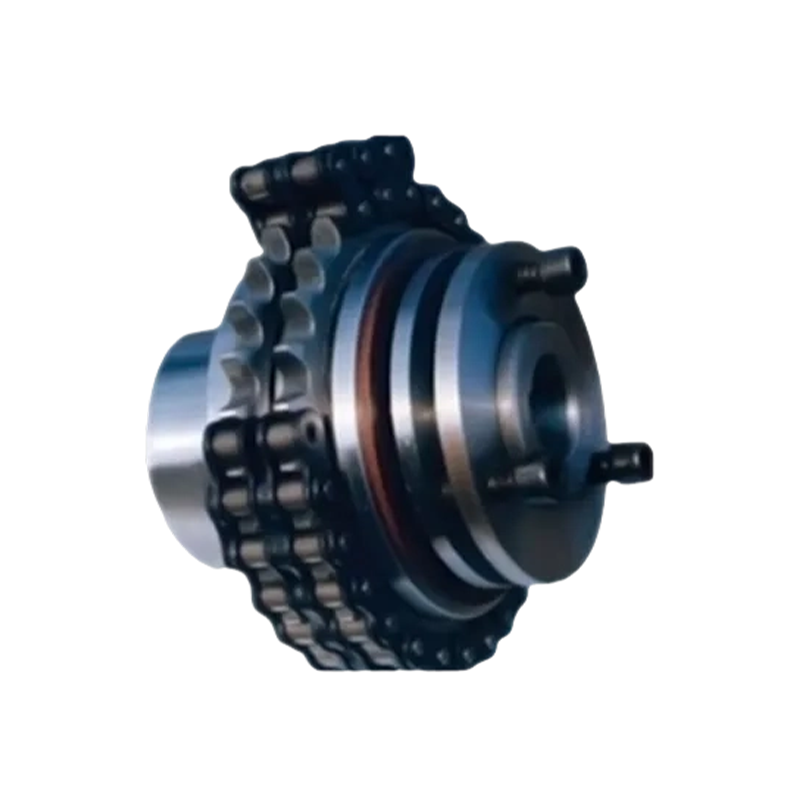
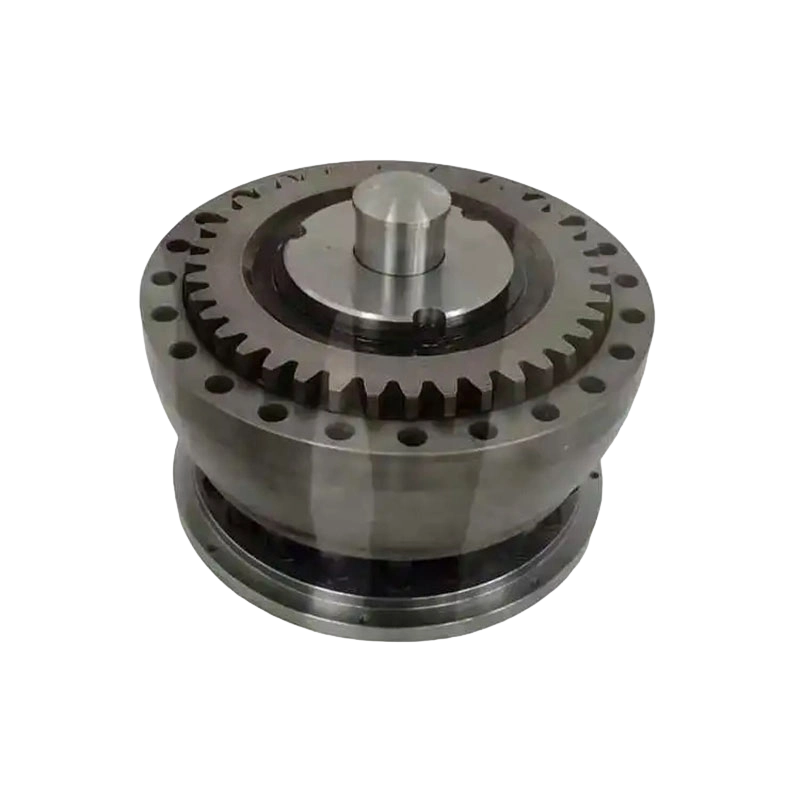
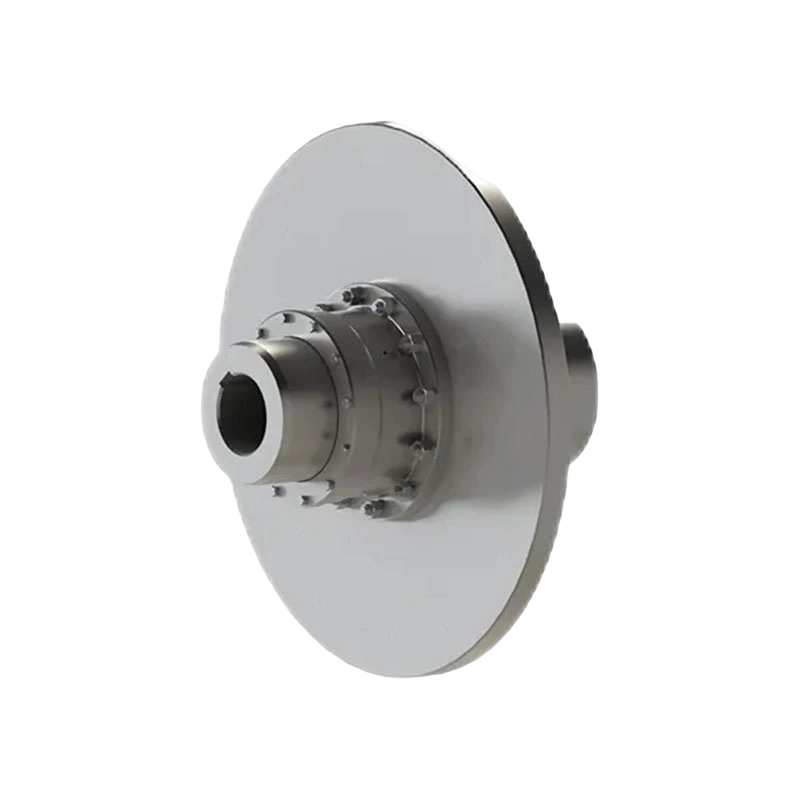
MAC type friction safety coupling(Q/YA41001X-2018)
How a Friction Safety Coupling Works
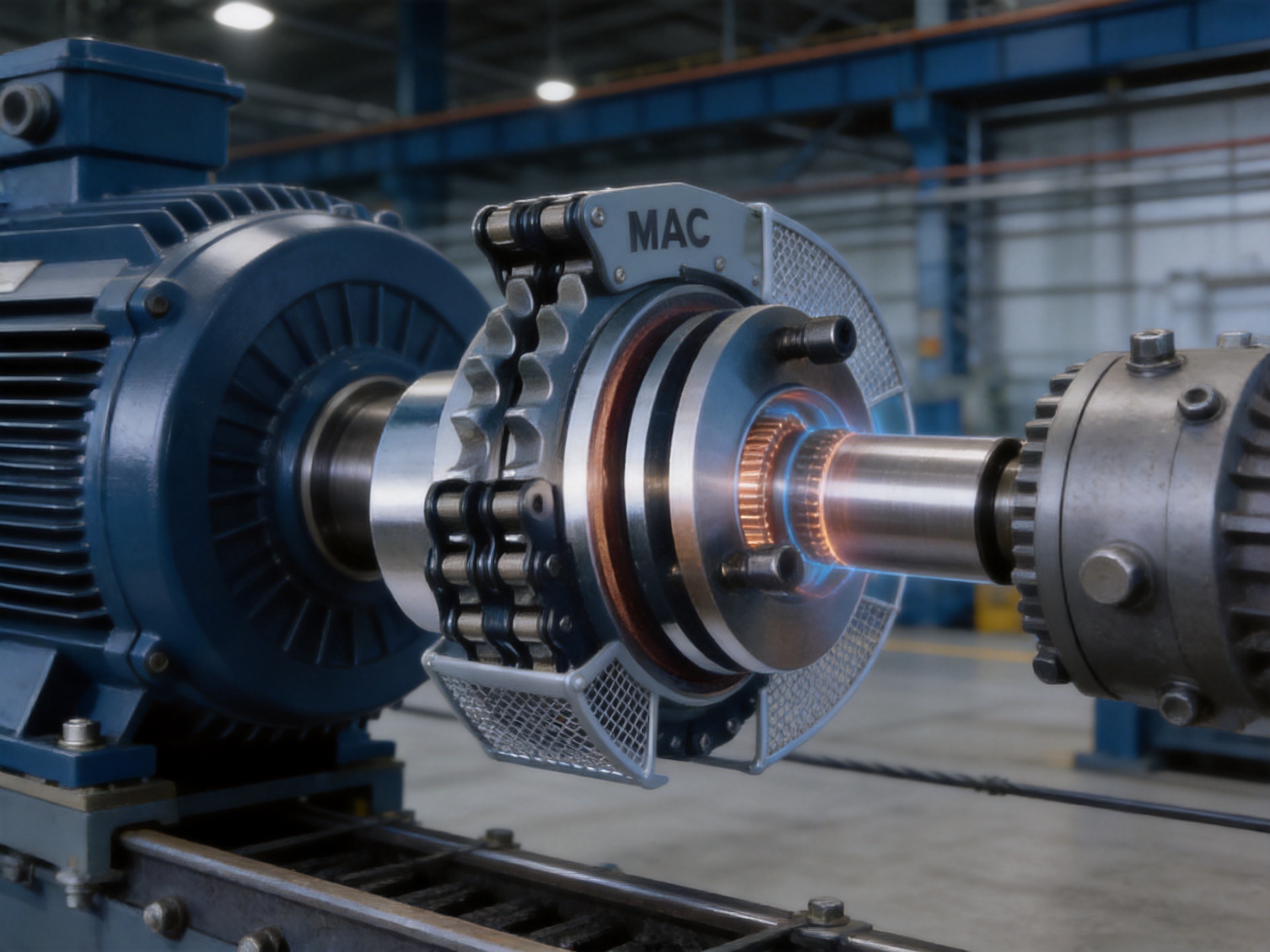
The central operating principle of the MAC friction safety coupling is the controlled slip of a friction pair. During normal operation, spring force or hydraulic pressure presses the friction surfaces together. The resulting friction force generates the torque capacity required to transmit motion from one shaft to the other.
When the actual transmitted torque remains below the preset value, the coupling behaves like a conventional flexible transmission component. The machine can operate continuously while the coupling transfers rotational power through the friction interface. The precise torque level depends on the model, friction material, clamping force, friction coefficient, shaft arrangement, and adjustment setting.
If the load suddenly increases beyond the set protection torque, the friction surfaces begin to slip. This slip limits the torque that can be transmitted downstream. A jammed conveyor, blocked roller, sudden material accumulation, stalled pump, foreign object, or abnormal acceleration event can therefore be isolated before it causes more extensive damage.
Unlike a shear-pin device, the friction safety coupling does not rely on a single part that must break when overload occurs. Unlike a simple rigid coupling, it does not force the entire drivetrain to absorb the full torque spike. Unlike some basic disconnecting devices, it can be adjusted to match the real operating requirements of the machine.
The protection value can be adjusted through the spring nut or, where the applicable configuration uses it, through hydraulic pressure. This gives the user control over the point at which the friction surfaces begin to slip. A lower setting can provide more sensitive protection for delicate equipment, while a higher setting can accommodate machinery that requires greater starting or peak torque.
Torque adjustment must always be performed according to the equipment design, the coupling documentation, and the actual operating conditions. The setting should be high enough to prevent nuisance slipping during normal starts and temporary process variations, but low enough to protect the weakest major component in the transmission chain.
Controlled Slip Instead of Destructive Failure
The most important safety function is not simply that the coupling slips, but that it slips in a controlled and repeatable way. A gradual friction response can reduce the impact associated with sudden mechanical failure. This helps protect key components from torsional shock and can reduce unplanned downtime.
Controlled slip does not mean that an overload can be ignored. The machine should still be stopped, inspected, and restarted only after the cause of the overload has been identified. Repeated slipping can generate heat and wear, especially if the overload continues for a long period. The coupling is a protective component, not a substitute for proper process control, guarding, lubrication, alignment, or maintenance.
Automatic Recovery Potential
Because the MAC series uses durable friction materials, including copper-based powder-metallurgy materials in relevant friction applications, the coupling can often return to normal transmission after a brief slip event without replacing a broken fuse element. This recovery potential is valuable in production environments where every minute of downtime affects output.
Whether automatic recovery is appropriate depends on the type and duration of the overload. After a significant event, the operator should check the friction surfaces, fasteners, adjustment mechanism, shaft connections, and surrounding equipment. Any signs of excessive heat, discoloration, deformation, abnormal noise, or loss of torque capacity require technical evaluation.
Main Advantages of the MAC Friction Safety Coupling
Broad Torque Coverage
The MAC family provides multiple frame sizes and configurations to cover a wide range of nominal torques. The listed series begins with MAC1Q at 6.3 N·m and progresses through larger sizes, including MAC6Q at 900 N·m, MAC6Z at 2,000 N·m, MAC7Q at 2,500 N·m, and MAC7Z with a nominal torque of 4,700 N·m and an upper range of 9,500 N·m.
This range allows engineers to select a coupling according to the required torque rather than using an oversized or undersized solution. Correct sizing improves the balance between safety, rotational inertia, installation space, and cost. A coupling that is too small may slip during normal operation, while one that is excessively large may add unnecessary weight and inertia.
Flexible Torque Adjustment
Many industrial machines do not operate at one fixed load. Their torque requirements may change during starting, acceleration, material entry, process transitions, or product changes. The adjustable friction mechanism allows the protection setting to be adapted to these conditions.
The spring-nut adjustment structure provides a practical mechanical method for setting the clamping force. Hydraulic adjustment, where specified, can offer another method for applications requiring a particular control arrangement. In both cases, the goal is to provide a predictable relationship between the adjustment setting and the torque protection value.
High Transmission Efficiency
The product information indicates that transmission efficiency is usually maintained above 95 percent. High efficiency is important because power lost in the coupling becomes heat. Lower heat generation supports more stable operation, reduces energy waste, and helps protect the friction elements during continuous duty.
Efficiency is influenced by the actual load, speed, alignment, friction condition, installation accuracy, and slipping frequency. The stated value should therefore be used as a design reference rather than a guarantee for every operating condition. Continuous slipping, improper adjustment, contamination, or excessive misalignment can alter performance.
Wear-Resistant Friction Materials
The friction pair is the working heart of the safety mechanism. The use of wear-resistant and high-temperature-resistant friction materials supports repeated protection events and helps maintain stable torque transmission. Copper-based powder metallurgy is identified among the applicable friction material choices.
Powder-metallurgy friction materials can be engineered to provide a useful combination of friction stability, heat resistance, wear performance, and mechanical strength. Their behavior is especially important when the coupling must tolerate brief slip events without immediate replacement of the friction components.
Shock Absorption and Noise Reduction
A friction safety coupling can contribute to smoother power transmission by moderating sudden torque changes. When correctly installed and adjusted, it helps reduce the transmission of shock loads into the connected equipment. This can be beneficial in machines with variable loading, intermittent operation, reversing cycles, or frequent starts and stops.
Reduced shock can also help lower structural vibration and operating noise. However, noise and vibration may originate from imbalance, poor alignment, worn bearings, gear damage, loose foundations, or process problems. The coupling should be considered part of a complete vibration-control strategy rather than the only solution.
Displacement Compensation
Industrial shafts rarely remain perfectly aligned under all conditions. Thermal expansion, foundation movement, bearing clearance, shaft deflection, assembly tolerances, and load-related deformation can create angular, radial, or axial displacement. The MAC coupling provides displacement compensation capability that helps accommodate these practical deviations.
Compensation capacity is not unlimited. Each model must be installed within the allowable displacement values defined by the technical documentation. Excessive misalignment increases frictional losses, bearing loads, wear, and temperature. Accurate shaft alignment remains essential even when a flexible safety coupling is used.
Reduced Maintenance Burden
When a short-duration overload occurs, the coupling may slip and return to service after inspection rather than requiring the replacement of a shear pin, breakable element, or complete coupling assembly. This can reduce spare-parts consumption and shorten recovery time.
Maintenance requirements remain straightforward: check the torque setting, inspect the friction surfaces, verify the fasteners, examine shaft hubs and keyways, and confirm that no abnormal heat or deformation has occurred. A planned inspection schedule is particularly important in heavy-duty applications where overload events are difficult to predict.
Comparison with Alternative Coupling and Protection Solutions
Comparison with Rigid Couplings
A rigid coupling provides a strong and direct connection between two shafts, but it offers little tolerance for misalignment and no inherent overload slip function. If the connected machine is blocked, the torque generated by the motor may be transmitted directly into shafts, keys, bearings, gears, and machine frames.
The MAC friction safety coupling offers a more protective alternative where overloads, displacement, or shock loads are possible. It combines shaft connection with a preset torque-limiting function. A rigid coupling may still be appropriate for accurately aligned systems with stable loads, but it is less suitable where equipment protection is a priority.
Comparison with Shear-Pin Couplings
Shear-pin protection is simple and effective when a clearly defined breakaway event is acceptable. However, after overload, the broken pin must be replaced before the machine can return to service. Finding and replacing the correct pin can extend downtime, particularly in remote mines, ports, steel plants, and large processing facilities.
The friction type design can provide repeatable slip and potential recovery without replacing a broken element after every short overload. This is a practical advantage for production equipment that experiences occasional transient overloads. Shear pins may remain suitable for applications where a positive mechanical break is required or where the machine must remain fully disconnected after overload.
Comparison with Simple Friction Clutches
A standard friction clutch is generally selected to engage and disengage power under controlled operating commands. A friction safety coupling, in contrast, is primarily designed to protect the drivetrain when torque exceeds a selected threshold. The MAC series combines friction transmission with overload protection in a shaft-coupling format.
This integrated function can simplify the transmission arrangement. It reduces the need to combine a separate flexible coupling with a separate torque limiter, provided that the model and setting meet the mechanical and safety requirements of the system.
Comparison with Electronic Protection
Electronic motor protection, current monitoring, variable-frequency-drive limits, and control-system alarms can detect abnormal operating conditions. These systems are valuable, but they may not respond directly to every mechanical torque spike. Electrical current does not always represent instantaneous shaft torque accurately, especially during transient events, deceleration, or complex mechanical interactions.
A mechanical friction safety coupling responds at the torque-transfer interface itself. It therefore provides an additional layer of protection independent of software, sensor calibration, communication delays, or motor-current interpretation. The strongest protection strategy often combines mechanical and electronic methods rather than choosing only one.
| Protection solution | Main operating principle | Recovery after overload | Typical strength | Important consideration |
|---|---|---|---|---|
| Rigid coupling | Direct shaft connection | Not applicable | High torsional stiffness | Limited misalignment and overload protection |
| Shear-pin coupling | Breakable element fails at overload | Pin replacement normally required | Simple positive overload indication | Downtime and spare-pin management |
| Electronic protection | Motor current, speed, or control monitoring | System reset or restart | Easy integration with automation | May not detect every mechanical torque spike |
| Friction safety coupling | Friction pair slips at preset torque | Potentially rapid after inspection | Adjustable mechanical torque protection | Heat, wear, and setting must be monitored |
Technical Range and Model Selection
The selection of a MAC coupling should begin with the actual transmitted torque, peak torque, speed, shaft diameters, shaft lengths, available installation space, load type, and expected overload behavior. Nominal motor power alone is not enough to determine the correct model.
The following summary presents the principal ratings from the supplied product data. Some configurations contain several shaft-hole and length combinations, so the complete engineering selection should be confirmed against the detailed manufacturer drawing before ordering.
| Model | Nominal torque | Torque range shown | Allowable speed | Reference outside diameter D | Reference mass | Reference inertia |
|---|---|---|---|---|---|---|
| MAC1Q | 6.3 N·m | 6.3–28 N·m | 1,000 r/min | 52 mm | 3.7 kg | 0.003 kg·m² |
| MAC1Z | 14 N·m | 14–56 N·m | Model-dependent | 52 mm | Not separately listed | Not separately listed |
| MAC2Q | 20 N·m | 20–80 N·m | 800 r/min | 62 mm | 4.2 kg | 0.014 kg·m² |
| MAC2Z | 40 N·m | 40–140 N·m | Model-dependent | 62 mm | Not separately listed | Not separately listed |
| MAC3Q | 63 N·m | 63–224 N·m | 500 r/min | 75 mm | 3.7 kg as listed | 0.061 kg·m² |
| MAC3Z | 90 N·m | 90–400 N·m | Model-dependent | 75 mm | Not separately listed | Not separately listed |
| MAC4Q | 125 N·m | 125–560 N·m | 400 r/min | 100 mm | 5.2 kg | 0.658 kg·m² |
| MAC4Z | 224 N·m | 224–1,120 N·m | Model-dependent | 100 mm | Not separately listed | Not separately listed |
| MAC5Q | 400 N·m | 400–1,400 N·m | 300 r/min | 120 mm | 5.8 kg | 0.921 kg·m² |
| MAC5Z | 630 N·m | 630–2,000 N·m | Model-dependent | 120 mm | Not separately listed | Not separately listed |
| MAC6Q | 900 N·m | 900–2,800 N·m | 200 r/min | 150 mm | 5.4 kg as listed | 3.726 kg·m² |
| MAC6Z | 2,000 N·m | 2,000–4,000 N·m | Model-dependent | 150 mm | Not separately listed | Not separately listed |
| MAC7Q | 2,500 N·m | 2,500–5,000 N·m | 140 r/min | 190 mm | 10 kg | 8.249 kg·m² |
| MAC7Z | 4,700 N·m | 4,700–9,500 N·m | 95 r/min | 190 mm | Not separately listed | Not separately listed |
The Q configurations in the supplied table include detailed reference dimensions such as D, Dm, D1, S, adjustment-thread information, mass, and inertia. The Z configurations provide additional torque and shaft-hole combinations, with dimensions varying by model. Because the table is arranged in grouped rows, some shaft-hole and length values apply to more than one preceding model. Final selection should therefore use the original technical drawing and a confirmed dimensional schedule.
Torque Calculation
For rotating equipment, transmitted torque can be estimated from power and speed using the relationship T = 9550P/n, where T is torque in N·m, P is power in kW, and n is rotational speed in r/min. This calculation provides the basic operating torque, but it does not include starting torque, acceleration torque, impact loading, material surges, or process-specific service factors.
The protection setting should be coordinated with the motor, reducer, shaft, key, bearing, chain, belt, gear, and driven machine. In many systems, the safety coupling should slip before the least-resistant component is overloaded. Engineers should also consider whether the process requires controlled restarting or whether the machine must be shut down immediately after slip.
Speed and Inertia
Allowable speed must be checked carefully. Smaller MAC models are listed for higher speeds, while larger models are generally intended for lower-speed, high-torque machinery. The rotating mass and inertia of the coupling influence acceleration time, dynamic response, and braking behavior.
At high speed, balance, concentricity, fastening quality, guarding, and shaft alignment become increasingly important. At low speed and high torque, the focus shifts toward contact pressure, shaft connection strength, structural stiffness, thermal behavior during slip, and the ability of the surrounding machine to withstand transient loads.
Shaft Bores and Installation Dimensions
The available shaft-hole diameters cover a broad range, from small bores in the MAC1 series to large bores reaching approximately 170 mm in the listed MAC7Z combinations. Shaft length, hub length, keyway dimensions, end clearance, and the coupling’s overall installation envelope must all be confirmed.
When a standard bore does not meet the application, customized coupling design may be considered. Customization can involve shaft-hole dimensions, hub arrangement, connection details, mounting space, special materials, or integration with an existing machine. Any non-standard design should be reviewed through a formal engineering process to preserve the required torque capacity and safety function.
Manufacturing Strengths and Quality Control
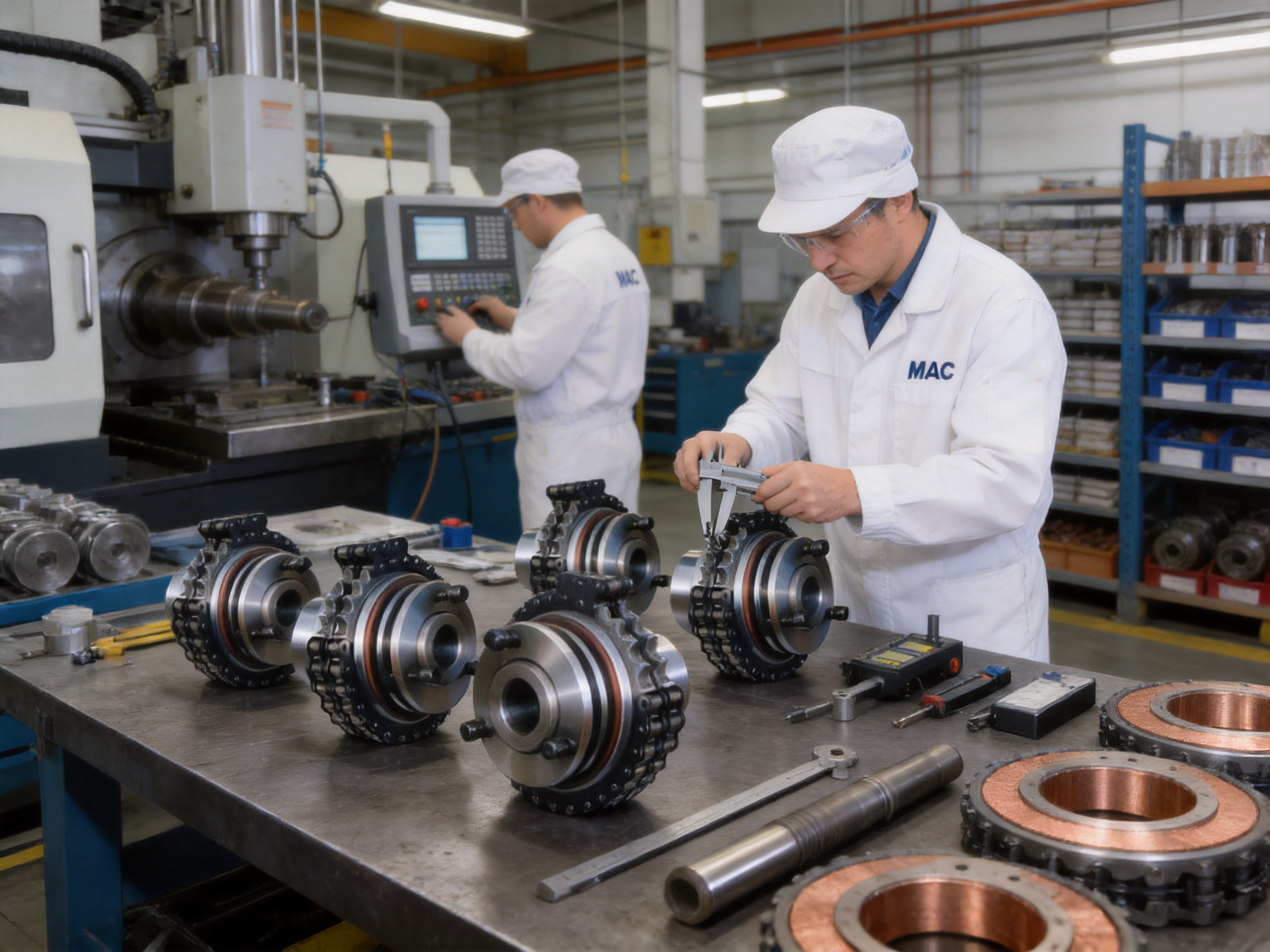
The performance of a friction safety coupling depends on more than its nominal dimensions. The friction surfaces must be manufactured consistently, the hubs must maintain accurate geometry, the adjustment mechanism must operate reliably, and the completed assembly must be inspected under controlled conditions.
Zhongye Heavy Industry Technology (Zhenjiang) Co., Ltd. integrates research and development, manufacturing, sales, and technical service. The company operates a new workshop with an area of approximately 16,463.52 square meters. The supplied facility description includes a 5,500-square-meter heavy workshop, a 4,600-square-meter precision workshop, a 2,000-square-meter office building and gymnasium, a 500-square-meter dining hall, a 1,000-square-meter warehouse, and additional roads, green areas, and parking spaces.
Heavy Machining Capability
The heavy workshop supports the production of large coupling components and other industrial transmission parts. Large hubs, flanges, sleeves, and bodies require stable machining processes because dimensional errors can affect balance, fit, alignment, and load distribution. Adequate working space also supports the handling of heavy components during machining, assembly, inspection, and packing.
Precision Workshop Support
The precision workshop is important for components requiring controlled tolerances and repeatable surface quality. Friction safety couplings contain parts whose dimensions influence clamping force, torque capacity, shaft fit, and axial positioning. Precision machining helps establish consistent interfaces between the hub, friction assembly, adjustment mechanism, and connected shafts.
Material and Friction-Surface Control
Friction materials must be selected according to the expected torque, speed, temperature, slip duration, and surrounding environment. Copper-based powder-metallurgy materials are identified for the product family because they can provide wear resistance and high-temperature performance suitable for demanding friction applications.
Material control should include supplier qualification, incoming inspection, correct storage, batch identification, and verification of the finished friction components. The friction coefficient can be affected by contamination, surface damage, moisture, oil, grease, and incorrect bedding. Manufacturing quality control therefore extends from raw materials to final assembly and operating instructions.
Assembly and Adjustment Verification
Correct assembly is essential for a safety coupling because the protection torque depends on the mechanical relationship between the friction pair and the adjustment mechanism. Assembly personnel must ensure that contact surfaces are clean, fasteners are tightened correctly, springs or hydraulic components are positioned properly, and the coupling is configured according to the approved drawing.
Adjustment verification should confirm that the coupling responds at the intended torque range. Depending on the production and inspection plan, testing may include dimensional inspection, rotational checks, friction-interface inspection, adjustment verification, and documentation of the final configuration.
Testing and Quality Management
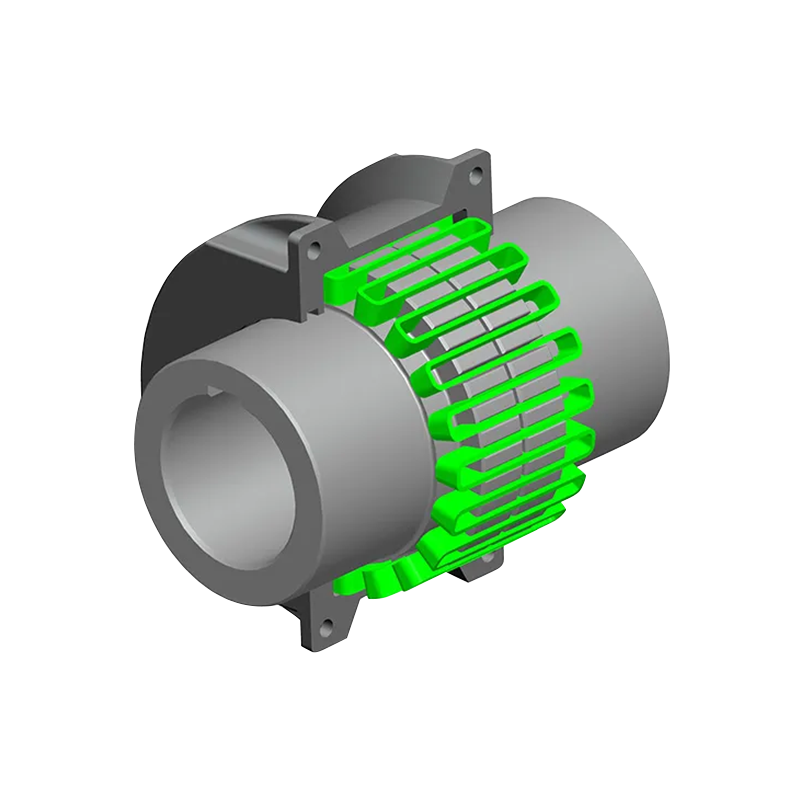
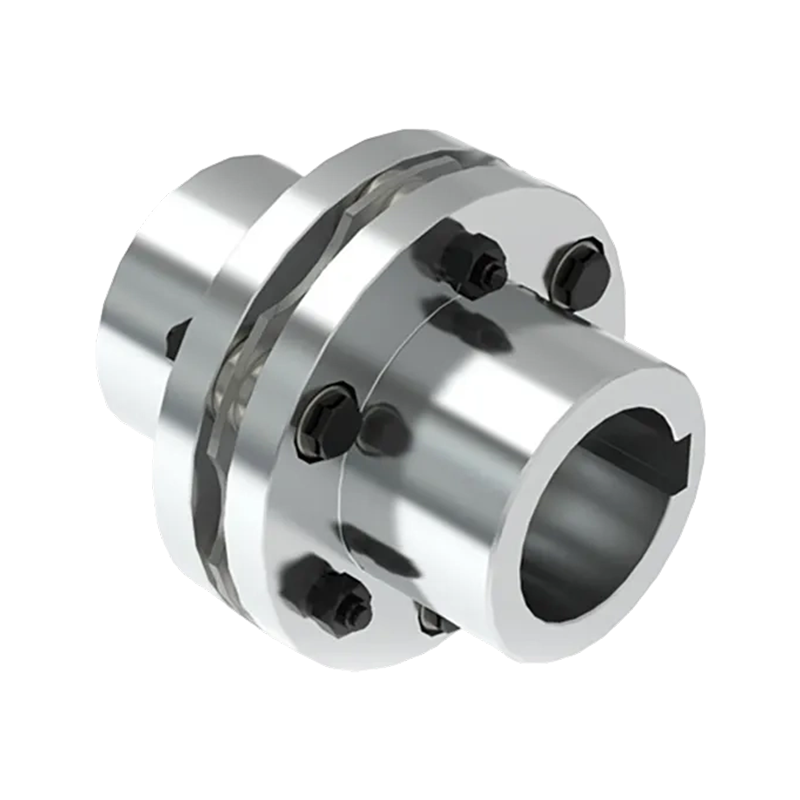
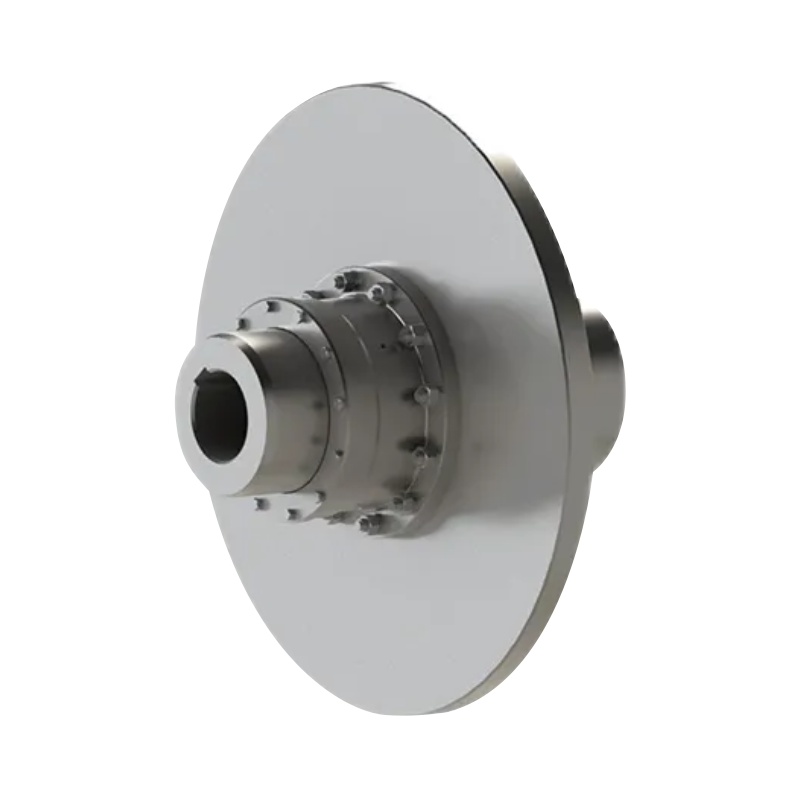
The company states that it has advanced testing facilities, strict quality control, reliable production guarantees, and ISO 9001-related quality management compliance. These capabilities support consistent production across a broad product range, including toothed couplings, elastic couplings, universal couplings, tire couplings, jaw couplings, diaphragm couplings, drum couplings, grid couplings, Oldham couplings, flange couplings, roller-chain couplings, and safety couplings.
A broad manufacturing portfolio can be valuable to customers that use several coupling types in one plant. The supplier can evaluate the transmission system as a whole rather than treating each coupling as an isolated purchase. This is particularly useful when a project includes standard couplings, non-standard shaft arrangements, and safety devices with different torque requirements.
Applications in Heavy Industry
Metallurgical Equipment
Steel and metallurgical equipment often operates under high loads, elevated temperatures, impact conditions, and variable material resistance. Rollers, conveyors, feeders, straightening machines, and auxiliary drives may encounter sudden blockage or excessive material accumulation. A friction safety coupling can reduce the risk that a transient overload will damage the motor or gearbox.
The coupling’s ability to accommodate limited displacement is useful in long production lines where thermal expansion and structural movement can influence shaft alignment. Model selection must account for the low-speed, high-torque characteristics common in these systems.
Mining Machinery
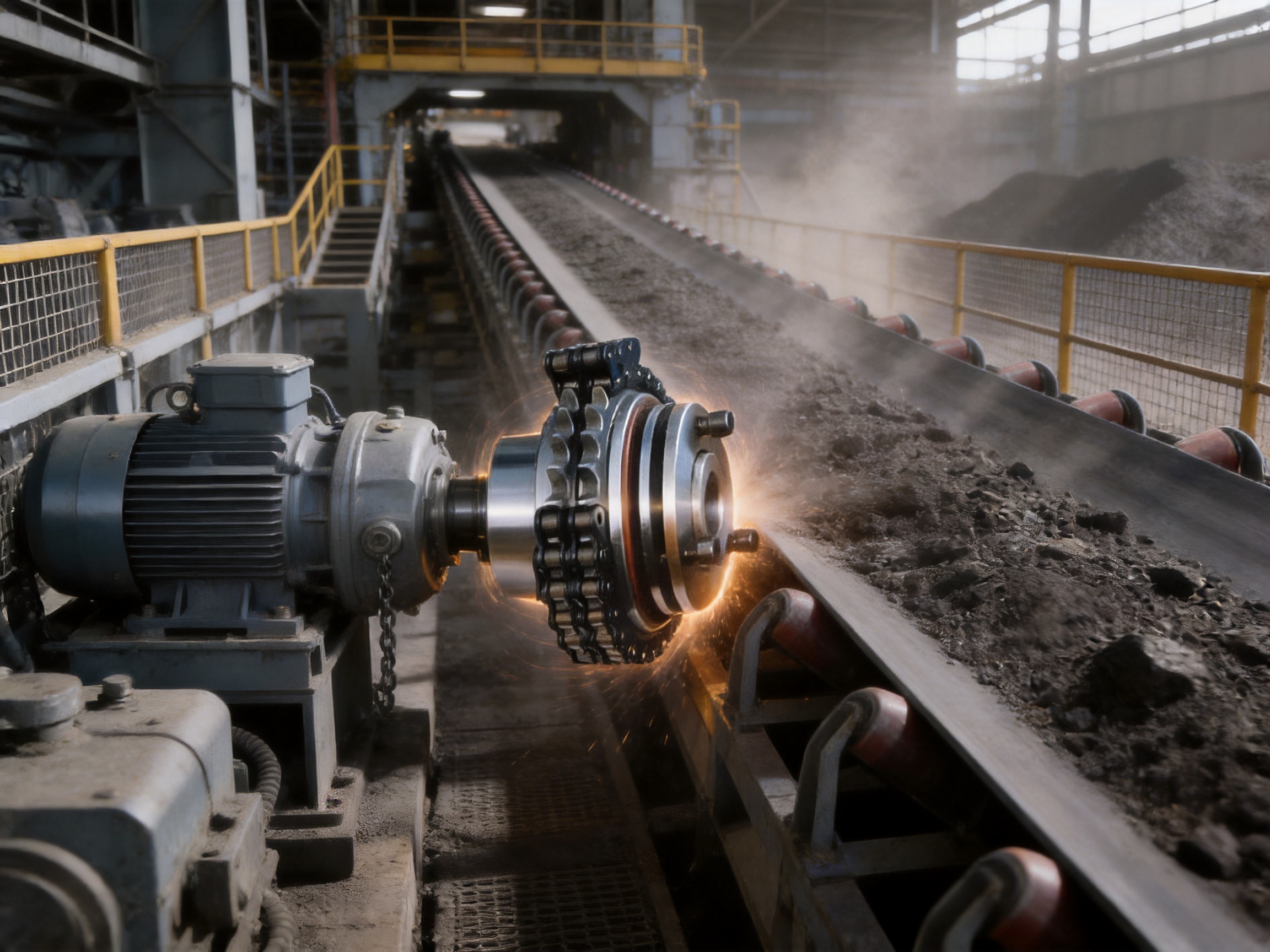
Mining equipment is exposed to dust, vibration, shock loading, uneven material flow, and difficult maintenance access. Crushers, feeders, conveyors, screens, hoists, and processing machinery can experience severe torque changes when large rocks or foreign materials enter the working zone.
In such environments, a resettable or potentially recoverable mechanical protection device can reduce the time needed to restore production after a brief overload. The coupling must be protected with suitable guarding, and the friction surfaces must be shielded from contamination as far as the machine design permits.
Port and Bulk-Handling Equipment
Port machinery often operates continuously and handles large quantities of bulk material. Ship unloaders, belt conveyors, bucket elevators, stackers, reclaimers, and transfer systems can be affected by material surges, wet cargo, blockages, and starting under load.
A properly set MAC coupling can protect the drive train while maintaining a compact mechanical arrangement. The broad shaft-hole and torque options help engineers match the coupling to different drive sizes used across a port facility.
Paper Machinery
Paper equipment requires stable speed and controlled tension. Sudden torque changes can affect rolls, calenders, winding systems, and web-handling components. A safety coupling can help limit mechanical overload while the flexible connection contributes to smoother operation.
Paper plants also value low downtime and predictable maintenance. The possibility of recovering from a brief overload without replacing a broken shear element can be beneficial, although inspection and correct restart procedures remain essential.
Water and Pumping Equipment
Pumps, mixers, aerators, water-treatment equipment, and related machinery may encounter blockage, abnormal fluid resistance, or start-up conditions that create unexpected torque. A mechanical safety coupling provides a direct torque-limiting layer between the motor and driven equipment.
For pump systems, engineers should evaluate starting torque, fluid inertia, pump type, operating speed, seal arrangement, and the consequences of reverse rotation. Coupling selection must also consider corrosion, moisture, temperature, and the need for protective enclosure.
Lifting Equipment
Lifting systems require careful protection because overloads can create both equipment damage and safety risks. Couplings used in hoists, winches, and auxiliary drives must be selected in accordance with the applicable machine safety design and should not be treated as the sole load-holding or braking device.
The friction coupling can protect the drive transmission from excessive torque, but it must be integrated with brakes, limit switches, overload controls, structural protection, and a documented risk assessment. The coupling setting should never be used to bypass the rated load limits of the lifting system.
Installation and Commissioning Guidance
Before installation, inspect the coupling for transport damage, confirm the model and bore sizes, verify the adjustment components, and compare the product with the approved drawing. Check that the shafts are clean, free from burrs, and within the specified dimensional tolerances.
Align the shafts carefully using appropriate measurement equipment. Flexible displacement compensation should not be used to compensate for careless installation. Excessive radial, angular, or axial error can create continuous friction, heat, vibration, and premature wear.
Install keys, locking elements, bolts, and other connection parts according to the engineering specification. Fasteners should be tightened using suitable tools and the recommended sequence. The coupling should be guarded before operation to prevent contact with rotating parts and to contain fragments in the unlikely event of a severe mechanical failure.
Set the initial protection torque according to the calculated operating torque and the machine service factor. Do not set the value arbitrarily high to prevent nuisance slipping. An excessively high setting may allow the motor or gearbox to transmit damaging torque before the friction pair responds.
During commissioning, observe starting behavior, acceleration, vibration, noise, temperature, and any evidence of slip. If slip occurs during normal operation, stop the machine and determine whether the cause is an incorrect setting, excessive starting torque, alignment error, mechanical interference, or a process overload.
Record the final setting, installation date, coupling model, shaft sizes, and commissioning observations. This information provides a useful reference for future maintenance and troubleshooting.
Maintenance and Troubleshooting
Routine maintenance should include visual inspection, checking for abnormal noise, verifying the adjustment position, examining the shaft connection, and monitoring operating temperature. Inspection frequency should be increased for applications with frequent starts, reversing, heavy impact, dusty conditions, or repeated overload events.
If the coupling slips unexpectedly, first inspect the driven machine for blockage or excessive resistance. Then verify that the adjustment nut or hydraulic setting has not changed. Check the friction surfaces for oil, grease, water, dust, glazing, scoring, discoloration, or excessive wear.
If the coupling does not slip when a known overload occurs, the setting may be too high, the friction surfaces may be contaminated or bonded, or the mechanism may be damaged. Do not continue testing by intentionally creating dangerous overloads. Use controlled inspection or an approved test procedure.
Abnormal vibration may result from shaft misalignment, unbalance, loose fasteners, worn bearings, bent shafts, or an incorrect coupling assembly. Friction couplings can reduce some torque shocks, but they cannot correct a bent shaft or a defective bearing.
After a major slip event, allow the coupling to cool before inspection. Friction surfaces may reach high temperatures during prolonged slipping. Do not touch the assembly until it is safe, and do not restart the machine until the cause of the overload has been identified.
Replacement friction components, if required, should match the approved product specification. Substituting an unknown friction material can change the coefficient of friction, heat behavior, wear rate, and protection torque. Any repair or modification should be documented.
Customization and Engineering Support
Industrial customers often require more than a standard catalog configuration. Shaft diameters may differ from standard bore ranges, the available installation space may be restricted, or the coupling may need to connect with a special flange, brake, gearbox, drum, or machine frame.
Zhongye provides customization and non-standard coupling design support as part of its manufacturing capability. A customized MAC-type solution may involve modified shaft holes, special hub lengths, alternative connection dimensions, different materials, special surface treatments, or an adaptation to an existing machine layout.
Successful customization begins with complete technical information. The customer should provide motor power, operating speed, continuous torque, peak torque, starting conditions, shaft dimensions, keyway details, alignment conditions, ambient temperature, installation orientation, duty cycle, overload type, and required protection behavior.
The engineering team can then evaluate the coupling size, friction material, adjustment method, hub strength, rotational speed, inertia, thermal requirements, and safety guarding. Where the machine is safety-critical, the coupling should be reviewed as part of the complete risk assessment rather than approved independently.
Customization is an advantage when it preserves the basic protective function while reducing the need for adapters or extensive machine modification. It can also help replace an obsolete coupling, improve the protection of an existing drive, or standardize coupling components across several production lines.
Why Manufacturer Capability Matters
Purchasing a safety coupling solely on the basis of a nominal torque number can lead to poor results. A reliable solution requires accurate manufacturing, stable friction materials, dimensional consistency, correct assembly, technical documentation, and responsive after-sales support.
Zhongye’s integrated structure provides a single source for product development, production, sales, and service. Its product portfolio demonstrates experience with multiple flexible coupling technologies and industrial sectors. This breadth allows the company to understand the relationship between the safety coupling and other transmission components.
The company’s stated advantages include research and development capability, manufacturing capacity, testing facilities, quality management, complete specifications, customization support, technical assistance before purchase, non-standard design, and after-sales service. These strengths are particularly relevant when the coupling is part of a large project involving multiple machines and operating conditions.
Its location in Zhenjiang, Jiangsu Province, places the production facility within a major Chinese industrial and manufacturing region. The company serves customers in metallurgy, mining, water treatment, lifting, paper production, ports, and other fields where dependable torque transmission is essential.
Selection Checklist
Before ordering a MAC friction safety coupling, confirm the continuous operating torque and the maximum transient torque.
Confirm the motor speed, driven-shaft speed, starting method, reversing frequency, and expected duty cycle.
Confirm the shaft-hole diameters, shaft lengths, keyways, mounting orientation, and available radial and axial space.
Confirm the required displacement compensation and complete the initial shaft-alignment plan.
Confirm the desired overload response: controlled slip, machine shutdown, manual reset, or another defined operating sequence.
Confirm the adjustment method, including spring-nut adjustment or hydraulic pressure where applicable.
Confirm the ambient temperature, dust, moisture, chemical exposure, installation altitude, and guarding conditions.
Confirm whether the selected model complies with the project’s applicable standards, specifications, and safety requirements.
Request the final dimensional drawing, torque-setting information, allowable speed, mass, inertia, and maintenance instructions before approval.
For customized products, provide complete shaft, load, speed, and installation information to avoid delays during engineering review.
Questions and Answers
What is a MAC friction safety coupling?
It is a flexible safety coupling that transmits torque through a friction pair and protects the connected machinery by slipping when the transmitted torque exceeds a preset value. The product is identified as complying with the Q/YA41001X-2018 standard.
How does it protect a motor and gearbox?
When the driven machine becomes blocked or heavily overloaded, the friction pair slips and limits the torque transmitted downstream. This helps isolate the overload from the motor, shafts, gearbox, and other expensive components.
Does the coupling break during an overload?
The protection principle is based on friction slip rather than the intentional fracture of a shear pin or coupling body. A severe or prolonged overload can still cause heat and wear, so the coupling and machine must be inspected after the event.
Can the protection torque be adjusted?
Yes. The product information identifies spring-nut adjustment and hydraulic-pressure adjustment as methods for setting the protection value, depending on the configuration. The setting should be established using engineering calculations and operating requirements.
Will the coupling automatically return to normal transmission?
After a brief overload, the friction surfaces may resume normal transmission once the load is removed. This potential recovery is one of the practical advantages over a shear-pin device. Inspection is still required before restarting.
What torque range is available?
The listed MAC family covers nominal torque ratings from 6.3 N·m to 4,700 N·m, with the MAC7Z range shown up to 9,500 N·m. The correct selection depends on speed, shaft dimensions, load type, and the required protection setting.
What industries use this type of coupling?
Typical applications include metallurgy, mining, port machinery, conveyors, paper equipment, water equipment, lifting machinery, and other industrial transmission systems that may experience shock loads or unexpected blockage.
Is a friction safety coupling a replacement for a motor protection system?
No. It should complement electrical monitoring, control-system protection, emergency stops, guards, brakes, sensors, and process safety measures. Mechanical and electronic protection methods provide different layers of protection.
Can the product be customized?
Customized and non-standard coupling designs are available for applications requiring special shaft holes, hub lengths, connection dimensions, materials, or installation arrangements. Complete technical information is necessary for a safe and accurate design.
What should be checked after the coupling slips?
Inspect the cause of the overload, the friction surfaces, adjustment mechanism, fasteners, shaft connections, alignment, temperature effects, and surrounding equipment. Do not simply increase the torque setting without identifying the reason for the slip.
Why is correct alignment important if the coupling is flexible?
Flexibility allows the coupling to compensate for limited displacement, but it does not eliminate alignment requirements. Excessive misalignment can increase heat, vibration, bearing loads, friction losses, and wear.
How should the coupling be selected for a conveyor?
Calculate the continuous and starting torque, consider material surges and blockage conditions, verify the speed and shaft dimensions, select a protection value below the safe limit of the weakest drive component, and confirm that the coupling can operate within the conveyor’s duty cycle.
Conclusion
The MAC type friction safety coupling provides a practical combination of power transmission, overload protection, torque adjustability, displacement compensation, and maintenance efficiency. Its friction-slip mechanism limits damaging torque without depending on a deliberately broken component, while its broad size range supports applications from compact machinery to heavy industrial drives.
The use of wear-resistant friction materials, high-temperature-capable friction components, and adjustable clamping force supports reliable operation in applications where torque conditions change or unexpected blockage is possible. The product’s reported transmission efficiency above 95 percent, broad nominal torque range, and potential for recovery after brief slip events make it a strong alternative to rigid couplings, basic shear-pin devices, and stand-alone overload arrangements.
Product performance ultimately depends on correct selection, accurate installation, appropriate torque setting, effective guarding, and regular inspection. The coupling should be integrated with the complete mechanical and control-system safety design.
With research and development, heavy and precision workshop capacity, testing facilities, ISO 9001-related quality management, and experience across multiple industrial sectors, Zhongye Heavy Industry Technology (Zhenjiang) Co., Ltd. is positioned to provide both standard MAC friction safety couplings and customized transmission solutions. For customers seeking dependable overload protection and professional coupling engineering, the series offers a balanced solution for modern heavy-duty machinery.
References
Q/YA41001X-2018, Technical Standard for MAC-Type Friction Safety Couplings.
MAC Friction Safety Coupling Product Data, Basic Parameters and Main Dimensions.
ISO 9001, Quality Management Systems—Requirements.
Industrial Power Transmission Engineering Principles, torque calculation and coupling selection guidance.
Mechanical Power Transmission Design Practice, flexible coupling alignment and maintenance principles.
Manufacturer-supplied technical information for MAC1Q, MAC1Z, MAC2Q, MAC2Z, MAC3Q, MAC3Z, MAC4Q, MAC4Z, MAC5Q, MAC5Z, MAC6Q, MAC6Z, MAC7Q, and MAC7Z configurations.
Product: MAC type friction safety coupling(Q/YA41001X-2018)
- Quick Links
- About
- Products
- Our Service
- News & Events
- Contact
- Products Series
- Flexible Couplings with Non-Elastic Elements
- Flexible Couplings with Metal Elastic Elements
- Flexible Couplings with Non-Metallic Elastic Elements
- Safety Coupling
- Rigid Coupling
- Contact Us
- Tel : +86 511 8572 3800 +86 511 8572 3900
- Mobile : +86 15106109009
- Email : sales@couplingzy.com
- Add:No.1 Zhongye Yingbin Avenue, Gaozi Street, Dantu Economic Development Zone, Zhenjiang City, Jiangsu Province, China.


