:+86 15106109009
:sales@couplingzy.com


 English
 русский
 Español
 عربى
 Português
 Deutsch
 Türk
 Indonesia


LCA Type Tire Coupling: High-Elasticity Torque Transmission for Heavy-Duty Machinery
Content
- 1 1. Product Overview
- 2 2. Operating Principle of the Frameless Tire Structure
- 3 3. Principal Advantages Compared with Conventional Couplings
- 4 4. Product Parameters and Series Coverage
- 5 5. Material and Structural Design Considerations
- 6 6. Manufacturing Strengths and Quality Assurance
- 7 7. Applications in Heavy Industry
- 8 8. Selection Guidelines
- 9 9. Installation and Maintenance
- 10 10. Customization and Technical Support
- 11 11. Why Choose the LCA Type Tire Coupling?
- 12 12. Questions and Answers
- 12.1 Q1: What type of coupling is the LCA product?
- 12.2 Q2: What is the main benefit of the frameless tire design?
- 12.3 Q3: Does the LCA coupling require lubrication?
- 12.4 Q4: How much misalignment can the coupling compensate for?
- 12.5 Q5: Can the coupling operate in both directions?
- 12.6 Q6: Can the tire element be replaced without moving the shafts?
- 12.7 Q7: What is the torque range of the LCA series?
- 12.8 Q8: Is the LCA suitable for mining and metallurgy?
- 12.9 Q9: How should the correct model be selected?
- 12.10 Q10: What information should be supplied for a customized coupling?
- 12.11 Q11: What inspection is recommended during service?
- 12.12 Q12: Does a flexible coupling eliminate the need for shaft alignment?
- 13 13. Conclusion
- 14 References
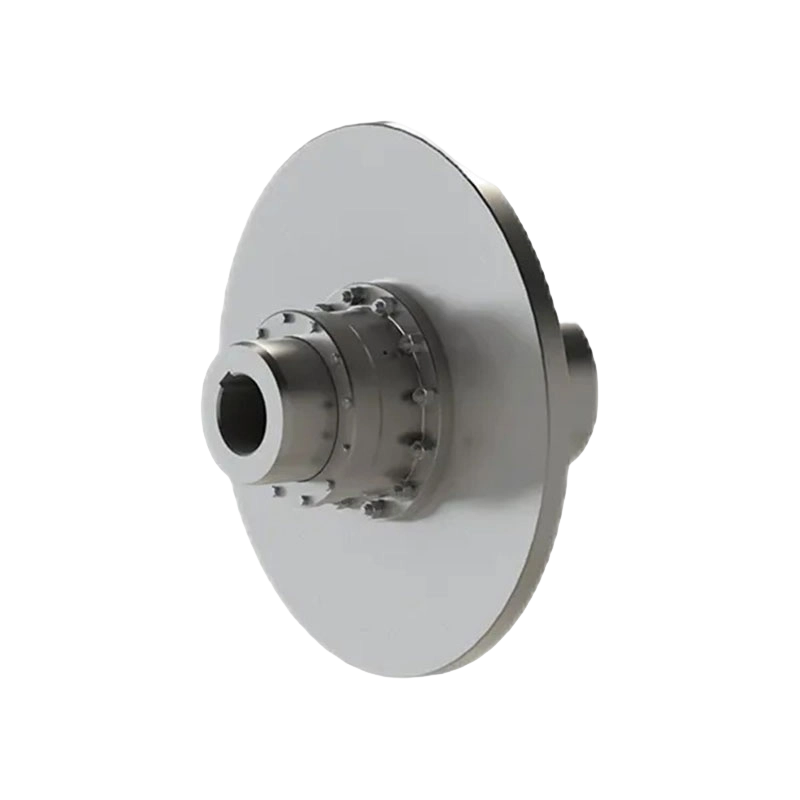
- 15 Product: LCA type tire coupling(Q/YC 34009X-2018)
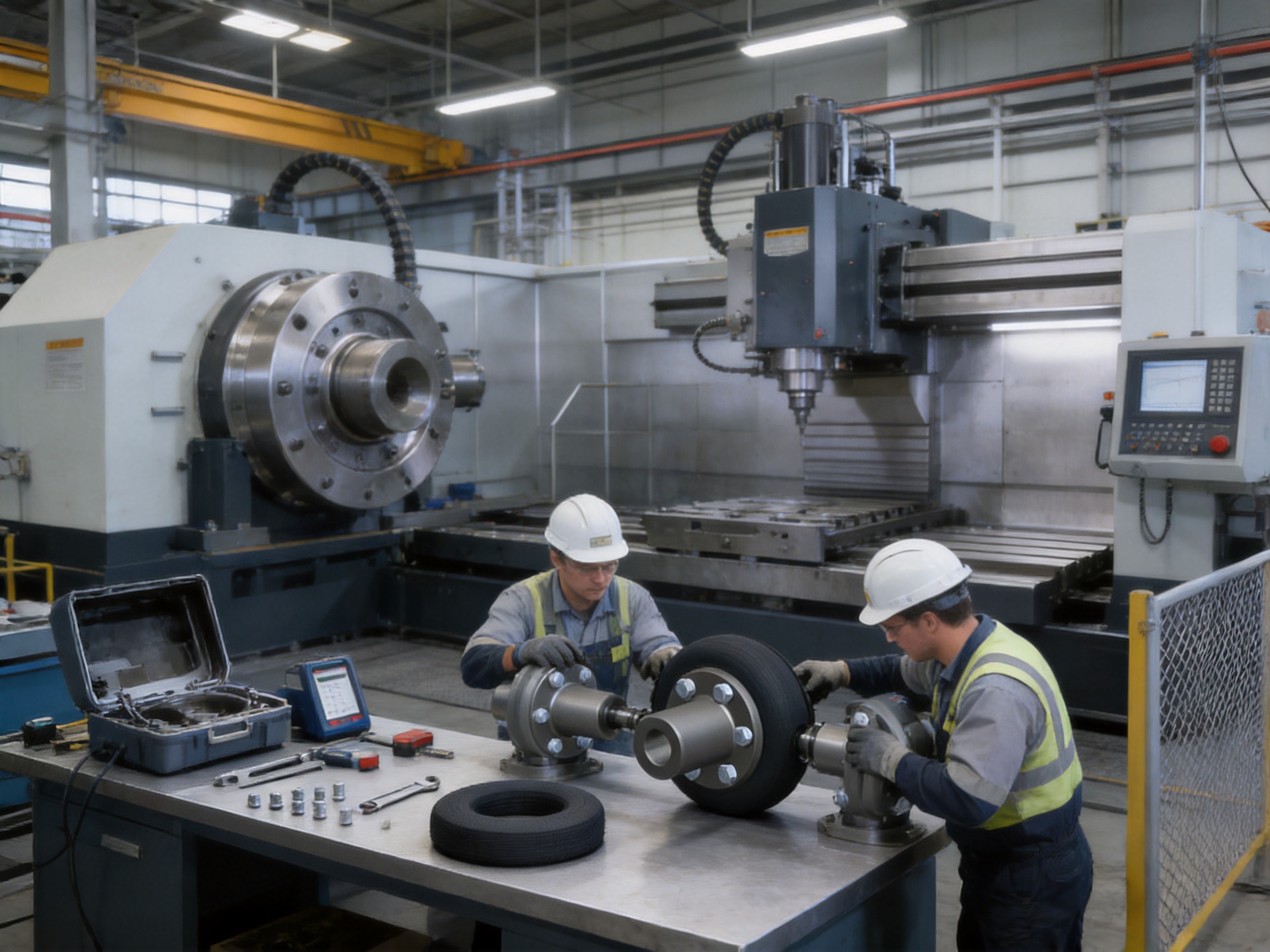
The LCA type tire coupling, manufactured according to Q/YC 34009X-2018, is a high-elasticity flexible coupling designed for machinery that must transmit torque while absorbing vibration, compensating for shaft misalignment, and operating reliably in demanding industrial environments. Its frameless radial-cut tire body gives the coupling a simple and highly resilient construction. Unlike many conventional flexible couplings that depend on metal springs, rigid grids, or enclosed elastic elements, the LCA design uses a tire-shaped non-metallic elastic element clamped between hubs and pressure plates.
This construction enables the coupling to combine several important functions in one compact assembly. It transmits torque securely, reduces starting and stopping shocks, damps torsional vibration, lowers operating noise, and compensates for axial and angular displacement. It also operates without lubrication and allows the tire element to be replaced quickly without moving the connected shafts in many installation arrangements.
The coupling is suitable for metallurgy, mining, lifting equipment, water equipment, paper machinery, port equipment, and other applications involving frequent starts, reversing operation, variable loads, installation errors, or structural deformation. With nominal torque ratings extending from 10 N·m to 20,000 N·m, the LCA series covers applications ranging from relatively compact drive systems to large heavy-duty transmission lines.
1. Product Overview
A coupling connects two shafts so that rotational power can pass from a driving machine to a driven machine. In a real industrial installation, however, the two shafts are rarely perfectly aligned under every operating condition. Shaft systems may experience angular misalignment, parallel or radial displacement, axial movement, foundation settlement, thermal expansion, bearing clearance, frame deformation, or transient shock loads.
A rigid coupling cannot accommodate these movements. It may transmit torque efficiently under ideal alignment, but it transfers misalignment forces directly into the shafts, bearings, and connected equipment. A flexible coupling is therefore required when the system needs both torque transmission and mechanical compliance.
The LCA type tire coupling provides this compliance through a flexible tire body. The tire body is radially cut and does not use a steel supporting frame. The hubs and pressure plates clamp the tire body through bolts, allowing torque to be transmitted through frictional clamping and the deformation characteristics of the elastic element.
The absence of a steel frame is a major design feature. A metal frame normally increases the torsional stiffness of a coupling and can restrict its ability to absorb high-frequency vibration. The frameless tire structure allows the elastic body to deform more freely. As a result, the coupling can tolerate considerable displacement while maintaining smooth torque transmission.
The design is particularly valuable in drive systems where the main concern is not only steady-state torque, but also transient behavior. Motors, gearboxes, pumps, conveyors, crushers, rolling equipment, hoists, and other machines may produce sudden torque changes during starting, stopping, reversing, loading, or blockage. The LCA coupling helps isolate these events and reduces the transmission of peak shock into the rest of the machine.
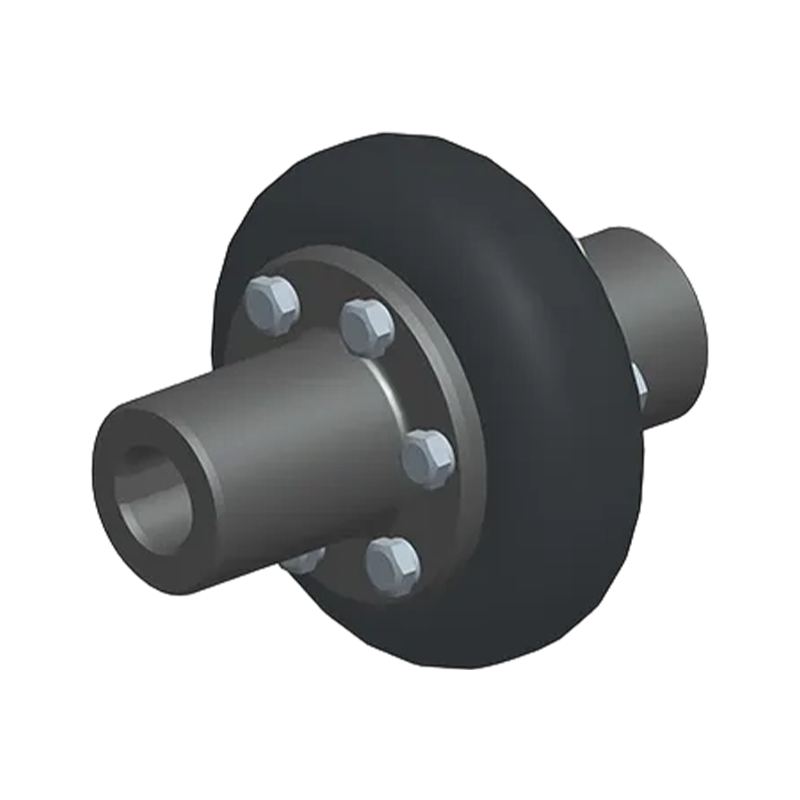
LCA type tire coupling(Q/YC 34009X-2018)
2. Operating Principle of the Frameless Tire Structure
The main working parts of the LCA coupling are the two hubs, the tire-shaped elastic element, the pressure plates, and the fastening bolts. Each hub is installed on one shaft. The elastic tire body is placed between the two coupling halves and secured by the pressure plates.
When the driving shaft rotates, the hub applies torque to the tire body. The tire body transfers this torque through its elastic material to the opposite pressure plate and hub, which then drives the driven shaft. Because the tire material can deform, the coupling transmits power without creating the same rigid load path found in a solid flange or rigid sleeve.
The coupling’s elastic deformation performs several functions at the same time. It allows one coupling half to move slightly relative to the other, absorbs torsional energy during sudden load changes, and limits the propagation of vibration from the driving machine to the driven machine. The material also helps maintain a smoother torque curve during acceleration and deceleration.
A key advantage of the frameless construction is its low torsional stiffness. Low torsional stiffness is not a weakness when the coupling is correctly selected. Instead, it is an important performance characteristic for systems exposed to high-frequency start-stop impacts. The elastic tire body temporarily stores and releases energy, reducing the intensity of torque pulses.
The structure also avoids torsional clearance, commonly called backlash, during forward and reverse rotation. In a coupling with mechanical gaps between teeth, claws, or other fitted components, reversing the direction of rotation may cause the parts to strike each other before torque is fully transferred. The clamped tire body of the LCA design maintains continuous contact and can support dynamic balance during forward and reverse operation without the same type of clearance impact.
Because torque is transferred through clamping rather than through a complex internal lubrication system, the coupling can operate without grease or oil. This reduces the number of routine maintenance tasks and eliminates the risk of lubricant leakage near dusty, wet, or high-contamination equipment.
2.1 Elastic deformation and torque absorption
During normal operation, the elastic tire body deforms in response to torque and shaft displacement. Under a temporary overload or starting impact, the deformation increases and absorbs part of the energy. Once the transient event passes, the tire gradually returns toward its original position.
This behavior helps reduce peak loads on motors, reducers, shafts, keys, bearings, and driven equipment. It is particularly useful where the driven machine has high inertia or where the load changes abruptly. Examples include conveyors starting under load, crushers receiving irregular material, hoists accelerating suspended loads, and metallurgical equipment operating through repeated working cycles.
2.2 Misalignment compensation
The LCA type tire coupling is designed to compensate for substantial shaft displacement. The stated performance includes axial deviation of up to plus or minus 10 millimeters and angular offset of approximately 3 degrees, subject to correct selection, installation, operating speed, torque, and environmental conditions.
These values make the coupling suitable for equipment where alignment cannot remain perfect during operation. For example, long shafts may expand when heated, equipment frames may deflect under load, and large foundations may experience small shifts. The coupling allows the connected machines to continue operating without forcing all of these movements into the bearings and shaft ends.
Misalignment capacity should not be interpreted as permission to neglect alignment. Proper shaft alignment remains essential for long service life. The coupling should compensate for expected operating movement rather than correct major installation errors. Excessive or continuous displacement can increase tire deformation, temperature, and fatigue stress.
3. Principal Advantages Compared with Conventional Couplings
3.1 Higher elasticity
The most important advantage of the LCA tire coupling is its high elasticity. Many conventional flexible couplings use metal springs, toothed components, grids, pins, or star-shaped inserts. These designs can provide reliable torque transmission, but their stiffness and displacement capacity vary significantly. The frameless tire body offers a large deformable section that can absorb movement in several directions.
High elasticity is useful when the driving and driven machines have different dynamic characteristics. It reduces the tendency of one machine to excite vibration in the other. It can also help prevent resonance problems in systems with variable operating speeds or cyclic loads.
3.2 Excellent shock absorption
Start-stop operations create torque shocks that may be much higher than the average running torque. A rigid or highly torsionally stiff coupling transmits these shocks quickly and with limited attenuation. The LCA coupling absorbs a portion of the shock through elastic deformation, reducing the effective peak torque seen by downstream components.
This feature can extend the service life of gearboxes, shaft keys, bearings, chains, sprockets, and driven machines. It can also improve the reliability of motors and braking systems by reducing sudden changes in load.
3.3 Noise and vibration reduction
The non-metallic tire body acts as a vibration-damping interface. It reduces the transmission of high-frequency mechanical vibration and limits metallic impact between coupling components. This can result in lower structure-borne noise and a more comfortable operating environment around the machine.
Noise reduction is especially valuable in enclosed plants, workshops, water-treatment facilities, paper mills, and production lines where many machines operate simultaneously. Lower vibration can also improve the accuracy of nearby instruments and reduce fatigue in machine frames.
3.4 Compensation for large displacement
The LCA series offers considerably greater displacement compensation than many standard couplings. The stated axial compensation of up to plus or minus 10 millimeters and angular compensation of 3 degrees enable the coupling to accommodate thermal movement, installation tolerances, foundation deformation, and operating deflection.
This can reduce the need for complex alignment correction systems. It is also helpful when the connected machinery is large, difficult to move, or installed in a location where frequent realignment would be expensive.
3.5 No torsional backlash
The coupling maintains continuous elastic contact through the clamped tire element. This supports smooth transfer during both forward and reverse rotation. In reversing drives, the absence of a pronounced mechanical clearance helps prevent impact noise and sudden torque transfer when the direction changes.
This characteristic is valuable for hoists, winches, reversing conveyors, rolling machinery, positioning systems, and other equipment that changes direction repeatedly.
3.6 Lubrication-free operation
The LCA coupling does not require routine lubrication. Conventional gear couplings often need periodic grease inspection and replenishment, while some enclosed designs depend on seals that can eventually age or leak. By eliminating the need for internal lubricant, the tire coupling simplifies maintenance and reduces the possibility of contamination.
Lubrication-free operation is particularly suitable for dusty mining environments, wet metallurgical plants, paper mills, ports, and water equipment. It also reduces maintenance exposure for personnel working near rotating machinery.
3.7 Fast replacement of the elastic element
The tire unit can be replaced quickly in suitable installations without moving the shaft system. This is one of the most practical advantages of the design. Moving a motor, gearbox, pump, or large driven machine can require lifting equipment, alignment work, disconnection of piping, and extended production downtime.
With a replaceable tire element and accessible pressure plate bolts, maintenance personnel can often remove the worn element and install a new one while leaving the primary shaft positions unchanged. The exact procedure depends on the equipment layout and safety requirements, but the simplified replacement concept can significantly reduce repair time.
4. Product Parameters and Series Coverage
The LCA series includes multiple sizes for different torque and shaft diameter requirements. The nominal torque range extends from 10 N·m for LCA1 to 20,000 N·m for LCA11. Allowable speed decreases as the coupling size and torque capacity increase, reflecting the influence of mass, diameter, elastic deformation, and centrifugal effects.
The table below summarizes the principal series-level parameters provided for the product. Individual bore combinations, shaft-hole lengths, dimensions, mass, and moment of inertia may vary within each size. Final selection should therefore be based on the detailed drawing and technical confirmation for the required bore arrangement.
| Type | Nominal Torque (N·m) | Allowable Speed (r/min) | Representative Bore Range (mm) | Representative Outer Diameter D (mm) | Approximate Mass (kg) |
|---|---|---|---|---|---|
| LCA1 | 10 | 5000 | 6 to 11 | 63 | 0.35 |
| LCA2 | 20 | Not separately stated in the source table | 8 to 19 | 100 | 1.33 |
| LCA3 | 80 | 4000 | 18 to 28 | 135 | 3.4 |
| LCA4 | 160 | 3150 | 25 to 38 | 180 | 7.4 |
| LCA5 | 315 | 2800 | 30 to 50 | 210 | 13.5 |
| LCA6 | 630 | 2500 | 40 to 56 | 265 | 22.6 |
| LCA7 | 1250 | 2000 | 45 to 75 | 310 | 84.8 |
| LCA8 | 2500 | 1600 | 60 to 95 | 400 | 74.3 |
| LCA9 | 5000 | 1250 | 80 to 125 | 450 | 111.5 |
| LCA10 | 10000 | To be confirmed for the selected configuration | 100 to 150 | 560 | 191.3 |
| LCA11 | 20000 | 800 | 130 to 180 | 700 | 373 |
The source parameter table contains some layout irregularities, including grouped bore rows and incomplete entries for certain dimensions. For engineering procurement, users should provide the required shaft diameters, shaft-hole lengths, operating speed, transmitted power, starting frequency, ambient conditions, and expected misalignment. The manufacturer can then confirm the exact model, bore configuration, keyway arrangement, dimensions, and allowable operating conditions.
Where the source table includes an unclear speed entry, such as the entry shown as “WOO” for one configuration, that value should not be used for equipment design until it has been verified against the manufacturer’s formal drawing or technical data sheet.
5. Material and Structural Design Considerations
The tire body is the functional heart of the coupling. Its non-metallic elastic material must provide an appropriate balance of flexibility, fatigue resistance, tensile strength, tear resistance, temperature tolerance, and environmental durability. The material formulation and curing process directly influence the coupling’s torque capacity, damping performance, service life, and resistance to aging.
The pressure plates and hubs provide the mechanical interface between the tire element and the shafts. Their geometry must distribute clamping forces evenly and prevent local overstress in the elastic material. Bolt tightening is important because insufficient or uneven tightening can permit slippage, while excessive tightening can damage the tire body or distort the pressure plates.
The coupling’s radial-cut configuration supports tire replacement and allows the element to be clamped without requiring a fully enclosed housing. This open and streamlined construction also makes visual inspection easier. Maintenance personnel can inspect the tire body for cracks, hardening, abrasion, deformation, surface damage, or signs of overheating.
The coupling should be installed with adequate clearance around the tire body. Although the design is compact relative to its transmission capability, sufficient space is necessary for inspection, bolt access, ventilation, and replacement. Guards must be installed wherever personnel could contact rotating components.
6. Manufacturing Strengths and Quality Assurance
Zhongye Heavy Industry Technology (Zhenjiang) Co., Ltd. integrates research and development, manufacturing, sales, technical support, and after-sales service. This integrated structure is important for coupling production because product performance depends on close coordination between design, material selection, machining, assembly, testing, and field application.
The company operates a new workshop covering approximately 16,463.52 square meters. The facility includes a heavy workshop of approximately 5,500 square meters, a precision workshop of approximately 4,600 square meters, office and technical areas, a warehouse, and supporting infrastructure. The separation between heavy and precision work areas supports efficient handling of large coupling components while maintaining suitable conditions for detailed machining and assembly.
6.1 Engineering and product development
Coupling design begins with an understanding of the application rather than simply selecting a nominal torque value. Engineers must consider the motor power, operating speed, service factor, starting method, load inertia, reversing frequency, shaft diameters, available space, environmental conditions, and expected shaft movement.
The company’s experience across metallurgy, mining, water equipment, lifting, paper, port, and other industrial sectors provides a broad basis for application-specific design. This experience supports the development of standard products as well as customized couplings for non-standard shaft arrangements, unusual loads, special dimensions, or difficult installation conditions.
Computer-aided design and engineering review can be used to check component geometry, interference, bolt access, shaft-hole dimensions, pressure distribution, and installation clearance. For customized projects, the manufacturer can develop drawings and technical solutions around the customer’s actual equipment rather than forcing the application into an unsuitable standard configuration.
6.2 Machining of hubs and pressure plates
The metal hubs and pressure plates require accurate machining to ensure concentricity, dimensional stability, and reliable clamping. Typical production operations may include rough machining, heat treatment where specified, finish turning, boring, keyway machining, drilling, tapping, deburring, and dimensional inspection.
Accurate bore machining is essential for a secure shaft connection. Bore tolerances, keyway dimensions, fit requirements, and surface finish must match the shaft design. Poor bore quality can cause looseness, fretting, eccentric rotation, and uneven loading. Precision machining also helps maintain dynamic balance at the specified operating speed.
Pressure plate flatness and hole positioning are equally important. Uneven pressure can create local stress in the tire body and accelerate wear. Controlled machining and inspection help ensure that the tire element is clamped uniformly around its circumference.
6.3 Elastic element production
The tire body requires controlled material preparation, forming, cutting, curing, and inspection. Consistent compound mixing is important because variations in hardness or elasticity can change the coupling’s torsional behavior. The tire body must also maintain uniform thickness and geometry so that the load is distributed evenly during rotation.
During production, manufacturers may inspect dimensions, hardness, appearance, bonding or material integrity where applicable, and resistance to defects such as cracks, inclusions, cuts, or surface damage. Process control is especially important for large tire elements because a small material inconsistency can become significant under repeated cyclic deformation.
6.4 Assembly and bolt control
Assembly quality affects both performance and service life. The tire body, hubs, pressure plates, and bolts must be fitted in the correct sequence. Contact surfaces should be clean and free from burrs, oil contamination, scale, or foreign particles that could affect clamping.
Bolt tightening should follow a controlled cross-pattern sequence. Where required by the technical documentation, calibrated torque tools should be used. Proper tightening creates a uniform clamping force and minimizes the risk of local tire stress or relative movement between the tire element and metal components.
6.5 Testing and inspection
A complete quality program can include incoming material inspection, in-process dimensional checks, final dimensional inspection, visual inspection, runout verification, bolt and assembly checks, balance evaluation, and performance testing according to the product’s design requirements.
For large or customized couplings, inspection records can provide traceability from raw material through machining and assembly. This is particularly valuable for mining, metallurgy, lifting, and port equipment, where unplanned downtime may create substantial production losses.
The company states that its products comply with international standards and certifications such as ISO 9001. A quality management system supports controlled procedures, document management, corrective action, process consistency, and continuous improvement. Customers requiring specific inspection plans, material certificates, dimensional reports, or acceptance documentation should confirm these requirements before production.
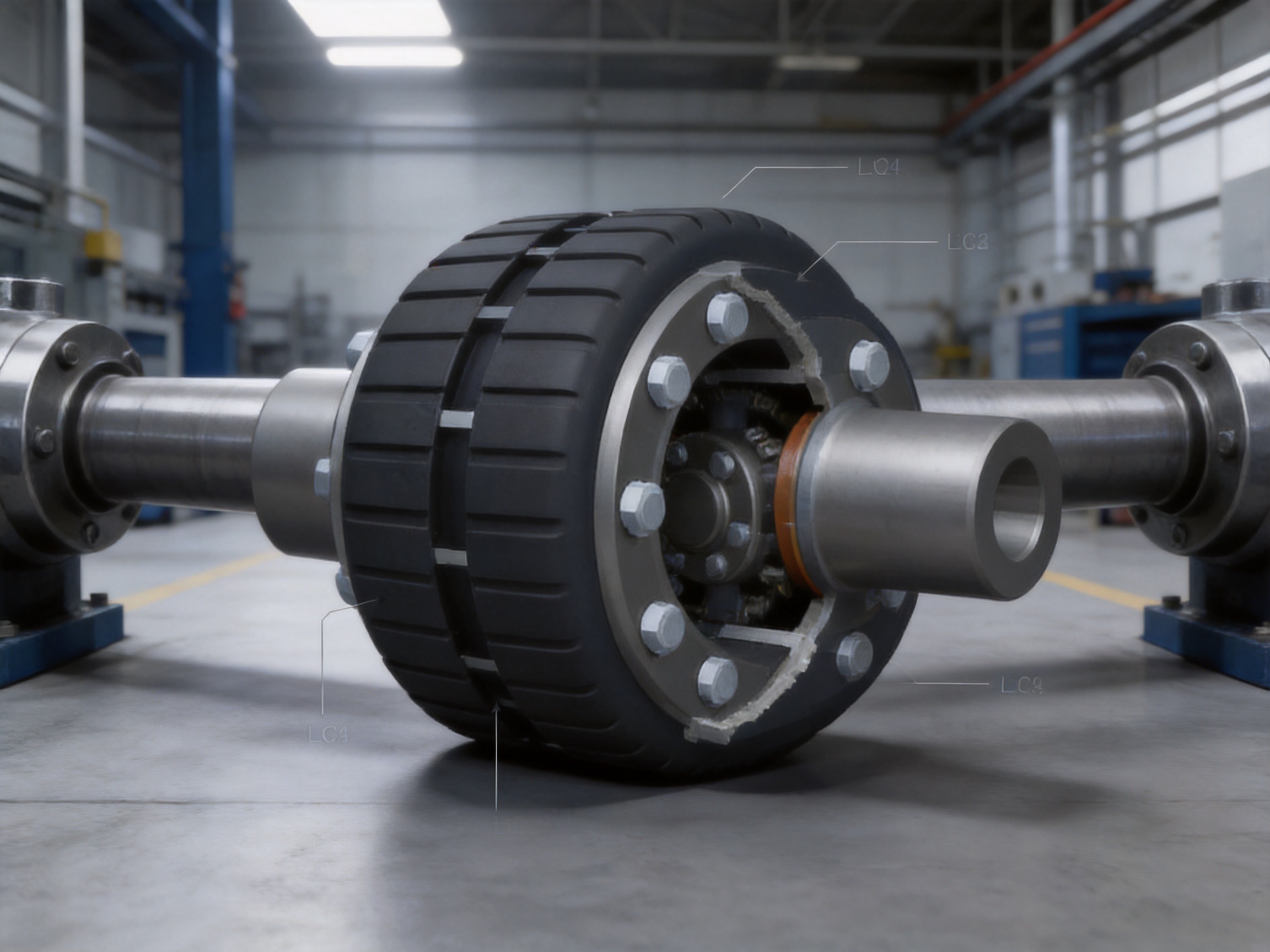
7. Applications in Heavy Industry
7.1 Metallurgical equipment
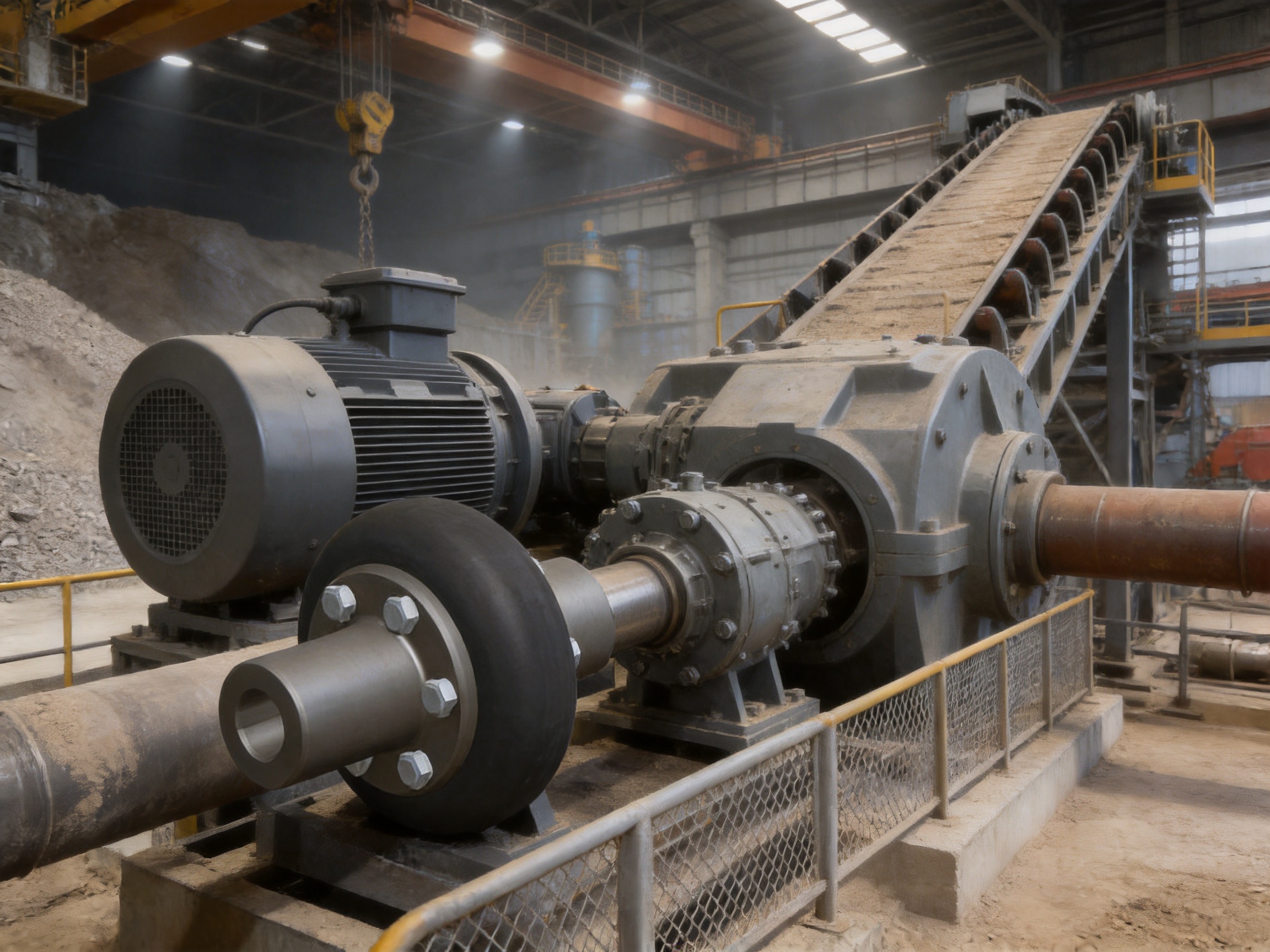
Metallurgical machinery often operates under high loads, elevated temperatures, dust, vibration, and frequent load variation. Rolling mills, coil handling equipment, cooling systems, conveyors, pumps, and auxiliary drives can all benefit from a coupling that absorbs shock and tolerates displacement.
Thermal expansion and frame deformation may change shaft alignment during operation. The LCA coupling’s axial and angular compensation helps reduce the additional bearing loads that would otherwise result from these movements. Its lubrication-free construction is also useful where hot surfaces, dust, or difficult access make routine grease service undesirable.
7.2 Mining machinery
Mining equipment commonly experiences irregular loads, impact, dust, moisture, and limited maintenance access. Crushers, feeders, screens, conveyors, pumps, and hoisting systems may repeatedly accelerate and decelerate under changing material conditions.
The tire body can cushion sudden load changes and protect connected equipment from excessive torque peaks. The coupling’s simple construction and replaceable elastic element can also reduce the time needed for maintenance in remote or difficult locations.
7.3 Lifting and hoisting systems
Hoists and lifting systems require dependable torque transmission during acceleration, braking, reversing, and positioning. A coupling with low backlash and strong damping characteristics can help reduce shock during directional changes.
Selection for lifting equipment must include a suitable service factor and consideration of duty class, braking torque, emergency stopping, load inertia, and safety requirements. The tire coupling is a transmission component and should be used together with properly designed brakes, guards, shaft connections, and control systems.
7.4 Paper machinery
Paper production lines often contain long shaft systems, multiple drives, rollers, pumps, fans, and auxiliary machines. Vibration and misalignment can affect product quality as well as mechanical reliability. A flexible tire coupling can help isolate vibration while compensating for small installation and operating movements.
Its lubrication-free operation may reduce the risk of lubricant contamination near production areas. Environmental compatibility must still be verified for chemicals, temperature, humidity, cleaning agents, and other process conditions.
7.5 Water and pumping equipment
Pumps and water equipment may operate continuously for long periods. Alignment can change because of foundation movement, pipe forces, thermal effects, or bearing conditions. The LCA coupling can accommodate a degree of movement while reducing vibration transfer between motor and pump.
For outdoor or wet installations, users should confirm the suitability of the tire material, metal surface treatment, fasteners, and protective guards. Proper drainage and inspection access should be included in the equipment layout.
7.6 Port and conveying equipment
Port machinery and bulk-material conveyors often operate in humid, dusty, and corrosive environments. Ship loaders, reclaimers, cranes, belt conveyors, and transfer systems can experience fluctuating loads and frequent starts.
The coupling’s resistance to lubrication-related contamination, combined with its shock absorption and misalignment capacity, makes it suitable for these applications. Protection against salt spray, abrasive dust, and mechanical impact should be considered when specifying the complete coupling assembly.
8. Selection Guidelines
Correct selection begins with the transmitted torque. The required coupling torque should not be based only on the motor’s rated torque. The calculation should consider power, speed, service factor, starting torque, load characteristics, acceleration, braking, reversing, and potential overloads.
A basic relationship between power, torque, and speed is commonly expressed as:
Torque in N·m = 9550 × power in kW ÷ speed in r/min.
The calculated operating torque should then be multiplied by an appropriate service factor. The correct factor depends on the driven machine, operating cycle, starting frequency, shock level, ambient conditions, and duty classification. A crusher or reversing hoist generally requires a different factor from a smooth-running centrifugal pump.
Users should also verify the following points:
1. The selected nominal torque is greater than the calculated design torque.
2. The operating speed does not exceed the allowable speed for the selected size and configuration.
3. Both shaft diameters fall within the permitted bore range.
4. Shaft-hole length and keyway dimensions are adequate for the available shaft ends.
5. The coupling can accommodate the expected axial and angular displacement.
6. The surrounding equipment provides enough space for assembly, inspection, and tire replacement.
7. The tire material is suitable for the operating temperature and surrounding environment.
8. The coupling is protected by a suitable guard.
9. The coupling’s moment of inertia is acceptable for the motor and control system.
10. The complete assembly can be balanced and installed within the required runout limits.
For high-speed or highly dynamic systems, the moment of inertia deserves particular attention. A larger coupling may have a higher torque rating, but it also adds rotating mass. The selected model should provide adequate torque capacity without adding unnecessary inertia.
9. Installation and Maintenance
9.1 Installation preparation
Before installation, inspect the shafts, keys, keyways, hubs, pressure plates, tire body, and bolts. Shaft surfaces should be clean and free from burrs. Confirm that the shaft diameters and lengths match the approved drawing. Check that the coupling components have not been damaged during transportation or storage.
Measure the shaft alignment before fitting the coupling. Although the tire coupling can accommodate considerable displacement, starting with accurate alignment reduces the continuous deformation imposed on the tire body and extends service life.
9.2 Assembly procedure
Install the hubs on the respective shafts using the specified fit and key arrangement. Position the tire body and pressure plates according to the assembly drawing. Tighten the bolts gradually in a crosswise sequence so that clamping pressure develops uniformly.
Do not use damaged, stretched, corroded, or incorrect bolts. Do not substitute fasteners without confirming their grade, dimensions, and mechanical properties. After tightening, rotate the shaft system manually where possible and check for interference, abnormal resistance, or visible unevenness.
Install the guard before commissioning. The guard should prevent contact with rotating parts while allowing reasonable inspection and maintenance access. Never operate an exposed coupling in an area accessible to personnel.
9.3 Commissioning
During the first operating period, observe the coupling for unusual vibration, noise, heat, tire movement, bolt loosening, or signs of rubbing. Check the connected machines as well as the coupling itself because abnormal behavior may result from bearing problems, shaft runout, foundation movement, or equipment imbalance.
If the system includes frequent starts or reversing, monitor the coupling under the most severe duty cycle rather than only during steady operation. A coupling that appears normal at constant speed may show excessive deformation during acceleration, braking, or reversal if it has been incorrectly selected.
9.4 Routine inspection
Routine inspection should include visual examination of the tire body for cracks, cuts, hardening, swelling, abrasion, heat damage, or permanent deformation. Inspect the pressure plates and hubs for looseness, fretting, corrosion, or contact marks. Check bolt condition and verify tightening where required by the maintenance program.
Inspection intervals depend on operating conditions. Heavy shock duty, high temperature, severe dust, frequent reversing, and continuous operation may require more frequent checks than a lightly loaded, stable drive. Maintenance personnel should record inspection findings so that gradual deterioration can be identified.
9.5 Tire replacement
When the tire body reaches the end of its service life, replacement should be performed using the correct approved element. The coupling should be isolated from all energy sources, including electrical, hydraulic, pneumatic, and stored mechanical energy. The shaft system must be secured against unexpected rotation.
After removing the old tire, clean the contact surfaces and inspect the pressure plates, hubs, bolts, and keys. Replace any damaged component before installing the new tire. Tighten the pressure plate bolts in the specified sequence and verify the assembly before returning the equipment to service.
10. Customization and Technical Support
Not every shaft system matches a standard catalog configuration. Customers may require special bore sizes, non-standard shaft-hole lengths, modified keyways, different hub arrangements, special coatings, alternative materials, or unique installation dimensions. Zhongye supports the design and manufacture of non-standard couplings in addition to standard product lines.
A customization project should begin with complete technical information. Useful data includes motor power, operating speed, shaft diameters, shaft extensions, center distance, installation orientation, torque characteristics, duty cycle, ambient temperature, humidity, dust, chemical exposure, alignment conditions, and space limitations.
Photographs, layout drawings, shaft sketches, existing coupling dimensions, and maintenance requirements can further improve design accuracy. The manufacturer can use this information to recommend an LCA model or determine whether a different coupling type is more suitable.
The company’s broader product portfolio includes toothed couplings, elastic sleeve pin couplings, elastic pin couplings, universal couplings, jaw couplings, star couplings, diaphragm couplings, drum couplings, grid couplings, Oldham couplings, flange couplings, clamp-shell couplings, roller chain couplings, safety couplings, and other transmission products.
This broad range allows the technical team to compare different coupling principles rather than recommending a single design for every application. Where high elasticity and vibration damping are the primary requirements, the LCA tire coupling may be preferred. Where high speed, electrical insulation, torque limiting, axial flexibility, or extreme compactness is more important, another coupling construction may be appropriate.
11. Why Choose the LCA Type Tire Coupling?
The LCA type tire coupling is a strong option for users seeking a balance between high flexibility, shock absorption, simple maintenance, and large displacement compensation. Its advantages come directly from its construction rather than from a complex collection of auxiliary parts.
The frameless radial-cut tire body creates low torsional stiffness and strong damping. The pressure plate and bolt arrangement provides a practical method of torque transmission and replacement. The non-metallic elastic element reduces vibration and noise while avoiding the need for lubrication. The broad model range enables use in both small and heavy industrial drives.
Compared with rigid couplings, the LCA coupling offers far greater protection against misalignment and operating deformation. Compared with many metal-element couplings, it provides greater elasticity and better shock damping. Compared with enclosed gear couplings, it simplifies lubrication and inspection. Compared with some permanently bonded elastic designs, its replaceable tire unit can reduce repair time.
These advantages do not eliminate the need for correct engineering. The coupling must be selected according to torque, speed, displacement, environment, and duty cycle. When properly specified and maintained, however, it can protect the wider transmission system and help reduce production losses caused by vibration, misalignment, and unexpected maintenance.
12. Questions and Answers
Q1: What type of coupling is the LCA product?
The LCA is a flexible coupling with a non-metallic elastic element. It uses a frameless, radial-cut tire body clamped between hubs and pressure plates.
Q2: What is the main benefit of the frameless tire design?
The frameless construction provides very low torsional stiffness and high elasticity. This allows the coupling to absorb start-stop impacts, torsional vibration, and operating displacement more effectively than many rigid or highly stiff coupling designs.
Q3: Does the LCA coupling require lubrication?
No. The coupling is designed for lubrication-free operation. This reduces routine maintenance and avoids the need to inspect or replenish internal grease.
Q4: How much misalignment can the coupling compensate for?
The stated product performance includes axial deviation of up to plus or minus 10 millimeters and angular offset of approximately 3 degrees. Actual allowable values depend on size, speed, torque, installation, and operating conditions. Alignment should still be performed as accurately as practical.
Q5: Can the coupling operate in both directions?
Yes. The tire coupling supports forward and reverse rotation and is designed to operate without the pronounced torsional clearance associated with some mechanically interfitted couplings.
Q6: Can the tire element be replaced without moving the shafts?
In suitable equipment layouts, the tire unit can be replaced without moving the shaft system. The exact procedure depends on access space, coupling orientation, guard design, and the arrangement of the connected machines.
Q7: What is the torque range of the LCA series?
The listed nominal torque range extends from 10 N·m for LCA1 to 20,000 N·m for LCA11.
Q8: Is the LCA suitable for mining and metallurgy?
Yes. Its shock absorption, vibration damping, misalignment compensation, lubrication-free operation, and replaceable tire element are useful for mining, metallurgy, conveying, lifting, and other heavy industrial applications.
Q9: How should the correct model be selected?
Selection should consider design torque, service factor, operating speed, shaft diameters, shaft-hole length, axial and angular displacement, starting and reversing conditions, ambient environment, available space, and required maintenance access.
Q10: What information should be supplied for a customized coupling?
Customers should provide motor power, speed, shaft diameters, shaft extensions, torque characteristics, duty cycle, alignment conditions, installation space, environmental conditions, and any special requirements for materials, coatings, keyways, or inspection documentation.
Q11: What inspection is recommended during service?
Inspect the tire body for cracks, cuts, hardening, swelling, abrasion, heat damage, and deformation. Also inspect bolts, pressure plates, hubs, keys, shaft connections, vibration, noise, and signs of slippage or rubbing.
Q12: Does a flexible coupling eliminate the need for shaft alignment?
No. A flexible coupling compensates for expected displacement, but accurate initial alignment remains important. Excessive misalignment increases elastic deformation and may shorten the service life of the tire element and connected bearings.
13. Conclusion
The LCA type tire coupling is engineered for industrial drive systems that require more than basic torque transmission. Its frameless radial-cut tire body combines high elasticity, low torsional stiffness, shock absorption, vibration damping, noise reduction, and substantial displacement compensation in a practical mechanical assembly.
The coupling is suitable for forward and reverse rotation, does not require lubrication, and can support rapid tire replacement in suitable installations. With sizes covering nominal torque from 10 N·m to 20,000 N·m, it can be applied to a wide range of equipment, from compact machinery to large metallurgical, mining, lifting, conveying, and process systems.
Zhongye Heavy Industry Technology (Zhenjiang) Co., Ltd. strengthens the product offering through integrated research and development, precision machining, heavy-component manufacturing, elastic element production, quality control, customization, and technical support. Its workshop resources, industrial experience, product range, and non-standard design capability allow customers to obtain both standard couplings and application-specific transmission solutions.
For reliable results, the coupling should be selected using actual torque, speed, duty cycle, displacement, and environmental data. When correctly engineered, installed, guarded, and maintained, the LCA type tire coupling can reduce mechanical shock, protect connected equipment, simplify maintenance, and improve the operating reliability of heavy-duty transmission systems.
References
1. Q/YC 34009X-2018, Technical requirements and dimensional information for LCA type tire couplings.
2. Manufacturer-provided LCA type tire coupling product data and basic parameter table.
3. ISO 9001, Quality management systems—Requirements.
4. General principles of industrial shaft coupling selection, alignment, installation, and maintenance.
5. Manufacturer technical information concerning flexible couplings, non-metallic elastic elements, customization, inspection, and industrial applications.
6. Application engineering practices for couplings used in metallurgy, mining, lifting, conveying, pumping, paper, and port equipment.
Product: LCA type tire coupling(Q/YC 34009X-2018)

- Quick Links
- About
- Products
- Our Service
- News & Events
- Contact
- Products Series
- Flexible Couplings with Non-Elastic Elements
- Flexible Couplings with Metal Elastic Elements
- Flexible Couplings with Non-Metallic Elastic Elements
- Safety Coupling
- Rigid Coupling
- Contact Us
- Tel : +86 511 8572 3800 +86 511 8572 3900
- Mobile : +86 15106109009
- Email : sales@couplingzy.com
- Add:No.1 Zhongye Yingbin Avenue, Gaozi Street, Dantu Economic Development Zone, Zhenjiang City, Jiangsu Province, China.


