:+86 15106109009
:sales@couplingzy.com


 English
  русский
  Español
  عربى
عربى  Português
  Deutsch
  Türk
Türk  Indonesia

SM Type Bond-Connected Double Flexible Diaphragm Coupling: Precision Power Transmission for Heavy Industry
Content
- 1 Introduction
- 2 Product Structure and Operating Principle
- 3 Main Performance Advantages
- 4 Comparison with Other Coupling Technologies
- 5 Technical Data and Selection Overview
- 6 Applications in Industrial Equipment
- 7 Manufacturing Strengths and Quality Control
- 8 Installation Recommendations
- 9 Maintenance and Service Life
- 10 Safety Considerations
- 11 Why This Coupling Is a Strong Industrial Choice
- 12 Q&A
- 12.1 What is an SM type bond-connected double flexible diaphragm coupling?
- 12.2 What makes the double-diaphragm structure different from a single-diaphragm coupling?
- 12.3 Does the coupling require lubrication?
- 12.4 What is the torque range?
- 12.5 What is the maximum allowable speed?
- 12.6 Can the coupling compensate for severe misalignment?
- 12.7 Is the coupling suitable for pumps and compressors?
- 12.8 Can the product be customized?
- 12.9 How should the coupling be maintained?
- 12.10 Why is torsional rigidity important?
- 12.11 What company manufactures this product?
- 13 Conclusion
- 14 References
- 15 Product: SM type bond connects double type elastic diaphragm coupling
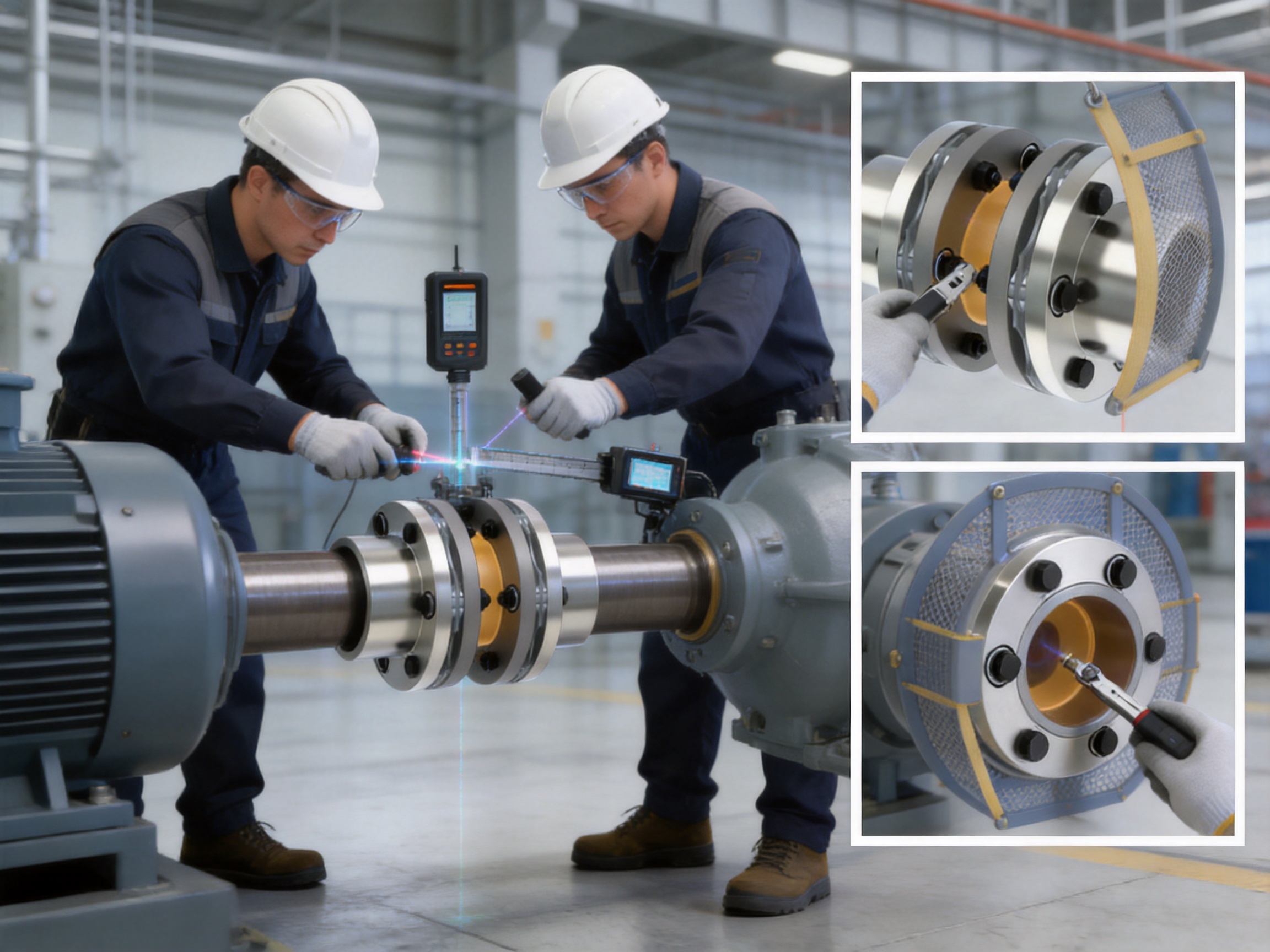
Introduction
Modern industrial equipment demands power transmission components that can operate accurately, continuously, and safely under severe mechanical conditions. Pumps, compressors, fans, rolling-mill equipment, mining machinery, paper-making lines, lifting systems, fluid-transport equipment, and port machinery all depend on couplings to transfer torque between connected shafts. A coupling must do more than join two shafts. It must accommodate installation tolerances, absorb operating vibration, compensate for shaft misalignment, protect connected equipment, and maintain reliable transmission over a long service life.
The SM type bond-connected double flexible diaphragm coupling is designed for these demanding requirements. It belongs to the category of flexible couplings with metal elastic elements and uses two high-strength metal diaphragms connected through an intermediate component. This double-diaphragm arrangement provides a carefully balanced combination of torsional rigidity, flexibility, alignment compensation, operating precision, and maintenance efficiency.
Compared with a single-diaphragm structure, the double flexible design can compensate more effectively for radial, axial, and angular deviations between connected shafts. At the same time, the coupling preserves high torque transmission accuracy because the metal diaphragms deform elastically without relying on sliding friction or lubrication. The structure is suitable for applications where speed, positioning accuracy, reliability, and reduced maintenance are all important.
The product range covers nominal torques from 9.8 N·m to 8,100,000 N·m, while allowable speeds extend to 20,000 revolutions per minute for selected small sizes. This broad range allows the same general coupling concept to serve precision high-speed machinery as well as large, low-speed heavy-duty equipment.
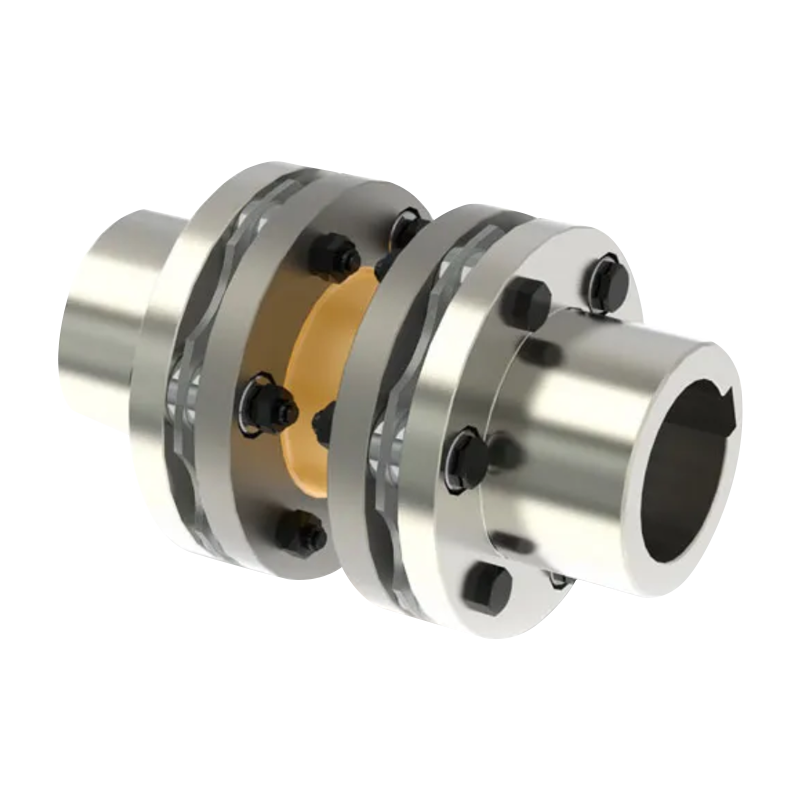
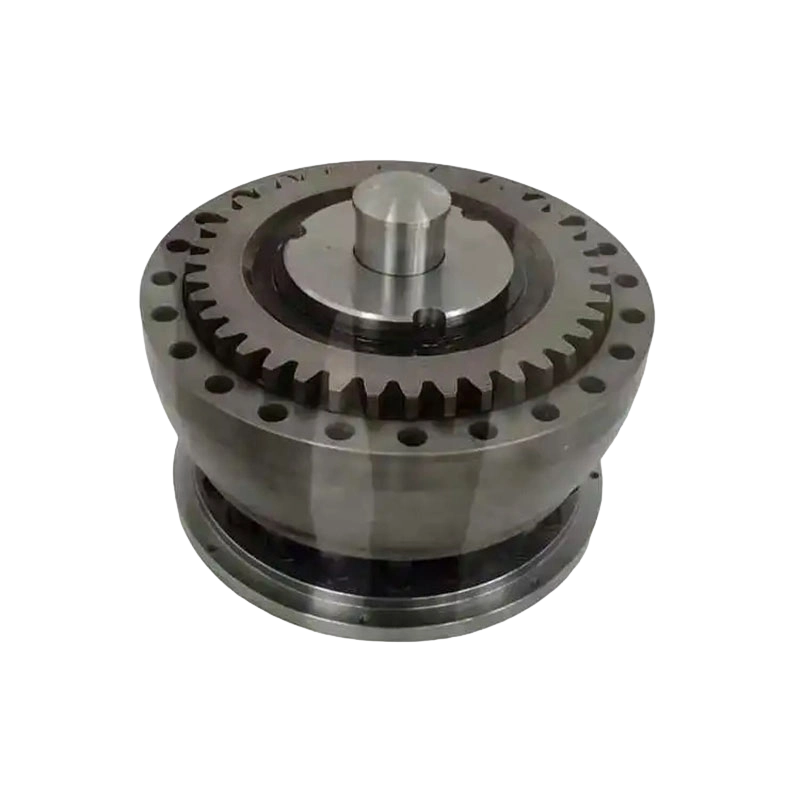
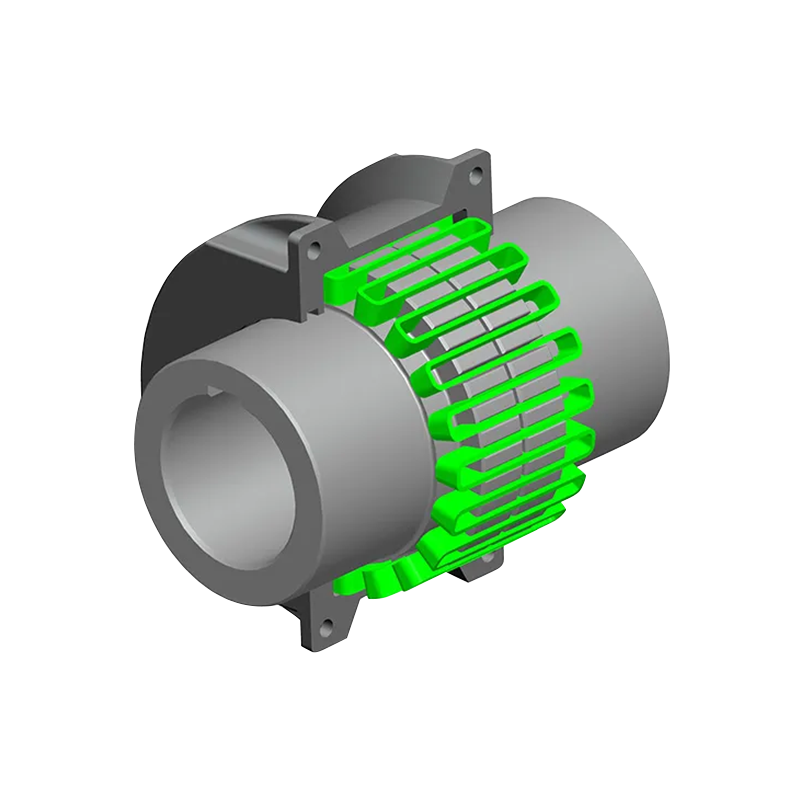
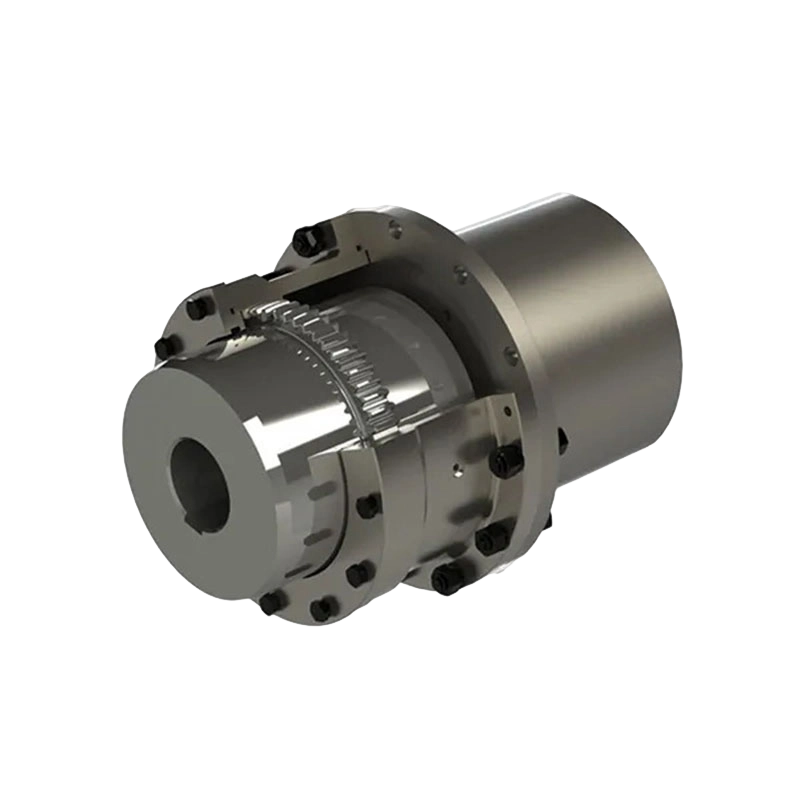
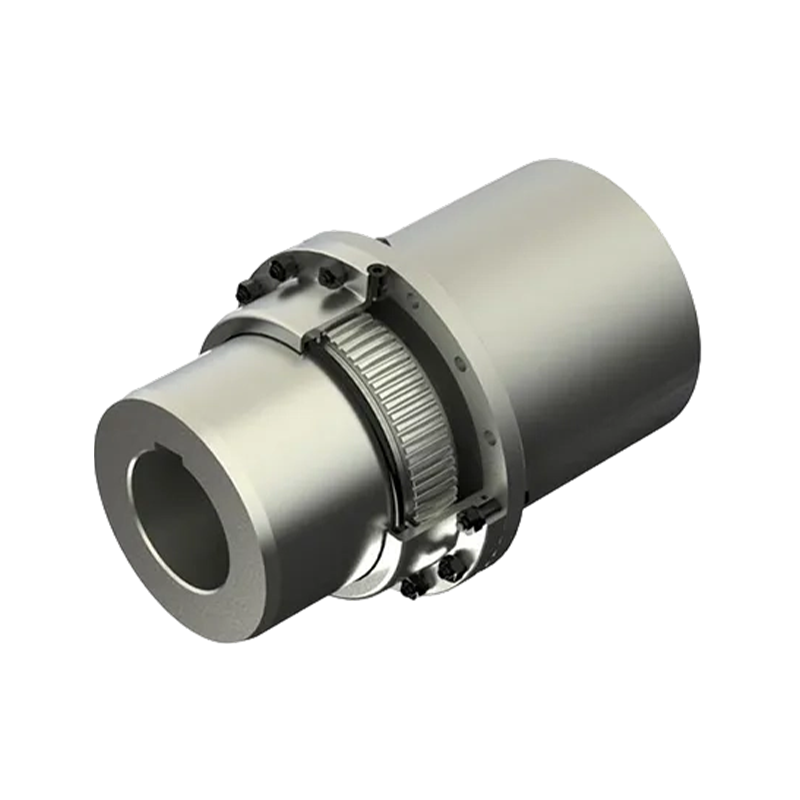
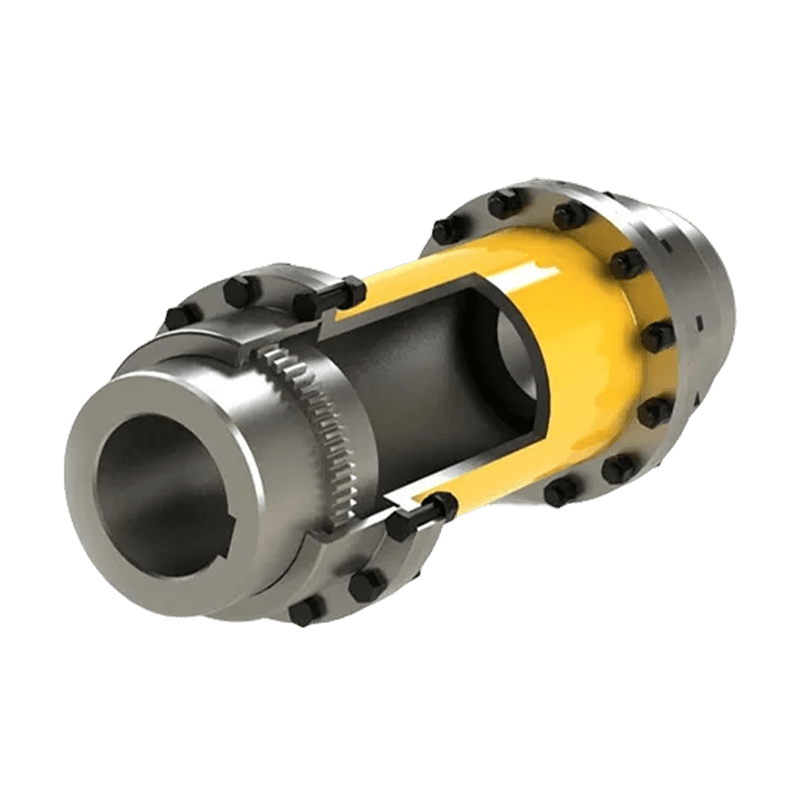
SM type bond connects double type elastic diaphragm coupling
Product Structure and Operating Principle
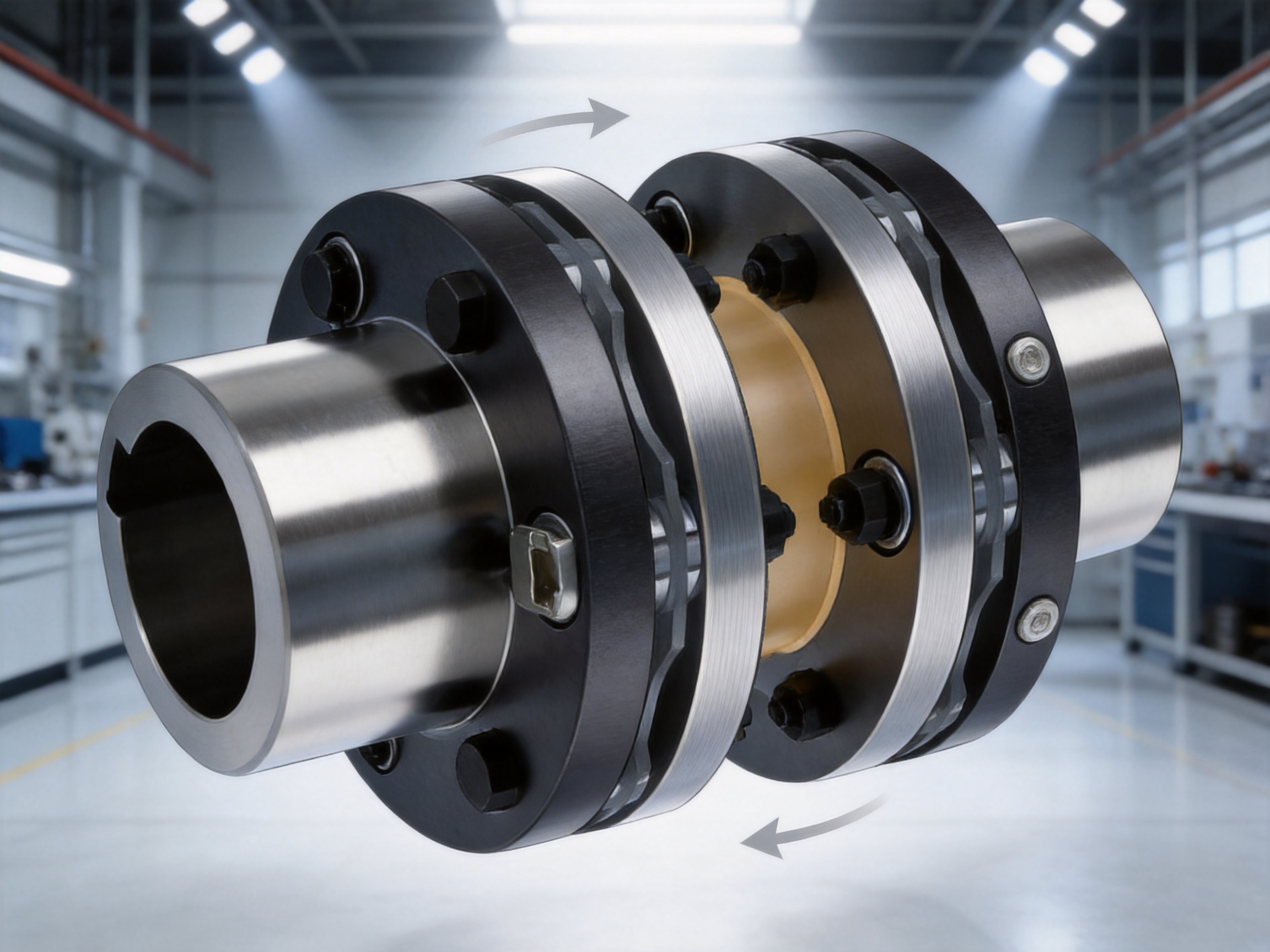
The essential operating principle of the SM type coupling is elastic deformation. Torque enters through one hub, passes through the metal diaphragm assembly and intermediate connecting section, and leaves through the opposite hub. The diaphragms remain firmly connected to the rotating components while flexing slightly to accommodate shaft displacement.
Unlike an elastomeric coupling, the product does not depend on rubber, polyurethane, or another soft non-metallic material to transmit torque. Unlike a gear coupling, it does not require toothed sliding surfaces and grease lubrication. Unlike a rigid flange coupling, it is not forced to transmit every alignment error directly into the connected shafts and bearings.
The metal diaphragm is manufactured to provide controlled flexibility. Its elastic deformation allows the coupling to accommodate three principal types of misalignment:
Axial displacement, caused by thermal expansion, installation variation, or movement of a connected machine.
Angular misalignment, caused when two shaft centerlines intersect at a small angle rather than remaining perfectly collinear.
Radial or parallel misalignment, caused when two shaft centerlines are offset from one another.
The double-diaphragm configuration is particularly valuable because the intermediate connecting piece creates two flexible planes. This arrangement distributes the compensation movement across both diaphragm groups instead of concentrating the entire displacement at one flexible element. As a result, the coupling can provide more effective alignment compensation while maintaining stable rotational behavior.
The diaphragms transmit torque through tensile and bending stresses generated during operation. Because there are no sliding friction pairs in the primary flexible element, the coupling can operate without regular lubrication. This reduces contamination risks, simplifies maintenance planning, and makes the product suitable for locations where access is difficult or where grease leakage would be undesirable.
Stable Key Connection
A stable key connection is used to support accurate torque transmission and positioning between the coupling hubs and the shafts. Properly designed keyways help maintain the relative angular position of the connected components and reduce the possibility of unwanted circumferential movement during start-up, stopping, reversing, or fluctuating-load operation.
Key connections must be selected and installed according to the shaft diameter, transmitted torque, operating duty, and applicable engineering standards. The coupling itself is only one part of the complete shaft system. Shaft tolerances, key fit, hub fit, locking method, balance requirements, and installation alignment all influence final performance.
Intermediate Connecting Component
The intermediate connecting piece links the two diaphragm assemblies and determines the working span of the coupling. It also contributes to the ability of the coupling to compensate for shaft movement. Depending on the selected size and configuration, the intermediate section may be designed to meet different shaft spacing, dimensional, or installation requirements.
By separating the flexible elements into two locations, the design can reduce the bending load imposed on the connected shafts and bearings. This feature is especially important in systems containing long shaft extensions, high-speed rotors, or equipment with different thermal growth characteristics.
Main Performance Advantages
High Torsional Rigidity
High torsional rigidity is one of the most important benefits of a metal diaphragm coupling. A coupling with high torsional rigidity limits angular wind-up between the driving and driven shafts. This supports accurate synchronization and helps the driven machine respond quickly to changes in motor torque.
High torsional rigidity is valuable in compressors, pumps, test stands, high-speed fans, generators, and other equipment where excessive torsional deflection can create control problems or resonance risks. It is also useful in systems that require precise positioning or repeatable rotational performance.
At the same time, torsional rigidity does not mean that the coupling is completely rigid. The diaphragm assemblies retain the flexibility needed to compensate for shaft misalignment. The product therefore combines a relatively stiff torque path with controlled flexibility in the alignment directions.
Effective Misalignment Compensation
The double flexible diaphragm structure can accommodate axial, angular, and radial deviations within the stated allowable values. For the smallest sizes, the listed axial compensation is generally between ±1.6 mm and ±3.2 mm, while larger sizes provide greater axial compensation values according to the product design. Angular compensation ranges from approximately 2 degrees in the smaller models to 20 minutes in the largest models. Radial compensation is listed from 0.5 mm to 3 mm across the product range.
These values are allowable compensation limits, not recommended installation targets. A coupling should not be installed with the expectation that it will continuously operate at the maximum listed misalignment. Better initial alignment generally produces lower diaphragm stress, lower bearing loads, reduced vibration, and longer service life.
Correct alignment also improves the performance of the entire rotating system. It reduces unnecessary forces on motor bearings, pump bearings, gearbox shafts, compressor rotors, and other connected components. In many installations, the coupling’s ability to compensate for limited misalignment also reduces the time required to achieve final alignment during commissioning.
Wide Torque and Speed Range
The SM type coupling is offered in a broad series of sizes identified from type 00 through type 40. Type 00 has a nominal torque of 9.8 N·m and an allowable speed of 20,000 r/min. Type 01 provides 33 N·m at up to 20,000 r/min, while type 02 provides 90 N·m at the same listed speed. Larger models gradually increase torque capacity as allowable speed decreases.
The largest listed model, type 40, provides a nominal torque of 8,100,000 N·m and an allowable speed of 400 r/min. This relationship between torque and speed reflects a normal engineering principle: large, high-capacity couplings are generally used in slower heavy-duty transmission systems, while small couplings can operate at higher rotational speeds.
The product series allows engineers to select a coupling based on actual operating torque, peak torque, speed, shaft diameter, misalignment, duty cycle, and environmental conditions. Selection should not be based on nominal torque alone. Service factors, transient loads, motor starting characteristics, reversing duty, torsional vibration, and the requirements of the connected equipment should also be evaluated.
Lubrication-Free Operation
Because the flexible element is metallic and does not rely on sliding gear teeth or an elastomeric insert, the coupling can operate without routine lubrication. This is a major advantage in heavy industrial equipment where maintenance access is limited or where lubricant contamination is a concern.
Lubrication-free operation can reduce the number of routine maintenance tasks, eliminate grease replacement, and reduce the risk of lubricant leakage into nearby equipment. It also makes the coupling suitable for clean production environments and installations where oil or grease management is difficult.
Lubrication-free does not mean maintenance-free. Operators should still inspect the diaphragm assemblies, fasteners, hubs, key connections, shaft ends, guards, and surrounding equipment. Periodic inspection is necessary to detect abnormal vibration, fretting, loose fasteners, corrosion, fatigue indications, or signs of excessive misalignment.
Reliable High-Speed Performance
The smallest coupling types are rated for allowable speeds as high as 20,000 r/min. High-speed operation requires careful attention to dynamic balance, concentricity, installation accuracy, shaft runout, and guard design. The metal diaphragm structure is well suited to high-speed systems because it avoids soft elements that may generate heat or change stiffness with temperature.
For high-speed applications, the specified allowable speed must be treated as a design limit rather than a universal operating recommendation. The actual permitted speed may be influenced by balancing grade, coupling configuration, shaft length, operating temperature, installation orientation, and the natural frequencies of the complete rotor system.
Before commissioning a high-speed installation, the connected equipment should be checked for alignment and balance. The coupling guard should be installed securely, and the system should be monitored during initial operation for vibration, noise, temperature changes, and unusual movement.
Comparison with Other Coupling Technologies
Compared with Single-Diaphragm Couplings
A single-diaphragm coupling has one principal flexible plane. It can provide effective angular and axial compensation, but its ability to accommodate parallel offset depends more strongly on the arrangement of the connected equipment and the stiffness of the associated shafts.
The SM type double-diaphragm structure provides two flexible planes separated by an intermediate component. This arrangement generally offers more effective compensation for complex combinations of radial, axial, and angular misalignment. It can also reduce the concentration of deformation at a single diaphragm assembly.
For machinery that experiences thermal expansion, shaft movement, or changing operating alignment, the double-diaphragm design can provide a more adaptable connection. It is especially useful when the two connected machines have different support structures or operating temperatures.
Compared with Gear Couplings
Gear couplings transmit torque through external and internal gear teeth. They can provide high torque capacity and some misalignment compensation, but the tooth surfaces require lubrication and periodic maintenance. Gear couplings may also be sensitive to lubricant condition, contamination, sealing quality, and tooth wear.
The SM type diaphragm coupling transmits torque through a metal elastic element and does not use sliding gear teeth. Its lubrication-free structure simplifies maintenance and reduces the possibility of grease-related problems. It also avoids the backlash that may be associated with certain toothed connections.
Gear couplings may remain appropriate for applications requiring particular torque density, axial movement, or established installation standards. However, where high torsional accuracy, clean operation, and reduced maintenance are priorities, a diaphragm coupling can offer significant advantages.
Compared with Elastomeric Couplings
Elastomeric couplings use flexible rubber or polymer elements to absorb shock and vibration. They can be economical and effective in many general-purpose applications, but their performance may change with temperature, aging, chemical exposure, ultraviolet radiation, and repeated load cycles.
The metal diaphragm structure offers more stable characteristics in high-temperature or high-speed industrial environments. It does not rely on an elastomer that can harden, soften, crack, or lose resilience over time. Metal diaphragms also provide higher torsional rigidity than many elastomeric designs.
Elastomeric couplings may provide greater damping in certain applications. Therefore, the choice should be based on the complete system requirements. If strong torsional damping is the primary objective, another coupling type may be suitable. If accuracy, speed, cleanliness, and stable stiffness are more important, the SM type design has a clear technical advantage.
Compared with Rigid Couplings
Rigid couplings are used when two shafts are accurately aligned and are expected to behave as one continuous shaft. They provide direct torque transmission but cannot compensate for operating misalignment. Even small alignment errors can increase bearing loads, generate vibration, and accelerate shaft or seal damage.
The SM type coupling maintains a precise torque path while allowing controlled movement through its diaphragms. This makes it more suitable for equipment in which alignment changes can occur because of thermal growth, foundation movement, installation tolerances, or dynamic loading.
Technical Data and Selection Overview
The following table summarizes representative data from the type series. The listed values should be used together with complete engineering calculations and the manufacturer’s technical documentation.
| Type | Nominal Torque (N·m) | Allowable Speed (r/min) | Maximum Bore, dmax (mm) | Outside Diameter, D (mm) | Axial Compensation (mm) | Angular Compensation | Radial Compensation (mm) | Mass (kg) |
|---|---|---|---|---|---|---|---|---|
| 00 | 9.8 | 20,000 | 20 | 57 | ±1.6 | 2° | 0.5 | 0.23 |
| 03 | 173 | 18,000 | 35 | 93 | ±2.4 | 2° | 0.6 | 2.9 |
| 06 | 772 | 12,000 | 60 | 143 | ±3.6 | 1°30′ | 0.8 | 10.8 |
| 10 | 4,900 | 8,000 | 108 | 246 | ±5.2 | 1°30′ | 1.0 | 50 |
| 15 | 37,130 | 4,300 | 165 | 375 | ±4.0 | 1° | 1.3 | 234 |
| 20 | 102,100 | 2,800 | 255 | 556 | ±5.2 | 1° | 1.8 | 763 |
| 25 | Not listed | Not listed | Not listed | Not listed | Not listed | Not listed | Not listed | Not listed |
| 30 | 800,000 | 930 | 440 | 1,030 | ±10.4 | 20′ | 2.5 | 2,600 |
| 35 | 2,500,000 | 620 | 650 | 1,530 | ±13.6 | 20′ | 3.0 | 8,600 |
| 40 | 8,100,000 | 400 | 1,030 | 2,400 | ±16.4 | 20′ | 3.0 | 32,000 |
The original type series includes models from type 00 through type 40. Type 25 is not identified in the supplied data table, so it should not be treated as a standard size without confirmation. The complete selection must be based on the actual available model, shaft dimensions, connected equipment, and required operating conditions.
Torque Selection
Nominal operating torque can be estimated from power and speed, but the calculated value should be increased by an appropriate service factor. Motor starting, cyclic loading, impact loading, reversing, emergency stops, and process disturbances may produce torque peaks substantially higher than the average running torque.
For a rotating system, engineers commonly evaluate the following factors:
Rated motor or engine power.
Normal operating speed and speed variation.
Starting and stopping torque.
Peak and transient torque.
Load classification and duty cycle.
Ambient temperature and environmental exposure.
Required service life and inspection interval.
Potential torsional vibration or resonance.
The selected coupling should have sufficient capacity for both continuous and transient conditions. Selecting only by the average calculated torque may result in diaphragm fatigue or excessive stress during irregular operating events.
Speed Selection
Allowable speed decreases as coupling size and torque capacity increase. The rated value should be compared with the actual operating speed, including any overspeed condition that may occur during testing, unloading, or control-system malfunction.
For high-speed systems, balance quality is especially important. The coupling, shaft, key, spacer, and associated rotating components should be considered as an integrated rotor. Any imbalance can increase bearing loads and vibration even when the coupling itself meets its nominal speed rating.
Bore and Shaft Selection
The maximum bore dimension is a key selection parameter. The shaft diameter must remain within the permitted bore range, and the hub length, keyway, shaft extension, and fastening arrangement must be checked for mechanical compatibility.
A coupling should not be bored beyond its specified maximum diameter. If a shaft is larger than the standard bore, a larger coupling type or a customized design should be considered. The shaft and hub fit should provide secure torque transmission without creating excessive assembly stress.
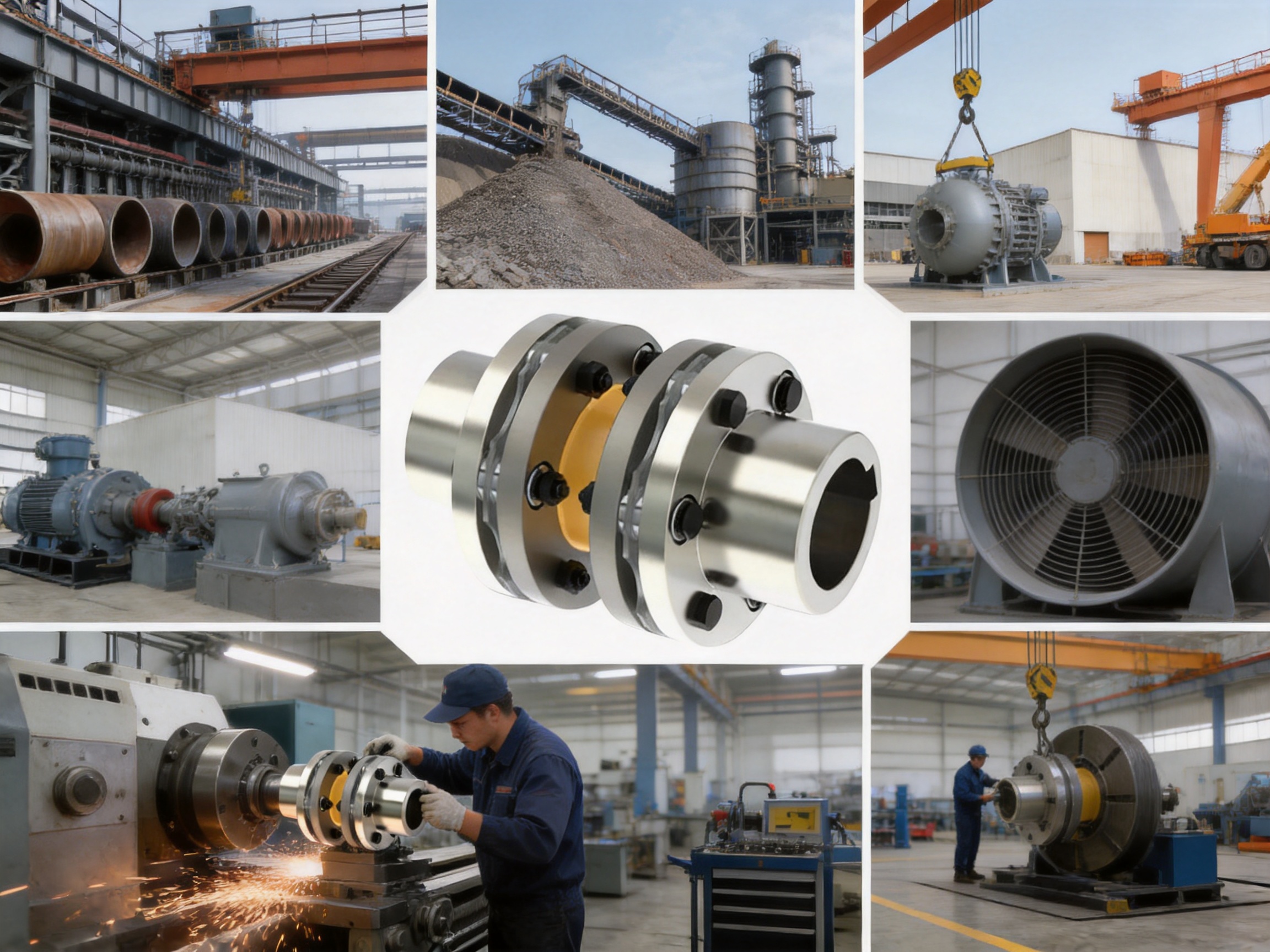
Applications in Industrial Equipment
Pump Systems
Pump systems frequently experience thermal changes, pipe loads, foundation movement, and varying operating conditions. A diaphragm coupling can help isolate the pump and motor from limited alignment deviations while maintaining efficient torque transmission.
It is suitable for water equipment, process pumps, chemical fluid systems, circulation pumps, and other industrial pumping applications when the selected material and configuration are compatible with the environment. Proper pipe support and pump alignment remain essential because a coupling should not be used to compensate for excessive pipe strain.
Fans and Blowers
Fans and blowers often operate continuously and may run at high speed. Low maintenance is valuable in ventilation, dust collection, combustion-air, and industrial process systems. The metal diaphragm coupling can provide stable operation without routine lubrication and can help accommodate limited installation deviations between the motor and fan shafts.
Compressors
Compressors require accurate and reliable shaft connection because their operation may include high speed, cyclic loading, and sensitivity to vibration. The high torsional rigidity of a metal diaphragm coupling supports accurate power transmission, while the flexible elements accommodate controlled shaft movement.
Compressor applications should receive detailed torsional vibration analysis. The coupling selection must consider motor characteristics, compressor cylinder or rotor behavior, start-up conditions, and possible resonance within the complete drivetrain.
Metallurgical Equipment
Metallurgical machinery is often exposed to dust, heat, shock loads, large torque fluctuations, and continuous production schedules. The lubrication-free metal diaphragm structure can reduce routine servicing requirements and avoid dependence on grease in locations where contamination or high temperature makes lubrication difficult.
Applications may include rolling equipment, conveying systems, auxiliary drives, process fans, pumps, and other heavy machinery. The selected coupling must be protected by a suitable guard and checked regularly for heat-related effects, corrosion, and abnormal loading.
Mining Equipment
Mining equipment places high demands on torque capacity and durability. Crushers, conveyors, pumps, hoists, fans, and material-handling systems may operate under fluctuating load and harsh environmental conditions.
Large SM type couplings provide nominal torque capacities suitable for heavy-duty systems. The correct size must be determined from the actual load spectrum rather than from motor power alone. Impact loads, blocked-machine conditions, starts under load, and emergency stops should be included in the design review.
Paper-Making Equipment
Paper-making lines require stable speed, consistent transmission, and reduced downtime. Couplings may be used in rolls, pumps, fans, dryers, drives, and auxiliary systems. The high torsional stiffness of the diaphragm design can support synchronization between connected rotating components.
The clean, lubrication-free operating principle is also useful in production environments where lubricant contamination must be controlled. Installation alignment and dynamic balance should be verified carefully in high-speed paper machinery.
Lifting and Port Equipment
Lifting equipment and port machinery may experience starts, stops, reversals, shock loads, and long duty cycles. Correct coupling selection helps protect the drive system and supports reliable transfer of torque between motors, reducers, drums, pumps, and auxiliary drives.
Safety factors should be carefully evaluated for lifting applications. The coupling should not be regarded as the sole safety device. Brakes, overload protection, emergency stopping systems, guards, and structural components must be designed and maintained independently.
Manufacturing Strengths and Quality Control
The performance of a metal diaphragm coupling depends on more than its general design. Material quality, dimensional accuracy, heat treatment, machining, assembly control, balancing, inspection, and documentation all influence the final product. Zhongye Heavy Industry Technology (Zhenjiang) Co., Ltd. integrates research and development, manufacturing, and sales, with production capabilities intended for both standard and customized coupling requirements.
Integrated Research and Development
An integrated research and development process allows the coupling design to be evaluated from several perspectives. Torque capacity, diaphragm flexibility, stress distribution, hub strength, shaft connection, dynamic balance, installation space, and service conditions must be considered together.
For a double-diaphragm coupling, the relationship between diaphragm stiffness and misalignment compensation is particularly important. Excessive stiffness may increase alignment forces, while excessive flexibility may reduce torsional accuracy or create unacceptable cyclic stress. Proper engineering seeks a controlled balance between these characteristics.
Heavy and Precision Workshops
The company’s new workshop covers approximately 16,463.52 square meters. The facility includes a heavy workshop of approximately 5,500 square meters, a precision workshop of approximately 4,600 square meters, an office building and gymnasium, a dining hall, a warehouse, and supporting roads, green areas, and parking space.
The combination of heavy and precision production areas supports a broad product range. Large coupling components require suitable lifting, machining, handling, and assembly capacity, while small and high-speed coupling components require precise dimensional control and balance-related attention.
Separate production capabilities can also support different manufacturing stages, including rough machining, precision machining, diaphragm preparation, hub processing, assembly, inspection, and packaging. A well-organized production flow helps reduce handling damage and improves manufacturing consistency.
Material and Diaphragm Quality
Metal diaphragms must have consistent mechanical properties and predictable fatigue behavior. Material selection should consider yield strength, fatigue resistance, corrosion exposure, operating temperature, and the required flexibility of the finished component.
Manufacturing controls should include verification of material certificates, thickness, surface condition, heat-treatment status where applicable, and dimensional conformity. Edge condition and surface finish are also important because local defects can increase stress concentration in a flexible metal element.
Precision Machining
Coupling hubs and intermediate parts require accurate machining of bores, keyways, flange faces, bolt patterns, and concentric surfaces. Dimensional errors can create assembly difficulty, increased runout, and unbalanced operation.
Precision machining also helps ensure that replacement components remain compatible with the original coupling. Consistent production dimensions simplify installation, maintenance planning, and spare-parts management for customers operating multiple machines.
Assembly and Fastener Control
Diaphragm coupling assembly requires careful control of component orientation, fastener condition, tightening sequence, and tightening torque. Incorrect assembly can alter the working geometry of the diaphragm and create uneven stress distribution.
Fasteners should be selected for the operating load and environmental conditions. The installation team should use calibrated tools and follow the specified tightening procedure. Reused fasteners should only be permitted when the technical documentation confirms that reuse is acceptable.
Balancing and Inspection
Dynamic balance is important for coupling operation, especially at high speed. Inspection may include dimensional measurement, runout checks, balance verification, visual examination, and functional or assembly checks as appropriate to the product configuration.
Quality control should also confirm the traceability of major components and the accuracy of product identification. Clear type markings and documentation help users select correct replacement parts and verify that the installed coupling matches the equipment design.
Customization Capability
Industrial equipment frequently has non-standard shaft diameters, unusual shaft spacing, restricted installation access, special materials, unusual environmental conditions, or specific balance requirements. The company undertakes the design and manufacture of non-standard couplings to address these situations.
A customized coupling project should begin with complete operating information. Important data include power, speed, torque, shaft dimensions, keyway details, shaft spacing, misalignment, ambient conditions, temperature, installation orientation, duty cycle, braking conditions, and required service life.
Customization may involve bore dimensions, hub geometry, intermediate length, flange arrangement, diaphragm material, protective coating, balance grade, mounting method, or special inspection requirements. A customized design should be reviewed and approved before production to ensure that all interface and performance requirements are understood.
Installation Recommendations
Pre-Installation Inspection
Before installation, inspect the coupling and verify the type, size, bore, keyway, accessories, fasteners, and documentation. Check that no component has been damaged during transportation or storage.
Inspect the shaft ends for burrs, corrosion, dents, excessive runout, or damaged keyways. Clean the shaft surfaces and coupling bores. Do not use impact methods that may deform the hubs or diaphragm assemblies.
Alignment
Initial alignment should be performed using suitable measurement equipment. Depending on the machine, alignment may involve dial indicators, laser alignment tools, precision straightedges, feeler gauges, or other approved methods.
Alignment should account for thermal growth if the connected equipment reaches different temperatures during operation. The cold alignment target may differ from the final operating alignment. The machine manufacturer’s alignment instructions should be followed where available.
Fastener Installation
Install fasteners according to the specified sequence and tightening torque. Uneven tightening can distort the diaphragm or flange and create unnecessary stress. Fasteners should be clean and free from damage, and any required locking method should be applied correctly.
Guarding
A complete coupling guard is required wherever personnel could contact rotating components. The guard must be strong enough to contain foreseeable component failure, while allowing adequate ventilation and inspection access. Never operate the coupling without suitable guarding.
Initial Commissioning
During initial commissioning, run the equipment at low speed if possible and observe for abnormal noise, vibration, rubbing, or movement. Gradually increase to normal operating speed while monitoring the system.
After the first operating period, inspect the coupling and fasteners. If abnormal conditions are found, stop the equipment and identify the cause before continuing operation. A coupling should not be expected to correct severe misalignment, bent shafts, soft foundations, or damaged bearings.
Maintenance and Service Life
The SM type coupling is designed for low-maintenance operation, but regular inspection remains important. Maintenance personnel should establish an inspection frequency based on speed, load, environment, duty cycle, and the consequences of failure.
Recommended inspection items include:
Visible cracks, deformation, corrosion, or damage on the diaphragms.
Loose, missing, or damaged fasteners.
Fretting marks around hubs, keys, bolts, or fitted surfaces.
Changes in vibration, noise, or operating temperature.
Signs of shaft movement or abnormal wear.
Condition and security of the coupling guard.
Evidence of excessive axial, angular, or radial movement.
Changes in connected-machine bearing temperature.
If a diaphragm shows cracking or permanent deformation, the coupling should be removed from service and evaluated. Welding, drilling, grinding, or unauthorized modification of a diaphragm is not recommended because such actions can alter its stress distribution and fatigue performance.
The service life of a diaphragm coupling depends on operating stress, alignment, speed, load fluctuations, environment, and assembly quality. Good alignment and proper torque selection are among the most effective ways to increase service life.
Safety Considerations
Couplings are rotating power-transmission components and can cause serious injury if exposed. The equipment must be isolated and locked out before installation, inspection, cleaning, or maintenance.
Personnel should not approach an operating coupling without an approved guard and safe working procedure. Loose clothing, tools, cables, and cleaning materials must be kept away from rotating equipment.
Before commissioning, verify that all fasteners are installed, the guard is secured, the shaft line is clear, and no tools or foreign objects remain inside the machine. Emergency-stop and overload-protection systems should be tested as part of the complete equipment commissioning process.
In hazardous environments, the coupling materials, coatings, balance, guard, and installation method should be reviewed for compatibility with the applicable safety requirements. The customer is responsible for ensuring that the complete machine complies with local regulations and site-specific procedures.
Why This Coupling Is a Strong Industrial Choice
The SM type bond-connected double flexible diaphragm coupling offers a combination of characteristics that is difficult to obtain from a single coupling technology. Its metal elastic elements provide stable torsional behavior, while the two flexible diaphragm assemblies provide compensation for multiple forms of shaft misalignment.
Its wide torque range makes it applicable to both small high-speed systems and very large heavy-duty installations. Its allowable speed of up to 20,000 r/min supports precision rotating machinery, while its maximum listed nominal torque of 8,100,000 N·m supports large industrial drives.
The absence of routine lubrication reduces maintenance requirements and eliminates many problems associated with grease leakage, lubricant aging, and sliding tooth wear. The stable key connection supports accurate torque transmission and positioning. The all-metal structure is also well suited to applications where temperature stability and long-term mechanical consistency are important.
Compared with many competing coupling types, the product offers a practical balance between flexibility and rigidity. It is not simply a soft connection designed to absorb shock, nor is it a fully rigid connection that transfers alignment errors directly into the machines. Instead, it is engineered to transmit torque accurately while allowing controlled movement in the shaft system.
These advantages are supported by the manufacturer’s integrated capabilities in research and development, heavy manufacturing, precision machining, quality control, standard product supply, and customized coupling design. Customers can therefore obtain not only a catalog coupling but also technical assistance for non-standard interfaces and demanding industrial applications.
Q&A
What is an SM type bond-connected double flexible diaphragm coupling?
It is a metal elastic coupling that uses two flexible diaphragms and an intermediate connecting component to transmit torque between two shafts. The diaphragms compensate for controlled axial, angular, and radial misalignment while maintaining high torsional rigidity.
What makes the double-diaphragm structure different from a single-diaphragm coupling?
The double structure provides two flexible planes separated by an intermediate component. This arrangement can distribute deformation more effectively and compensate for complex shaft deviations more efficiently than a single flexible diaphragm arrangement.
Does the coupling require lubrication?
The metal diaphragm structure is designed for lubrication-free operation. However, the coupling still requires periodic inspection of diaphragms, fasteners, hubs, keys, alignment, and the surrounding machine.
What is the torque range?
The listed product series covers nominal torques from 9.8 N·m to 8,100,000 N·m. The correct model must be selected according to continuous torque, peak torque, speed, service factor, shaft size, and operating conditions.
What is the maximum allowable speed?
The highest listed allowable speed is 20,000 r/min for selected small coupling types. Larger couplings have lower allowable speeds. The actual application must also consider balance, shaft dynamics, configuration, and operating temperature.
Can the coupling compensate for severe misalignment?
No. The coupling can compensate only within its specified allowable axial, angular, and radial values. It should not be used to correct bent shafts, poor foundation conditions, excessive pipe strain, or major installation errors.
Is the coupling suitable for pumps and compressors?
Yes. It is suitable for many pump, fan, blower, and compressor systems when the selected type meets the torque, speed, bore, misalignment, environmental, and torsional vibration requirements of the equipment.
Can the product be customized?
Yes. Customized designs can be developed for non-standard shaft diameters, shaft spacing, mounting interfaces, materials, balance requirements, operating environments, and other special conditions. Complete technical data should be provided before design confirmation.
How should the coupling be maintained?
Maintenance should include periodic inspection of the diaphragms, fasteners, hubs, keys, guards, alignment, vibration, and connected bearings. Any sign of cracking, deformation, loosening, abnormal noise, or increased vibration should be investigated before continued operation.
Why is torsional rigidity important?
High torsional rigidity reduces angular wind-up between the driving and driven shafts. This improves transmission accuracy, supports synchronization, and can reduce unwanted torsional movement in high-speed or precision machinery.
What company manufactures this product?
The product is manufactured and supplied by Zhongye Heavy Industry Technology (Zhenjiang) Co., Ltd., a Chinese coupling manufacturer engaged in research and development, manufacturing, sales, standard coupling supply, and non-standard coupling design.
Conclusion
The SM type bond-connected double type elastic diaphragm coupling is a high-performance solution for industrial shaft connection where accurate torque transmission, controlled flexibility, low maintenance, and reliable operation are required. Its double metal diaphragm configuration improves compensation for axial, radial, and angular misalignment while maintaining high torsional rigidity.
With nominal torque ratings extending from 9.8 N·m to 8,100,000 N·m and allowable speeds reaching 20,000 r/min for selected models, the product series covers a wide range of applications. It can serve precision high-speed equipment as well as large heavy-duty industrial drives.
The coupling’s lubrication-free metal structure, stable key connection, broad specification range, and customization capability provide clear advantages over many gear, elastomeric, single-diaphragm, and rigid coupling alternatives. Its successful application depends on correct selection, accurate alignment, proper assembly, suitable guarding, and regular inspection.
Supported by integrated research and development, heavy and precision manufacturing workshops, quality-control procedures, advanced testing capabilities, and non-standard design support, the product is suited to demanding industries including metallurgy, mining, water equipment, lifting, paper production, ports, fluid transportation, and general heavy industry.
References
1. Manufacturer-provided technical data for the SM type bond-connected double flexible diaphragm coupling.
2. Manufacturer-provided dimensional and allowable compensation table for coupling types 00 through 40.
3. General engineering principles for flexible shaft coupling selection, alignment, torque rating, and speed evaluation.
4. General industrial practices for rotating machinery installation, dynamic balance, coupling guarding, and maintenance.
5. Manufacturer information concerning research and development, production facilities, quality control, customization, and industrial applications.
Product: SM type bond connects double type elastic diaphragm coupling

- Quick Links
- About
- Products
- Our Service
- News & Events
- Contact
- Products Series
- Flexible Couplings with Non-Elastic Elements
- Flexible Couplings with Metal Elastic Elements
- Flexible Couplings with Non-Metallic Elastic Elements
- Safety Coupling
- Rigid Coupling
- Contact Us
- Tel : +86 511 8572 3800 +86 511 8572 3900
- Mobile : +86 15106109009
- Email : sales@couplingzy.com
- Add:No.1 Zhongye Yingbin Avenue, Gaozi Street, Dantu Economic Development Zone, Zhenjiang City, Jiangsu Province, China.


