:+86 15106109009
:sales@couplingzy.com


 English
 русский
 Español
 عربى
 Português
 Deutsch
 Türk
 Indonesia


ZC Type Elastic Pin Gear Coupling: Heavy-Duty Flexible Torque Transmission for Industrial Machinery
Content
- 1 1. Product Overview and Operating Principle
- 2 2. Performance Advantages in Heavy-Duty Applications
- 3 3. Comparison with Conventional Plum-Shaped Elastic Couplings
- 4 4. Representative Technical Data
- 5 5. Application Areas
- 6 6. Manufacturing Strengths and Quality Approach
- 7 7. Customization and Non-Standard Design
- 8 8. Installation and Maintenance Recommendations
- 9 9. Selecting the Correct ZC Model
- 10 10. Why Choose an Experienced Coupling Manufacturer
- 11 11. Frequently Asked Questions
- 11.1 Q1: What is a ZC type elastic pin gear coupling?
- 11.2 Q2: What is the nominal torque range?
- 11.3 Q3: What is the operating temperature range?
- 11.4 Q4: How does the coupling compensate for misalignment?
- 11.5 Q5: How does it compare with a plum-shaped elastic coupling?
- 11.6 Q6: Which industries use this coupling?
- 11.7 Q7: Does the manufacturer provide custom couplings?
- 11.8 Q8: What information is needed for a quotation?
- 11.9 Q9: What should be inspected during maintenance?
- 11.10 Q10: Can the coupling operate without a guard?
- 11.11 Q11: Are the largest models suitable for every high-torque drive?
- 11.12 Q12: What is the main benefit of the non-metallic elastic pins?
- 12 12. Conclusion
- 13 References
- 14 Product: ZC type elastic pin gear coupling(Q/YZ33006X-2018)
Modern industrial machinery depends on reliable torque transmission. In metallurgical plants, mining systems, lifting equipment, paper production lines, port machinery, and water-treatment facilities, the coupling between two shafts must do more than transfer rotation. It must accommodate installation errors, absorb shock loads, withstand repeated starting and stopping, protect connected equipment, and continue operating under demanding environmental conditions.
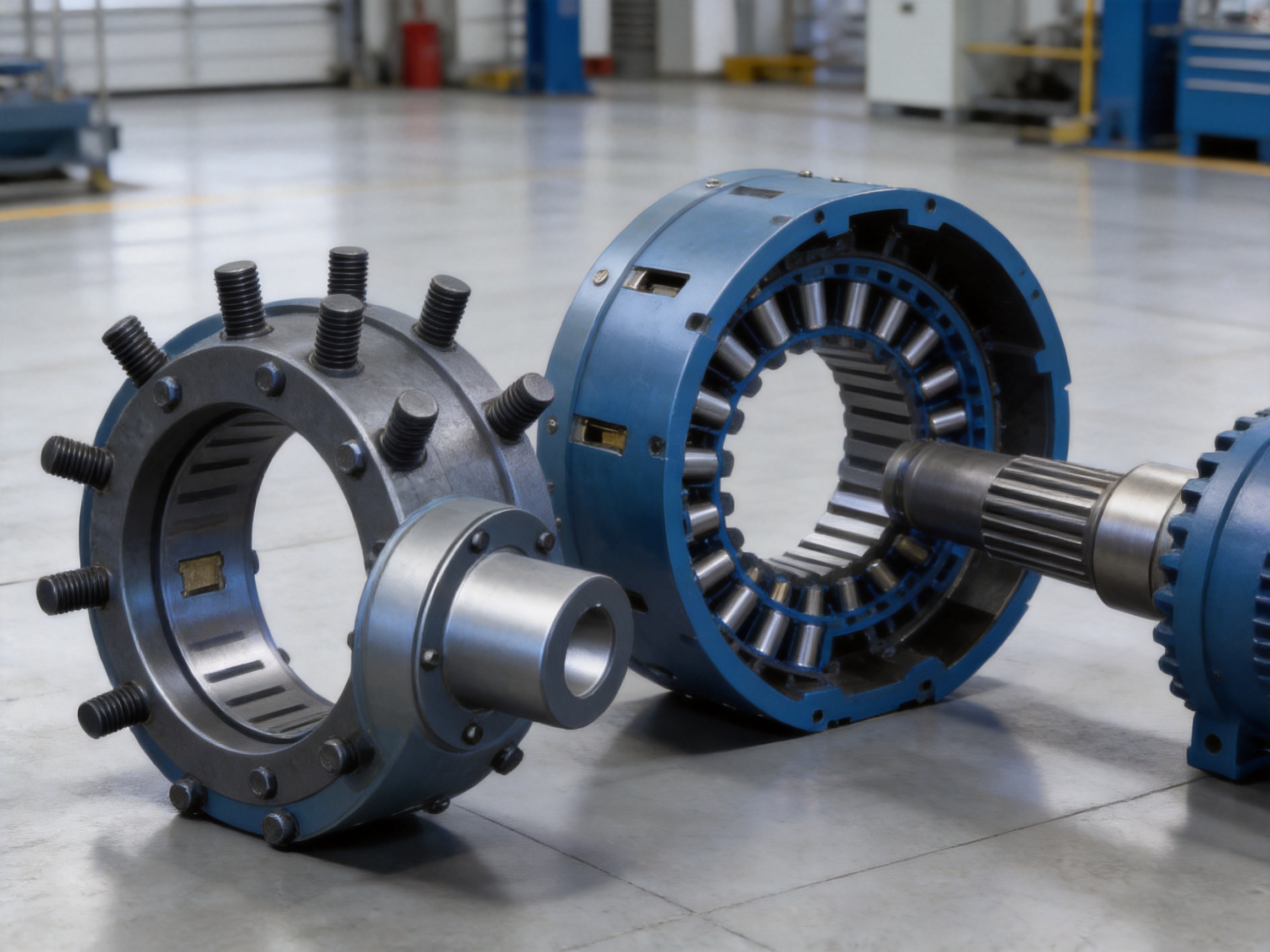
The ZC type elastic pin gear coupling, manufactured according to Q/YZ33006X-2018, is designed for these requirements. It is a heavy-duty flexible coupling with non-metallic elastic elements. Its construction combines the half element grooves on the outer edge of the coupling with the corresponding half grooves in the outer cover to form precise pin holes. High-performance elastic pin shafts are installed in these holes to transmit torque while providing controlled flexibility between the connected shafts.
With nominal torque ratings ranging from 112 N·m to 2,800,000 N·m and product sizes from ZC1 to ZC23, the series covers a broad selection of industrial applications. The coupling is suitable for equipment requiring a compact, maintainable, and impact-resistant connection between driving and driven shafts. Its operating temperature range is specified as -20 °C to +70 °C, allowing use in many indoor and outdoor industrial environments.
Unlike a rigid coupling, the ZC coupling does not require perfect shaft alignment during operation. Unlike some lightweight flexible couplings, it is engineered for substantial torque and heavy-duty service. Its non-metallic elastic pins provide a balance between torsional stiffness and flexibility, helping the transmission system absorb shock, compensate for certain shaft misalignments, and reduce the transmission of harmful vibration.
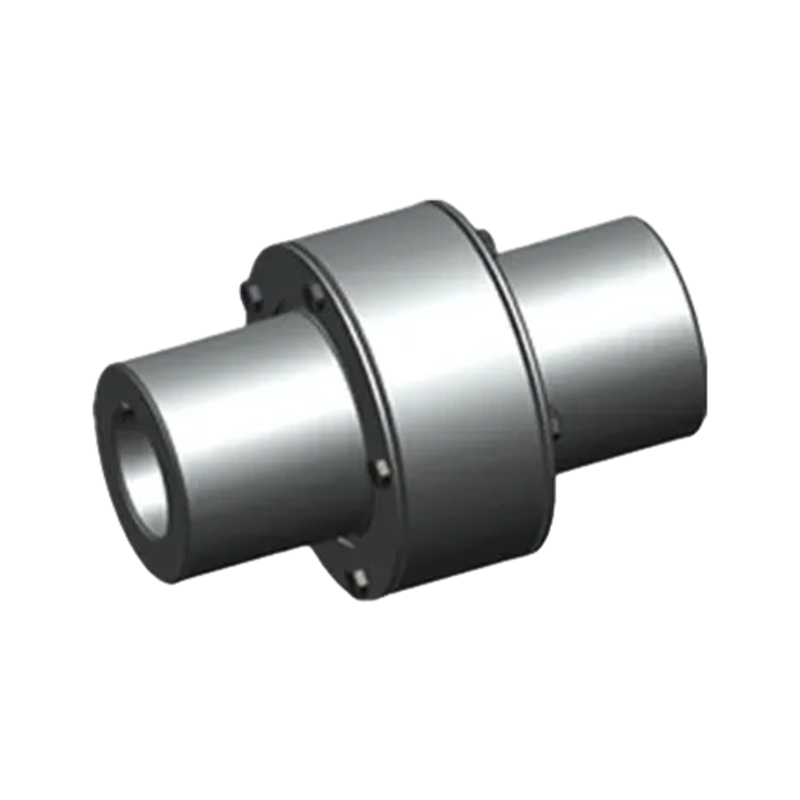
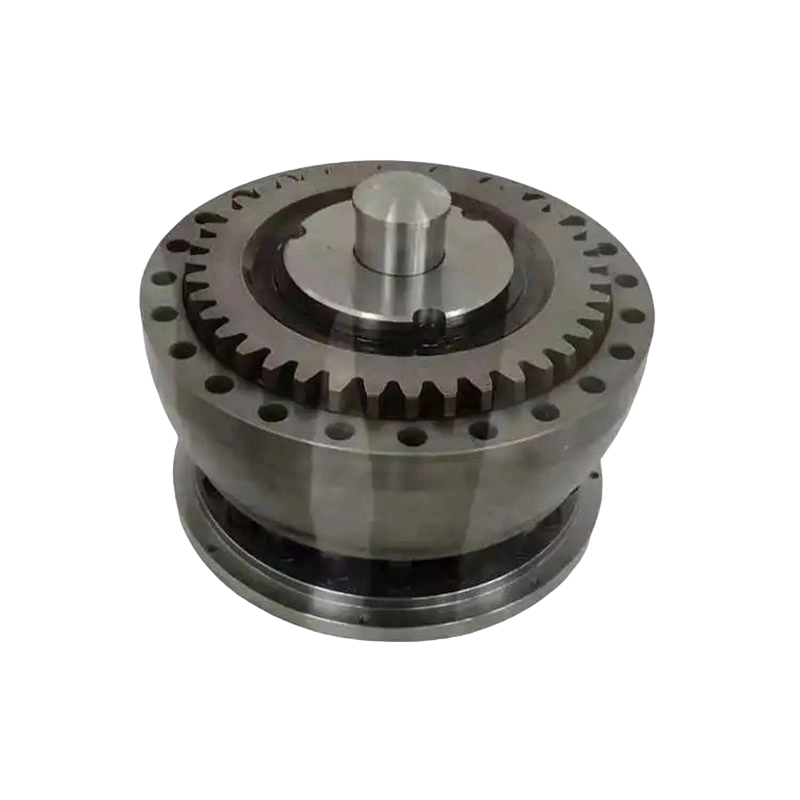
ZC type elastic pin gear coupling(Q/YZ33006X-2018)
1. Product Overview and Operating Principle
A coupling connects two shafts so that torque can pass from a prime mover to a machine. The prime mover may be an electric motor, gearbox, turbine, engine, or other rotating power source. The driven machine may be a conveyor, crusher, mill, pump, hoist, rolling machine, fan, compressor, paper-processing unit, or lifting mechanism. Because these machines rarely remain perfectly aligned under all operating conditions, the coupling must allow a controlled amount of movement.
The ZC type elastic pin gear coupling uses two principal coupling halves, an outer cover, and a series of elastic pin shafts. The coupling halves are mounted on the respective shafts. Their external grooves and the matching grooves in the cover form pin holes around the coupling circumference. Elastic pin shafts are then positioned in these holes. When the driving half rotates, torque is transferred through the elastic pins to the driven half.
The pins are the non-metallic elastic transmission elements. They deform within their designed operating range when torque is applied. This deformation allows the coupling to absorb transient shock and compensate for limited angular, radial, and axial displacement between the shafts. At the same time, the surrounding metal components maintain the geometry and strength needed for high torque transmission.
The result is a flexible mechanical connection with greater torsional rigidity and load capacity than many conventional plum-shaped elastic couplings. The coupling remains flexible enough to protect the connected equipment but sufficiently stiff to support stable torque transfer in high-load systems.
1.1 Structural characteristics
The precision relationship between the coupling groove and outer-cover groove is central to the design. By forming complete pin holes from matching half grooves, the structure provides an organized load path around the circumference. The arrangement distributes torque across multiple pins instead of concentrating the entire load at one localized contact area.
The outer cover also helps retain the elastic pin elements in their working positions. This compact housing arrangement contributes to operational stability and helps simplify maintenance. When inspection or replacement is required, the relevant components can be accessed without dismantling the entire connected machine in many installation configurations.
Because the elastic elements are non-metallic, the coupling can provide damping and impact absorption that would not be available from a completely rigid metallic connection. The elastic pins are intended to accommodate normal operating movement while maintaining the coupling’s ability to transmit high torque.
1.2 Standards and product range
The product is identified as a ZC type elastic pin gear coupling and follows the Q/YZ33006X-2018 standard stated for this series. The available range extends from ZC1 through ZC23. The smallest listed model has a nominal torque of 112 N·m, while the largest listed model has a nominal torque of 2,800,000 N·m.
This range allows engineers to select a coupling according to the actual torque, speed, shaft diameter, shaft extension, inertia, and installation space of the machinery. The selection process should not be based on nominal torque alone. Operating speed, starting conditions, shock loading, shaft alignment, service factor, and bore requirements must also be considered.
The series includes compact couplings for smaller drive systems as well as very large couplings for heavy industrial transmission lines. Bore options extend from small shaft diameters in the lower models to shaft-hole diameters of up to 850 mm in the listed ZC23 configurations.
2. Performance Advantages in Heavy-Duty Applications
The ZC coupling is designed to address several weaknesses commonly found in basic shaft connections. A rigid coupling can transmit torque efficiently, but it transfers alignment errors and vibration directly into the connected equipment. A small flexible coupling may accommodate movement, but it may not have sufficient torque capacity for heavy machinery. The ZC design seeks to combine high capacity with controlled flexibility.
2.1 High nominal torque capacity
The most visible advantage of the series is its broad torque range. The nominal torque ratings begin at 112 N·m for ZC1 and rise through intermediate sizes to 2,800,000 N·m for ZC23. This makes the product suitable for both moderate industrial drives and very large heavy-duty transmission systems.
High nominal torque capacity is especially important in equipment with large inertia, frequent load changes, or difficult starting conditions. Crushers, rolling equipment, hoists, conveyors, and metallurgical machinery can generate torque peaks that are significantly higher than the steady-state operating torque. A correctly selected elastic pin coupling can help manage these transient events while maintaining the mechanical connection.
Engineers should still apply an appropriate service factor and verify the operating conditions. The published nominal torque is a selection reference, not a substitute for a complete application calculation. The effects of shock, reversing operation, braking, temperature, speed, and alignment should be evaluated before final approval.
2.2 Controlled torsional flexibility
Torsional flexibility allows the coupling to absorb part of the sudden torque variation generated during starting, stopping, load engagement, or process disturbance. This can reduce the severity of torque spikes transmitted to the gearbox, motor, shaft, and driven machine.
At the same time, excessive flexibility can produce unwanted torsional oscillation and poor control. The ZC design provides elastic deformation through multiple pins while retaining a substantial metal structure. This gives the series greater torsional rigidity than many conventional plum-shaped elastic couplings, according to the product information.
The balance between flexibility and stiffness is valuable in systems where the drive must remain responsive but also protected from impact. It is particularly relevant to machinery that starts under load or experiences cyclic resistance.
2.3 Compensation for shaft misalignment
Perfect alignment is difficult to maintain in industrial machinery. Foundation settlement, thermal expansion, bearing wear, installation tolerances, shaft deflection, and changes in operating load can alter the relationship between the driving and driven shafts. A flexible coupling can accommodate limited misalignment and reduce the resulting additional loads.
The elastic pins allow controlled movement between the coupling halves. This helps reduce the risk that small alignment deviations will produce excessive bearing loads, shaft bending, or premature wear. The coupling should not be used to compensate for severe misalignment. Accurate installation remains essential for service life and smooth operation.
During installation, the shaft centerlines should be checked using suitable alignment equipment. The coupling’s permitted displacement should be confirmed from the applicable technical documentation, and the actual operating condition should remain within those limits.
2.4 Shock absorption and vibration reduction
Heavy machines often generate impact loads. A conveyor may receive an uneven material burden, a crusher may encounter a large piece of material, and a lifting machine may experience abrupt load engagement. If these loads pass directly through a rigid connection, they can damage gears, shafts, keys, bearings, and motor components.
The non-metallic elastic pins provide a damping effect. Their controlled deformation can absorb part of the impact and reduce the abruptness of torque transmission. This does not eliminate shock loading, but it can help moderate the load path and protect connected equipment.
Vibration performance depends on the entire drive system, including the motor, gearbox, shafts, bearings, foundation, and driven machine. Nevertheless, a properly selected and correctly installed elastic coupling can contribute to smoother operation and lower transmission of certain torsional disturbances.
2.5 Wide operating temperature range
The stated operating temperature range of the ZC series is -20 °C to +70 °C. This range supports many industrial environments, including workshops, outdoor machinery, water-treatment facilities, ports, mines, and production plants with seasonal temperature variation.
Temperature affects the behavior of non-metallic elastic materials. Therefore, the operating environment should be checked before selection. If the coupling is exposed to temperatures outside the stated range, direct radiation, aggressive chemicals, oil contamination, or unusual atmospheric conditions, the material compatibility and service limits should be reviewed with the manufacturer.
3. Comparison with Conventional Plum-Shaped Elastic Couplings
Plum-shaped elastic couplings are widely used in machinery because of their simple construction and compact dimensions. They are effective in many light and medium-duty applications. However, equipment with high torque, large inertia, severe impact, or continuous heavy loading may require a different design approach.
The ZC type elastic pin gear coupling is positioned as a higher-capacity alternative for demanding industrial service. Its multiple elastic pin arrangement, robust outer structure, and broad dimensional range allow it to address applications where a smaller plum-shaped coupling may not provide adequate load-bearing capability.
3.1 Greater load-bearing capability
The ZC series reaches a nominal torque of 2,800,000 N·m. This is substantially beyond the normal range of many compact flexible couplings. Large models can be applied to major drives with large shaft diameters and significant mechanical inertia.
The larger metal components distribute the working forces through the coupling body and the group of elastic pins. This arrangement is appropriate for systems in which high torque must be transmitted for long operating periods.
3.2 Higher torsional rigidity
In some applications, a coupling that is too soft can introduce excessive torsional movement. The result may be delayed response, oscillation, or unstable speed behavior. The ZC coupling provides a comparatively firm connection while preserving the ability to absorb limited impact and misalignment.
This combination is useful for high-power drives where torque transmission must remain predictable. It can also help maintain better control of the driven machine during changes in load.
3.3 Broader industrial suitability
Compact plum-shaped couplings are often selected for general-purpose motors, pumps, fans, and smaller gearboxes. The ZC series is intended for more demanding equipment, including metallurgy, mining, lifting, ports, papermaking, and heavy automated production lines.
These sectors commonly involve high loads, frequent starts and stops, large shaft sizes, severe operating cycles, and costly downtime. The larger model range and high torque ratings make the ZC coupling more suitable for this type of service.
3.4 Maintenance considerations
A coupling should be selected not only for its initial purchase cost but also for the time and resources required during its service life. The compact housing of the ZC series and its replaceable elastic pin concept can support practical maintenance planning.
Regular inspection should include checking the elastic pins, fasteners, coupling halves, outer cover, shaft connections, keyways, and signs of unusual wear. If the machine exhibits increased vibration, noise, backlash, temperature, or torsional shock, the coupling should be inspected promptly.
4. Representative Technical Data
The following table summarizes representative values from the supplied ZC series data. The complete selection must be checked against the applicable product drawing and technical standard because several models contain multiple bore and shaft-hole-length configurations.
| Model | Nominal torque (N·m) | Allowable speed (r/min) | Representative shaft-hole diameter range (mm) | Overall diameter D (mm) | Mass range shown (kg) |
|---|---|---|---|---|---|
| ZC1 | 112 | 5000 | 12–24 | 76 | 1.53–1.67 |
| ZC2 | 250 | Not separately stated in the first row | 16–32 | 90 | 2.70–3.00 |
| ZC3 | 630 | 4500 | 25–42 | 118 | 6.49–7.31 |
| ZC4 | 1800 | 4200 | 40–60 | Not fully separated in source row | 15.25–16.20 |
| ZC5 | 4500 | 4000 | 50–80 | 192 | 24.82–27.02 |
| ZC6 | 8000 | 3300 | 60–95 | 230 | 40.15–40.89 |
| ZC8 | 18000 | 2500 | 80–130 | 300 | 87.43–94.67 |
| ZC10 | 31500 | 2100 | 100–170 | 355 | 164.00–169.30 |
| ZC13 | 100000 | 1500 | 150–240 | 515 | 413.60–480.00 |
| ZC16 | 250000 | 1000 | 220–340 | 695 | 1045–1144 |
| ZC19 | 630000 | 750 | 280–450 | 970 | 2818–3068 |
| ZC21 | 1800000 | 530 | 380–630 | 1440 | 7293–8699 |
| ZC23 | 2800000 | 460 | 480–850 | 1640 | 11946–13822 |
The source table includes additional columns for shaft-hole length, D1, B, S, moment of inertia, and mass. These dimensions vary by model and bore combination. For example, the series progresses from compact ZC1 and ZC2 configurations to large ZC23 assemblies with an overall diameter of 1,640 mm. The allowable speed generally decreases as coupling size and torque capacity increase.
When comparing a selected coupling with the available machine space, engineers should consider not only the outside diameter but also the axial length, shaft extension, guard arrangement, installation tools, and required clearance for inspection. The coupling mass and moment of inertia may influence motor starting behavior, braking performance, and dynamic calculations.
5. Application Areas
5.1 Metallurgical equipment
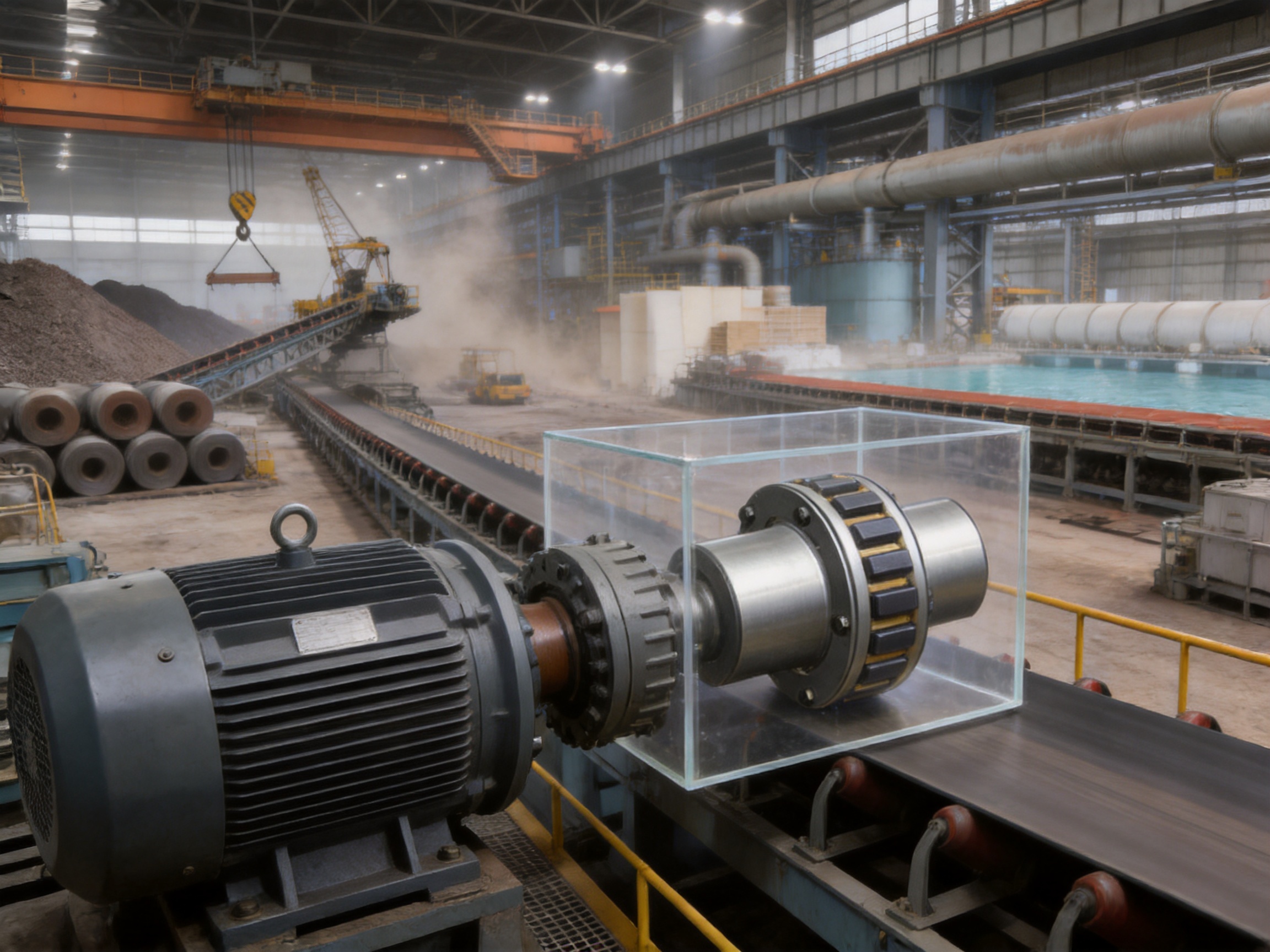
Metallurgical production systems frequently operate under high load and severe mechanical conditions. Conveyors, rolling equipment, feeders, cooling systems, and auxiliary drives may experience repeated impact and changing resistance. The ZC coupling can provide a robust connection capable of transmitting high torque while helping manage torsional shock.
In steel and non-ferrous metal plants, equipment may also experience elevated ambient temperatures, dust, vibration, and difficult maintenance access. The coupling selection must include an assessment of the actual temperature and contamination conditions. Where the environment exceeds the stated temperature range or includes corrosive substances, suitable protection and material verification are important.
5.2 Mining machinery
Mining equipment must often start and operate under substantial resistance. Conveyors, crushers, bucket-wheel systems, feeders, and material-handling equipment can experience irregular loads caused by large or uneven material. A flexible pin coupling can help limit the severity of torque shocks transmitted into the drive system.
The high-torque ZC models are suitable for large shaft arrangements and high-power drives. Correct selection should account for the starting method, conveyor loading, belt acceleration, reversing requirements, and frequency of overload events.
5.3 Lifting and hoisting equipment
Lifting machinery requires dependable torque transfer and controlled dynamic behavior. Hoists, cranes, winches, and lifting platforms may undergo frequent starts, stops, braking cycles, and changes in load direction. These operating conditions can create high torsional stress in the drive train.
The ZC coupling’s elastic pins can help moderate sudden torque changes. However, coupling selection for lifting equipment must be integrated with the complete safety design. Brakes, gearboxes, shafts, drums, limit systems, and load-control components must meet the applicable safety requirements independently of the coupling.
5.4 Port machinery
Port equipment operates in demanding environments that may include humidity, salt-laden air, heavy loads, wind, and intermittent operation. Ship loaders, reclaimers, cranes, conveyors, and bulk-handling systems need reliable drive connections and practical maintenance access.
The coupling should be protected from direct exposure to corrosive contaminants where necessary. Fasteners, guards, coatings, and inspection schedules should be selected according to the site environment. The flexible torque-transmission characteristics of the ZC series can support equipment that experiences variable loading during material handling.
5.5 Paper and water-treatment equipment
Paper production lines often contain long shafts, rollers, pumps, fans, and auxiliary drives that require smooth continuous operation. Water-treatment plants use pumps, mixers, aeration equipment, conveyors, and sludge-handling machinery. In both fields, unexpected downtime can interrupt the process and increase operating costs.
The ZC coupling offers a range of torque and bore sizes for different drive arrangements. Its ability to compensate for limited alignment deviation can be valuable where foundation movement, thermal changes, or long operating periods affect shaft positioning.
6. Manufacturing Strengths and Quality Approach
The performance of a heavy-duty coupling depends on more than the design drawing. Material quality, machining accuracy, heat treatment, assembly control, inspection, and final testing all influence service reliability. Zhongye Heavy Industry Technology (Zhenjiang) Co., Ltd. integrates research and development, manufacturing, and sales for coupling products and custom transmission components.
6.1 Integrated research and development
An integrated engineering and manufacturing structure allows design decisions to be evaluated against production capability. This is important for couplings because the groove geometry, pin-hole location, bore tolerance, balance, surface finish, and assembly fit must work together.
The company produces several coupling families, including toothed couplings, elastic sleeve pin couplings, elastic pin couplings, universal couplings, tire couplings, jaw couplings, star couplings, diaphragm couplings, drum couplings, grid couplings, Oldham couplings, flange couplings, clip-shell couplings, roller-chain couplings, safety couplings, and non-standard products.
Experience across multiple coupling types supports the evaluation of different transmission requirements. Customers can therefore request a product recommendation based on torque, speed, alignment, space, temperature, and application conditions rather than selecting a coupling only by appearance or nominal bore.
6.2 Dedicated production facilities
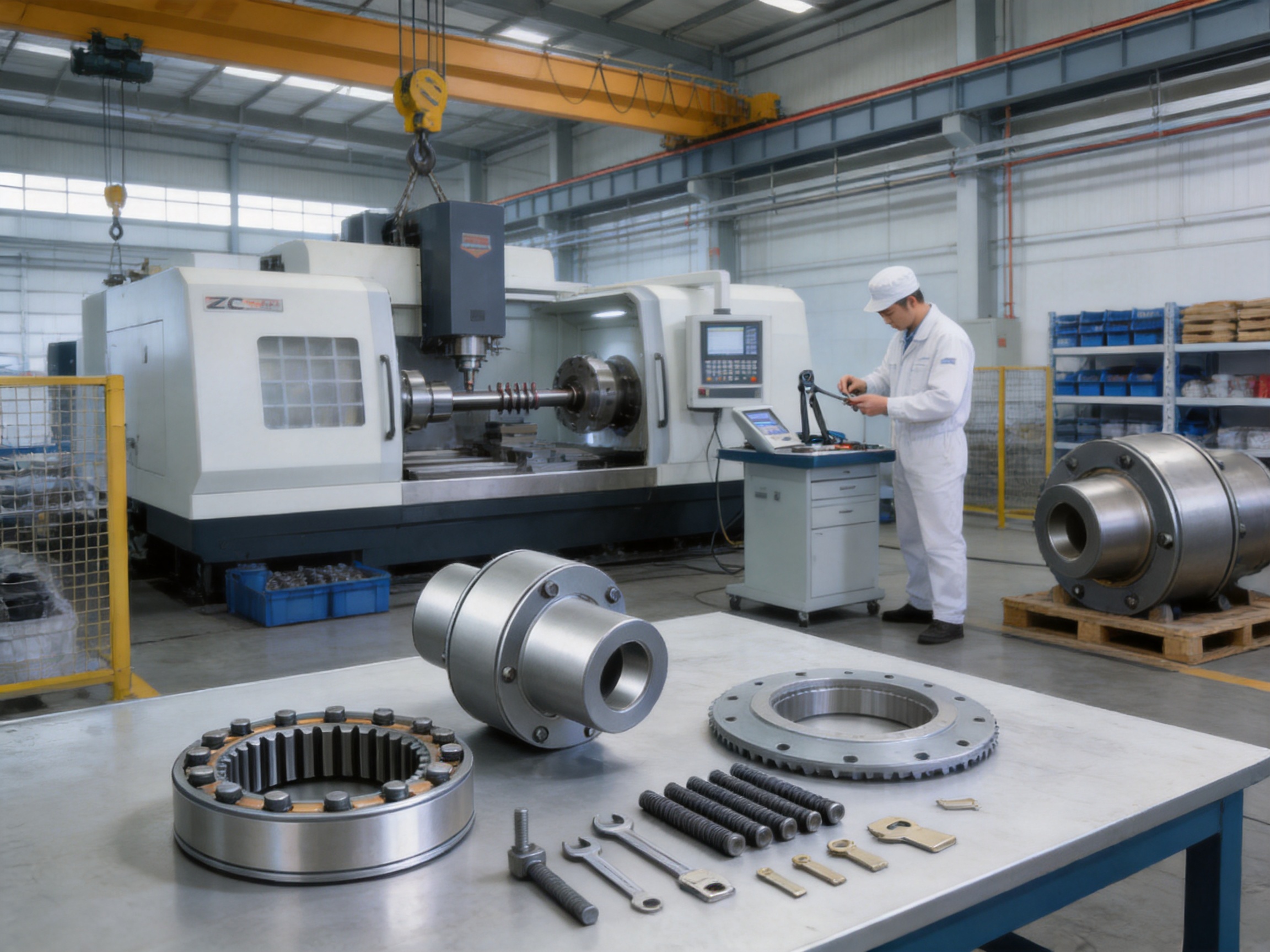
The company’s new workshop covers approximately 16,463.52 square meters. The facility includes a heavy workshop of about 5,500 square meters, a precision workshop of approximately 4,600 square meters, a 2,000-square-meter office building and gymnasium, a 500-square-meter dining hall, a 1,000-square-meter warehouse, and approximately 3,563 square meters allocated to roads, landscaping, and parking.
The separation of heavy and precision production areas is valuable for coupling manufacturing. Large coupling components require lifting capacity, substantial machining equipment, and adequate space for handling. Smaller or precision components require controlled machining, measurement, assembly, and inspection processes.
A dedicated warehouse also supports material organization, component traceability, and order preparation. For custom and multi-size coupling programs, effective material management helps reduce the risk of mixing components or delaying production.
6.3 Machining and dimensional control
Coupling halves and covers must maintain accurate concentricity and correct relative geometry. Errors in bore alignment, pin-hole distribution, or mating surfaces can lead to imbalance, uneven pin loading, vibration, and accelerated wear.
Manufacturing control should therefore include appropriate turning, boring, milling, drilling, keyway processing, surface treatment, and dimensional inspection. Large components must be processed with equipment capable of maintaining stability during heavy machining. Precision parts require measurement systems suitable for checking diameters, lengths, runout, and positional relationships.
The ZC series contains many models and multiple bore options. A robust production system is necessary to maintain consistency across different sizes while allowing customization for shaft diameter, shaft-hole length, mounting arrangement, and application requirements.
6.4 Quality management and testing
The company states that its products comply with international standards and certifications such as ISO 9001. A quality management system supports documented procedures for purchasing, production, inspection, nonconforming product control, and customer service.
For a coupling manufacturer, quality assurance should cover incoming material verification, dimensional checks during machining, final assembly inspection, elastic element verification, and packaging control. Depending on the order and application, additional checks may include runout, balance, hardness, surface condition, torque-related verification, and visual inspection of welds or castings where applicable.
Testing facilities and inspection records are particularly important for large couplings. The physical size and mass of a ZC21, ZC22, or ZC23 assembly make transportation, lifting, balancing, and installation more demanding than for small couplings. A documented inspection process provides confidence that the delivered assembly corresponds to the approved technical specification.
7. Customization and Non-Standard Design
Industrial drive systems frequently contain constraints that cannot be addressed by a standard catalog configuration. The distance between shafts may be fixed, the shaft diameters may differ, the available axial space may be limited, or the equipment may require a special cover, flange, bore, keyway, or mounting arrangement.
The manufacturer undertakes the design and production of non-standard couplings. Customization can be considered for bore dimensions, shaft-hole lengths, coupling materials, surface protection, mounting features, special clearances, and application-specific dimensions. Any modification should be reviewed for its effect on torque capacity, allowable speed, balance, stress concentration, and maintenance access.
7.1 Information required for selection
Customers should provide the following information when requesting a ZC coupling quotation or technical recommendation:
1. Motor or prime-mover power and rated speed.
2. Normal operating torque and peak or starting torque.
3. Driving and driven shaft diameters.
4. Shaft-hole lengths, keyway dimensions, and shaft-end configuration.
5. Distance between shaft ends and available radial and axial space.
6. Misalignment expected during installation and operation.
7. Starting, stopping, reversing, braking, and overload conditions.
8. Ambient temperature, humidity, dust, chemicals, oil, and outdoor exposure.
9. Required operating hours, maintenance conditions, and desired service life.
10. Applicable industry standards, drawings, inspection requirements, and delivery schedule.
Complete information reduces the risk of selecting a coupling that is technically adequate in torque but unsuitable in speed, bore, space, temperature, or dynamic behavior.
7.2 Engineering support
Technical support is especially valuable for large or unusual applications. The manufacturer can help compare standard models, review shaft dimensions, assess service factors, and develop non-standard solutions. Pre-sale technical support should be followed by installation guidance and after-sale service so that the coupling performs as intended throughout its working life.
8. Installation and Maintenance Recommendations
A high-quality coupling can fail prematurely if it is installed incorrectly. Before installation, the shaft ends, keyways, coupling bores, elastic pins, cover, fasteners, and mating surfaces should be inspected. Rust, burrs, dirt, paint buildup, and mechanical damage should be removed from relevant fitting surfaces.
8.1 Alignment
The driving and driven shafts should be aligned according to the applicable technical requirements. Angular and parallel alignment should be checked with suitable instruments. The coupling should not be used to correct an installation error that exceeds its permitted flexibility.
After the coupling halves are installed, the shaft should be rotated manually where possible to confirm that there is no interference. Guards and surrounding equipment must provide sufficient clearance for the coupling, fasteners, elastic pins, and any expected movement during operation.
8.2 Fasteners and assembly
Fasteners should be clean, correctly sized, and tightened to the specified torque. The outer cover and coupling halves must be assembled in the correct orientation. Elastic pins should be installed without damage, excessive force, contamination, or unauthorized substitution.
Because the pins are functional elastic elements, their material and dimensions should match the approved product specification. Improvised replacements may change the coupling’s stiffness, damping, load distribution, and service life.
8.3 Inspection intervals
Inspection frequency should reflect the severity of service. A heavily loaded crusher or lifting drive may require more frequent checks than a continuously running pump with stable loading. Inspection should look for pin wear, cracking, deformation, loosening, corrosion, abnormal contact, excessive backlash, and changes in vibration or noise.
The coupling should also be checked after events such as severe overload, jammed equipment, emergency braking, collision, or unexpected reverse rotation. A coupling that has experienced a major shock should be inspected even if the machine continues to operate.
8.4 Replacement of elastic elements
Elastic pins should be replaced when wear or damage reaches the applicable service limit. Replacing only visibly damaged elements may not always provide uniform performance if the remaining pins have significantly different wear or age. The maintenance plan should follow the manufacturer’s recommendations for replacement quantity and procedure.
Before restarting the machine, confirm that all pins and covers are installed correctly, all fasteners are secure, and the coupling guard is in place. Rotating couplings must not be operated without suitable guarding.
9. Selecting the Correct ZC Model
Model selection begins with torque. The operating torque should be calculated from power and speed, then adjusted for service conditions. Starting torque, peak torque, impact, reversing, braking, and cyclic loading should be included. The selected nominal torque should exceed the calculated application requirement with an appropriate safety margin.
Speed is the second major consideration. Each ZC model has an allowable speed listed in the supplied data. In general, the allowable speed decreases as coupling size and torque capacity increase. The operating speed must remain within the allowable limit, and high-speed applications may require additional balance or dynamic evaluation.
The shaft-hole diameter and shaft-hole length must match the actual shaft ends. Bore tolerance, keyway dimensions, interference or clearance requirements, and axial position should be confirmed on the approved drawing. A coupling that has adequate torque capacity but an unsuitable bore cannot be installed safely.
Space and inertia must also be evaluated. Larger couplings require more radial clearance, stronger lifting arrangements, and adequate access for inspection. Their higher moment of inertia may affect acceleration, deceleration, braking, and motor selection.
Finally, the environment must be considered. Temperature, moisture, dust, chemicals, oil, salt, and outdoor exposure may affect elastic elements and metal surfaces. Protective guards, coatings, seals, or special materials may be needed for certain conditions.
10. Why Choose an Experienced Coupling Manufacturer
Heavy-duty couplings influence the reliability of the entire drive train. A failure can damage shafts, bearings, gearboxes, motors, and connected machinery. It can also stop production and create safety risks. For this reason, purchasing decisions should consider engineering capability, manufacturing resources, inspection systems, customization support, and after-sales service.
An experienced coupling manufacturer can support the process from initial application review through design, production, inspection, delivery, installation, and maintenance. This integrated service is particularly useful for large couplings, non-standard shaft arrangements, replacement projects, and equipment operating under severe impact.
Zhongye Heavy Industry Technology (Zhenjiang) Co., Ltd. serves metallurgical, mining, water, lifting, paper, port, and other industrial sectors. Its stated strengths include research and development capability, manufacturing capacity, testing facilities, quality control, complete coupling specifications, custom design, pre-sale technical support, non-standard production, and after-sale service.
The company is located in Zhenjiang, Jiangsu Province, China, and supplies a range of flexible, rigid, safety, and customized couplings. Its product portfolio allows customers to compare different coupling principles, including metal elastic element couplings, non-metallic elastic element couplings, gear couplings, diaphragm couplings, grid couplings, tire couplings, and other designs.
11. Frequently Asked Questions
Q1: What is a ZC type elastic pin gear coupling?
A ZC type elastic pin gear coupling is a flexible shaft coupling that transmits torque through multiple non-metallic elastic pin shafts installed between coupling halves and an outer cover. It is designed for heavy-duty industrial transmission and follows the Q/YZ33006X-2018 standard identified for the product.
Q2: What is the nominal torque range?
The supplied product information gives a nominal torque range from 112 N·m for ZC1 to 2,800,000 N·m for ZC23.
Q3: What is the operating temperature range?
The stated operating temperature range is -20 °C to +70 °C. Applications outside this range should be reviewed with the manufacturer to verify material suitability and performance.
Q4: How does the coupling compensate for misalignment?
The elastic pins deform within their designed range, allowing controlled relative movement between the coupling halves. This can compensate for limited angular, radial, and axial misalignment. It does not replace accurate shaft alignment or permit severe installation errors.
Q5: How does it compare with a plum-shaped elastic coupling?
The ZC coupling is designed for higher torque, greater torsional rigidity, larger shaft sizes, and more severe industrial service than many conventional plum-shaped elastic couplings. A plum-shaped coupling may remain a better choice for compact, lighter-duty applications where its capacity is sufficient.
Q6: Which industries use this coupling?
Typical applications include metallurgy, mining, lifting, port machinery, papermaking, water treatment, conveyors, heavy automated production lines, and other industrial equipment requiring flexible high-torque transmission.
Q7: Does the manufacturer provide custom couplings?
Yes. The manufacturer undertakes non-standard coupling design and production. Custom work may address bore size, shaft-hole length, mounting dimensions, special clearances, environmental requirements, and other application-specific conditions.
Q8: What information is needed for a quotation?
Important information includes power, speed, normal and peak torque, shaft diameters, keyways, shaft-hole lengths, shaft spacing, operating temperature, alignment conditions, starting and braking characteristics, environmental exposure, and any required drawings or standards.
Q9: What should be inspected during maintenance?
Inspect the elastic pins, coupling halves, outer cover, fasteners, shaft connections, keyways, alignment, corrosion, wear, vibration, noise, backlash, and signs of overheating. Inspection should be more frequent in high-impact or high-cycle applications.
Q10: Can the coupling operate without a guard?
No. A rotating coupling should be protected by a suitable guard. The guard helps prevent contact with rotating parts and contains components in the event of a mechanical failure.
Q11: Are the largest models suitable for every high-torque drive?
No. High nominal torque does not automatically make a coupling suitable for every application. Speed, peak torque, shaft diameter, alignment, inertia, space, temperature, and dynamic behavior must all be verified before selection.
Q12: What is the main benefit of the non-metallic elastic pins?
The pins provide controlled elasticity and damping. They help the coupling absorb shock, accommodate limited misalignment, and reduce the direct transmission of certain torsional disturbances while maintaining a strong mechanical connection.
12. Conclusion
The ZC type elastic pin gear coupling is a heavy-duty flexible transmission solution for industrial machinery that requires more than simple torque connection. Its combination of high nominal torque, controlled torsional flexibility, non-metallic elastic pins, compact housing, broad bore range, and multiple model sizes makes it suitable for demanding equipment.
Compared with many conventional plum-shaped elastic couplings, the series offers higher load-bearing capability and greater torsional rigidity. Its applications extend from moderate industrial drives to very large systems with torque ratings up to 2,800,000 N·m. The range from ZC1 to ZC23 provides flexibility for engineers designing new machinery or replacing existing couplings.
Reliable performance depends on correct selection, accurate alignment, proper assembly, suitable guarding, and planned maintenance. The manufacturer’s integrated research, production, inspection, customization, and service capabilities provide support for both standard and non-standard coupling requirements.
For customers seeking a flexible shaft coupling for mining, metallurgy, lifting, ports, paper production, water equipment, or heavy automation, the ZC series offers a practical combination of strength, flexibility, serviceability, and application versatility. Final selection should always be confirmed against the complete technical drawing, operating conditions, and applicable engineering standards.
References
1. Q/YZ33006X-2018, ZC Type Elastic Pin Gear Coupling Product Standard, as identified in the supplied product information.
2. ZC Type Elastic Pin Gear Coupling Basic Parameters and Main Dimensions, manufacturer-supplied technical table.
3. ISO 9001, Quality Management Systems—Requirements.
4. General engineering principles for flexible shaft coupling selection, alignment, installation, and maintenance.
5. Manufacturer-supplied company and facility information for Zhongye Heavy Industry Technology (Zhenjiang) Co., Ltd.
Product: ZC type elastic pin gear coupling(Q/YZ33006X-2018)

- Quick Links
- About
- Products
- Our Service
- News & Events
- Contact
- Products Series
- Flexible Couplings with Non-Elastic Elements
- Flexible Couplings with Metal Elastic Elements
- Flexible Couplings with Non-Metallic Elastic Elements
- Safety Coupling
- Rigid Coupling
- Contact Us
- Tel : +86 511 8572 3800 +86 511 8572 3900
- Mobile : +86 15106109009
- Email : sales@couplingzy.com
- Add:No.1 Zhongye Yingbin Avenue, Gaozi Street, Dantu Economic Development Zone, Zhenjiang City, Jiangsu Province, China.


