:+86 15106109009
:sales@couplingzy.com


 English
  русский
  Español
  عربى
عربى  Português
  Deutsch
  Türk
Türk  Indonesia

T20 High-Speed Snake Spring Coupling: Advanced Metal Elastic Power Transmission for Demanding Applications
Content
- 1 Understanding the T20 High-Speed Snake Spring Coupling
- 2 Why High-Speed Equipment Requires a Specialized Coupling
- 3 Core Construction and Operating Principle
- 4 Key Performance Advantages
- 5 Comparison with Other Coupling Technologies
- 6 Manufacturing Quality and Engineering Strengths
- 7 Application Areas
- 8 Selection Guidelines for Engineers and Buyers
- 9 Installation and Commissioning Practices
- 10 Maintenance and Service Recommendations
- 11 Customization and Non-Standard Solutions
- 12 Manufacturing Infrastructure and Customer Support
- 13 Safety Considerations
- 14 Q&A: T20 High-Speed Snake Spring Coupling
- 14.1 What is a snake spring coupling?
- 14.2 What category does the T20 belong to?
- 14.3 Can the T20 compensate for parallel and angular misalignment?
- 14.4 Is the T20 suitable for high-speed machinery?
- 14.5 Does the T20 require lubrication?
- 14.6 How does the T20 compare with an elastomeric coupling?
- 14.7 How does the T20 compare with a rigid flange coupling?
- 14.8 Can the spring element be replaced?
- 14.9 What information is needed to select a T20 coupling?
- 14.10 Can the coupling be customized?
- 14.11 What industries can use this coupling?
- 14.12 What are the main causes of premature coupling failure?
- 14.13 Does the coupling require a guard?
- 15 Conclusion
- 16 References
- 17 Product: T20 high speed snake spring coupling
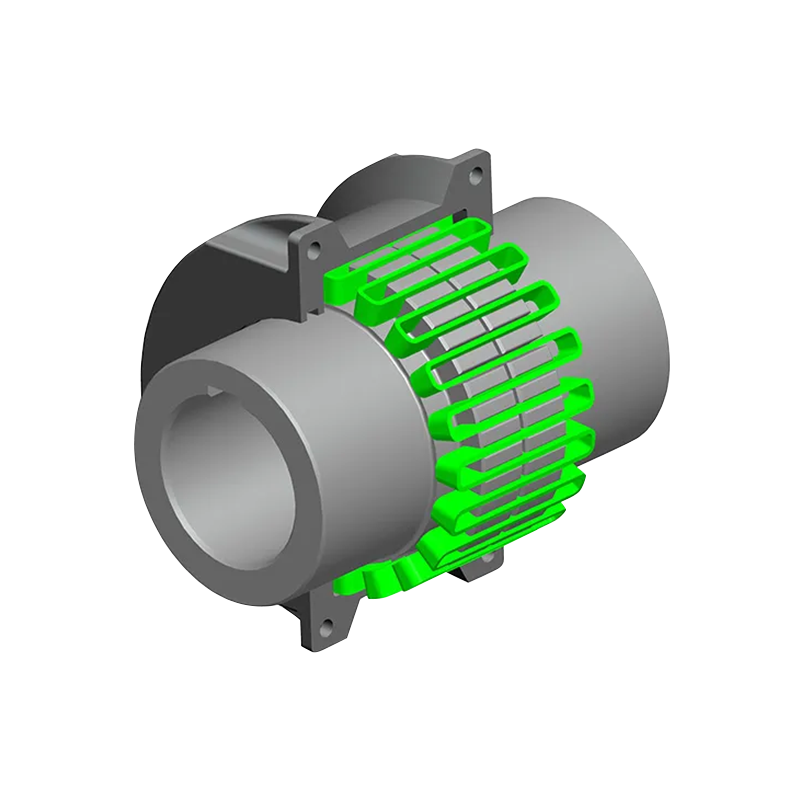
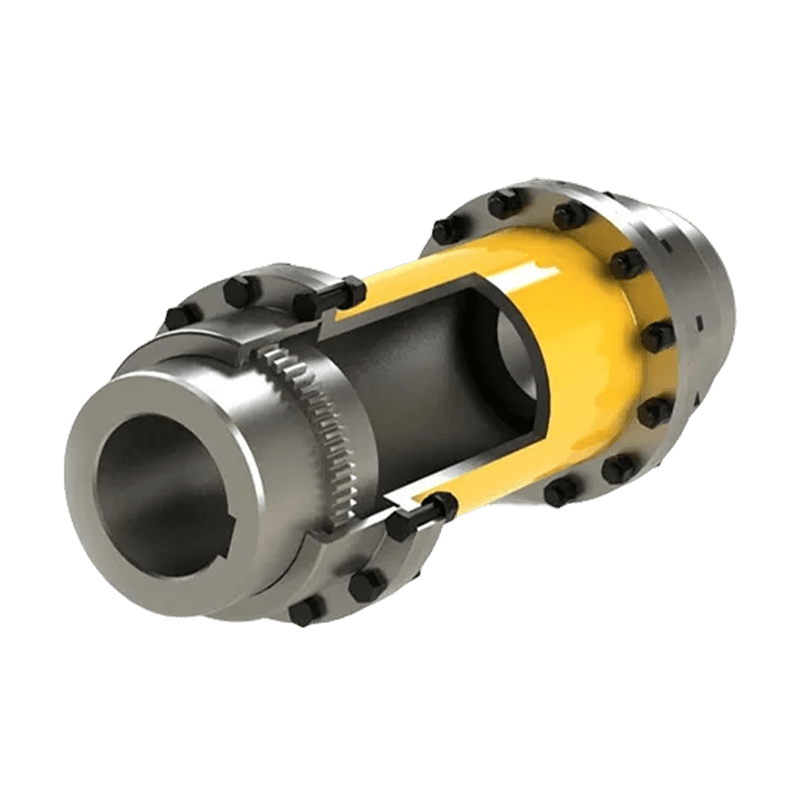
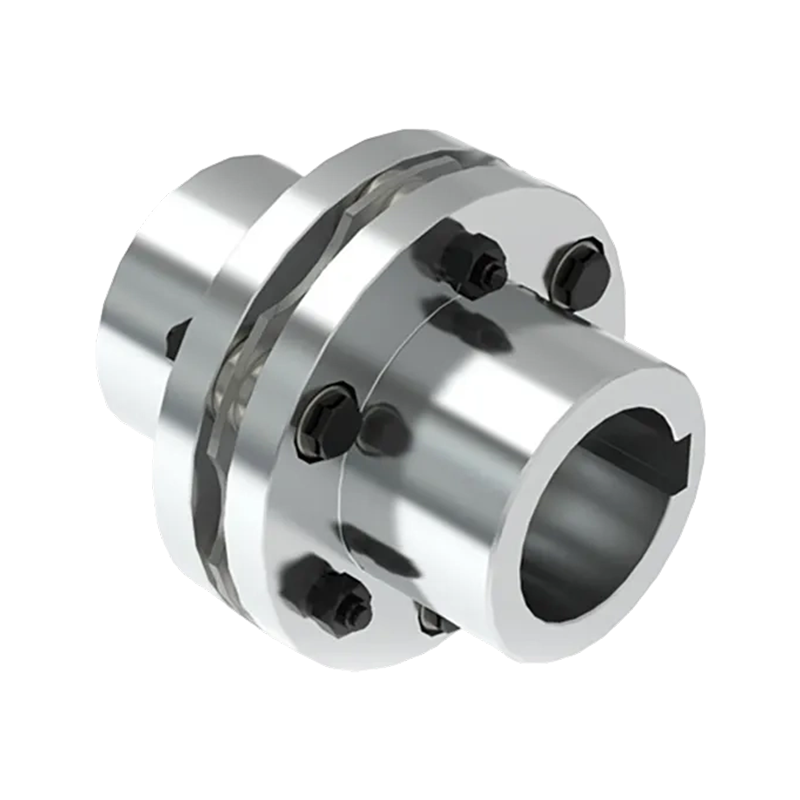
The T20 high-speed snake spring coupling is a flexible shaft coupling designed for mechanical systems that require reliable torque transmission, vibration control, and compensation for shaft misalignment. Combining a precisely formed snake-shaped spring with robust coupling hubs and covers, the design provides a practical balance between flexibility, strength, compactness, and serviceability.
High-speed rotating equipment places demanding requirements on every component in the power transmission line. Pumps, compressors, blowers, marine propulsion systems, industrial drives, and specialized machinery must operate with stable torque transfer while resisting vibration, shock loads, thermal changes, and installation inaccuracies. A rigid connection may transmit torque efficiently, but it cannot accommodate the inevitable misalignment that occurs between connected shafts. The T20 addresses this challenge through a metal elastic element that flexes under operating conditions while maintaining positive mechanical engagement.
Unlike many basic flexible couplings that are designed primarily for general-purpose speed and torque transmission, the T20 is developed with high-speed performance and dynamic behavior in mind. Its snake-shaped spring distributes the load over multiple contact points, supports controlled flexibility, and helps reduce the transmission of torsional shocks. At the same time, its metallic construction provides higher resistance to heat, oil, aging, and demanding industrial environments than many couplings that depend on non-metallic elastic components.
The result is a coupling solution suitable for equipment where transmission reliability, compact installation, reduced maintenance, and long operating life are essential.
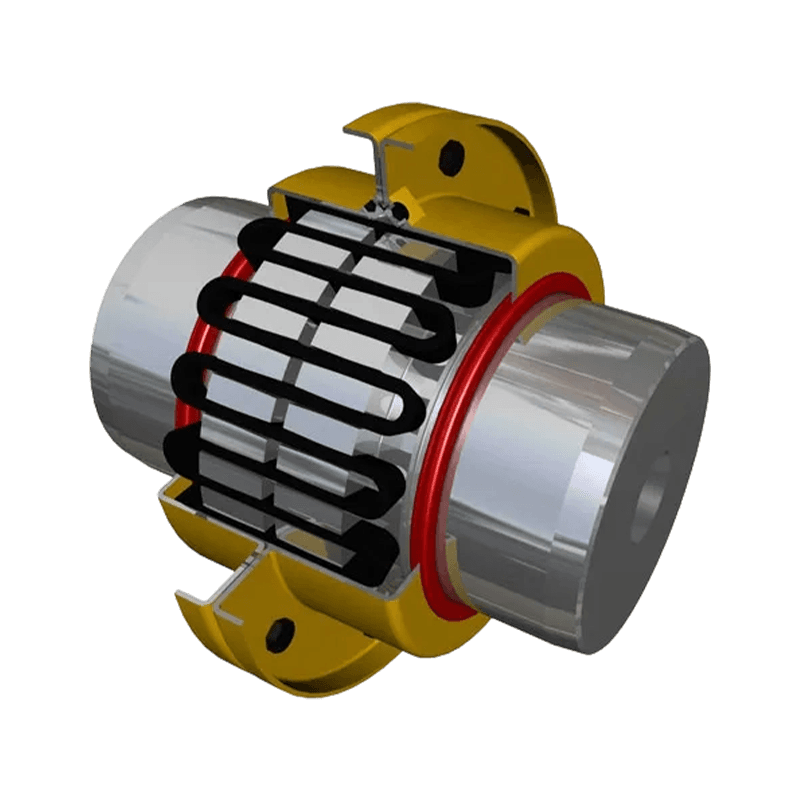
T20 high speed snake spring coupling
Understanding the T20 High-Speed Snake Spring Coupling
A coupling connects two shafts so that power and torque can pass from a driver to a driven machine. In an ideal installation, the shafts would be perfectly aligned and would remain aligned throughout operation. In real equipment, however, angular, parallel, and axial misalignment can arise from manufacturing tolerances, foundation movement, bearing wear, thermal expansion, installation errors, or changes in operating load.
The T20 uses a metal snake spring as its flexible transmission element. The spring is positioned between specially shaped teeth or profiles on the coupling hubs. When the driver rotates, the hubs apply force to the spring. The spring then transfers torque to the driven hub while flexing slightly in response to misalignment and dynamic loads.
This operating principle gives the coupling several important characteristics:
• Positive torque transmission through a durable metallic element.
• Controlled flexibility for angular, parallel, and axial misalignment.
• Damping of torsional vibration and shock loads.
• High resistance to elevated temperatures and industrial contaminants.
• A compact arrangement that can deliver substantial torque within a relatively limited installation space.
• Serviceability through inspection or replacement of the spring element without necessarily removing the connected machinery.
The T20 is categorized as a flexible coupling with a metal elastic element. This distinguishes it from diaphragm couplings, elastomeric jaw couplings, tire couplings, and rigid flange couplings. Each coupling family has its own operating range and advantages. The T20 is particularly valuable when a user needs a combination of high-speed capability, damping, misalignment compensation, and resistance to harsh operating conditions.
Why High-Speed Equipment Requires a Specialized Coupling
High rotational speed magnifies small mechanical imperfections. A minor angular error that may be tolerable at low speed can generate significant cyclic forces when the shaft rotates rapidly. Similarly, small imbalances, intermittent torque fluctuations, or backlash can produce vibration that affects bearings, seals, gears, and connected equipment.
A coupling used in a high-speed system must therefore do more than connect two shafts. It must operate with stable dynamic behavior, maintain accurate torque transmission, and avoid introducing excessive radial or torsional forces. The coupling should also withstand repeated flexing without premature fatigue.
The T20 snake spring arrangement is suited to this environment because the spring is not expected to remain completely rigid. Instead, it is designed to flex in a controlled manner. This controlled flexibility helps the coupling absorb certain dynamic disturbances while preventing misalignment from being transferred directly to the connected shafts and bearings.
For high-speed applications, the following factors are especially important:
Rotational stability: The coupling must be manufactured with consistent geometry and balanced components so that it does not create unnecessary centrifugal forces during operation.
Spring fatigue resistance: The metal spring must withstand repeated cycles of loading and unloading. Proper material selection, forming, heat treatment, and quality inspection are essential.
Torque capacity: The coupling must transmit the required continuous and peak torque without excessive deformation or tooth contact stress.
Misalignment control: The coupling should accommodate realistic installation and operating movement without placing excessive loads on the shafts or bearings.
Thermal and environmental resistance: The coupling must retain its mechanical properties in the presence of heat, lubricant, dust, moisture, and industrial contaminants.
Maintenance accessibility: Regular inspection and replacement should be practical, especially when the coupling is installed in production equipment where downtime is costly.
Core Construction and Operating Principle
Metal Snake Spring Element
The central component of the T20 is its snake-shaped spring. The spring is formed from high-strength metallic material and installed between the mating teeth of the hubs. Its serpentine profile enables it to engage multiple points around the circumference while preserving the ability to flex.
When torque is transmitted, the spring contacts the hub teeth and transfers load through a series of distributed interfaces. This arrangement helps reduce the concentration of force at a single point. Instead of depending on one solid block of elastomer or a rigid connection, the spring provides a resilient path for torque transfer.
The spring also contributes to vibration damping. As torque fluctuates, the spring undergoes small elastic deflections. These deflections can moderate sudden changes in torque and reduce the direct transmission of torsional shocks. The damping behavior depends on the material, spring geometry, coupling size, speed, load, and operating conditions, so actual performance should always be confirmed against application data.
Coupling Hubs
The hubs connect the coupling to the driver and driven shafts. They are manufactured to provide accurate shaft fits and consistent alignment with the spring element. Depending on the application, the hubs may be supplied with different bore arrangements, keyways, interference fits, or other shaft connection configurations.
Hub geometry is important because it determines how torque enters and leaves the coupling. Properly designed hub teeth distribute the load into the spring and help maintain reliable contact during rotation. Precision machining is also necessary to control concentricity, tooth dimensions, bore accuracy, and surface quality.
Protective Cover
The cover surrounds the spring and helps retain lubricant. It also protects the internal components from dust, moisture, and accidental contact. In industrial environments, the cover can be an important part of the coupling system because it contributes to operating safety and helps preserve the condition of the spring and hub teeth.
Lubrication reduces friction at the contact areas between the spring and hub teeth. Correct lubricant selection and proper filling are essential. The lubricant must be compatible with the operating temperature, rotational speed, sealing arrangement, and industrial environment. Maintenance personnel should follow the technical instructions supplied for the specific coupling size and operating conditions.
Fasteners and Sealing Features
Fasteners, seals, and related components must maintain the integrity of the cover during operation. Their design should support reliable assembly, resistance to loosening, and protection against lubricant leakage. During installation, tightening procedures and torque values should be followed carefully because improper fastening can affect balance, sealing, and overall coupling performance.
Key Performance Advantages
High Torque Transmission in a Compact Design
The T20 transfers torque through a strong metallic spring and positive hub engagement. This allows it to handle demanding mechanical loads while maintaining a compact overall arrangement. A compact coupling can simplify machine design, reduce the space required around the shaft line, and make it easier to integrate the drive into existing equipment.
High torque density is especially useful in pumps, compressors, conveyors, lifting equipment, and other systems where the available installation envelope is limited. A coupling that can transmit the required torque without excessive diameter or length may help reduce the size of guards, base frames, and connected assemblies.
Compensation for Multiple Types of Misalignment
One of the main reasons to select a flexible coupling is to accommodate shaft misalignment. The T20 is designed to compensate for three common forms of misalignment:
Angular misalignment occurs when the centerlines of two shafts intersect at an angle rather than remaining parallel and collinear.
Parallel or radial misalignment occurs when the shaft centerlines are parallel but offset from one another.
Axial misalignment occurs when the shafts move toward or away from each other along their common axis.
In actual equipment, these forms of misalignment may occur simultaneously. The flexible spring element permits controlled movement while continuing to transmit torque. This reduces the likelihood that alignment errors will be transferred directly into the bearings, seals, or gearboxes.
Misalignment compensation does not eliminate the need for proper installation. Every coupling has allowable limits, and operation beyond those limits can accelerate fatigue, increase temperature, raise vibration, and shorten service life. The T20 should therefore be selected and aligned according to the actual equipment requirements.
Vibration and Shock Absorption
Rotating equipment may experience torque pulsations during startup, shutdown, load changes, compression cycles, or intermittent operation. If these disturbances are transmitted directly through a rigid connection, they can produce high stress in shafts and machine components.
The T20 spring provides elastic compliance in the drive line. This compliance helps moderate rapid torque changes and may reduce the severity of torsional vibration. The coupling can also absorb certain shock loads that might otherwise damage the connected equipment.
Its damping performance is one of the principal advantages over many rigid couplings. Compared with some non-metallic elements, the metal spring can offer improved resistance to high temperature and certain chemical or oil-exposure conditions. Compared with a completely rigid design, it offers much greater tolerance for dynamic movement and transient loading.
Resistance to Temperature and Industrial Conditions
Metal elastic elements are generally less vulnerable than many rubber or polymer components to high temperatures, aging, and certain types of chemical exposure. This makes the T20 suitable for industrial systems where the ambient environment or operating temperature may be challenging.
Applications such as compressors, pumps, steel production equipment, mining machinery, port equipment, and marine systems can expose couplings to dust, moisture, oil mist, vibration, and changing temperatures. The protective cover and suitable lubrication help safeguard the internal parts, while the metallic spring provides a durable elastic medium.
Environmental suitability must still be assessed for each application. Factors such as corrosive chemicals, water immersion, abrasive dust, extreme temperatures, explosive atmospheres, and special hygiene requirements may require additional materials, sealing arrangements, surface treatments, or certification.
Long Service Life and Lower Maintenance Requirements
Long service life depends on correct selection, proper installation, suitable lubrication, and regular inspection. When these conditions are satisfied, the T20 can provide durable operation with reduced maintenance interruptions.
The spring is replaceable in many service arrangements, allowing the user to renew the flexible element while retaining the hubs and other reusable components when inspection confirms that they remain suitable. This can reduce replacement cost and shorten repair time compared with replacing an entire coupling assembly.
Regular maintenance should include checking the cover, fasteners, lubrication condition, spring wear, hub teeth, shaft connections, vibration, and signs of overheating. Preventive inspection can identify developing problems before they result in an unplanned shutdown.
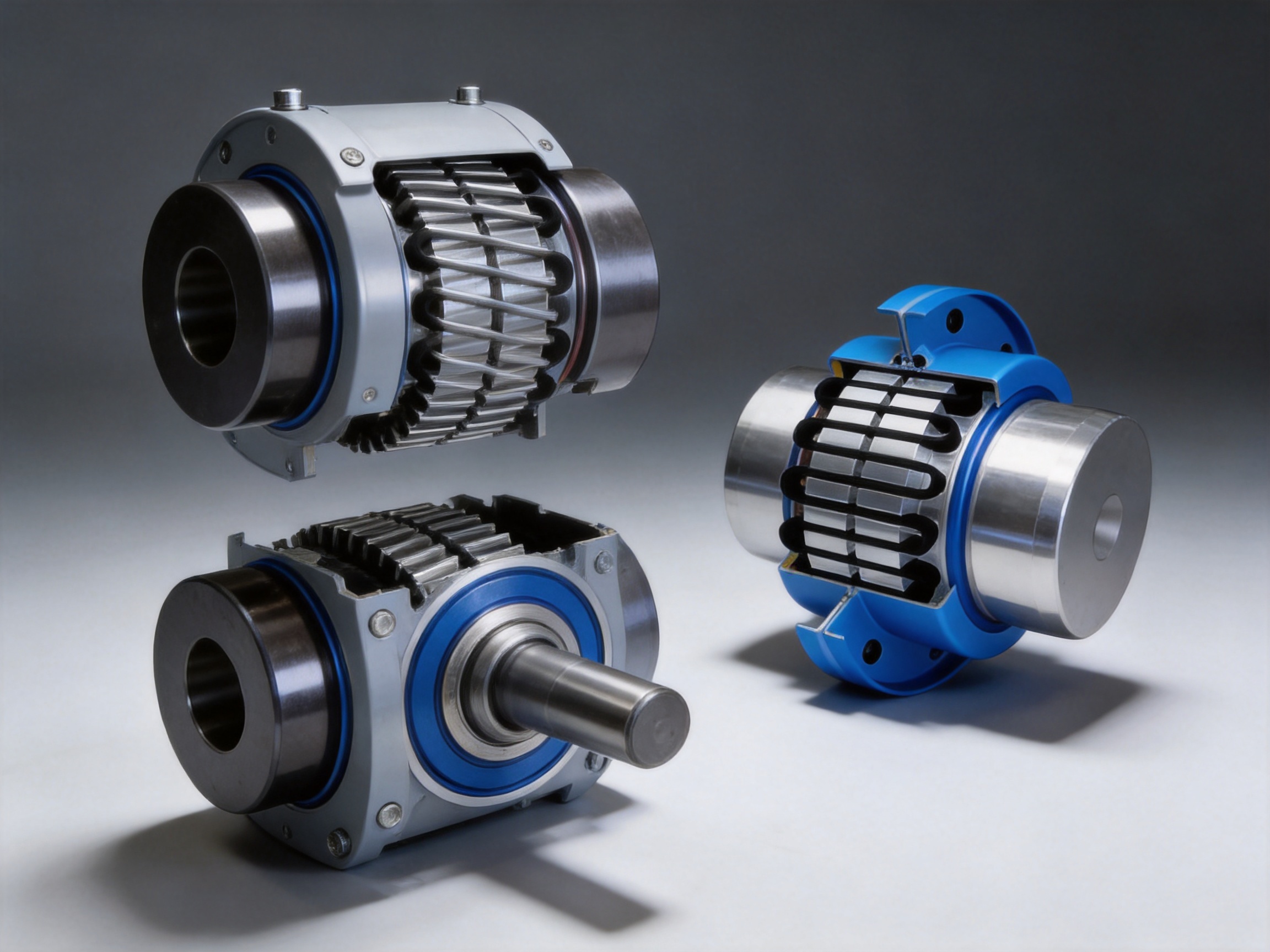
Comparison with Other Coupling Technologies
Choosing a coupling requires an understanding of the operating priorities of the complete machine. No single coupling design is ideal for every application. The T20 is competitive because it combines several features that are often separated among different coupling categories.
| Coupling type | Main elastic or transmitting element | Typical strengths | Common considerations |
|---|---|---|---|
| T20 snake spring coupling | Metal snake-shaped spring | High torque capacity, damping, misalignment compensation, temperature resistance, serviceable spring element | Requires correct lubrication, alignment, guarding, and spring inspection |
| Rigid flange coupling | Rigid bolted or fitted connection | Simple construction, precise torque transmission, no elastic deformation | Does not compensate for misalignment and may transfer shocks to connected equipment |
| Elastomeric jaw coupling | Non-metallic spider element | Compact design, simple maintenance, no routine lubrication in many designs | Elastomer may be affected by temperature, chemicals, aging, and material fatigue |
| Diaphragm coupling | Metal diaphragms | High-speed operation, low backlash, no lubrication in many configurations | May have limited damping and can require precise installation and specialized design verification |
| Tire coupling | Flexible rubber or polymer tire | Strong vibration isolation and generous misalignment compensation | Large radial dimensions and possible sensitivity to temperature, oil, and aging |
| Gear coupling | Toothed metallic sleeves and hubs | High torque density and substantial misalignment capability | Usually requires lubrication and may transmit more torsional vibration than a spring-based design |
Advantages over Rigid Couplings
A rigid coupling can be appropriate when shafts are precisely aligned, supported by a stable structure, and not exposed to meaningful movement. However, real industrial machinery frequently experiences thermal growth, foundation movement, or bearing displacement. A rigid coupling can transfer these movements directly into the shaft system.
The T20 offers a more forgiving connection. Its spring permits controlled relative movement and helps reduce the stress caused by unavoidable alignment changes. This can be particularly beneficial when the driver and driven equipment are mounted on separate baseplates or when operating temperature changes significantly.
Advantages over Non-Metallic Elastic Couplings
Non-metallic elastic couplings are popular because they are often compact and easy to maintain. Nevertheless, their elastomeric components can be sensitive to temperature, ultraviolet exposure, oil, solvents, ozone, and aging. The elastic element may also harden, crack, soften, or lose its damping properties over time.
The T20 replaces the non-metallic elastic element with a metal spring. This can improve resistance to heat and certain industrial contaminants. It also provides a stable load-transmitting component for applications where a polymer element may have a shorter useful life.
The selection should be based on the actual operating environment. A non-metallic coupling may remain the best choice when maximum elastomeric damping, low cost, or lubricant-free operation is the primary requirement. The T20 becomes particularly attractive when durability, high-speed capability, and metal-element stability are more important.
Advantages over Some Gear Couplings
Gear couplings are well known for high torque density and misalignment capacity. However, their toothed sliding interfaces generally require reliable lubrication and regular attention to prevent wear. They may also transfer torsional fluctuations differently from a spring coupling.
The T20 uses a spring-based flexible element that provides an additional degree of compliance and damping. In applications with pulsating torque or a need to moderate shock transmission, this behavior may provide an advantage. The final choice depends on speed, torque, misalignment, space, lubrication practices, and the dynamic characteristics of the machine.
Advantages over Some Diaphragm Couplings
Diaphragm couplings are highly valued in certain high-speed, low-backlash applications. They can be excellent where torsional stiffness, precise angular positioning, and low-maintenance operation are required. However, they may provide less inherent damping than a spring-based coupling and can require careful evaluation of axial movement and installation conditions.
The T20 is a strong alternative when the equipment benefits from elastic damping, shock absorption, and a replaceable spring element. Its design is directed toward practical industrial power transmission, where durability and maintainability are as important as high rotational capability.
Manufacturing Quality and Engineering Strengths
The performance of a snake spring coupling depends heavily on manufacturing accuracy. Even a sound design can underperform if the spring geometry is inconsistent, the hubs are poorly machined, the cover is inadequately sealed, or the finished assembly is not inspected correctly.
Zhongye Heavy Industry Technology integrates research and development, manufacturing, and sales. Its product range covers multiple coupling families, including toothed couplings, elastic sleeve pin couplings, elastic pin couplings, universal couplings, tire couplings, jaw couplings, star couplings, diaphragm couplings, drum couplings, grid couplings, Oldham couplings, flange couplings, clip-shell couplings, roller chain couplings, safety couplings, and customized non-standard couplings.
This broad product experience is valuable for T20 development because coupling selection often involves comparing several technologies within the same transmission system. An integrated manufacturer can evaluate the complete application rather than treating one coupling type as a universal solution.
Engineering and Product Development
Engineering begins with understanding the machine duty. Important inputs include rated power, peak torque, operating speed, startup conditions, duty cycle, shaft dimensions, misalignment, ambient temperature, space limitations, braking loads, reversing operation, and the presence of shock or pulsating loads.
These parameters influence the spring size, hub geometry, cover arrangement, bore configuration, material selection, and balancing requirements. A professional manufacturer can also review the shaft connection, keyway, spacer arrangement, guard dimensions, and maintenance access before finalizing the design.
For non-standard equipment, customization may include special bore sizes, different hub lengths, spacer configurations, corrosion-resistant materials, modified covers, tailored mounting arrangements, or adjustments for unusual shaft separation. Such solutions should be engineered rather than improvised because changes to spring geometry, hub tooth form, or cover balance can affect performance.
Material Selection and Heat Treatment
The spring must combine elastic flexibility with fatigue resistance. Material selection should consider tensile strength, yield strength, toughness, wear resistance, corrosion behavior, and temperature stability. Manufacturing processes may include controlled forming, heat treatment, surface finishing, and dimensional verification.
The hubs require a material and hardness suitable for repeated contact with the spring. The teeth must resist wear and maintain their geometry during continuous operation. Heat treatment can improve strength and surface durability, while precision machining supports accurate shaft fits and balanced rotation.
Material traceability is also important for industrial customers. Records of material batches, heat treatment, inspection results, and production processes help support consistent quality and facilitate analysis if a field issue occurs.
Precision Machining
Computer-controlled machining equipment can produce consistent bores, keyways, hub faces, tooth profiles, and mounting features. Dimensional accuracy affects the way torque is distributed and the way the assembly rotates. Concentricity and runout are particularly important in high-speed applications.
Machined surfaces should be inspected with appropriate gauges and measuring equipment. Depending on the coupling design and customer requirements, inspection may include bore diameter, keyway dimensions, tooth spacing, hub runout, face alignment, cover dimensions, and component interchangeability.
Spring Forming and Assembly
Spring forming must produce a repeatable snake profile. Variations in pitch, height, curvature, or cross-section can alter the contact pattern and affect torque distribution. Controlled forming processes help ensure that springs from different production batches maintain consistent performance.
During assembly, the spring must be correctly positioned between the hub teeth. Lubricant must be applied according to the specified quantity and grade. The cover must be properly fitted and sealed, and fasteners must be tightened evenly. Assembly checks should confirm that the coupling rotates smoothly and that no component interferes with another.
Balancing and Dynamic Inspection
High-speed coupling assemblies may require balancing or dynamic verification. Unbalanced components can create centrifugal forces that increase vibration and bearing loads. The balancing requirement depends on coupling size, speed, operating environment, and the dynamic sensitivity of the connected machine.
Quality control may include visual inspection, dimensional inspection, hardness testing, runout measurement, balance testing, and functional checks. For specialized orders, customers may request additional documentation, inspection plans, material certificates, or test records.
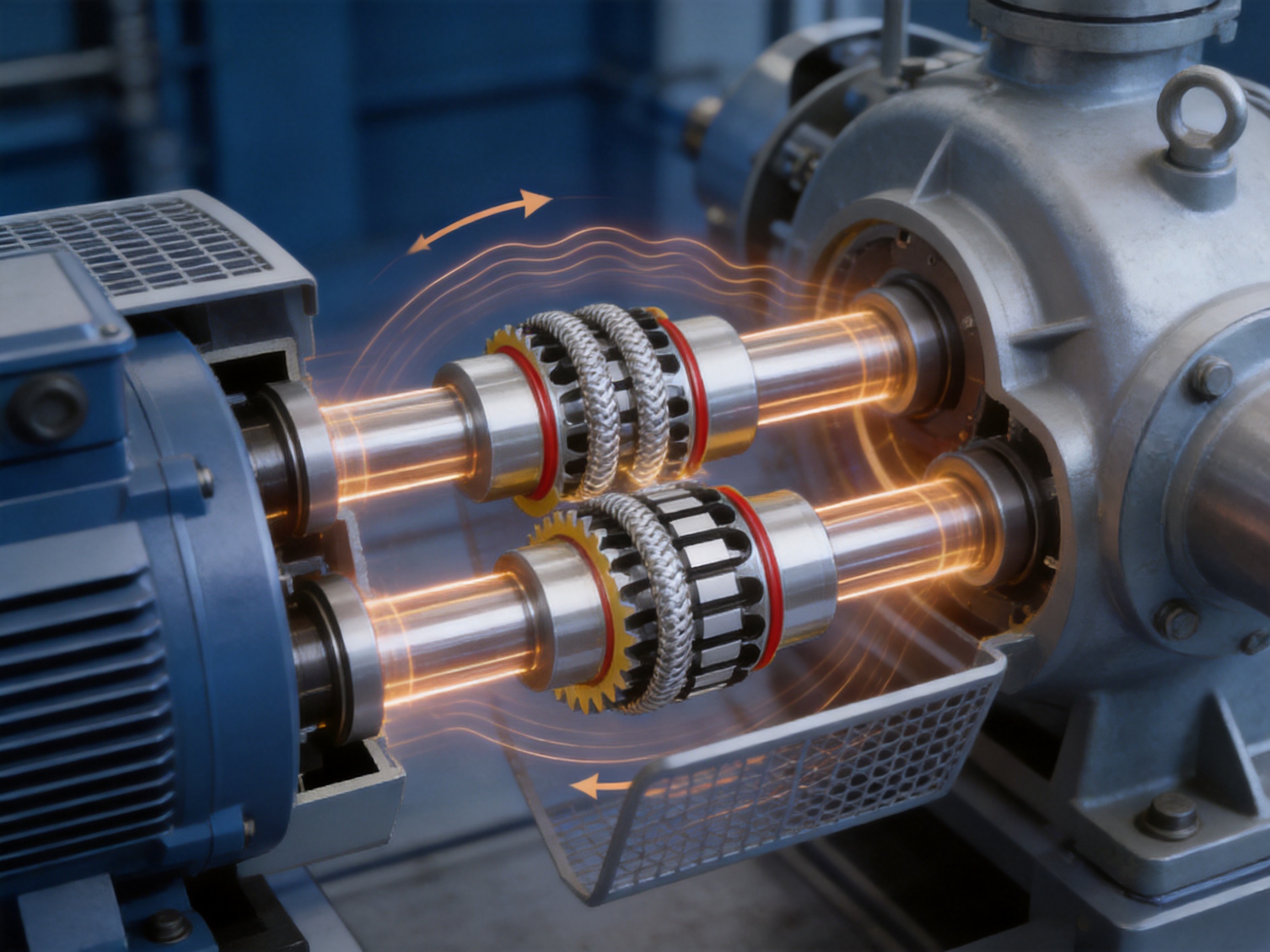
Application Areas
Pumps
Pumps often operate continuously and may be connected to motors, turbines, or gearboxes. Shaft alignment can change because of thermal expansion, pipe loads, foundation movement, or maintenance work. The T20 can help accommodate these conditions while transmitting torque and reducing the transfer of vibration.
It is suitable for water equipment, industrial process pumps, cooling systems, chemical transfer equipment, and other pump installations where the operating temperature, fluid environment, and speed are compatible with the coupling specification.
Compressors and Blowers
Compressors can produce pulsating torque, especially during changing load conditions. High-speed compressor trains also place significant demands on balance, spring fatigue resistance, lubrication, and alignment. The T20 provides a flexible mechanical connection that can moderate torsional disturbances and support stable operation.
For compressor applications, the user should verify critical speed considerations, torsional vibration behavior, startup torque, overspeed conditions, and enclosure requirements before selecting the final coupling size.
Metallurgical Equipment
Steel and metallurgical machinery may operate in environments with high heat, dust, shock loads, and frequent load changes. Couplings used in these systems must withstand demanding mechanical and environmental conditions. The T20's metallic spring and protective cover make it a practical option for selected drive systems in rolling mills, processing lines, and related equipment.
Mining Equipment
Mining machinery is exposed to heavy loads, vibration, dust, impact, and uneven operating conditions. Flexible couplings can reduce the effect of misalignment and torque shocks between motors, gearboxes, conveyors, crushers, and auxiliary equipment.
When used in mining systems, the coupling should be protected by an appropriate guard and selected with consideration for abrasive contamination, maintenance access, shaft movement, and the possibility of overload or blockage.
Marine Propulsion and Auxiliary Drives
Marine systems may experience limited installation space, changing loads, vibration, and movement caused by the vessel structure. A flexible metal-element coupling can support reliable power transmission between engines, gearboxes, pumps, generators, and auxiliary machinery.
Marine applications may require special corrosion protection, sealing arrangements, balancing standards, classification documentation, or approval by a relevant authority. These requirements should be identified during the inquiry stage.
Lifting and Port Equipment
Cranes, hoists, winches, ship loaders, and other port machinery may undergo frequent starts, stops, reversals, and shock loads. The T20 can provide controlled flexibility between the drive and driven equipment, helping to reduce sudden torque transfer and accommodate alignment changes caused by structural movement.
Paper and Processing Equipment
Paper machinery and continuous processing lines often operate for long periods at controlled speed. A reliable coupling can help reduce vibration and protect bearings and gearboxes from excessive shaft loads. The T20 can be considered for drive sections where temperature, speed, torque, and lubrication conditions are suitable.
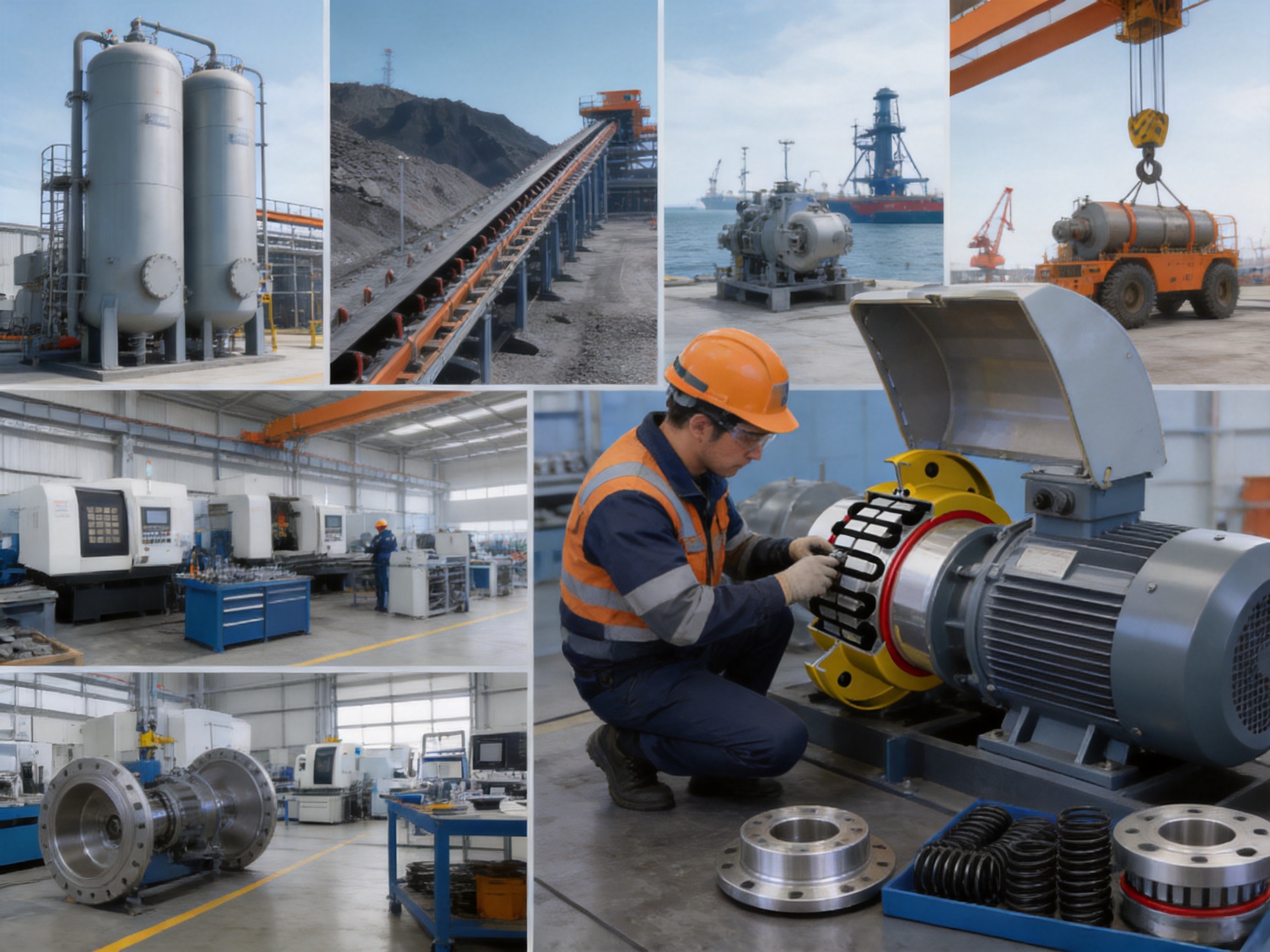
Selection Guidelines for Engineers and Buyers
Correct selection is essential to achieving the expected service life. The coupling should not be selected solely by shaft diameter or nominal motor power. A complete evaluation should consider all operating conditions.
Determine the Required Torque
Start with the transmitted power and rotational speed. The relationship between power, speed, and torque provides the basis for preliminary sizing. The selection must also consider service factors for starting, stopping, reversing, cyclic loading, impact, and driven-machine characteristics.
Peak torque may be substantially higher than the normal running torque. A conveyor that starts under load, a compressor with pulsating torque, or a crusher exposed to blockage can impose transient loads that exceed the rated operating condition. The coupling should be selected to withstand the most severe credible duty rather than only the average power.
Check Operating Speed
The maximum operating speed must remain within the coupling's permissible speed range. High-speed systems require attention to balance, cover construction, spring condition, shaft arrangement, and the possibility of resonance or critical-speed interaction.
Where the machine passes through critical speeds during startup or shutdown, the complete rotating assembly should be evaluated. The coupling cannot be assessed independently from the motor, gearbox, shafts, bearings, and driven equipment.
Measure Shaft and Installation Dimensions
Important dimensions include shaft diameters, keyway sizes, shaft extensions, distance between shaft ends, coupling outside diameter, overall length, and available radial clearance. The selected coupling must fit within the guard and machine envelope while allowing sufficient space for assembly and maintenance.
Customers should provide accurate shaft drawings or dimensional data. Errors in bore or keyway information can cause delays, poor fits, or unsafe operation.
Evaluate Misalignment
Estimate the expected angular, parallel, and axial misalignment during both installation and operation. Thermal growth and structural movement should be included. The T20 should be operated within its allowable misalignment values because excessive movement can increase spring fatigue and hub wear.
Flexible couplings are not intended to compensate for careless alignment. Good initial alignment reduces operating stress and extends the life of the coupling and connected machinery.
Review Environmental Conditions
Specify ambient temperature, lubricant temperature, moisture, dust, oil, chemicals, corrosive gases, outdoor exposure, and washdown conditions. If the equipment is installed in a hazardous area, applicable explosion protection requirements must be addressed.
The cover, seals, spring material, lubricant, and surface treatment may need to be adapted to the environment. A detailed technical review is recommended for unusual or severe service.
Consider Maintenance Strategy
Determine whether the coupling can be inspected without moving the motor or driven machine. Consider the required lubrication interval, availability of replacement springs, planned shutdown schedules, and the skills of local maintenance personnel.
The T20 can support a practical maintenance strategy because the spring element can be inspected and, where appropriate, replaced separately from reusable coupling components. This should be confirmed for the specific installation and coupling configuration.
Installation and Commissioning Practices
Before installation, inspect the shafts, keyways, coupling hubs, spring, cover, fasteners, and seals. Remove dirt, burrs, paint buildup, and corrosion from the fitting surfaces. Confirm that the supplied parts match the approved drawing and purchase specification.
Check shaft diameter and key dimensions with calibrated measuring tools. The hubs should fit correctly without excessive looseness or forced assembly that could damage the components. If an interference fit is specified, the correct heating and mounting procedure should be used. Direct impact on the hubs should be avoided.
Align the shafts using suitable dial indicators, laser alignment equipment, or another approved method. Check both angular and parallel alignment. If the machine operates at a significantly different temperature from the alignment condition, thermal growth should be considered during setup.
Install the spring carefully between the hub teeth. Apply the specified lubricant uniformly and in the correct quantity. Excess lubricant may cause leakage or churning, while insufficient lubricant can increase wear and temperature.
Fit the cover and seals, then tighten all fasteners evenly. Verify that the cover is secure and that the assembly rotates freely by hand where practical. Install a suitable guard before commissioning. The guard must prevent contact with rotating parts while allowing appropriate ventilation and inspection access.
During the initial run, observe vibration, noise, temperature, leakage, and machine behavior. Start at low load when possible and gradually increase to normal operating conditions. Any unusual noise, rapid temperature rise, visible movement, or abnormal vibration should be investigated immediately.
Maintenance and Service Recommendations
A preventive maintenance program can greatly improve coupling reliability. Inspection frequency should be based on speed, load, operating environment, duty cycle, and the consequences of failure.
Routine Visual Inspection
Inspect the cover for cracks, deformation, corrosion, loose fasteners, and lubricant leakage. Check for signs of contact between the cover and surrounding guards. Look for discoloration that may indicate overheating.
Spring and Hub Inspection
When the coupling is opened according to the approved maintenance procedure, inspect the spring for worn contact areas, cracks, permanent deformation, corrosion, or unusual polishing. Inspect the hub teeth for pitting, deformation, excessive wear, or damaged edges.
Wear patterns can provide useful information about alignment and loading. Uneven wear may indicate excessive angular or parallel misalignment. Localized damage may suggest shock loading, incorrect assembly, insufficient lubrication, or an operating condition beyond the original selection basis.
Lubrication
Use only the recommended lubricant and maintain the correct quantity. Mixing incompatible lubricants can reduce performance or damage seals. Lubrication intervals should be shortened in high-speed, high-temperature, dusty, or heavily loaded service if inspection indicates accelerated degradation.
Vibration Monitoring
Changes in vibration can provide early warning of coupling or machine problems. A gradual increase may indicate spring wear, misalignment, imbalance, loose fasteners, bearing deterioration, or changes in the driven machine. Vibration trends are generally more useful than a single isolated reading.
Replacement of Worn Components
Replace the spring if it shows cracking, unacceptable wear, permanent deformation, or loss of elastic performance. Damaged hubs, seals, fasteners, and covers should also be replaced as required. Reusing a worn spring or damaged tooth profile can lead to rapid failure after reassembly.
Customization and Non-Standard Solutions
Industrial equipment frequently includes shaft dimensions, space limitations, or operating conditions that do not match a standard catalog configuration. Custom coupling engineering can address these requirements while preserving the operating principles of the T20 design.
Possible customization areas include special bore diameters, keyways, shaft extensions, hub lengths, spacer lengths, cover dimensions, mounting arrangements, corrosion-resistant materials, surface treatments, and application-specific balancing requirements.
Customization may also be required for systems with unusual axial movement, high ambient temperature, frequent reversing, severe shock loads, or special maintenance constraints. The manufacturer can review the complete application and recommend a suitable configuration rather than modifying a standard component without engineering validation.
For a technical quotation, customers should provide the following information:
• Motor or driver power.
• Normal and peak rotational speed.
• Continuous and peak torque.
• Driver and driven machine types.
• Shaft diameters and keyway details.
• Distance between shaft ends.
• Expected angular, parallel, and axial misalignment.
• Ambient and operating temperatures.
• Lubrication and environmental conditions.
• Startup, stopping, reversing, and shock-load information.
• Required standards, inspection documents, or certifications.
Complete information improves selection accuracy, shortens technical communication, and reduces the risk of supplying an unsuitable configuration.
Manufacturing Infrastructure and Customer Support
Zhongye Heavy Industry Technology operates an integrated manufacturing facility with research and development, production, testing, warehousing, and technical support capabilities. Its new workshop covers approximately 16,463.52 square meters, including heavy workshop space, precision workshop space, offices, a warehouse, dining facilities, roads, and landscaped areas.
The combination of heavy and precision production areas supports the manufacture of coupling components with different sizes, weights, and accuracy requirements. Heavy machining is important for large hubs and industrial components, while precision workshop capabilities support smaller or higher-accuracy parts, inspection, and assembly.
The company serves industries including metallurgy, mining, water equipment, lifting equipment, paper machinery, port equipment, and other industrial fields. This application experience provides practical knowledge of different load patterns, environmental conditions, maintenance practices, and equipment configurations.
Its stated strengths include research and development capability, manufacturing capacity, testing facilities, quality control, complete product specifications, customization support, technical consultation, non-standard design, and after-sales service. These capabilities are important when a coupling must be integrated into a complete power transmission system rather than purchased as an isolated component.
Quality management based on international practices, including ISO 9001-related systems, supports process control and continuous improvement. Customers requiring project documentation should confirm the exact certification, inspection, and documentation requirements during the order process.
Safety Considerations
A rotating coupling is a potentially hazardous machine component. The T20 must always be installed with a suitable guard that complies with applicable workplace safety requirements. Personnel should never approach or touch the coupling while it is rotating.
Before maintenance, isolate the energy source, lock out and tag out the equipment, verify zero energy, and prevent unexpected startup. The coupling, shafts, and nearby components may remain hot after shutdown, so sufficient cooling time should be allowed.
Never operate the coupling without its protective cover unless a controlled test procedure specifically permits it and all relevant safeguards are in place. Do not exceed the specified speed, torque, temperature, or misalignment limits. Do not replace the spring with an unapproved substitute because spring geometry and material properties directly affect performance.
After maintenance, confirm that all tools, loose parts, and temporary fixtures have been removed. Check fastener tightening, lubrication, alignment, guard installation, and the free rotation of the assembly before returning the machine to service.
Q&A: T20 High-Speed Snake Spring Coupling
What is a snake spring coupling?
A snake spring coupling is a flexible shaft coupling that uses a serpentine metallic spring positioned between the teeth of two hubs. The spring transmits torque while flexing to accommodate certain shaft misalignment and reduce torsional shock transmission.
What category does the T20 belong to?
The T20 belongs to the category of flexible couplings with metal elastic elements. It is designed for applications requiring a combination of torque transmission, flexibility, damping, and resistance to demanding industrial conditions.
Can the T20 compensate for parallel and angular misalignment?
Yes. The coupling is designed to compensate for angular, parallel, and axial misalignment within its specified limits. Proper initial shaft alignment remains essential because excessive misalignment can accelerate spring and hub wear.
Is the T20 suitable for high-speed machinery?
The T20 is developed for high-speed power transmission applications, but the permitted speed depends on the coupling size, configuration, balance grade, installation, torque, and machine dynamics. The exact operating speed should be confirmed during technical selection.
Does the T20 require lubrication?
The snake spring and hub tooth interfaces generally require suitable lubrication. The lubricant type, quantity, and maintenance interval must follow the applicable technical instructions and operating conditions.
How does the T20 compare with an elastomeric coupling?
The T20 uses a metal spring rather than a rubber or polymer element. This can provide greater resistance to heat, aging, and certain industrial contaminants, while still offering flexibility and damping. An elastomeric coupling may be preferable where lubricant-free operation, maximum soft damping, or a very compact design is the primary objective.
How does the T20 compare with a rigid flange coupling?
A rigid flange coupling does not compensate for misalignment and generally transfers shock and movement directly through the shaft line. The T20 provides controlled flexibility and can reduce the mechanical effects of alignment errors and torque fluctuations.
Can the spring element be replaced?
In suitable maintenance arrangements, the spring element can be inspected and replaced while reusable components are retained. The replacement procedure must follow the approved design and should include inspection of the hubs, cover, seals, lubricant, and fasteners.
What information is needed to select a T20 coupling?
Selection normally requires power, speed, continuous and peak torque, shaft dimensions, shaft separation, misalignment, duty cycle, temperature, environmental conditions, startup characteristics, and installation-space information.
Can the coupling be customized?
Yes. Non-standard configurations may be developed for special bores, keyways, hub dimensions, spacers, covers, materials, surface treatments, balancing requirements, and unusual operating conditions. Customization should be reviewed and approved by the manufacturer before production.
What industries can use this coupling?
Potential industries include pumps, compressors, metallurgy, mining, water equipment, lifting machinery, port equipment, paper machinery, marine auxiliary systems, and other industrial power transmission applications. Final suitability depends on the actual operating parameters.
What are the main causes of premature coupling failure?
Common causes include incorrect selection, excessive torque, overspeed, poor alignment, inadequate lubrication, contaminated lubricant, loose fasteners, damaged seals, excessive shock loading, corrosion, and operation outside the specified misalignment limits.
Does the coupling require a guard?
Yes. A suitable guard should be installed to protect personnel from rotating components and to help prevent accidental contact with the spring, hubs, cover, and shafts.
Conclusion
The T20 high-speed snake spring coupling is a practical metal elastic solution for demanding shaft connection duties. Its snake-shaped spring combines positive torque transmission with controlled flexibility, allowing the coupling to compensate for realistic shaft misalignment and reduce the transfer of vibration and shock loads.
Compared with rigid couplings, it offers greater tolerance for movement and installation variation. Compared with many non-metallic elastic couplings, its metallic spring provides improved resistance to heat, aging, and selected industrial contaminants. Compared with certain gear or diaphragm coupling arrangements, it offers a useful balance of damping, serviceability, and robust industrial operation.
Its performance depends on more than the coupling design alone. Accurate selection, precision manufacturing, correct lubrication, careful alignment, appropriate guarding, and preventive maintenance are all necessary. The manufacturing strengths of Zhongye Heavy Industry Technology, including integrated research and development, precision production, inspection, customization, and technical support, provide a solid foundation for supplying T20 couplings to varied industrial applications.
For users seeking a durable, flexible, and high-performance transmission connection, the T20 offers a strong option for modern rotating machinery. A detailed application review should be completed before ordering so that the coupling size, bore arrangement, spring specification, cover design, material, lubrication, and balancing requirements match the complete mechanical system.
References
1. ISO 9001, Quality Management Systems: Requirements.
2. ISO 10825, Gear Couplings: Rating for Transmitted Power and Torque.
3. ISO 21940, Mechanical Vibration: Rotor Balancing and Balance Quality Requirements.
4. ANSI/AGMA 9000, Flexible Couplings: Nomenclature for Flexible Couplings.
5. American Gear Manufacturers Association, Flexible Coupling Selection and Application Practices.
6. Machinery vibration monitoring and shaft alignment principles used in industrial rotating equipment maintenance.
7. Manufacturer technical information for T20 high-speed snake spring coupling design, selection, installation, lubrication, and maintenance.
Product: T20 high speed snake spring coupling
- Quick Links
- About
- Products
- Our Service
- News & Events
- Contact
- Products Series
- Flexible Couplings with Non-Elastic Elements
- Flexible Couplings with Metal Elastic Elements
- Flexible Couplings with Non-Metallic Elastic Elements
- Safety Coupling
- Rigid Coupling
- Contact Us
- Tel : +86 511 8572 3800 +86 511 8572 3900
- Mobile : +86 15106109009
- Email : sales@couplingzy.com
- Add:No.1 Zhongye Yingbin Avenue, Gaozi Street, Dantu Economic Development Zone, Zhenjiang City, Jiangsu Province, China.


