:+86 15106109009
:sales@couplingzy.com


 English
 русский
 Español
 عربى
 Português
 Deutsch
 Türk
 Indonesia


T10 Snake Spring Coupling: Flexible Metal-Element Power Transmission for Demanding Machinery
Content
- 1 1. Understanding the T10 Snake Spring Coupling
- 2 2. The Operating Principle of Metal Elastic Flexibility
- 3 3. Main Performance Advantages
- 4 4. Comparison with Other Coupling Categories
- 5 5. Application Areas
- 6 6. Manufacturing Quality and Engineering Approach
- 7 7. Customization and Non-Standard Engineering
- 8 8. Selection Considerations
- 9 9. Installation Recommendations
- 10 10. Maintenance and Service Life
- 11 11. Company Manufacturing and Service Strengths
- 12 12. Quality Management and International Supply
- 13 13. Why the T10 Is a Practical Competitive Choice
- 14 14. Frequently Asked Questions
- 14.1 14.1 What type of coupling is the T10?
- 14.2 14.2 What is the main advantage of a snake spring structure?
- 14.3 14.3 Is the T10 suitable for heavy machinery?
- 14.4 14.4 Can the T10 compensate for misalignment?
- 14.5 14.5 How does the T10 compare with a rigid coupling?
- 14.6 14.6 How does it compare with a non-metallic elastic coupling?
- 14.7 14.7 Can a customized T10 configuration be supplied?
- 14.8 14.8 What information is required for selection?
- 14.9 14.9 What industries can use the T10?
- 14.10 14.10 Does the T10 require maintenance?
- 14.11 14.11 Can the T10 eliminate all vibration?
- 14.12 14.12 Why should the manufacturer be involved in product selection?
- 15 15. Conclusion
- 16 References
- 17 Product: T10 snake spring coupling
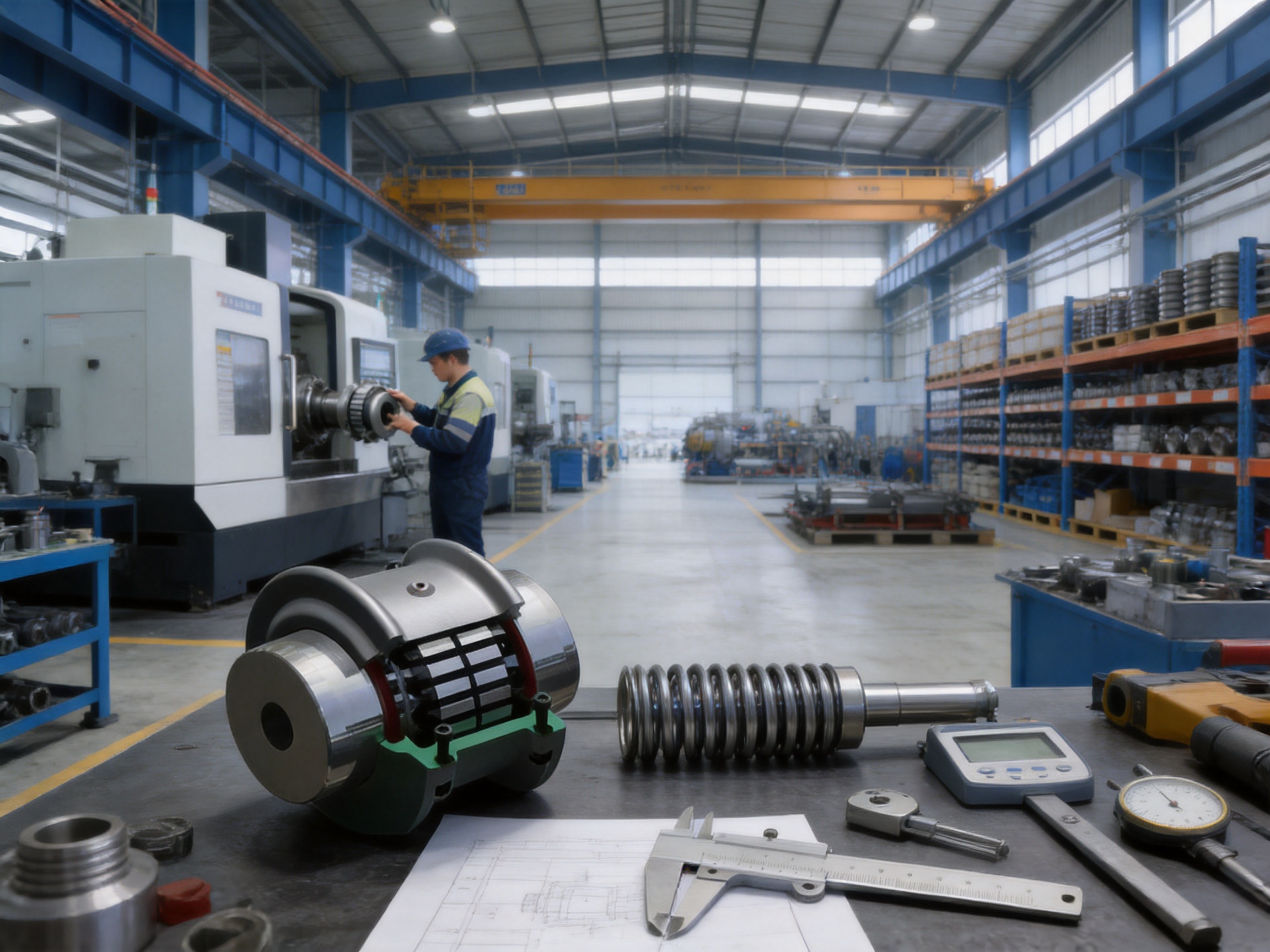
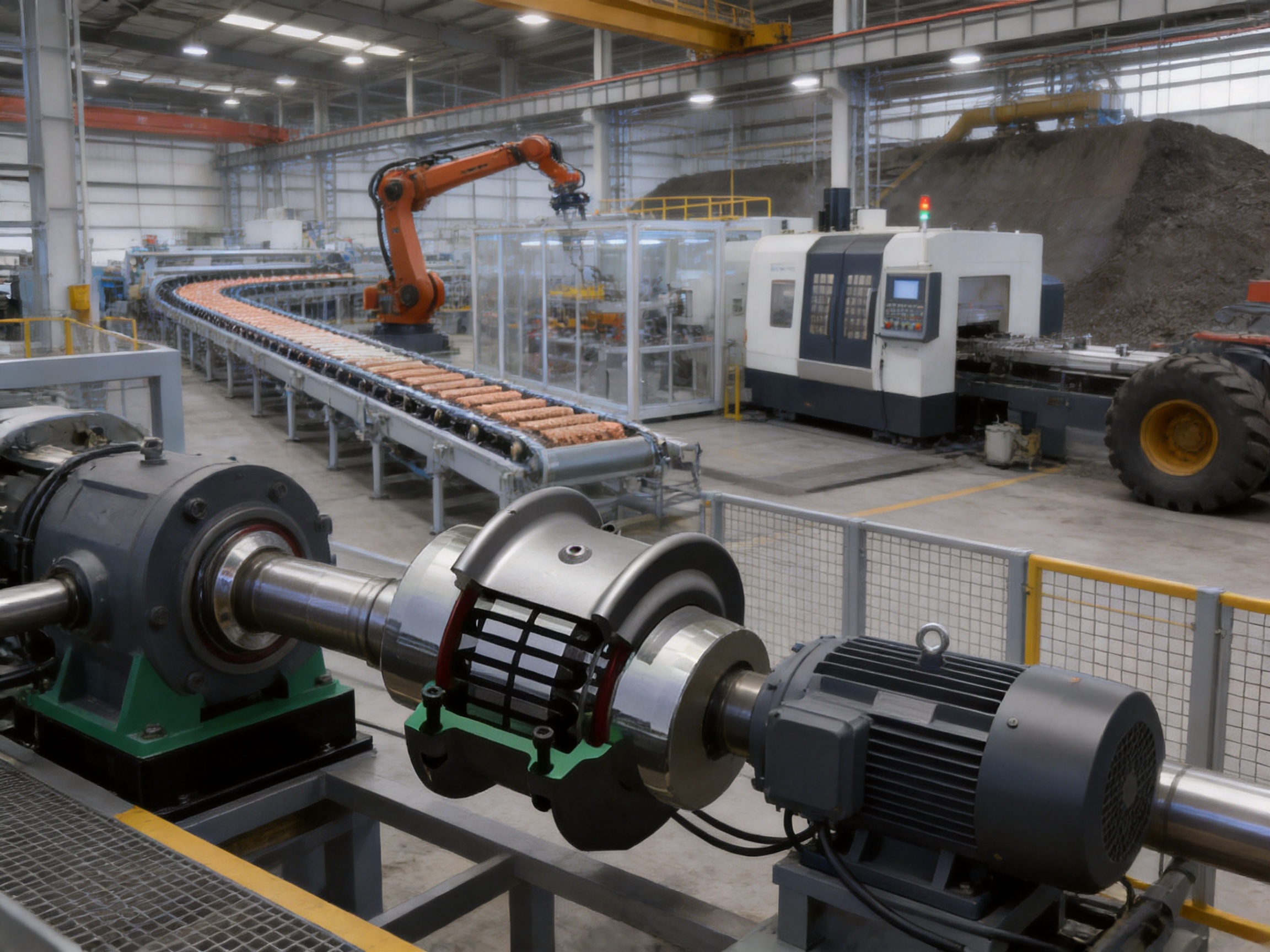
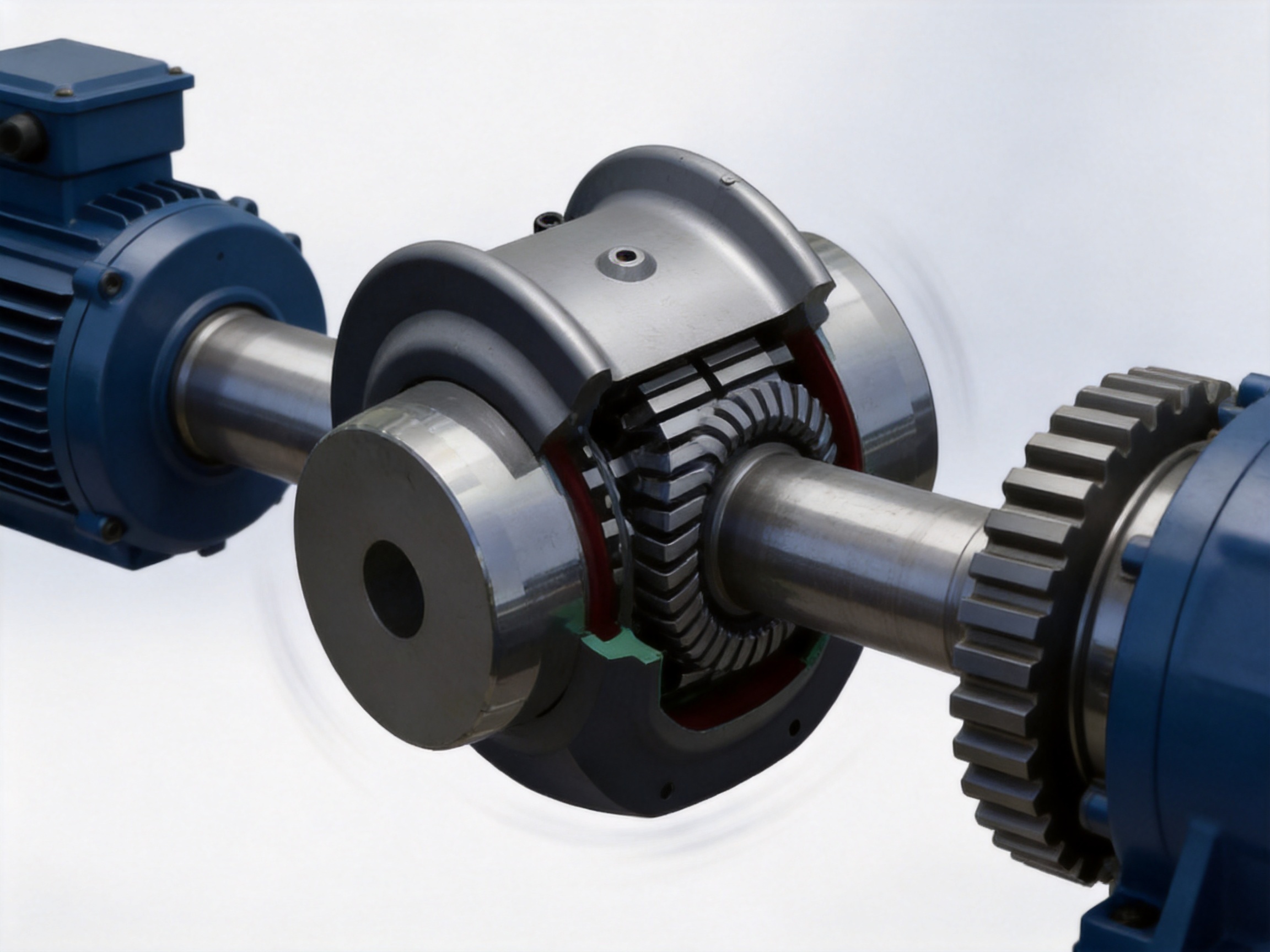
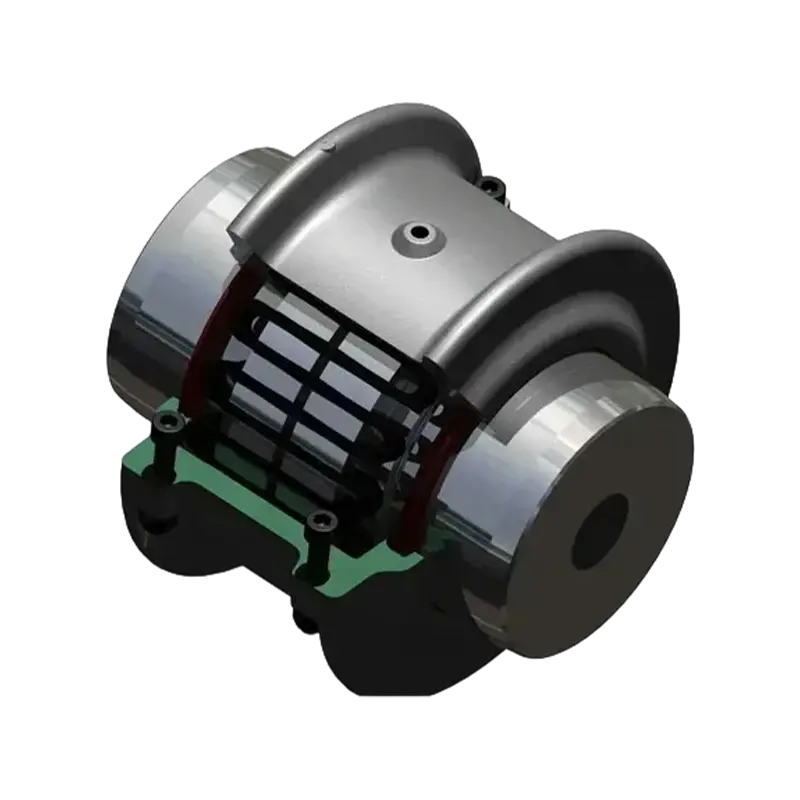
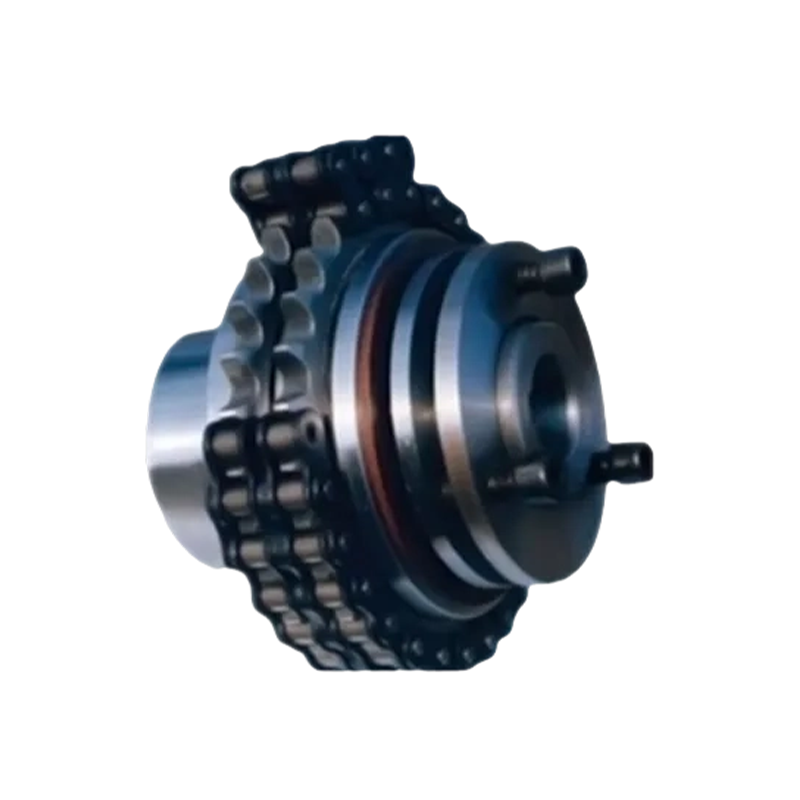
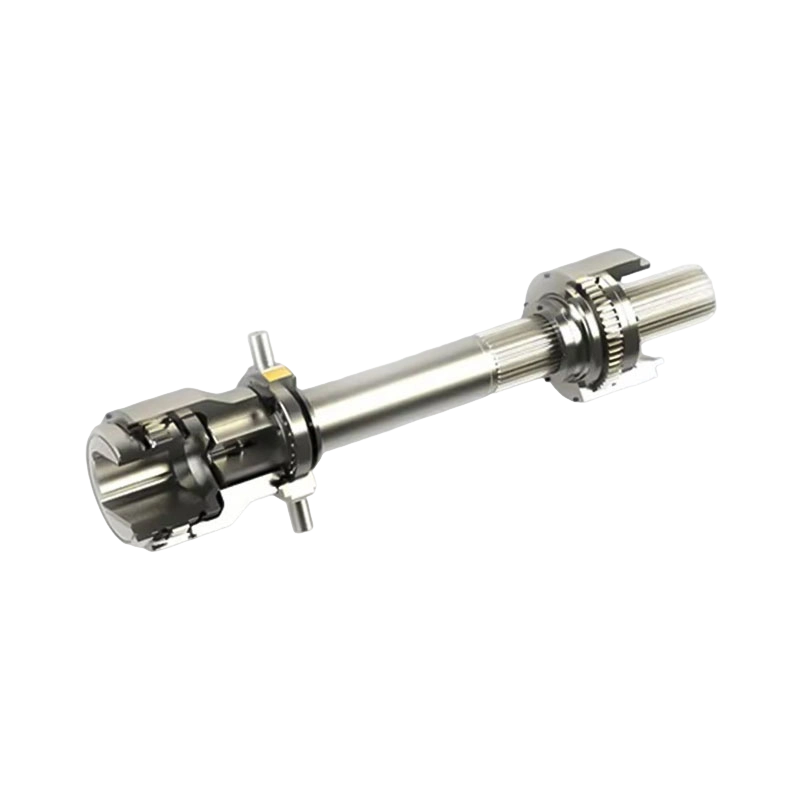
T10 snake spring coupling
Modern industrial equipment requires power transmission components that can transfer torque accurately while accommodating the unavoidable movement and variation found in real machines. Shafts rarely remain perfectly aligned during operation. Thermal expansion, installation tolerances, foundation movement, bearing wear, vibration, shock loading, and fluctuating torque can all affect the connection between a motor and a driven machine. A coupling must therefore perform more than a simple joining function. It must transmit power, protect connected equipment, compensate for selected misalignment conditions, and maintain dependable operation over an extended service life.
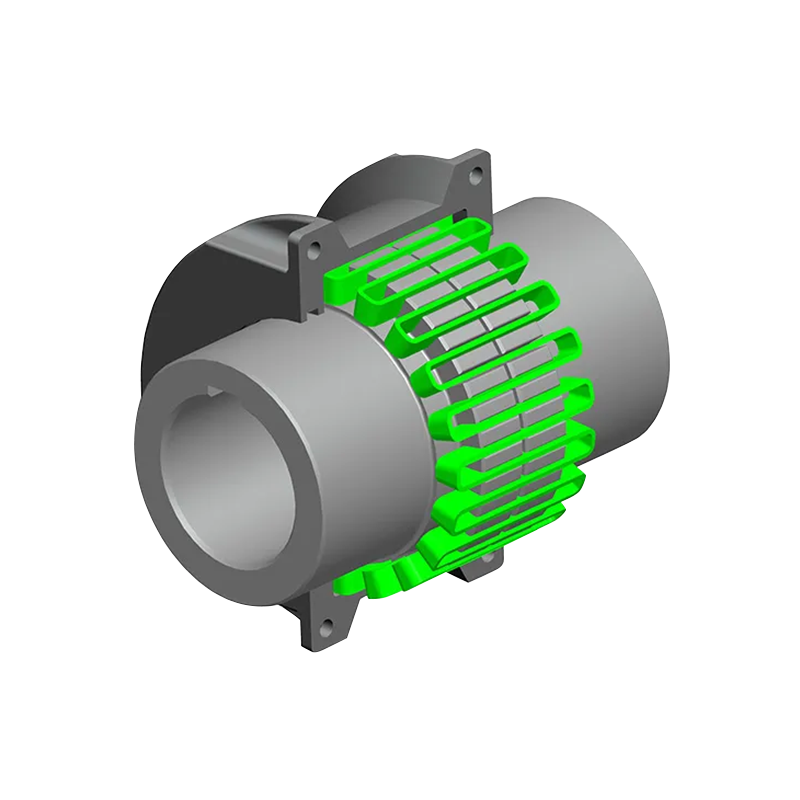
The T10 snake spring coupling is a flexible coupling with a metal elastic element designed for these demanding requirements. Its distinctive snake spring structure provides torsional flexibility while preserving reliable torque transmission. The coupling is intended for industrial automation, heavy machinery, conveyors, robots, precision manufacturing equipment, and other applications in which mechanical impacts, vibration, and changing loads may influence equipment performance.
Unlike a rigid coupling, the T10 does not depend on perfectly aligned shafts to operate effectively. Unlike many couplings that rely on a soft non-metallic element, it uses a high-strength metal spring element to combine flexibility with durability and resistance to demanding operating conditions. This design gives the coupling a balanced performance profile: it can absorb torsional shock, help suppress vibration, compensate for centering deviation, and transfer power with a high degree of operational stability.
1. Understanding the T10 Snake Spring Coupling
The T10 snake spring coupling consists of two hubs and a specially formed snake spring element housed within a protective coupling assembly. The hubs connect to the driving and driven shafts, while the spring element transmits torque between them. When torque is applied, the spring deforms in a controlled manner. This elastic action allows the coupling to accommodate certain dynamic changes instead of passing every impact directly into the shafts, bearings, gearbox, or driven machine.
The spring element is the central working component of the design. Its geometry creates a flexible mechanical connection that can respond to torque variations and transient loads. During normal operation, it transfers torque between the hubs. During acceleration, deceleration, sudden load changes, or other disturbances, it provides an elastic buffer. This buffering function helps reduce the severity of shock transmission and contributes to smoother power transfer.
The term “snake spring” refers to the characteristic serpentine form of the metal spring. The spring is installed so that it engages with the coupling hubs and distributes the transmitted load through its shaped profile. The result is a compact coupling arrangement with a flexible metal element rather than a solid or fully rigid connection.
Because the T10 uses a metal elastic element, it belongs to a different performance category from couplings based primarily on rubber, polyurethane, or other non-metallic materials. Metal spring construction can be especially valuable where the application demands mechanical strength, dependable response under repeated load changes, and resistance to the limitations that may affect softer elements.
2. The Operating Principle of Metal Elastic Flexibility
A coupling must transfer torque without creating excessive stress in the connected equipment. In a rigid connection, torque fluctuations pass directly from one shaft to the other. This can be acceptable in carefully aligned systems with stable loads, but it can also increase the risk of vibration, impact, and premature wear when the machine experiences transient conditions.
The T10 changes this behavior by introducing controlled elastic compliance into the torque path. When the driving shaft accelerates or encounters a sudden resistance, the spring element flexes. This flexing absorbs part of the mechanical disturbance and releases it more gradually. The coupling consequently acts as a mechanical buffer between the prime mover and the driven machine.
This principle is valuable in systems where the motor and load have different inertia characteristics. A motor may accelerate quickly while a conveyor, fan, gearbox, pump, or production mechanism responds more slowly. Without sufficient flexibility, the difference in motion can generate high torsional stress. The T10 spring element helps moderate the transition between the two components.
The same principle applies during load variation. Conveyors may experience irregular material flow. Hoisting systems may encounter changing loads. Metallurgical equipment may be exposed to intermittent resistance. Mining equipment can face shock and impact. In each case, a flexible metal element can help reduce the direct transmission of sudden torque changes.
Torsional flexibility does not mean that the coupling loses control of the power transmission process. The spring is designed to transmit torque through its elastic deformation, not through uncontrolled movement. This allows the T10 to maintain a practical balance between flexibility and torque-carrying capability.
3. Main Performance Advantages
3.1 Torsional Flexibility
The principal advantage of the T10 is its ability to provide torsional flexibility in the drivetrain. Torsional flexibility allows the coupling to respond to fluctuations in torque and rotational speed. Instead of treating the shaft line as a completely rigid structure, the coupling gives the system a controlled degree of elasticity.
This characteristic is useful during startup, shutdown, reversing operation, intermittent loading, and sudden changes in resistance. By absorbing part of the torque disturbance, the coupling can help protect shafts, keyways, gear teeth, bearings, and other drivetrain components from unnecessarily severe loading.
Torsional flexibility may also contribute to improved operating smoothness. When the coupling moderates torque pulses, the connected machine may experience fewer abrupt transitions. This is particularly valuable in equipment that must maintain stable operation across repeated cycles.
3.2 Compensation for Centering Deviation
Real-world shaft systems are rarely aligned with absolute perfection. Even when installation is completed carefully, operating conditions can introduce small deviations. Thermal expansion can change shaft positions. Foundations can settle. Bearings can develop clearance. Mounting tolerances can influence the centerline. A coupling that cannot accommodate these conditions may impose additional forces on the connected equipment.
The T10 is designed to compensate for centering deviation within the limits appropriate to its installation and operating conditions. This flexibility helps reduce the effects of minor alignment variation and allows the shaft line to function more reliably than a completely rigid connection would permit.
Proper alignment remains essential. A flexible coupling should not be treated as a substitute for accurate installation. Its role is to accommodate reasonable operating variation, not to correct serious misalignment. Correct shaft positioning, suitable support, appropriate fastening, and regular inspection remain necessary for achieving the expected service life.
3.3 Mechanical Impact Absorption
Mechanical impacts are common in heavy machinery and industrial automation. They may occur when a machine starts under load, when a conveyor receives material suddenly, when a mechanism reaches a resistance point, or when a driven component changes speed quickly. These events can create torque spikes that travel through the drivetrain.
The T10 spring element absorbs a portion of these impacts through controlled deformation. This can reduce the peak severity of transmitted loads and help lower the mechanical burden on other components. The result is a more resilient connection between the driving and driven machines.
Impact absorption is also important for equipment operating in harsh environments. Metallurgical, mining, lifting, and port machinery may experience irregular loads that cannot be fully eliminated through control systems alone. A mechanical coupling with an elastic metal element provides an additional layer of protection within the power transmission system.
3.4 Vibration Suppression
Vibration can originate from torque pulsation, rotating imbalance, gear engagement, fluctuating loads, installation errors, and structural resonance. Once vibration enters a drivetrain, it can affect bearings, seals, fasteners, foundations, and connected equipment. Excessive vibration can also increase noise and accelerate fatigue.
The T10 contributes to vibration control by introducing elastic compliance between the shafts. The spring element helps interrupt the direct transmission of some torsional vibration and can smooth the transfer of rotational energy. This does not eliminate every source of vibration, but it can help reduce the coupling’s contribution to the problem and improve the overall behavior of the shaft line.
For the best result, the coupling should be selected as part of a complete vibration-control strategy. Correct balancing, alignment, bearing condition, base rigidity, operating speed, and load characteristics must all be considered. The T10 provides an important mechanical function within that wider system.
3.5 Reliable Torque Transmission
Flexibility is useful only when the coupling can still transmit torque reliably. The T10 is designed to maintain effective torque transfer through its hubs and spring element. The metal spring provides a durable load path while allowing controlled elastic movement.
Reliable torque transmission supports stable operation in equipment that must maintain consistent output. Conveyors need dependable movement of materials. Robots need coordinated motion. Precision manufacturing systems require repeatable shaft behavior. Heavy machinery must transfer power despite fluctuating resistance. In each situation, a coupling that combines torque transmission with controlled flexibility can support equipment availability and operating consistency.
3.6 Potential Reduction of Power Losses
When a drivetrain is exposed to repeated shock, severe vibration, or misalignment-related resistance, energy may be lost through unwanted mechanical disturbance. The T10’s ability to moderate these effects can contribute to more efficient power transfer by helping the system operate more smoothly.
Efficiency depends on the complete machine, and no coupling should be considered an independent guarantee of energy savings. Nevertheless, a properly selected and correctly installed coupling can reduce unnecessary mechanical stress and help the drivetrain use transmitted power more effectively.
4. Comparison with Other Coupling Categories
Different coupling types are suitable for different operating priorities. The T10’s advantages become clearer when it is compared with rigid couplings, non-metallic elastic couplings, diaphragm couplings, and other metal-element designs.
4.1 Compared with Rigid Couplings
A rigid coupling creates a firm connection between shafts. It can be suitable when the shafts are accurately aligned, the load is stable, and no meaningful flexibility is required. Its simple construction may be beneficial in selected installations.
However, a rigid coupling has limited ability to accommodate shaft movement, torsional shock, or centering deviation. Any misalignment or sudden torque variation is more directly transmitted to the connected equipment. This can increase the stress on bearings, shafts, and foundations.
The T10 offers a more forgiving connection. Its spring element provides torsional flexibility and can accommodate selected operating deviations. For machinery exposed to changing loads, vibration, or mechanical impact, this flexibility can be a significant advantage over a completely rigid connection.
4.2 Compared with Non-Metallic Elastic Couplings
Non-metallic elastic couplings use materials such as rubber, polyurethane, or other engineered polymers. These products can provide useful damping and may be appropriate for light or moderate applications. Their performance, however, can be influenced by temperature, aging, chemical exposure, compression set, and material fatigue.
The T10 uses a metal elastic element. This construction provides a different balance of strength, resilience, and mechanical durability. It is well suited to applications where repeated torque fluctuation, heavy loading, and long-term structural reliability are important considerations.
A metal spring element can also provide more predictable mechanical behavior under demanding torque conditions than a softer element. Application-specific factors must still be assessed, including speed, torque, environment, maintenance practices, and required flexibility.
4.3 Compared with Diaphragm Couplings
Diaphragm couplings use thin metallic diaphragms to accommodate misalignment and transmit torque. They are often selected for high-speed, precision, or specialized applications in which low backlash and accurate motion transmission are priorities.
The T10 snake spring coupling serves a different mechanical purpose. Its serpentine spring structure is especially focused on torsional flexibility, impact absorption, vibration suppression, and dependable power transmission in industrial machinery. It is therefore a practical choice when the machine requires a flexible metal-element connection capable of dealing with dynamic loads.
Selection between a snake spring coupling and a diaphragm coupling should be based on the complete application. Speed, torque, allowable misalignment, torsional characteristics, environmental conditions, maintenance access, and equipment layout all influence the appropriate choice.
4.4 Compared with Other Spring Couplings
Other spring couplings may use different spring geometries, materials, or housing arrangements. The T10 distinguishes itself through its snake spring structure and the way that structure distributes elastic deformation through the coupling. This design supports a combination of flexibility and torque transmission that is valuable in heavy-duty and automation-related equipment.
Competitive evaluation should not rely solely on product category. The quality of material, machining precision, spring forming, assembly accuracy, inspection procedures, and technical support can be just as important as the general design. A well-manufactured coupling with a suitable design can outperform a theoretically similar product that has inconsistent production quality or inadequate support.
5. Application Areas
5.1 Industrial Automation
Industrial automation systems depend on repeatable motion and reliable power transmission. Automated machinery may accelerate, decelerate, index, reverse, or operate through repeated cycles. These changes create dynamic conditions for motors, gearboxes, and driven shafts.
The T10 can be used where the system needs controlled torsional compliance without sacrificing dependable torque transfer. Its ability to help absorb mechanical impacts and suppress torsional vibration makes it suitable for automated production equipment, material-handling systems, and integrated machine assemblies.
5.2 Robots and Robotic Equipment
Robotic systems require coordinated movement, accurate response, and reliable operation over many repeated cycles. Although robot architectures vary widely, the drivetrain may be exposed to acceleration changes, reversing motion, and transient loads.
Where the coupling design and operating parameters are appropriate, the T10 can help create a more resilient connection between a motor, gearbox, and driven mechanism. The coupling’s torsional flexibility can support smoother transfer of motion and reduce the effect of sudden changes in load.
5.3 Conveyors
Conveyors often operate continuously and may experience uneven material loading. A conveyor can also face sudden resistance when material accumulates, enters the belt, or moves through a transfer point. Such conditions can create shock loads in the drive system.
The T10 is suitable for conveyor drive applications that require a flexible connection capable of transmitting torque while moderating load changes. Its spring element can help protect the drive train from abrupt torque transfer and contribute to stable operation.
5.4 Precision Manufacturing Equipment
Precision manufacturing machinery must maintain controlled motion and avoid unnecessary vibration. Even moderate torsional disturbances can influence positioning, surface quality, tool life, or process repeatability.
The T10 can contribute to a stable mechanical connection by helping reduce torsional vibration and accommodating small centering deviations. The exact suitability depends on the machine’s speed, accuracy requirements, torque profile, and installation conditions.
5.5 Heavy Machinery
Heavy machinery often operates under demanding loads and harsh conditions. Equipment used in metallurgy, mining, lifting, ports, paper production, and water-related applications may experience shock, vibration, changing resistance, and long operating cycles.
A flexible metal-element coupling can provide valuable protection in these environments. The T10 is designed to support reliable power transmission while absorbing a portion of the mechanical disturbances that could otherwise be imposed directly on shafts and gear trains.
6. Manufacturing Quality and Engineering Approach
The performance of a snake spring coupling depends not only on its basic design but also on the quality of its manufacture. The hubs must be accurately produced, the spring must be formed consistently, the assembly must maintain correct engagement, and the finished coupling must be inspected against suitable requirements.
Zhongye Heavy Industry Technology integrates research and development, manufacturing, and sales. Its production organization includes a new workshop of approximately 16,463.52 square meters. The facility includes a heavy workshop of approximately 5,500 square meters, a precision workshop of approximately 4,600 square meters, an office building and gymnasium of approximately 2,000 square meters, a dining hall of approximately 500 square meters, a warehouse of approximately 1,000 square meters, and approximately 3,563 square meters allocated to roads, landscaping, and parking.
This facility structure supports the different stages involved in coupling production. Heavy machining and handling can be carried out in an appropriately equipped workshop, while precision operations can be organized separately to support dimensional consistency. Warehousing also plays an important role by helping control material flow, component identification, and finished-product storage.
6.1 Material Selection
The T10 is produced using high-quality, high-strength materials selected to support the mechanical demands of flexible power transmission. Material selection affects the strength, fatigue behavior, dimensional stability, and service reliability of the hubs and spring element.
For a metal elastic coupling, material quality is especially important because the spring experiences repeated deformation during service. The material must provide suitable elasticity and resistance to fatigue under the expected operating conditions. Hubs and related components must also maintain adequate strength and dimensional stability under transmitted torque and installation forces.
6.2 Precision Machining
Precision machining contributes to accurate shaft fits, proper hub geometry, effective spring engagement, and balanced operation. Poorly controlled dimensions can create uneven load distribution, excessive vibration, or difficulty during installation.
A professional production process should control critical dimensions throughout machining rather than relying only on final inspection. This approach helps identify deviations earlier and supports more consistent production from one coupling to the next.
6.3 Spring Forming and Assembly
The snake spring is the functional heart of the coupling. Its shape, pitch, cross-section, and engagement with the hubs influence the operating characteristics of the complete assembly. Consistent forming is therefore essential.
Assembly must also be controlled carefully. The spring must be installed correctly within the hubs and housing, and the coupling must be checked for proper engagement and movement. A correctly assembled spring coupling should transmit torque smoothly while retaining the designed flexibility.
6.4 Inspection and Testing
Testing and inspection provide evidence that the finished product meets its intended requirements. Depending on the product configuration and customer application, quality checks may include dimensional inspection, visual examination, material verification, assembly checks, rotational inspection, and other appropriate tests.
Zhongye emphasizes advanced testing facilities, strict quality control, reliable production guarantees, and complete specifications. These capabilities support the delivery of coupling products for different industries and operating conditions.
Quality control is most effective when it covers incoming materials, manufacturing processes, component inspection, final assembly, packaging, and technical documentation. Such a complete approach reduces the possibility that a problem will remain undetected until the coupling is installed in the customer’s equipment.
7. Customization and Non-Standard Engineering
Industrial equipment does not always conform to standard coupling dimensions. Shaft diameters, keyways, mounting arrangements, space restrictions, speed requirements, torque characteristics, and environmental conditions may vary from one project to another.
The company undertakes the design and manufacture of various non-standard couplings. This capability is valuable for users who require more than a catalog item. A customized T10-related solution may involve adapting hub dimensions, bore arrangements, mounting details, materials, protective features, or other configuration elements, subject to engineering review.
Customization should begin with accurate application information. Important data may include the motor power, operating speed, nominal torque, peak torque, startup condition, duty cycle, shaft dimensions, allowable misalignment, ambient temperature, installation position, surrounding equipment, and maintenance requirements.
When these details are reviewed early, the manufacturer can help determine whether a standard configuration is appropriate or whether a non-standard design is required. This technical process reduces the risk of selecting a coupling based solely on nominal power while overlooking transient loads or installation constraints.
8. Selection Considerations
Choosing a T10 snake spring coupling requires more than matching shaft diameters. The coupling must be evaluated as part of the complete drivetrain.
| Selection factor | Why it matters | Information to provide |
|---|---|---|
| Transmitted torque | Determines the required strength and operating margin of the coupling. | Nominal torque, peak torque, startup torque, and overload conditions. |
| Operating speed | Influences balance, vibration behavior, and suitability for the application. | Normal speed, maximum speed, acceleration and deceleration profile. |
| Load characteristics | Dynamic or impact loads may require greater flexibility and capacity. | Steady, intermittent, reversing, shock, or fluctuating load description. |
| Shaft arrangement | Controls bore design, hub dimensions, and installation requirements. | Shaft diameters, keyways, axial spacing, and available radial space. |
| Alignment condition | Determines whether the coupling can accommodate expected centering deviation. | Angular, parallel, and axial movement expected during operation. |
| Environment | Temperature, dust, moisture, and contamination can affect service performance. | Ambient temperature, humidity, dust level, corrosive exposure, and enclosure. |
| Maintenance access | Influences inspection, replacement, and installation planning. | Available access, planned service intervals, and replacement procedure. |
| Safety requirements | Protective arrangements may be required around rotating parts. | Guarding, workplace standards, and site-specific safety practices. |
The final selection should be confirmed by qualified technical personnel. A coupling that is too small may experience excessive stress, while an unnecessarily large coupling may increase cost, inertia, and installation complexity. Correct selection balances capacity, flexibility, speed, space, and service conditions.
9. Installation Recommendations
Correct installation is essential for achieving the intended performance of the T10. Before installation, the user should verify that the coupling, shaft dimensions, keys, fasteners, and related parts match the approved design or order information.
The shafts should be cleaned and inspected. Dirt, burrs, corrosion, paint buildup, and damage can affect hub seating and alignment. Shaft ends should be positioned according to the required axial arrangement, and the coupling should be installed without forcing components into place.
Alignment should be checked using suitable measurement practices. The coupling can accommodate certain centering deviations, but excessive misalignment can increase spring stress, vibration, and wear. Proper alignment also reduces the loads placed on bearings and connected equipment.
Fasteners should be tightened according to the applicable engineering instructions. Under-tightening can allow movement or loosening, while over-tightening can damage components or distort the assembly. Any retaining devices, keys, guards, and related parts should be installed before the equipment is placed into operation.
After installation, the system should be rotated or operated at low speed where practical. The user should check for abnormal noise, excessive vibration, contact, looseness, or unusual heating. A controlled commissioning process can identify installation issues before the machine reaches full operating conditions.
10. Maintenance and Service Life
The T10 is designed for reliable operation, but all rotating mechanical equipment benefits from planned inspection. Maintenance requirements depend on load, speed, environment, duty cycle, alignment, and the condition of the connected machinery.
Routine inspection should look for unusual vibration, abnormal noise, loose fasteners, visible damage, corrosion, contamination, and changes in machine behavior. The spring element and surrounding housing should be examined when access and safety conditions permit. Any protective guard must be removed only under an approved maintenance procedure and with the equipment isolated from its energy source.
Operators should pay attention to changes in the coupled system. A sudden increase in vibration may indicate misalignment, bearing deterioration, overload, imbalance, or coupling damage. Repeated overloads or severe shock events should be investigated even if no obvious external damage is visible.
Service life is influenced by correct selection and operating conditions. The T10 can provide dependable performance when the coupling is not subjected to loads, speeds, temperatures, or misalignment beyond its intended range. Proper installation and timely correction of related equipment problems are equally important.
Because the coupling is part of a larger drivetrain, maintenance should not focus on the coupling alone. Motors, gearboxes, bearings, shafts, foundations, and driven components should also be inspected. A coupling may be affected by problems originating elsewhere in the system.
11. Company Manufacturing and Service Strengths
Zhongye Heavy Industry Technology is located in Zhenjiang, Jiangsu Province, China. The company integrates research and development, manufacturing, and sales, allowing technical knowledge and production experience to be connected within one organization.
Its product range includes toothed couplings, elastic sleeve column pin couplings, elastic column pin couplings, gear couplings with elastic pins, universal couplings, tire couplings, jaw couplings, star couplings, diaphragm couplings, drum couplings, grid couplings, Oldham couplings, flange couplings, clip shell couplings, GL-type roller chain couplings, safety couplings, and other coupling products.
This broad product range gives the company experience across multiple coupling principles. It can evaluate a customer’s application from a wider perspective rather than treating every requirement as a one-product problem. In some projects, the most suitable answer may be a T10 snake spring coupling. In others, a different coupling category or a customized design may be more appropriate.
The company serves metallurgical equipment, mining equipment, water equipment, lifting equipment, paper equipment, port equipment, and other industrial fields. These sectors commonly require durable mechanical products capable of operating under changing loads, demanding environments, and extended service schedules.
Its stated strengths include research and development capability, manufacturing capacity, testing facilities, strict quality control, complete specifications, customization support, high transmission efficiency, pre-sale technical assistance, non-standard design solutions, and after-sale service support.
The company also maintains a professional and technically experienced team focused on providing reliable coupling products. This human factor is important because coupling selection often requires communication between the manufacturer and the equipment user. Drawings, operating data, installation conditions, and service expectations must be understood accurately before a final solution is confirmed.
12. Quality Management and International Supply
Industrial customers often require documented and repeatable quality practices. The company’s products comply with international standards and certifications such as ISO 9001. A quality-management framework supports consistent procedures for design, purchasing, manufacturing, inspection, documentation, and customer service.
Compliance with recognized quality practices does not remove the need for application-specific engineering, but it provides a structured foundation for production control. Customers can benefit from clearer communication, more consistent documentation, and a defined approach to handling product requirements.
For international users, supplier capability also includes communication, packaging, delivery coordination, technical clarification, and after-sales support. A coupling is often one part of a larger equipment project, so the ability to coordinate with engineers, purchasing teams, installers, and maintenance personnel is valuable.
13. Why the T10 Is a Practical Competitive Choice
The T10’s competitive value comes from the combination of design, material, application range, and manufacturing support. Its snake spring structure provides a distinct method of introducing flexibility into a torque transmission path. This allows the coupling to address torsional fluctuation, centering deviation, mechanical impact, and vibration in one compact mechanical solution.
Compared with a rigid coupling, it offers greater tolerance of dynamic operating conditions. Compared with many non-metallic elastic couplings, its metal spring element is suited to applications where mechanical strength and repeated load response are important. Compared with highly specialized precision couplings, it provides a practical option for industrial machinery that must manage shock and fluctuating torque.
The T10 is also supported by a manufacturer with broad coupling experience, precision and heavy manufacturing facilities, customization capability, testing resources, and service support. This combination is important because product performance depends on more than the shape of the coupling. Consistent production, suitable material, accurate assembly, technical selection, and responsive support all contribute to the final result.
Users seeking a flexible metal-element coupling should therefore evaluate the T10 according to the complete application rather than comparing only initial purchase price. Factors such as expected service life, equipment protection, maintenance interruption, installation requirements, and supplier support can have a substantial effect on total operating value.
14. Frequently Asked Questions
14.1 What type of coupling is the T10?
The T10 is a flexible coupling with a metal elastic element. It uses a snake-shaped spring structure to transmit torque while providing torsional flexibility and compensation for selected centering deviations.
14.2 What is the main advantage of a snake spring structure?
The snake spring structure provides controlled elastic deformation in the torque path. It helps the coupling absorb mechanical impacts, moderate torque fluctuations, and suppress part of the torsional vibration transmitted between connected shafts.
14.3 Is the T10 suitable for heavy machinery?
Yes. The T10 is intended for industrial automation and heavy machinery applications, including equipment exposed to changing loads, vibration, and mechanical impact. Final suitability must be confirmed against torque, speed, shaft arrangement, environmental conditions, and other application data.
14.4 Can the T10 compensate for misalignment?
The T10 is designed to compensate for centering deviation within its appropriate operating limits. It should not be used to compensate for severe installation errors. Accurate shaft alignment remains necessary for reliable and long-term operation.
14.5 How does the T10 compare with a rigid coupling?
A rigid coupling provides a fixed shaft connection and has limited ability to accommodate movement or torque shock. The T10 introduces controlled flexibility, which can reduce the direct transmission of impact and torsional vibration while allowing more tolerance of normal operating variation.
14.6 How does it compare with a non-metallic elastic coupling?
The T10 uses a metal spring element rather than a rubber or polymer element. This makes it a suitable choice when the application requires a combination of torsional flexibility, mechanical strength, and dependable response under repeated dynamic loading.
14.7 Can a customized T10 configuration be supplied?
Customization may be available depending on the application and engineering requirements. Customers should provide shaft dimensions, torque, speed, load characteristics, environmental information, installation space, and any special connection requirements for technical evaluation.
14.8 What information is required for selection?
Important information includes motor power, operating speed, nominal and peak torque, startup conditions, duty cycle, shaft diameter, keyway dimensions, axial spacing, expected misalignment, ambient conditions, and maintenance requirements.
14.9 What industries can use the T10?
The T10 can be considered for industrial automation, robotics, conveyors, precision manufacturing equipment, metallurgy, mining, lifting, paper production, port equipment, water equipment, and other machinery requiring flexible metal-element power transmission.
14.10 Does the T10 require maintenance?
Planned inspection is recommended for any rotating coupling. Users should monitor vibration, noise, fastener condition, visible damage, corrosion, contamination, and changes in equipment behavior. The actual inspection schedule depends on the application and operating environment.
14.11 Can the T10 eliminate all vibration?
No. The coupling can help suppress torsional vibration and reduce the transmission of certain mechanical disturbances, but vibration can also originate from imbalance, misalignment, bearings, gears, foundations, or process loads. Effective control requires attention to the complete machine.
14.12 Why should the manufacturer be involved in product selection?
Coupling selection involves more than shaft size. The manufacturer can review torque, speed, load variation, installation conditions, environment, and customization requirements to help determine whether the standard T10 configuration is suitable or whether another design is preferable.
15. Conclusion
The T10 snake spring coupling is a flexible metal-element solution for industrial power transmission. Its unique spring structure provides torsional flexibility, compensation for centering deviation, impact absorption, vibration suppression, and dependable torque transfer. These characteristics make it suitable for equipment operating under dynamic loads, repeated cycles, mechanical shocks, and demanding industrial conditions.
Its advantages over rigid couplings arise from its controlled flexibility. Its advantages over many non-metallic elastic couplings come from the strength and mechanical durability of its metal spring element. Its application value is further supported by professional manufacturing, precision machining, testing resources, broad coupling experience, customization capability, and technical service.
For users selecting a coupling for automation equipment, conveyors, robots, precision machinery, or heavy industrial systems, the T10 should be evaluated against the complete operating profile. Proper selection, accurate alignment, correct installation, and planned inspection are essential to achieving reliable service.
When these factors are addressed systematically, the T10 can serve as an effective connection between driving and driven equipment, helping protect the drivetrain, improve operating smoothness, and support the long-term reliability of industrial machinery.
References
1. ISO 9001, Quality Management Systems—Requirements.
2. ISO 10825, Gears—Wear and Damage to Gear Teeth—Terminology.
3. ISO 20816, Mechanical Vibration—Measurement and Evaluation of Machine Vibration by Measurements on Non-Rotating Parts.
4. American Gear Manufacturers Association, Flexible Couplings—Application and Selection Principles.
5. Engineering reference materials on torsional vibration, shaft alignment, flexible coupling design, and industrial power transmission.
6. Manufacturer-provided technical information for the T10 snake spring coupling and related industrial coupling products.
Product: T10 snake spring coupling

- Quick Links
- About
- Products
- Our Service
- News & Events
- Contact
- Products Series
- Flexible Couplings with Non-Elastic Elements
- Flexible Couplings with Metal Elastic Elements
- Flexible Couplings with Non-Metallic Elastic Elements
- Safety Coupling
- Rigid Coupling
- Contact Us
- Tel : +86 511 8572 3800 +86 511 8572 3900
- Mobile : +86 15106109009
- Email : sales@couplingzy.com
- Add:No.1 Zhongye Yingbin Avenue, Gaozi Street, Dantu Economic Development Zone, Zhenjiang City, Jiangsu Province, China.


