:+86 15106109009
:sales@couplingzy.com


 English
 русский
 Español
 عربى
 Português
 Deutsch
 Türk
 Indonesia


KC Type Roller Chain Coupling: High-Torque Shaft Connection for Demanding Industrial Drives
Content
- 1 What Is a Roller Chain Coupling?
- 2 Operating Principle and Torque Transmission
- 3 Main Performance Characteristics
- 4 Advantages Compared with Alternative Coupling Designs
- 5 KC Series Technical Range
- 6 Engineering Selection Considerations
- 7 Manufacturing and Quality Strengths
- 8 Customization for Non-Standard Equipment
- 9 Industrial Applications
- 10 Installation Recommendations
- 11 Maintenance and Troubleshooting
- 12 Why Select Zhongye for KC Coupling Supply?
- 13 Frequently Asked Questions
- 13.1 What category does the KC type roller chain coupling belong to?
- 13.2 What is the nominal torque range of the KC series?
- 13.3 What is the maximum listed speed?
- 13.4 Can the coupling handle shaft misalignment?
- 13.5 Does the coupling provide torsional vibration damping?
- 13.6 What materials are available?
- 13.7 Is a protective cover necessary?
- 13.8 How is the coupling maintained?
- 13.9 Can Zhongye manufacture non-standard couplings?
- 13.10 What information is required for a quotation?
- 13.11 Are all dimensions in the published table final?
- 14 Conclusion
- 15 References
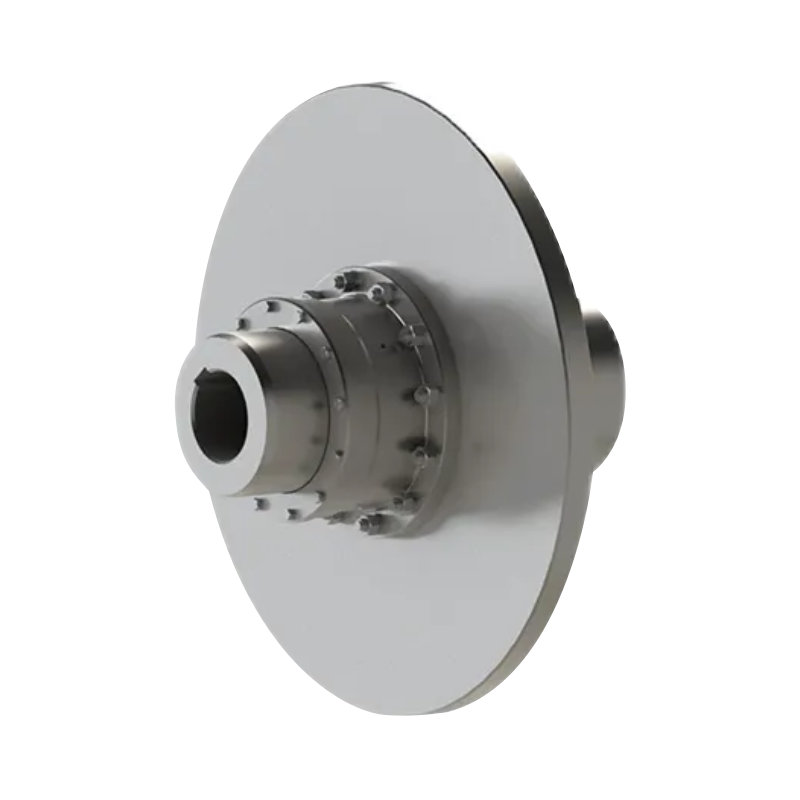
- 16 Product: KC type roller chain coupling(Q/YL 17032X-2018)
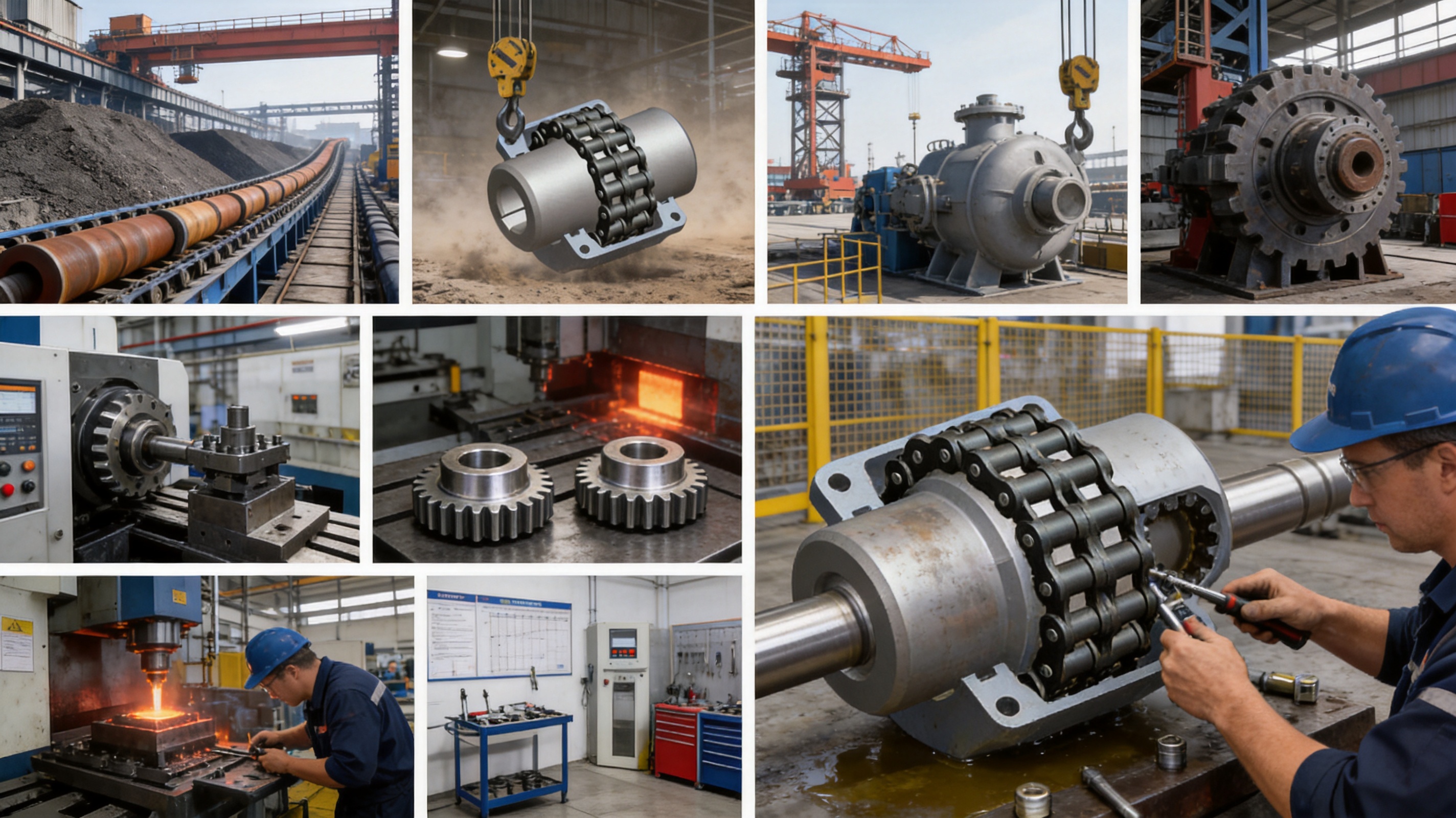
Reliable torque transmission is a central requirement in almost every industrial power-transmission system. Pumps, compressors, conveyors, crushers, mixers, agricultural machines, lifting equipment, and metallurgical production lines all depend on a coupling that can connect rotating shafts while accommodating the practical imperfections of machinery. Shafts are rarely perfectly aligned after installation. Thermal expansion, foundation movement, bearing wear, manufacturing tolerances, and operating vibration can introduce parallel, angular, or axial deviations. If these conditions are not managed correctly, excessive loads may be transferred to bearings, seals, gears, and connected equipment.
The KC type roller chain coupling, manufactured in accordance with the Q/YL 17032X-2018 standard, is designed to address these requirements through a simple but highly effective mechanical construction. It uses two toothed sprockets connected by a precision roller chain. The chain transmits torque between the hubs while allowing a controlled degree of flexibility to compensate for shaft misalignment. A protective cover can also be supplied for applications that require improved lubrication retention, operator protection, and resistance to external contamination.
This type of coupling is particularly suitable for systems that need substantial torque capacity, dependable operation, compact construction, and convenient maintenance. The listed KC series covers nominal torque ratings from 190 N·m to 717,000 N·m. The range includes compact models for high-speed equipment and large models for heavy-duty machinery. Depending on the selected size, allowable speed can reach 5,000 rpm, while large-capacity models are intended for slower, high-torque applications.
Manufactured and supplied by Zhongye Heavy Industry Technology (Zhenjiang) Co., Ltd., the KC coupling benefits from an industrial production environment focused on research, machining, assembly, inspection, and customized engineering. The company serves metallurgical, mining, water-treatment, lifting, paper, port, and other industrial sectors, where reliable mechanical connections are essential to uptime and safety.
What Is a Roller Chain Coupling?
A roller chain coupling is a flexible mechanical coupling that transfers torque through a chain-and-sprocket arrangement. Each shaft is fitted with a sprocket hub. The sprockets are aligned face-to-face, and a duplex roller chain engages with the teeth of both sprockets. When the driving shaft rotates, its sprocket moves the chain, and the chain drives the sprocket connected to the driven shaft.
Unlike an elastomeric coupling, the roller chain coupling does not rely on rubber, polyurethane, or another soft element as its primary torque-transmitting component. It is therefore classified as a flexible coupling with a non-elastic element. Its flexibility comes from the geometry and articulation of the chain links rather than from elastic deformation of a polymer insert. This gives the coupling a different operating profile from jaw, tire, pin, grid, or star couplings.
The chain provides a practical balance between rigidity and flexibility. It offers positive mechanical engagement and efficient torque transmission, while its articulated links can accommodate limited angular and parallel shaft displacement. This makes the coupling useful when the connected shafts need a degree of movement but the application still requires a robust, high-load connection.
In standard applications, the coupling consists of the following major components:
1. Two hub-and-sprocket assemblies, each mounted on one of the connected shafts.
2. A roller chain that engages with the teeth of both sprockets.
3. A chain cover or casing, where specified, to retain lubricant and protect the chain from dust, moisture, and accidental contact.
4. Fasteners, keys, set screws, or other shaft-retention features selected according to the shaft design.
The straightforward construction is one of the product’s main strengths. It avoids complicated internal mechanisms and allows technicians to inspect the main working parts without dismantling an elaborate coupling body.
Operating Principle and Torque Transmission
Torque is transmitted through the positive engagement between the sprocket teeth and the chain rollers. The effective torque capacity depends on several factors, including sprocket size, chain pitch, chain width, material strength, heat treatment, shaft diameter, operating speed, lubrication condition, and the magnitude of starting or shock loads.
When the motor or engine begins to rotate, the driving sprocket applies force to the chain rollers. The chain carries this force around the coupling and transfers it to the driven sprocket. Because the chain is made from multiple articulated links, it can flex around the sprockets while remaining capable of carrying substantial tangential force. This mechanism is especially valuable in installations where a completely rigid connection would impose excessive reaction loads on the connected shafts or bearings.
Roller chain couplings are not intended to eliminate all torsional vibration in the same manner as a highly compliant elastomeric coupling. However, the articulated chain engagement, controlled clearance, and mechanical flexibility can help moderate certain operating disturbances and reduce the transmission of abrupt alignment-related forces. In applications with severe torsional oscillation, the complete drive system should be evaluated, and a torsional analysis may be required before final selection.
The KC range includes models from KC3012 through large-capacity models such as KC40028. The numerical designation generally reflects the chain and sprocket size family, while the final digits identify a particular configuration. Exact selection should always be based on the manufacturer’s dimensional drawing, load calculation, bore requirements, speed, service factor, and environmental conditions.
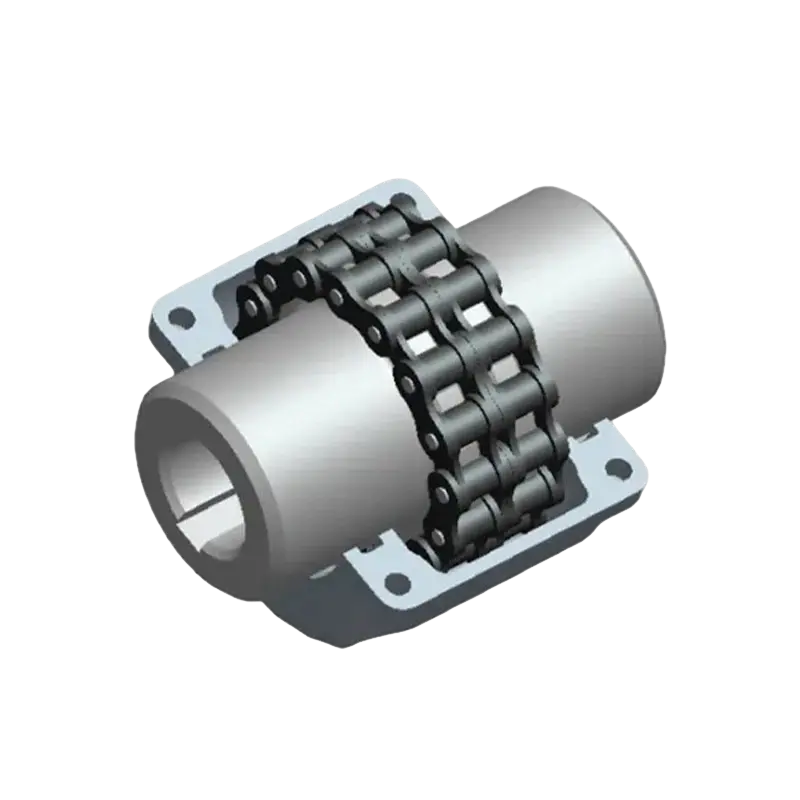
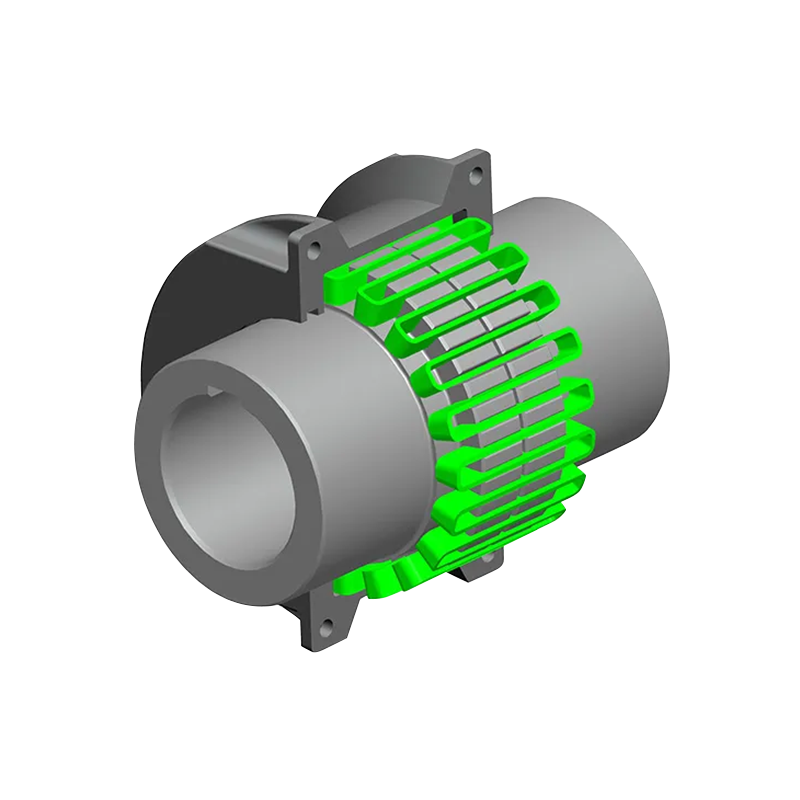
KC type roller chain coupling(Q/YL 17032X-2018)
Main Performance Characteristics
Broad Torque Capacity
One of the most important advantages of the KC type roller chain coupling is its broad torque range. The smallest listed model, KC3012, has a nominal torque of 190 N·m. At the opposite end of the range, the KC40028 model is listed at 717,000 N·m. This allows the same general coupling concept to be applied to both medium-duty rotating equipment and very large industrial drives.
A broad product range simplifies standardization for companies operating multiple types of machinery. Maintenance departments can work with a familiar coupling principle while selecting the correct size for each drive. The availability of intermediate models also helps engineers avoid selecting a coupling that is unnecessarily large, heavy, or expensive.
Accommodation of Shaft Misalignment
Perfect shaft alignment is difficult to maintain in real industrial conditions. A coupling may need to accommodate parallel offset, angular deviation, and limited axial movement. The roller chain’s articulated construction allows the sprockets to operate with a degree of relative displacement. This reduces the need for excessive precision during installation, although accurate alignment remains essential for long service life.
Misalignment compensation should not be interpreted as permission to operate with poorly aligned shafts. Excessive offset or angular error can cause uneven chain loading, accelerated sprocket wear, increased noise, and high bearing reactions. The coupling should be selected and installed within the allowable values specified by the manufacturer.
High Mechanical Strength
The working parts of the KC coupling can be produced from hardened steel or stainless steel, depending on the application. Hardened steel provides high surface durability and resistance to repeated contact stresses. Stainless steel is appropriate where corrosion resistance is important, including wet, humid, chemically exposed, or washdown environments.
Material selection is one area where an application-specific quotation is valuable. A mining conveyor operating in abrasive dust may require a different surface treatment and sealing arrangement from a stainless-steel coupling used near water-treatment equipment. The sprocket, chain, bore, keyway, fasteners, and cover should be considered as a complete system rather than as isolated parts.
Compact Mechanical Construction
The coupling’s chain-and-sprocket arrangement is relatively compact compared with some high-capacity coupling designs. Its simple geometry can make it easier to integrate into equipment where installation space is limited. A compact design may also reduce the overhung mass applied to connected shafts, although the actual effect depends on the selected size and the complete coupling assembly.
Compactness also supports easier replacement. In many installations, the coupling can be inspected or serviced without removing large sections of the drive train. When a split cover or suitable maintenance arrangement is used, chain inspection and lubrication can be performed with limited interruption to production.
Serviceability and Maintenance
Routine maintenance generally includes lubrication, inspection of chain tension and wear, checking sprocket condition, verifying fastener tightness, and confirming shaft alignment. Compared with more complex coupling types, these tasks are straightforward and can often be incorporated into a plant’s existing preventive-maintenance schedule.
Lubrication is particularly important. The chain pins, bushings, rollers, and sprocket teeth operate under repeated contact and sliding conditions. Insufficient or unsuitable lubricant can increase wear, noise, heat generation, and the risk of chain elongation. The lubricant must be compatible with the operating temperature, environmental exposure, cover arrangement, and manufacturer’s recommendations.
Advantages Compared with Alternative Coupling Designs
Compared with Rigid Couplings
A rigid coupling creates a fixed mechanical connection between two shafts. It is appropriate when the shafts are accurately aligned and when no relative movement is expected. However, any misalignment in a rigid connection is transferred directly to the shafts, bearings, and machine housings. Thermal growth or foundation movement can therefore create significant reaction forces.
The KC roller chain coupling offers a practical advantage where limited misalignment compensation is required. It allows the drive system to tolerate normal installation and operating deviations more effectively than a rigid flange or sleeve coupling. This can reduce the risk of premature bearing loading and make the overall system less sensitive to minor alignment changes.
Compared with Elastomeric Couplings
Elastomeric couplings use a flexible polymer element to transmit torque and absorb vibration. They can provide excellent damping and quiet operation, but the elastomer may be affected by temperature, oil, chemicals, ultraviolet exposure, aging, and fatigue. The flexible element may also require periodic replacement even when the metal hubs remain serviceable.
The KC coupling does not depend on a polymer insert for its main torque path. This can be advantageous in high-temperature, abrasive, or chemically challenging environments where elastomer life is uncertain. Its metal chain and sprocket components can also provide a more predictable mechanical response under high torque. On the other hand, applications requiring very high torsional damping or exceptionally quiet operation may favor an elastomeric design. The correct choice depends on the operating priorities.
Compared with Gear Couplings
Gear couplings are known for high torque density and significant misalignment capacity. They are widely used in heavy industrial drives, but their gear teeth and sleeves require careful lubrication and protection from contamination. Depending on their design, gear couplings may involve more precision-machined components and more demanding maintenance procedures.
The roller chain coupling offers a simpler visible working mechanism. Its chain can be inspected directly, and replacement components are comparatively easy to identify. For equipment where moderate misalignment capacity, high torque, and accessible maintenance are more important than maximum torque density, a chain coupling can be an effective alternative.
Compared with Grid Couplings
Grid couplings use a spring-like metal grid that engages with grooved hubs. They can provide useful torsional flexibility and shock-load absorption. However, the grid is a specialized component that may need replacement after fatigue or overload. The grid and grooves also require proper lubrication and cover protection.
A roller chain coupling uses a more familiar chain transmission principle. Maintenance teams experienced with industrial chain drives can often understand its inspection requirements quickly. The coupling can be especially attractive where spare chain and sprocket components are already available within the plant.
Compared with Pin and Sleeve Couplings
Pin and sleeve couplings use flexible pins and resilient sleeves. They are simple and economical, but the sleeves can wear due to repeated shock, heat, oil exposure, or excessive misalignment. The KC coupling replaces the polymer sleeve with a metal chain, making it better suited to some demanding environments and higher torque ranges.
Nevertheless, the chain coupling’s metal-to-metal engagement may produce more operating noise than a properly selected elastomeric coupling. Engineers should evaluate noise limits, guarding, lubrication, and the dynamic characteristics of the equipment before making a final decision.
KC Series Technical Range
The available KC series provides multiple sizes for different combinations of torque, speed, shaft diameter, and installation dimensions. The following representative data are based on the supplied product information. The dimensions should be confirmed against the latest manufacturer drawing because the source table contains compressed and irregularly formatted entries in several rows.
| Model | Nominal Torque (N·m) | Allowable Speed (rpm) | Representative Bore Range or d₁/d₂ Data | Mass (kg) |
|---|---|---|---|---|
| KC3012 | 190 | 5,000 | 16 | 0.6 |
| KC4012 | 249 | 4,800 | 22 | 1.0 |
| KC4014 | 329 | 4,800 | 28 | 1.32 |
| KC4016 | 419 | 4,800 | 32 | 1.9 |
| KC5014 | 620 | 3,600 | 35 | 2.7 |
| KC5016 | 791 | 3,600 | 40 | 3.4 |
| KC5018 | 979 | 3,000 | 45 | 4.4 |
| KC6018 | 1,810 | 2,500 | 56 | 7.8 |
| KC6020 | 2,210 | 2,500 | 60 | 10.4 |
| KC6022 | 2,610 | 2,500 | 71 | 12.4 |
| KC8018 | 3,920 | 2,000 | 80 | 15.2 |
| KC8020 | 4,800 | 2,000 | 90 | 20.2 |
| KC8022 | 5,640 | 1,800 | 100 | 26.1 |
| KC10020 | 8,400 | 1,800 | 110 | 39.1 |
| KC12018 | 12,700 | 1,500 | 125 | 52.6 |
| KC12022 | 18,300 | 1,250 | 140 | 79.4 |
| KC16018 | 26,400 | 1,100 | 160 | 110.7 |
| KC16022 | 38,100 | 1,000 | 200 | 191.8 |
| KC20018 | 54,100 | 800 | 205 | 323.4 |
| KC20022 | 77,800 | 600 | 260 | 507.8 |
| KC24022 | 137,000 | 600 | 310 | 958.5 |
| KC24026 | 186,000 | 500 | 380 | 1,403.6 |
| KC32022 | 261,000 | 100 | 430 | 1,970 |
| KC40020 | 494,000 | 470 | 640 | 3,149 |
| KC40024 | 602,000 | 590 | 800 | 4,724 |
| KC40028 | 717,000 | 700 | 960 | 6,620 |
The listed table is intended for preliminary comparison rather than final design approval. Some original entries combine multiple dimensions without separators, and several large-model values appear to require confirmation. A complete technical quotation should include the exact outside diameter, pitch diameter, face width, overall length, cover dimensions, keyway details, inertia, mass, maximum bore, allowable misalignment, and service factor.
Engineering Selection Considerations
Calculate the Required Operating Torque
The first step is to determine the actual operating torque rather than relying only on motor nameplate power. For a rotating system, torque is related to power and speed. In practical terms, a low-speed drive transmitting the same power as a high-speed drive will require more torque. Starting torque, acceleration torque, reversing loads, intermittent impacts, and cyclic operation must also be considered.
The selected coupling should have adequate nominal torque capacity after applying the appropriate service factor. A conveyor carrying bulk material, for example, may experience starting resistance and fluctuating load. A pump with a smooth motor start may have a lower shock factor. A crusher, mixer, or reciprocating machine may require a considerably higher allowance because of impact and pulsating torque.
Check Speed and Dynamic Behavior
Allowable speed is not interchangeable with nominal torque. Many smaller KC models permit relatively high rotational speeds, while larger models are generally intended for slower heavy-duty drives. The selected coupling must remain within the allowable speed for the complete assembly, including any cover and lubrication arrangement.
At elevated speed, chain articulation, centrifugal effects, balance, lubrication, and alignment become increasingly important. High-speed installations should be checked for vibration and balance. If the equipment has a significant torsional resonance risk, the coupling should be evaluated as part of the complete shaft train rather than selected only from a static torque table.
Confirm Shaft and Bore Requirements
The shaft diameter, keyway dimensions, available hub length, shaft extension, and axial installation space must all be checked. The coupling’s maximum bore must be large enough for the shaft, while the hub must retain sufficient wall thickness and keyway strength. If the standard bore does not meet the equipment design, Zhongye can evaluate customized hub dimensions, special keyways, shrink-fit arrangements, or other non-standard features.
Allow for Misalignment
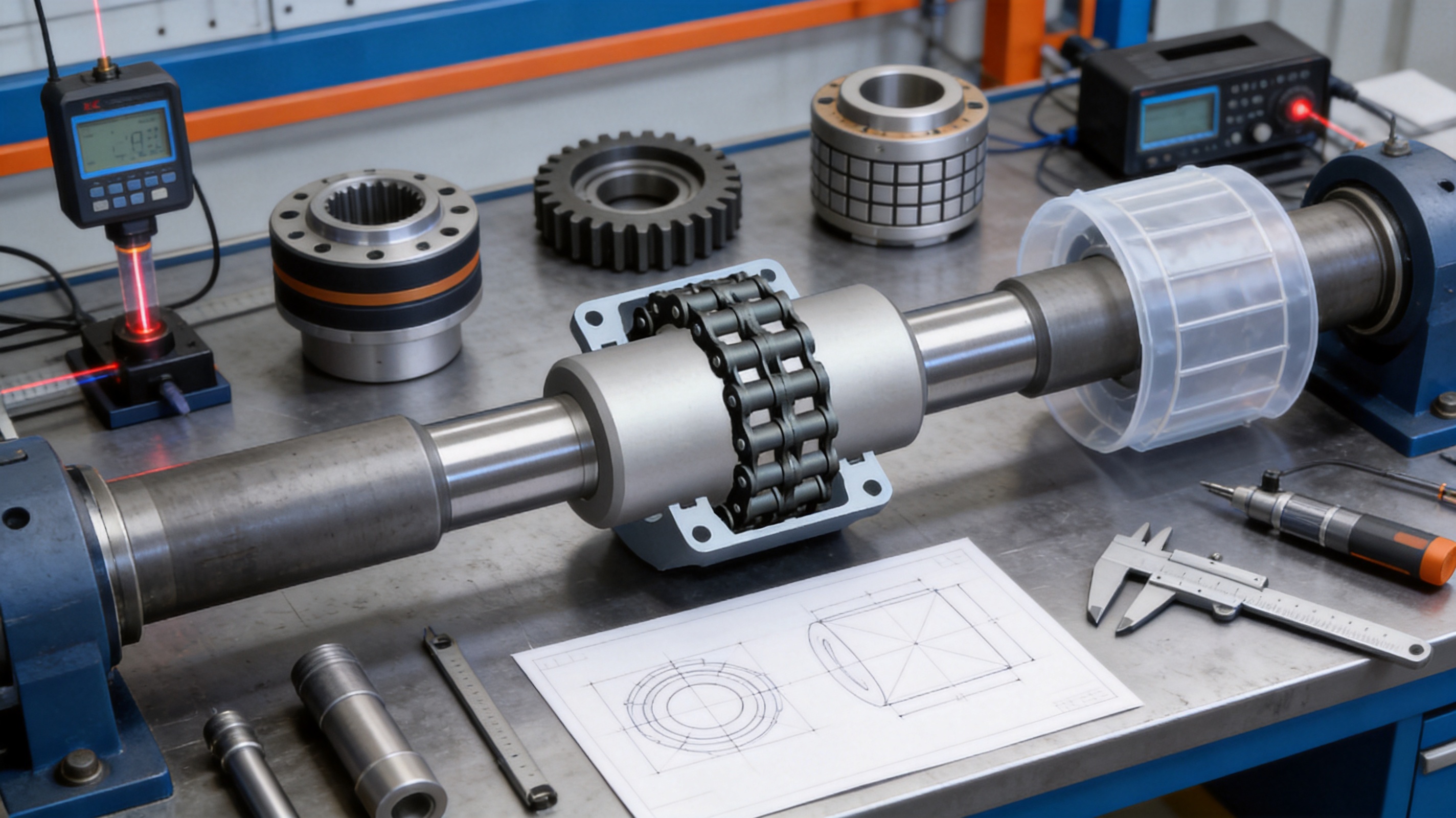
Parallel and angular misalignment should be measured during installation and reviewed periodically. The coupling can accommodate limited deviations, but its flexibility does not replace alignment work. Laser alignment, dial-indicator methods, or carefully controlled straightedge procedures may be used depending on the machine and required accuracy.
Alignment should be checked after the equipment reaches operating temperature when thermal growth is significant. Soft-foot conditions, foundation settlement, pipe strain, bearing movement, and changes in machine elevation can all affect alignment. A coupling that is correctly aligned during a cold shutdown may experience a different relationship between shafts during operation.
Evaluate the Environment
Mining, cement, port, and bulk-material applications may expose the coupling to abrasive dust. Water-treatment and outdoor equipment may face moisture, spray, and corrosion. Paper mills, food-processing plants, and chemical facilities may have special cleaning or contamination-control requirements. Temperature, humidity, chemical exposure, washdown procedures, and explosive-area classifications should be provided during the quotation stage.
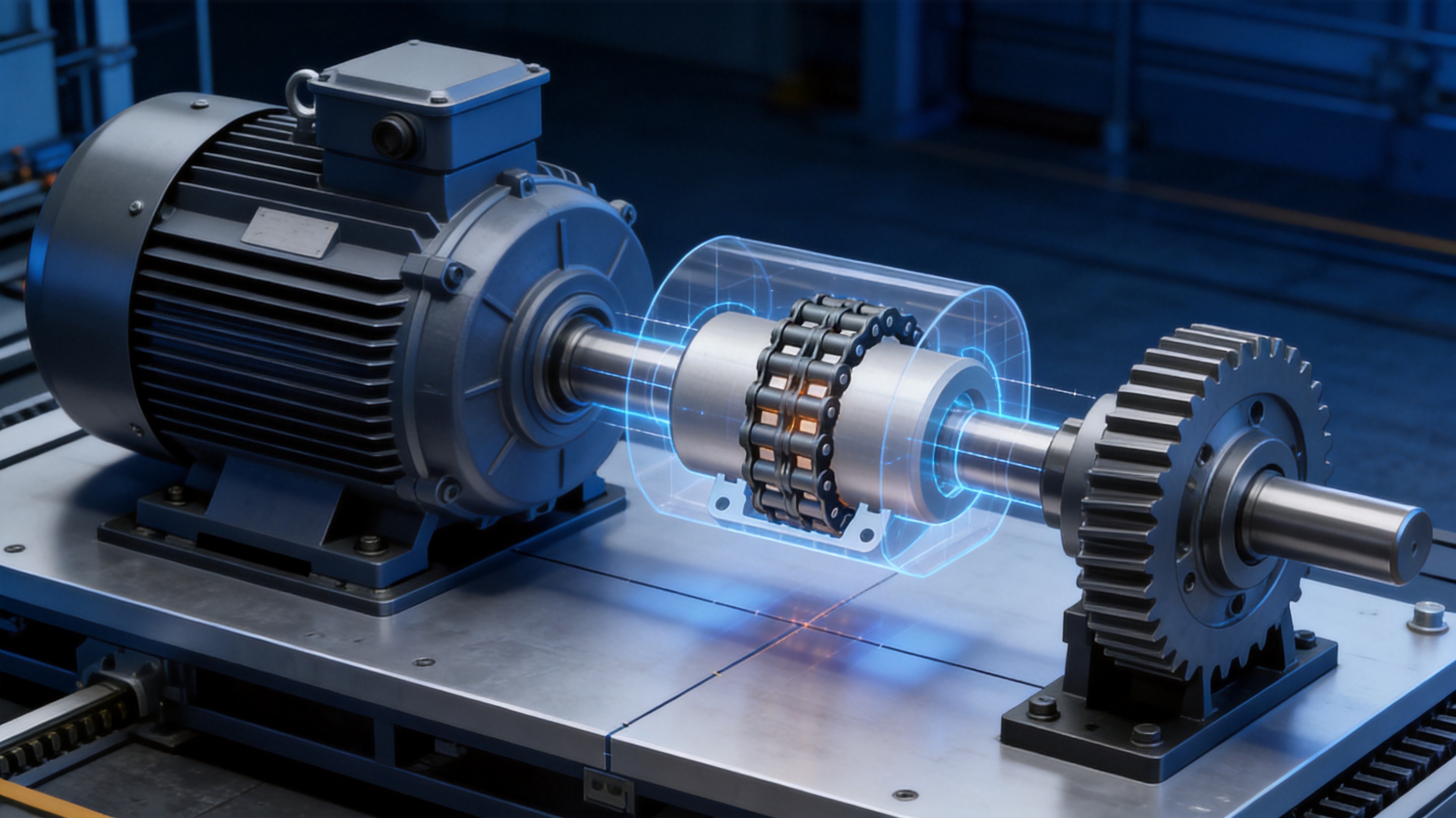
A protective cover is strongly recommended for most industrial installations. It helps retain lubricant, reduces the risk of foreign objects entering the chain, and protects personnel from rotating components. The cover material and sealing arrangement should be selected according to the environment. Stainless-steel construction may be appropriate where corrosion resistance is more important than minimum cost.
Manufacturing and Quality Strengths
Zhongye Heavy Industry Technology (Zhenjiang) Co., Ltd. integrates research and development, manufacturing, sales, and technical service. Its production base includes a heavy workshop, precision workshop, office facilities, warehouse space, and supporting logistics areas. This integrated structure is valuable for coupling production because large and small components often require different machining, handling, inspection, and assembly capabilities.
Heavy-Duty Manufacturing Capability
Large KC coupling components require stable machining, suitable lifting capacity, careful heat-treatment control, and dimensional inspection over substantial diameters and weights. A dedicated heavy workshop supports the production of large hubs, sprockets, covers, and related components for high-torque applications. This is particularly relevant to metallurgy, mining, port machinery, and lifting systems, where equipment size and load are significantly greater than those of general-purpose drives.
Precision Machining
Sprocket tooth geometry, bore concentricity, keyway accuracy, hub runout, face alignment, and chain engagement all influence coupling performance. A precision workshop supports the close control of these characteristics. Proper machining reduces uneven load distribution and helps the chain engage smoothly with both sprockets.
Precision is also important for customized products. A customer may require a special bore, non-standard shaft spacing, extended hub, brake drum, flange, insulation arrangement, or connection to an existing machine. The ability to combine design engineering with in-house or closely controlled production reduces the risk of mismatch between the drawing and the finished component.
Material and Heat-Treatment Options
Material selection is matched to torque, wear, corrosion, speed, and environmental requirements. Hardened steel can improve the wear resistance of chain-contact surfaces and sprocket teeth. Stainless steel can provide greater resistance to moisture and corrosive exposure. Other material and surface-treatment choices may be considered for special service conditions.
Heat treatment must be controlled carefully. Excessive hardness can create brittleness, while inadequate hardness can lead to rapid tooth or roller wear. The appropriate process depends on the component, material grade, section thickness, load, and required service life. Material certificates and inspection records can be requested where traceability is required by the customer or project specification.
Inspection and Testing
Quality control for a roller chain coupling may include incoming material inspection, dimensional verification, tooth-profile checks, bore and keyway inspection, hardness testing, runout measurement, visual inspection, assembly checks, and final documentation. For critical applications, additional tests may be specified, such as non-destructive examination of selected components or balancing verification at the operating speed.
A quality system based on ISO 9001 principles supports process consistency, corrective action, document control, and traceability. Certification alone does not replace engineering judgment, but it provides a framework for maintaining repeatable production and responding systematically to quality issues.
Customization for Non-Standard Equipment
Standard models are suitable for many applications, but industrial equipment often has unusual shaft dimensions, restricted installation space, special mounting requirements, or unique environmental conditions. Zhongye provides customized coupling design and non-standard manufacturing support for these situations.
Possible customization areas include:
1. Special bore diameters and keyway sizes.
2. Extended or shortened hubs to match shaft extensions.
3. Special shaft spacing or modified overall length.
4. Stainless-steel components for corrosive or wet environments.
5. Protective covers designed for specific clearance or guarding requirements.
6. Special surface treatments and corrosion-protection systems.
7. Adaptation to existing flanges, drums, brakes, gearboxes, motors, or driven machines.
8. Couplings designed for unusual speed, torque, temperature, or duty-cycle conditions.
9. Replacement components for legacy or imported equipment.
10. Complete non-standard coupling assemblies developed from customer drawings or site measurements.
For a successful custom design, the customer should provide motor power, operating speed, starting method, shaft diameters, shaft spacing, keyway details, torque characteristics, alignment conditions, ambient temperature, contamination level, installation orientation, and required service life. Photographs, existing drawings, and maintenance records can also help engineers identify practical constraints.
Industrial Applications
Mining and Bulk Material Handling
Conveyors, feeders, crushers, screens, and bucket elevators can experience heavy starting loads, dust, shock, and fluctuating torque. A chain coupling with a protective cover can provide a robust connection between motors, gearboxes, and driven shafts. The ability to inspect and lubricate the chain is valuable in remote or demanding plant locations.
Metallurgical Equipment
Steel mills and metal-processing plants operate large rollers, conveyors, shears, cooling systems, and auxiliary equipment. High ambient temperature, scale, vibration, and heavy loads create challenging conditions for shaft couplings. Proper material selection, guarding, lubrication, and alignment are essential. Large KC models can be evaluated for low-speed, high-torque applications.
Pumps and Water Equipment
Pumping systems may require couplings that tolerate minor alignment changes caused by pipe strain, foundation movement, or thermal effects. Stainless-steel options and suitable protective arrangements can improve resistance to moisture and corrosion. The coupling should be selected with consideration for pump startup behavior, motor speed, hydraulic transients, and the consequences of downtime.
Compressors and Process Machinery
Compressors and process machines often operate for long periods and may be sensitive to vibration and alignment changes. The coupling must be selected according to the compressor’s torque pattern, speed, starting arrangement, and torsional behavior. High-speed models require particular attention to balance, lubrication, cover design, and inspection intervals.
Agricultural Machinery
Agricultural equipment may operate outdoors and face dust, moisture, seasonal storage, variable loads, and limited maintenance access. The KC coupling’s straightforward construction can be advantageous for equipment that must be serviced quickly. Corrosion protection, sealed or covered construction, and accessible lubrication points should be considered.
Port and Lifting Equipment
Cranes, hoists, winches, ship-loading systems, and port conveyors often require high torque and dependable operation under intermittent or shock loading. The coupling selection must account for acceleration, braking, reversing, load pickup, duty classification, and safety requirements. In lifting applications, the coupling is only one part of the safety system and must not be treated as a substitute for brakes, overload protection, or required guarding.
Installation Recommendations
Before installation, inspect the coupling components for transport damage, corrosion, burrs, contamination, and incorrect dimensions. Confirm that the shaft diameters and keyways match the approved drawing. Clean the shaft surfaces and lightly protect them against corrosion where appropriate. Do not force a hub onto a shaft with excessive impact, because this can damage bearings, seals, or the coupling bore.
Install the hubs to the specified shaft positions and verify the distance between sprocket faces. Check parallel and angular alignment with suitable instruments. The chain should engage both sprockets fully and should not be forced into position by excessive prying. Install the connecting link correctly and secure it according to the chain manufacturer’s instructions.
Apply the recommended lubricant before commissioning. If a cover is supplied, ensure that it is correctly positioned, securely fastened, and free from interference with rotating parts. The cover should not be treated as an optional cosmetic component; it is important for personnel safety, lubrication retention, and contamination control.
After installation, rotate the system by hand where possible. Check for tight spots, interference, unusual resistance, and incorrect chain engagement. During the initial run, observe vibration, noise, temperature, and lubricant leakage. Stop the equipment immediately if the chain contacts the cover, the coupling runs eccentrically, or abnormal noise indicates misalignment or component damage.
Maintenance and Troubleshooting
Lubrication Inspection
Inspect the lubricant at regular intervals for contamination, hardening, loss, or excessive leakage. The maintenance interval depends on speed, load, temperature, cover design, and environmental conditions. A dusty or wet installation may require more frequent inspection than a clean indoor machine.
Chain Wear
Chain elongation, loose rollers, damaged links, seized pins, and abnormal side wear are signs that service is required. A worn chain may no longer engage the sprocket teeth correctly. Continuing to operate with severe chain wear can damage both sprockets and increase the risk of sudden failure.
Sprocket Wear
Inspect the sprocket teeth for hooking, pitting, cracking, uneven wear, or polishing. Uneven tooth wear may indicate misalignment, excessive load, incorrect chain tension, poor lubrication, or an unsuitable coupling size. If the chain and sprockets have operated together for a long period, replacement of only one component may result in poor engagement and accelerated wear.
Vibration and Noise
New or increasing vibration may result from shaft misalignment, unbalanced components, loose fasteners, damaged chain links, worn sprockets, foundation movement, or changes in the connected machine. A chain coupling naturally produces some mechanical operating sound, but sudden noise changes should be investigated rather than ignored.
Overheating
Overheating can be associated with insufficient lubrication, excessive speed, overloading, misalignment, chain interference with the cover, or inadequate clearance. Temperature trends are more informative than a single reading. A gradual increase in operating temperature often indicates developing wear or lubrication problems.
Why Select Zhongye for KC Coupling Supply?
Zhongye Heavy Industry Technology (Zhenjiang) Co., Ltd. combines product manufacturing with technical support and customized engineering. This is important because coupling performance depends not only on the nominal torque rating but also on correct sizing, bore design, alignment, material selection, lubrication, guarding, and integration with the surrounding equipment.
The company’s product portfolio includes toothed couplings, elastic sleeve pin couplings, gear couplings with elastic pins, universal couplings, tire couplings, jaw couplings, star couplings, diaphragm couplings, drum couplings, grid couplings, Oldham couplings, flange couplings, clip-shell couplings, roller chain couplings, safety couplings, and non-standard coupling assemblies. This broad range allows engineers to compare different coupling principles instead of forcing every application into one product category.
Its location in Zhenjiang, Jiangsu Province, provides access to an established industrial manufacturing region and transportation infrastructure. The company supports domestic and international customers through engineering communication, production coordination, inspection, packaging, and after-sales service. Customers can request technical assistance when the standard product table does not fully describe the application.
The company’s stated strengths include research and development capability, modern production facilities, testing resources, quality control, complete coupling specifications, customization support, pre-sale technical advice, non-standard design, and after-sales service. These capabilities are particularly valuable for large projects where coupling delivery must be coordinated with motors, reducers, pumps, conveyors, or complete production lines.
Frequently Asked Questions
What category does the KC type roller chain coupling belong to?
It belongs to the category of flexible couplings with non-elastic elements. Its torque-transmitting element is a metal roller chain rather than a rubber or polyurethane insert.
What is the nominal torque range of the KC series?
The supplied information lists a range from 190 N·m for the KC3012 model to 717,000 N·m for the KC40028 model. The correct model must be selected according to operating torque, service factor, speed, shaft dimensions, and duty conditions.
What is the maximum listed speed?
The highest listed allowable speed is 5,000 rpm for the KC3012 model. Allowable speed decreases for many larger models, so the maximum speed of the smallest model must not be applied to the complete product range.
Can the coupling handle shaft misalignment?
Yes. Its articulated roller chain construction accommodates limited parallel and angular misalignment. However, the allowable values must be confirmed from the manufacturer’s technical drawing, and accurate shaft alignment is still required.
Does the coupling provide torsional vibration damping?
The coupling offers mechanical flexibility and can reduce certain alignment-related shocks. It does not provide the same level of torsional damping as a highly compliant elastomeric coupling. Systems with severe torsional vibration should receive a dedicated dynamic assessment.
What materials are available?
The supplied product information identifies hardened steel and stainless steel as possible materials. The final material and surface treatment should be selected according to torque, wear, corrosion, temperature, and environmental requirements.
Is a protective cover necessary?
A cover is strongly recommended for most installations. It retains lubricant, limits contamination, and protects personnel from rotating chain and sprocket components. Special covers can be considered where space, temperature, or corrosion requirements are unusual.
How is the coupling maintained?
Maintenance normally includes lubrication, chain and sprocket inspection, alignment checks, fastener inspection, and monitoring for vibration, heat, and noise. The exact interval depends on the speed, load, environment, and duty cycle.
Can Zhongye manufacture non-standard couplings?
Yes. The company undertakes customized coupling design and manufacturing. Customers should provide shaft dimensions, torque, speed, misalignment, operating environment, installation space, and any existing drawings or equipment interfaces.
What information is required for a quotation?
Useful information includes motor power, operating speed, starting method, shaft diameters, keyways, shaft spacing, torque characteristics, load type, service factor, ambient conditions, material requirements, cover requirements, and expected operating hours.
Are all dimensions in the published table final?
The supplied table includes several compressed entries and formatting irregularities, especially for larger models. The table should therefore be used for preliminary selection only. Final dimensions, bore details, inertia, mass, and allowable misalignment should be confirmed against the current approved drawing.
Conclusion
The KC type roller chain coupling is a practical solution for industrial shaft connection where high torque, mechanical strength, limited misalignment compensation, compact construction, and accessible maintenance are important. Its positive chain-and-sprocket engagement distinguishes it from elastomeric and other flexible coupling designs, while its broad size range allows use in both medium-duty and very large industrial drives.
Compared with rigid couplings, it provides greater flexibility for real-world alignment conditions. Compared with polymer-based couplings, it offers a metal working element that can be advantageous in high-temperature, abrasive, or chemically demanding environments. Compared with more complex high-capacity designs, its visible and serviceable construction can simplify inspection and replacement.
Successful application depends on correct engineering selection. Torque, speed, service factor, shaft dimensions, misalignment, lubrication, cover design, material, environment, and dynamic behavior must all be evaluated. Zhongye Heavy Industry Technology provides standard KC models as well as customized coupling solutions, supported by research and development, heavy and precision manufacturing facilities, inspection capabilities, and technical service.
For mines, conveyors, pumps, compressors, agricultural machinery, metallurgical equipment, port systems, lifting equipment, and other demanding drives, the KC coupling provides a durable connection concept that can be adapted to a wide range of operating conditions. A detailed technical review with the manufacturer is recommended before final purchase, particularly for high-speed, high-torque, corrosive, safety-critical, or non-standard installations.
References
1. Q/YL 17032X-2018, Technical Standard for KC Type Roller Chain Couplings.
2. Manufacturer-supplied KC Roller Chain Coupling Basic Parameters and Main Dimensions.
3. Manufacturer technical information for flexible couplings with non-elastic elements.
4. General engineering principles for roller chain drives, sprocket engagement, lubrication, and chain wear inspection.
5. ISO 9001 quality-management principles for manufacturing, inspection, document control, and corrective action.
6. Industrial machinery alignment, coupling selection, shaft design, and torsional vibration analysis practices.
Product: KC type roller chain coupling(Q/YL 17032X-2018)

- Quick Links
- About
- Products
- Our Service
- News & Events
- Contact
- Products Series
- Flexible Couplings with Non-Elastic Elements
- Flexible Couplings with Metal Elastic Elements
- Flexible Couplings with Non-Metallic Elastic Elements
- Safety Coupling
- Rigid Coupling
- Contact Us
- Tel : +86 511 8572 3800 +86 511 8572 3900
- Mobile : +86 15106109009
- Email : sales@couplingzy.com
- Add:No.1 Zhongye Yingbin Avenue, Gaozi Street, Dantu Economic Development Zone, Zhenjiang City, Jiangsu Province, China.


