:+86 15106109009
:sales@couplingzy.com


 English
 русский
 Español
 عربى
 Português
 Deutsch
 Türk
 Indonesia


ZCD Conical Shaft Hole Elastic Pin Gear Coupling: Heavy-Duty Torque Transmission with Practical Misalignment Compensation
Content
- 1 1. Product Positioning and Operating Principle
- 2 2. Core Technical Advantages
- 3 3. Main Technical Parameters and Selection Range
- 4 4. Comparison with Alternative Coupling Types
- 5 5. Manufacturing Capabilities and Engineering Strengths
- 6 6. Application Areas
- 7 7. Installation and Maintenance Guidance
- 8 8. Limitations and Correct Selection Boundaries
- 9 9. Why Choose a Specialized Coupling Manufacturer
- 10 10. Q&A
- 10.1 Q1: What is the main purpose of the ZCD conical shaft hole elastic pin gear coupling?
- 10.2 Q2: What is the nominal torque range?
- 10.3 Q3: What shaft diameters are available?
- 10.4 Q4: Does the coupling require grease lubrication?
- 10.5 Q5: How much misalignment can it compensate?
- 10.6 Q6: What happens if the machine is overloaded?
- 10.7 Q7: Is the product suitable for high-speed machinery?
- 10.8 Q8: What is the working temperature range?
- 10.9 Q9: Can the coupling be customized?
- 10.10 Q10: Which industries commonly use this type of coupling?
- 10.11 Q11: How does it compare with a toothed coupling?
- 10.12 Q12: What information is needed for product selection?
- 11 11. Final Evaluation
- 12 References
- 13 Product: ZCD type conical shaft hole elastic pin gear coupling(Q/YZ33007X-2018)
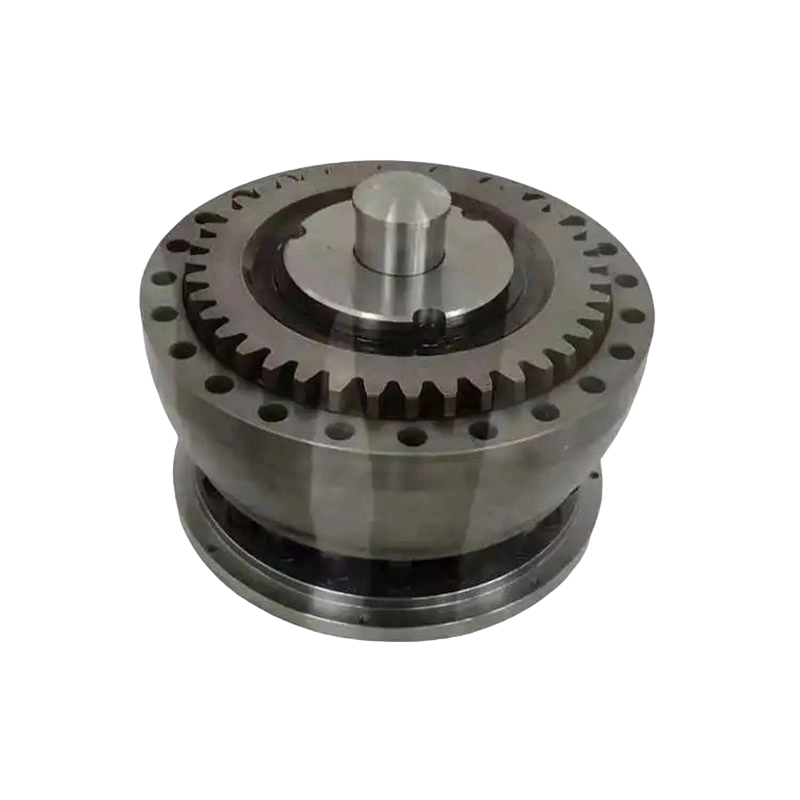
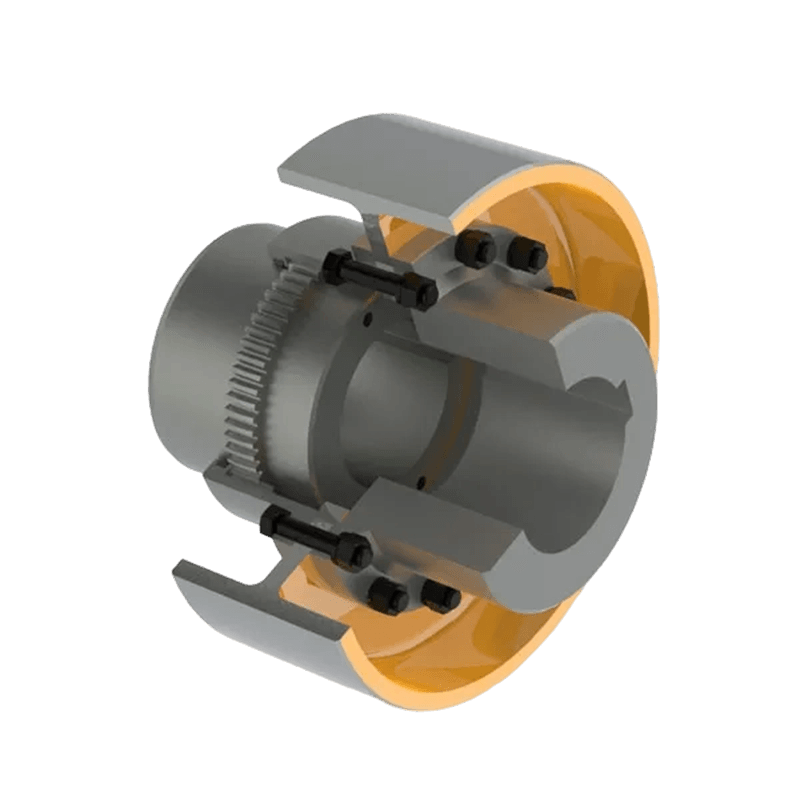
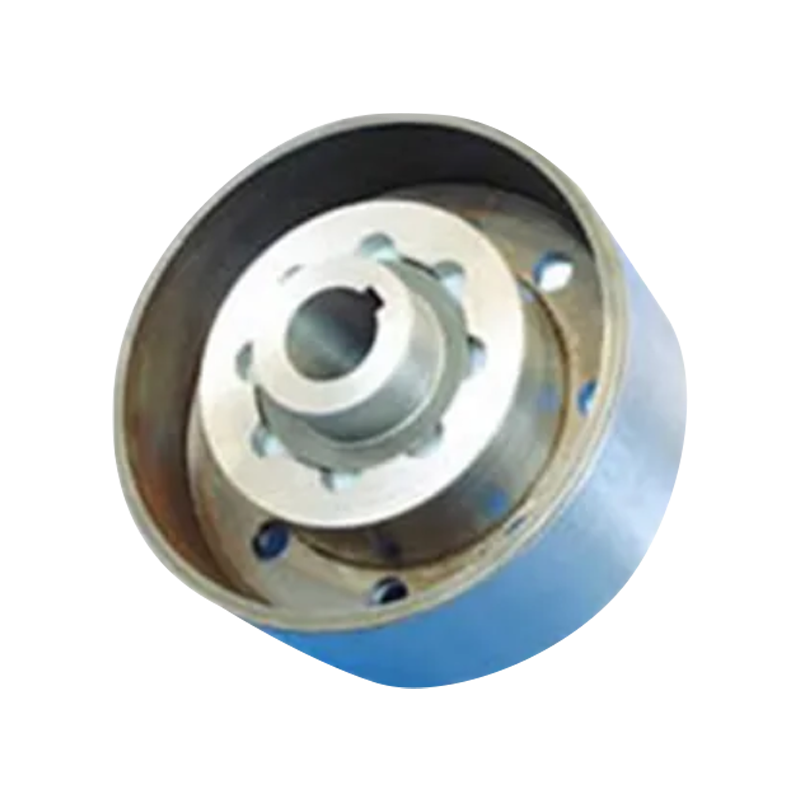
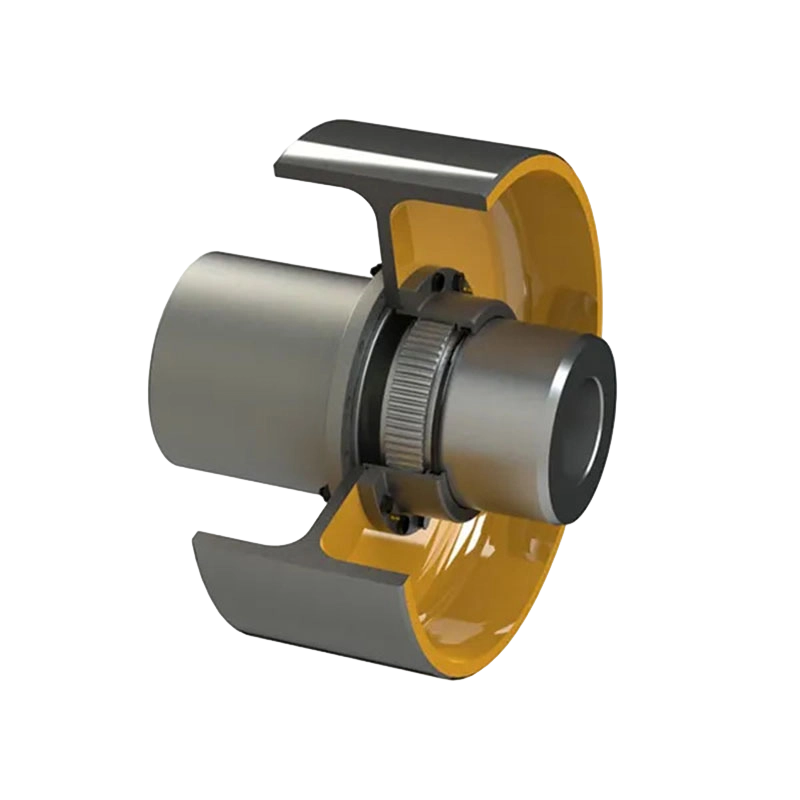
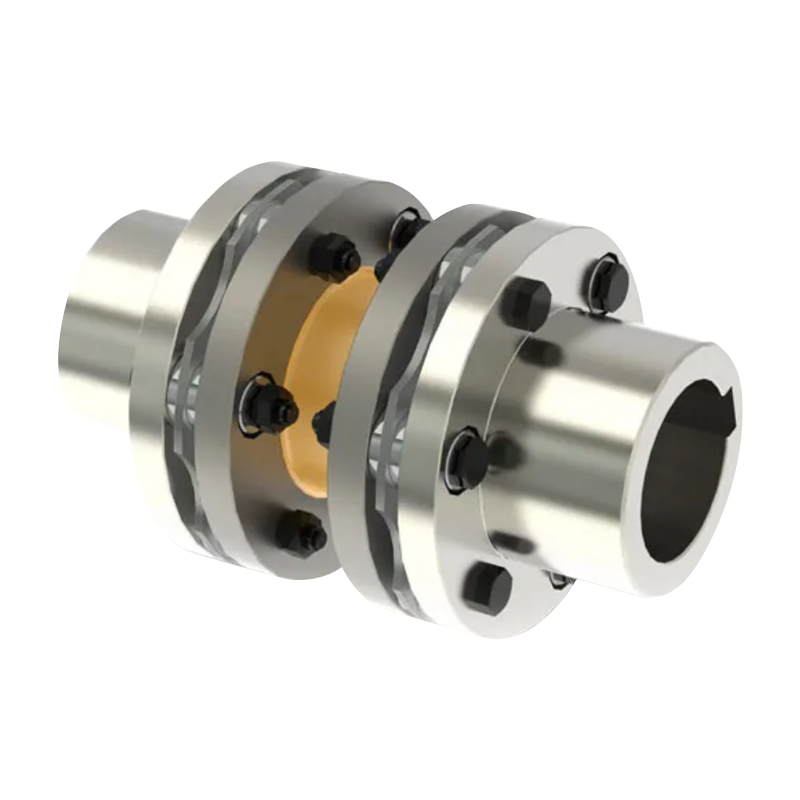
The ZCD type conical shaft hole elastic pin gear coupling is a heavy-duty flexible coupling designed for industrial power transmission systems that require reliable torque transfer, practical shaft connection, and compensation for installation and operating misalignment. It belongs to the category of flexible couplings with non-metallic elastic elements and uses elastic pins working with specially arranged pin grooves to transmit torque between connected shafts.
Its most distinctive feature is the conical shaft hole arrangement. Instead of relying only on a conventional cylindrical bore and keyway, one end of the coupling uses a conical shaft hole that tightens against a matching conical shaft extension. This arrangement helps achieve accurate centering, stable clamping, and convenient assembly or removal. It is particularly suitable for motors, gear reducers, and other drive units equipped with conical output shafts.
The coupling combines several useful characteristics in one compact design. It provides a wide nominal torque range, a relatively small turning diameter for its transmission capacity, three-dimensional misalignment compensation, low routine maintenance requirements, and overload protection through the deformable or breakable elastic pins. These features make the ZCD type suitable for medium- and heavy-duty industrial equipment, including metallurgical machinery, mining equipment, lifting systems, water equipment, paper machinery, and port machinery.
Manufactured by Zhongye Heavy Industry Technology (Zhenjiang) Co., Ltd., the product benefits from an integrated approach covering product development, engineering design, machining, assembly, testing, quality control, and technical support. The company operates dedicated heavy and precision workshops and provides both standard products and customized coupling solutions for special operating conditions.
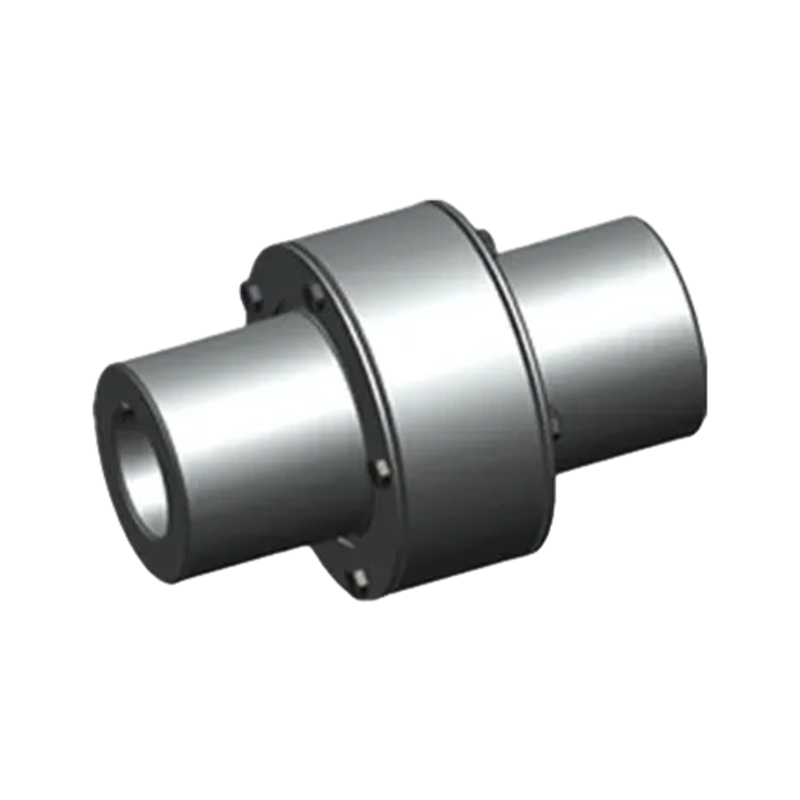
ZCD type conical shaft hole elastic pin gear coupling(Q/YZ33007X-2018)
1. Product Positioning and Operating Principle
A coupling is installed between two rotating shafts to transmit torque while accommodating certain differences in shaft position and operating behavior. In a real industrial machine, perfect alignment is difficult to maintain. Shaft centers may shift because of installation tolerances, foundation settlement, thermal expansion, bearing wear, housing deformation, or changes in operating load. A rigid connection may transmit these errors directly into the bearings, shafts, and connected equipment.
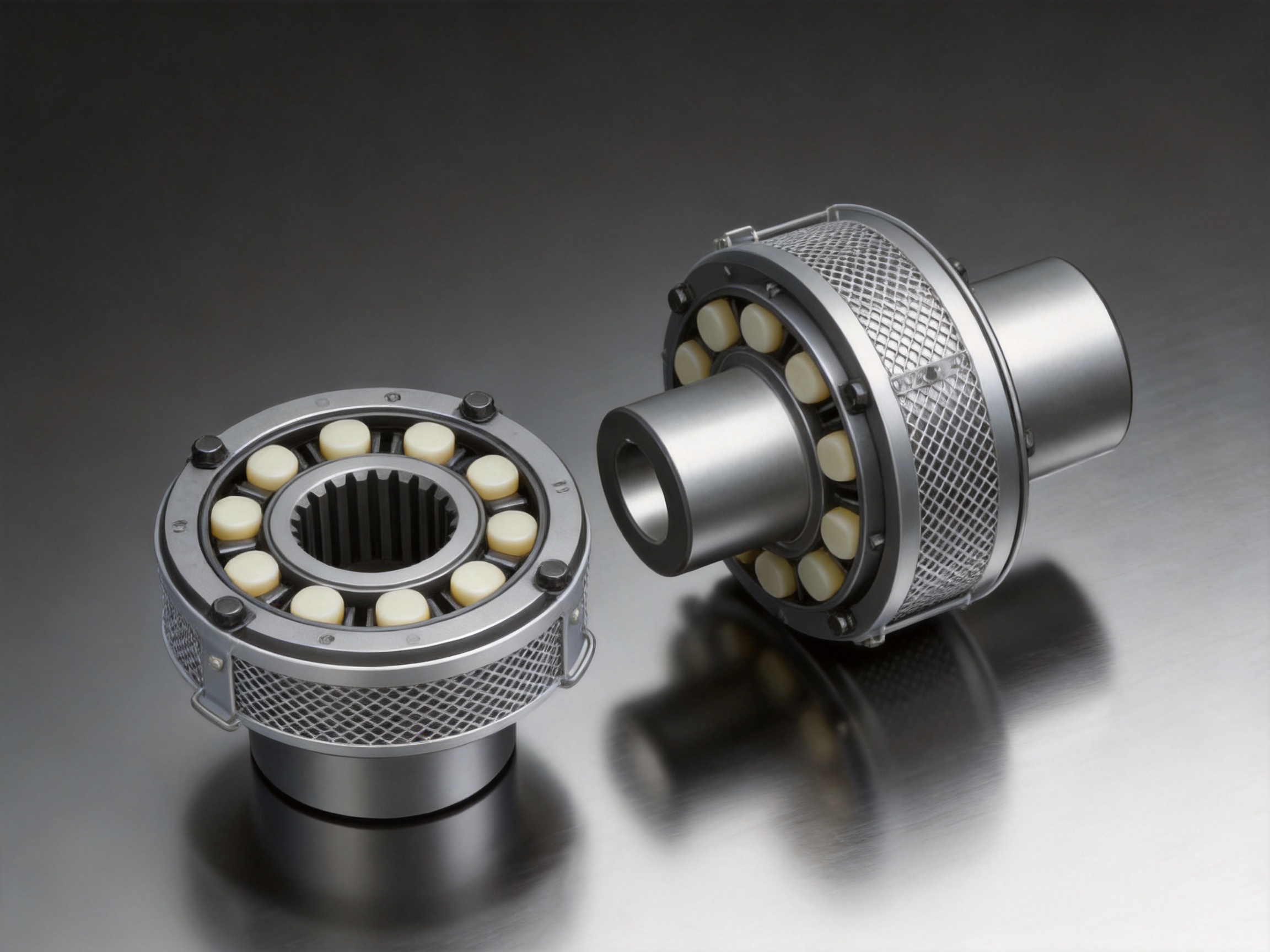
The ZCD type coupling addresses these practical conditions through a flexible pin transmission structure. The main coupling bodies are connected by elastic pins fitted into corresponding holes or grooves. During operation, torque is transmitted through the interaction of the coupling components and the elastic pins. The non-metallic pins provide a degree of flexibility, allowing the coupling to absorb limited axial, radial, and angular deviations.
The design is different from a fully rigid flange coupling, which normally requires highly accurate alignment and provides little tolerance for shaft displacement. It also differs from a conventional gear coupling, which uses external and internal gear teeth and generally requires lubrication to reduce tooth wear. The elastic pin gear coupling uses a simpler pin-based construction and non-metallic elastic elements, reducing the need for regular lubrication and simplifying maintenance.
The phrase “gear coupling” in the product name reflects the torque-transmitting geometry and application class, while the actual flexible element is the elastic pin. The design therefore combines the compactness and torque capability associated with industrial gear-type couplings with the practical maintenance advantages of a non-metallic elastic element.
1.1 Conical shaft connection
The conical shaft hole is central to the product’s installation concept. When a matching conical shaft is inserted and tightened, the conical surfaces generate a secure fit over the contact area. This helps locate the shaft concentrically and reduces the possibility of looseness caused by inadequate clamping or poor alignment.
A conical connection can also be useful where frequent replacement, inspection, or drive-unit maintenance is required. After the fastening arrangement is released, the coupling can be removed without requiring extensive dismantling of the complete transmission system. This is valuable in production lines where maintenance time directly affects equipment availability.
Correct matching of the shaft taper, shaft dimensions, tightening method, and coupling bore is essential. The shaft and coupling must be clean, free from burrs, and correctly seated. Installation personnel should follow the applicable assembly instructions and verify that the shaft is fully inserted and properly secured before commissioning.
1.2 Elastic pin torque transmission
The elastic pins provide the flexible connection between the coupling halves. Under normal load, they transmit the working torque while accommodating small movements between the connected shafts. Under excessive overload, the pins can deform or break before more expensive components such as the motor shaft, reducer shaft, or machine transmission parts suffer severe damage.
This behavior gives the coupling a basic sacrificial overload protection function. It should not be confused with a precisely calibrated torque limiter unless a special safety configuration has been specified. Nevertheless, the ability of the elastic pins to act as replaceable protective elements can reduce the risk of catastrophic damage in some transmission systems.
Pin condition should be checked during planned maintenance, particularly in applications involving frequent starting and stopping, shock loads, reversing, or repeated overload events. If a pin is damaged, the cause of the overload should be investigated before replacement. Simply installing a new pin without correcting the underlying condition may result in repeated failure.
2. Core Technical Advantages
2.1 Accurate and practical conical fit
The conical shaft hole helps improve alignment between the coupling and the connected drive shaft. Compared with a loose or poorly centered cylindrical connection, a properly fitted taper can provide better concentricity and more stable torque transmission. This is particularly helpful when the coupling is mounted directly to the conical output shaft of a motor or gear reducer.
Accurate centering reduces the risk of excessive rotational eccentricity, uneven pin loading, and unnecessary vibration. It can also support more predictable service life for bearings and connected components. The actual alignment result depends on shaft manufacturing accuracy, surface condition, installation method, tightening force, and the condition of the machine foundation.
The conical connection also supports efficient disassembly. In production environments where motors or reducers must be replaced, a coupling that can be removed without destructive cutting or complicated extraction is a practical advantage.
2.2 High torque capacity in a compact format
The ZCD series covers nominal torques from 112 N·m to 100,000 N·m. This broad range allows the same basic product concept to serve small auxiliary drives and large industrial transmission systems. The larger models are intended for substantial torque loads and can be used in heavy machinery when the speed, shaft dimensions, load pattern, and environmental conditions are appropriate.
For a comparable nominal torque, the coupling is designed with a relatively small turning diameter, compact overall volume, and moderate mass. This can help reduce space requirements around the shaft line. A smaller rotating envelope may also simplify the design of guards, machine frames, and maintenance access areas.
Compared with some traditional tooth-type couplings, the design may provide a practical alternative where a lower-maintenance, simpler construction is preferred. The final selection should always consider service factor, transient torque, allowable speed, bore dimensions, shaft length, and environmental limitations rather than nominal torque alone.
2.3 Three-dimensional compensation
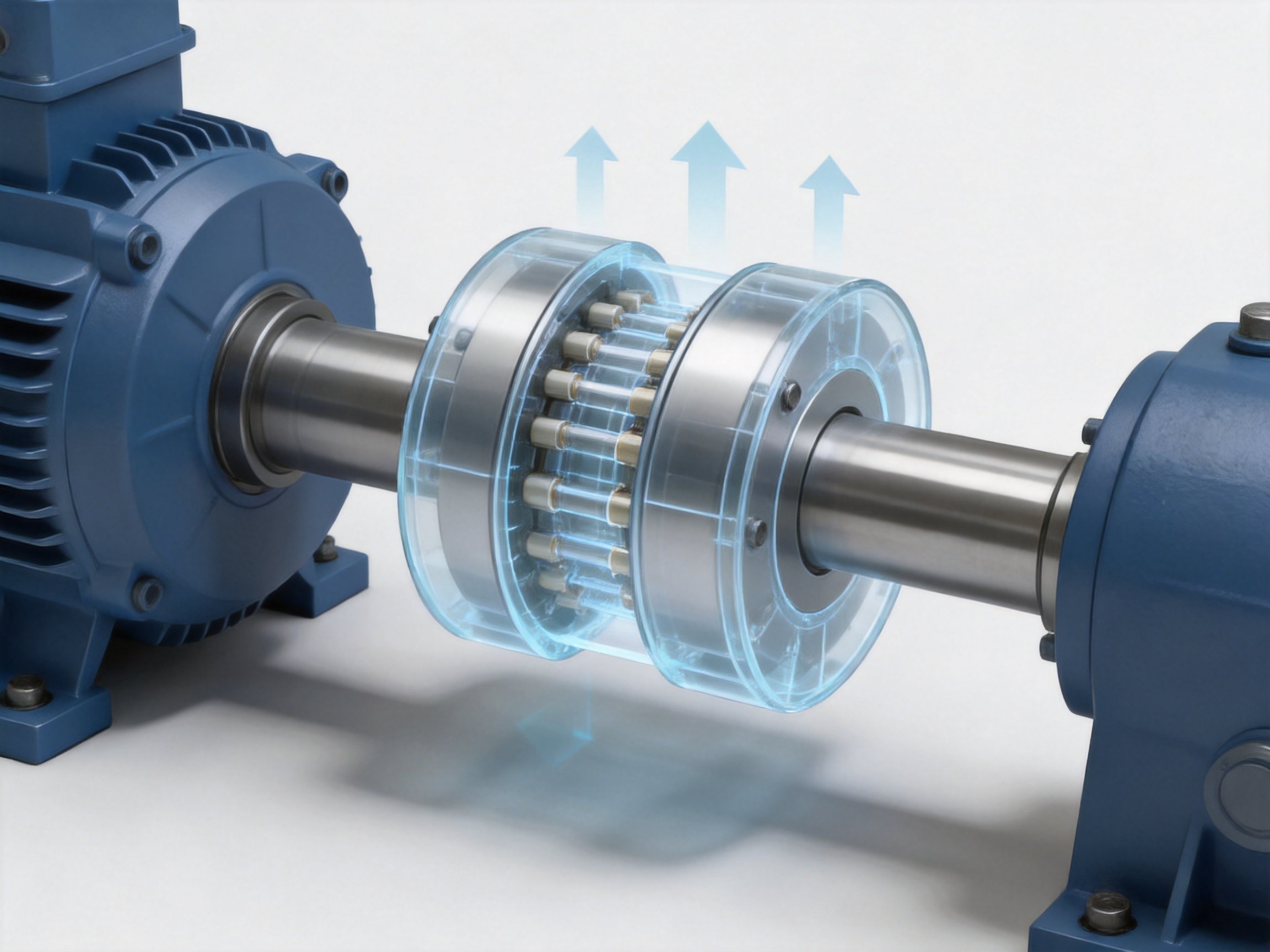
The elastic pin and groove arrangement allows the coupling to compensate for deviations in three directions. The stated approximate compensation capabilities are axial displacement of about 1.5 to 2.5 mm, radial displacement of about 0.3 to 0.6 mm, and angular deviation of about 0.5 degrees.
Axial compensation helps accommodate limited movement along the shaft axis. Such movement may result from thermal expansion, bearing movement, or changes in the relative position of the motor and driven machine. Radial compensation helps tolerate small shaft-center offsets caused by installation tolerances or structural deformation. Angular compensation helps accommodate a limited angle between the shaft centerlines.
These values are application-oriented reference figures, not permission to operate with uncontrolled misalignment. Excessive displacement can produce high pin stress, uneven load distribution, increased heat generation, and accelerated wear. Proper shaft alignment remains important even when a flexible coupling is selected.
The practical advantage is that the coupling can tolerate ordinary installation and operating errors without transferring all of them directly to the machinery. This makes it more forgiving than a rigid connection and can reduce the precision burden during installation, while still requiring responsible alignment practices.
2.4 Low routine maintenance requirements
The nylon elastic pins are self-lubricating under normal specified conditions and do not require the addition of coupling grease during routine operation. This is a significant advantage in applications where lubrication access is difficult or where oil and grease contamination must be minimized.
Unlike many toothed couplings, the ZCD structure does not depend on a continuously lubricated gear-tooth mesh. Eliminating routine grease application can reduce maintenance labor, simplify housekeeping, and avoid the risk of lubricant leakage into nearby equipment.
The coupling has relatively few parts and can be inspected without dismantling an extensive gear assembly. In many cases, the elastic pins can be replaced after removing the guard plate and accessing the relevant connection area. This helps reduce maintenance cost and shorten repair time.
2.5 Reduced manufacturing complexity
The product uses a comparatively simple structure and does not require the same level of high-precision internal and external gear processing associated with many fully toothed coupling designs. Fewer components can mean fewer potential assembly errors, a shorter manufacturing cycle, and more economical production.
A simpler structure does not mean that quality control is unimportant. Dimensional accuracy, concentricity, bore geometry, material consistency, pin fit, surface quality, and balancing remain essential to safe operation. The advantage is that the manufacturing process can focus quality control on a manageable number of critical features.
2.6 Overload protection through sacrificial pins
When the transmission is overloaded, the elastic pins may deform or fracture. This can interrupt torque transmission and protect more expensive parts of the drive system. For equipment exposed to occasional blockage, sudden impact, or unexpected load variation, this characteristic can provide an additional layer of mechanical protection.
After a pin failure, operators should inspect the motor, reducer, driven machine, shaft connections, coupling body, and guard. The replacement pin must be the correct type and size. Substituting an unsuitable material or improvised fastener may change the coupling’s torque behavior and compromise protection.
3. Main Technical Parameters and Selection Range
The ZCD series includes thirteen principal sizes, identified from ZCD1 to ZCD13. Nominal torque increases progressively from 112 N·m for ZCD1 to 100,000 N·m for ZCD13. Allowable speed ranges from 5,000 r/min for the smallest model to 1,500 r/min for the largest model.
The relationship between torque and speed is important. Smaller couplings generally support higher rotational speeds, while larger couplings are designed for higher torque at lower speeds. A coupling should never be selected by torque alone. The operating speed, shaft diameter, bore length, moment of inertia, mass, starting frequency, shock load, and ambient temperature must all be reviewed.
| Model | Nominal Torque (N·m) | Allowable Speed (r/min) | Representative Shaft Hole Range (mm) | Maximum Outer Diameter D (mm) | Mass Range (kg) |
|---|---|---|---|---|---|
| ZCD1 | 112 | 5000 | 6–28 | 78 | 2.08–2.30 |
| ZCD2 | 250 | Not stated in the supplied table | 25–32 | 90 | 3.74–3.98 |
| ZCD3 | 630 | 4500 | 30–42 | 118 | 9.43–10.30 |
| ZCD4 | 1800 | 4200 | 40–60 | 158 | 22.36–22.46 |
| ZCD5 | 4500 | 4000 | 50–80 | 192 | 21.71–30.45 |
| ZCD6 | 8000 | 3300 | 60–95 | 230 | 47.25–48.16 |
| ZCD7 | 11200 | 2900 | 70–110 | 260 | 64.13–69.42 |
| ZCD8 | 18000 | 2500 | 80–130 | 300 | 101.70–108.80 |
| ZCD9 | 25000 | 2300 | 90–150 | 335 | 142.40–157.50 |
| ZCD10 | 31500 | 2100 | 100–170 | 355 | 184.10–188.50 |
| ZCD11 | 40000 | 2000 | 110–180 | 380 | 212.30–225.00 |
| ZCD12 | 63000 | 1700 | 130–200 | 445 | 327.90–352.70 |
| ZCD13 | 100000 | 1500 | 150–220 | 515 | 468.40–524.50 |
The supplied dimensional schedule includes multiple shaft hole and shaft hole length combinations within many model sizes. The table above provides a simplified selection overview. Engineering orders should be confirmed against the complete dimensional drawing, especially where a particular shaft diameter, bore length, key arrangement, taper specification, or installation envelope is required.
3.1 Nominal torque
Nominal torque is the starting point for selection, but the required coupling rating should normally exceed the calculated operating torque. The calculation should consider motor power, operating speed, start-up torque, braking torque, reversing torque, impact loading, operating hours, and the driven machine’s service characteristics.
Applications with frequent starts and stops may generate higher transient loads than steady-running equipment. Hoists, crushers, conveyors with loaded starts, rolling equipment, and machines with intermittent blockage require special attention to acceleration and shock conditions.
3.2 Allowable speed
The allowable speed listed for each model is an important operating limit. Running above the stated value may increase centrifugal stress, vibration, pin loading, and heat generation. High-speed applications should also consider dynamic balance, shaft runout, guard clearance, and the influence of the coupling’s moment of inertia on acceleration and deceleration.
The smaller ZCD models have the highest listed speeds, while the largest models have lower allowable speeds. This reflects the normal engineering compromise between rotating diameter, structural mass, torque capacity, and dynamic behavior.
3.3 Shaft hole and length
The available shaft hole diameters cover a broad range, from small drive shafts in the lower sizes to shaft diameters up to 220 mm in the largest model. Shaft hole length must be matched to the actual shaft extension. Excessive unsupported shaft length, insufficient insertion depth, or improper key engagement can undermine the connection even when the coupling size is otherwise suitable.
Users should provide the manufacturer with shaft diameter, shaft length, taper details, key dimensions, shaft material, motor or reducer model, operating speed, transmitted power, and machine load characteristics when requesting confirmation or customization.
3.4 Temperature and environment
The stated working temperature range is approximately -20°C to +70°C. Within this range, the nylon elastic pins can provide the intended flexibility and transmission performance under normal conditions. Applications outside this range require technical review because extreme temperatures may affect the mechanical behavior of the non-metallic elements.
The coupling is intended for general machinery with medium to heavy loads and frequent start-stop operation. It is not the first choice for extremely high-speed equipment, extreme-temperature installations, or systems with strict requirements for ultra-low vibration and noise.
4. Comparison with Alternative Coupling Types
4.1 Compared with rigid couplings
Rigid couplings can provide a direct and firm connection, but they require accurate shaft alignment and provide little ability to absorb movement. Any angular, radial, or axial error may be transferred directly to the bearings and shafts. They are appropriate where the shafts are accurately aligned and no flexibility is required.
The ZCD coupling offers a more forgiving alternative for machinery where operating displacement or installation variation is expected. Its elastic pins can accommodate limited misalignment and reduce the direct transmission of certain shock loads. The trade-off is that the elastic elements are consumable components and must be inspected when exposed to overload or severe service.
4.2 Compared with fully toothed couplings
Toothed couplings are well known for high torque density and broad industrial use. However, their gear teeth generally require suitable lubrication and careful sealing. Tooth wear, lubricant contamination, and maintenance access can become concerns in dirty or difficult-to-reach environments.
The ZCD type avoids regular lubrication of a gear-tooth mesh and uses replaceable non-metallic elastic pins. Its simpler structure can reduce maintenance effort and manufacturing complexity. It may also offer a cost-effective solution where the highest possible angular displacement capability of a specialized toothed coupling is not necessary.
A toothed coupling may still be preferable for certain high-speed, high-temperature, or highly demanding applications. Product selection should be based on the complete operating envelope rather than on one feature in isolation.
4.3 Compared with diaphragm couplings
Diaphragm couplings are often selected for high-speed precision machinery because of their low backlash and strong torsional stiffness. They can provide excellent performance in carefully controlled installations. However, they may require higher manufacturing precision and more exact alignment procedures, and their overload behavior differs from that of a replaceable elastic pin.
The ZCD coupling is oriented toward robust industrial transmission, compact heavy-duty torque transfer, and practical maintenance. It is especially attractive when a machine benefits from a sacrificial flexible element and does not require the specialized high-speed characteristics of a diaphragm design.
4.4 Compared with elastomer jaw couplings
Jaw couplings are compact and convenient for smaller drives, but their torque capacity and size range may not meet the requirements of large industrial equipment. Their elastomer spider may also be sensitive to temperature, chemical exposure, and repeated shock loading depending on its material.
The ZCD series extends into much higher torque ratings and larger shaft sizes. Its elastic pin arrangement is suitable for medium- and heavy-duty applications where a small jaw coupling would be insufficient. The correct comparison must include service factor, allowable speed, misalignment, environmental resistance, and replacement-part availability.
4.5 Competitive advantages in practical applications
The principal competitive advantages of the ZCD design are its combination of conical shaft connection, high torque range, compact geometry, three-axis compensation, lubrication-free operation, simple construction, and overload protection. Many alternative coupling types provide some of these characteristics, but fewer combine all of them in one product family.
For plant operators, the value is not only the initial purchase price. Installation time, access requirements, lubrication labor, spare-part cost, machine downtime, and the protection of connected equipment all influence total ownership cost. A coupling that is easy to install and maintain can offer a meaningful operational advantage over a more complicated design.
5. Manufacturing Capabilities and Engineering Strengths
5.1 Integrated research, manufacturing, and sales
Zhongye Heavy Industry Technology (Zhenjiang) Co., Ltd. integrates research and development, manufacturing, sales, and technical service. This structure allows product requirements from industrial users to be transferred more directly into engineering and production activities.
An integrated supplier can support customers through several stages: initial coupling selection, shaft and bore confirmation, technical drawing review, standard production, non-standard design, delivery coordination, installation guidance, and after-sales service. This is particularly useful for heavy machinery projects where the coupling must be coordinated with the motor, reducer, driven equipment, and guard design.
5.2 Dedicated production facilities
The company’s new workshop covers approximately 16,463.52 square meters. The facility includes a heavy workshop of about 5,500 square meters, a precision workshop of approximately 4,600 square meters, an office building and gymnasium, a dining hall, a warehouse, and dedicated road, greening, and parking areas.
The separation of heavy and precision production areas is beneficial for a product family that includes both large industrial couplings and smaller precision-machined components. Heavy-duty coupling bodies require suitable handling, machining capacity, and workspace, while bore accuracy, concentricity, dimensional inspection, and assembly quality depend on controlled precision manufacturing operations.
A dedicated warehouse also supports organized storage of raw materials, semi-finished components, finished couplings, pins, and replacement parts. Effective material identification and storage are important for maintaining traceability and preventing the accidental mixing of components with different dimensions or specifications.
5.3 Product development and customization
The company produces a broad range of coupling types, including toothed couplings, elastic sleeve pin couplings, elastic pin couplings, universal couplings, tire couplings, jaw couplings, star couplings, diaphragm couplings, drum couplings, grid couplings, Oldham couplings, flange couplings, clip-shell couplings, and roller chain couplings.
This broad product knowledge supports cross-comparison during selection. If a ZCD coupling is not appropriate for a particular speed, temperature, alignment, or torsional requirement, the engineering team can assess another coupling concept or develop a non-standard design. Such flexibility is valuable for original equipment manufacturers and industrial users with unusual shaft arrangements.
Customization may involve shaft hole diameter, shaft hole length, taper dimensions, keyway details, outer dimensions, connection configuration, protective guard arrangements, material requirements, or special installation limitations. Customized designs should be confirmed through technical drawings and formal engineering review before production.
5.4 Manufacturing process control
Reliable coupling production requires control of several manufacturing stages. The process typically begins with engineering confirmation of the product model, dimensions, materials, and application requirements. Raw material preparation is followed by blank production, machining, bore and shaft-interface processing, finishing, cleaning, inspection, assembly, and final testing.
For the ZCD coupling, the conical shaft hole is a critical feature. The taper must be manufactured to the required geometry, and the finished surface must allow full and stable contact with the mating shaft. Dimensional errors or surface damage in this area can affect concentricity and clamping reliability.
Other important control points include coupling-body concentricity, pin-hole positioning, groove geometry, face runout, shaft hole length, keyway dimensions where applicable, and the fit of the nylon elastic pins. For larger models, handling and assembly procedures are also important because improper lifting or impact can damage machined surfaces.
5.5 Testing and quality assurance
The company identifies advanced testing facilities, strict quality control, complete specifications, and reliable production guarantees as important strengths. Testing and inspection should verify that the finished coupling conforms to the approved drawing and relevant technical requirements.
Depending on the product and order, quality activities may include dimensional inspection, material verification, surface examination, bore and taper inspection, concentricity measurement, visual inspection, assembly checking, rotational testing, and documentation review. Heavy-duty applications may require additional technical confirmation based on customer operating data.
The company’s products comply with international standards and certifications such as ISO 9001, according to the supplied company information. A quality management system provides a framework for controlled procedures, inspection records, corrective actions, process improvement, and customer feedback management.
5.6 Reliable supply for industrial sectors
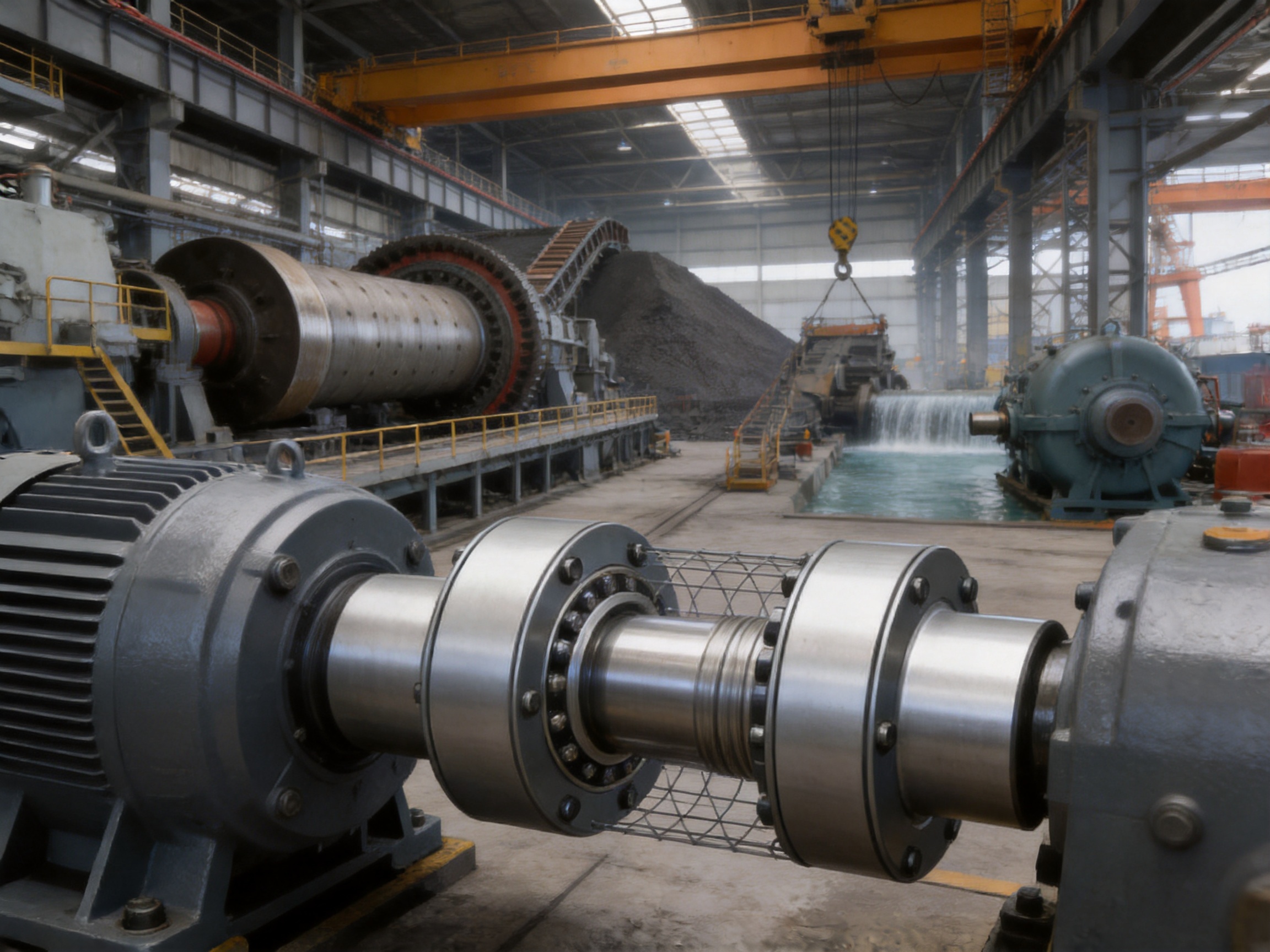
The company serves metallurgical equipment, mining equipment, water equipment, lifting equipment, paper machinery, port equipment, and other industrial fields. These sectors commonly require high torque, robust construction, dependable delivery, and the ability to accommodate special shaft arrangements.
Experience across several industries can improve practical design judgment. A coupling used in a paper machine may prioritize smooth operation and compact installation, while a mining conveyor may emphasize shock resistance and maintainability. A lifting system may require careful consideration of braking and reversing loads. Industrial experience helps ensure that product selection is based on operating behavior rather than catalog dimensions alone.
6. Application Areas
6.1 Metallurgical equipment
Metallurgical machinery often operates under heavy loads, frequent starts, and demanding production schedules. Roll drives, conveyors, auxiliary systems, and material-handling equipment can benefit from a coupling that provides high torque capacity and practical overload protection.
The ZCD series is suitable where the speed remains within the model’s allowable limit and where the temperature and alignment conditions fall within the specified range. The conical connection can simplify maintenance on drive units that must be removed during planned shutdowns.
6.2 Mining equipment
Mining machinery may experience shock loads, dust, vibration, and difficult maintenance access. Conveyors, crushers, feeders, pumps, and material-handling drives require couplings that can continue transmitting torque despite ordinary installation and operating variation.
The lubrication-free elastic pin structure can be advantageous where adding grease is inconvenient. However, the coupling should be protected with a suitable guard, and the effects of abrasive dust, water, chemical exposure, and extreme ambient temperature should be evaluated during project design.
6.3 Lifting equipment
Lifting equipment may impose repeated starting, stopping, braking, reversing, and transient loading. These conditions require careful service-factor selection. A coupling should be selected with adequate capacity for the motor torque, brake torque, acceleration cycle, and possible shock load.
The overload response of the elastic pins can help protect connected components, but it does not replace the need for a properly designed braking and safety system. Lifting applications should be reviewed according to the applicable machinery and safety requirements.
6.4 Water and pump equipment
Water equipment and pump systems often benefit from low-maintenance connections. The ZCD coupling can be considered for large pumps, water-treatment machinery, and associated drive systems when the speed, shaft alignment, torque, and environmental conditions are suitable.
Moisture, corrosion, chemical exposure, and outdoor installation must be considered. The coupling body, fasteners, guard, and non-metallic pins should be specified for the actual environment. Additional protective treatment or material selection may be needed for aggressive conditions.
6.5 Paper and port machinery
Paper machinery requires dependable continuous operation and controlled vibration, while port machinery may face variable loads, frequent starts, and outdoor exposure. The ZCD coupling provides a practical solution for selected drive lines where high torque, compact installation, and straightforward maintenance are priorities.
The application engineer should confirm whether the stated average vibration and noise reduction performance is adequate. Where a machine has strict vibration limits or very high rotational speed, another coupling type may be more suitable.
7. Installation and Maintenance Guidance
7.1 Pre-installation inspection
Before installation, verify the coupling model, nominal torque, allowable speed, shaft hole diameters, shaft hole lengths, taper details, key dimensions, and required accessories. Inspect the coupling for transport damage, corrosion, burrs, contamination, or deformation.
Check both shafts for correct diameter, taper, length, surface finish, and keyway condition. The shaft centerlines should be positioned according to the applicable installation drawing. Although the coupling compensates for limited misalignment, initial alignment should be as accurate as reasonably possible.
7.2 Conical shaft installation
Clean the conical surfaces carefully before assembly. Oil, dirt, paint, burrs, or foreign particles can prevent full contact and affect the final position. Insert the shaft smoothly without hammering directly on precision surfaces. Tighten the fixing arrangement according to the specified procedure and verify that the shaft is fully seated.
After tightening, rotate the assembly manually if possible and check for abnormal resistance, interference, or visible eccentricity. The guard should be installed before operation. The rotating coupling must never be operated without adequate guarding in an accessible area.
7.3 Alignment
Measure and correct angular and radial alignment between the motor, reducer, and driven machine. Confirm that the axial position allows the required shaft insertion and operating movement. The coupling’s compensation capability should be treated as an operating allowance, not as a substitute for alignment.
After the first operating period, recheck fasteners, shaft seating, vibration, and pin condition. Thermal expansion and foundation movement may change alignment after commissioning.
7.4 Routine inspection
Routine inspection should include visual examination of the elastic pins, guard, coupling body, fastening components, and shaft connection. Look for pin deformation, cracks, abnormal wear, looseness, corrosion, unusual noise, or vibration.
Because the pins are the flexible and sacrificial elements, their condition provides useful information about the transmission system. Uneven pin wear may indicate misalignment, excessive torque, unsuitable operating conditions, incorrect assembly, or a problem in the driven machine.
7.5 Pin replacement
Before replacing a pin, isolate the machine from all energy sources and prevent accidental startup. Remove the guard or access cover according to the maintenance procedure. Replace damaged pins with approved components of the correct material, size, and design.
Inspect the pin holes and surrounding coupling body for elongation, cracking, or distortion. If the coupling has experienced a major overload, inspect the shafts, keys, bearings, reducer, motor, and driven equipment before returning the machine to service.
8. Limitations and Correct Selection Boundaries
No coupling type is suitable for every machine. The ZCD coupling is intended for general industrial machinery with medium to heavy loads, frequent start-stop operation, and moderate misalignment. Its working temperature range is approximately -20°C to +70°C.
It is not the preferred choice for applications with extremely high rotational speed, severe temperature exposure, or strict requirements for exceptionally low vibration and noise. The product’s vibration and noise reduction performance is described as average, so precision machine tools, high-speed turbines, and other sensitive systems may require a diaphragm, disc, or specialized high-speed coupling.
Users should also review chemical compatibility. Non-metallic pins may be affected by certain oils, solvents, chemicals, ultraviolet exposure, or temperatures outside the specified range. The coupling should be protected from direct mechanical impact and installed with a suitable guard.
Selection should account for service factor and transient loads. A coupling that is adequate for continuous running torque may not be adequate for a crusher startup, a hoist brake application, a conveyor blockage, or repeated reversing. Accurate operating data is essential for a reliable recommendation.
9. Why Choose a Specialized Coupling Manufacturer
Industrial couplings connect valuable drive equipment, and their performance affects the availability of the entire machine. Choosing a specialized manufacturer provides access to product knowledge that extends beyond a single catalog item. The supplier can evaluate shaft geometry, torque, speed, misalignment, environment, and maintenance requirements together.
Zhongye Heavy Industry Technology focuses specifically on coupling design and manufacture and offers a broad product portfolio. This specialization supports technical comparison between elastic pin, gear, diaphragm, tire, grid, jaw, universal, flange, drum, and other coupling forms.
The company’s strengths include research and development capability, manufacturing capacity, testing facilities, quality control, standard specifications, customization support, pre-sales technical assistance, non-standard design solutions, and after-sales service. These capabilities are particularly relevant when a customer requires a coupling for a new machine or a replacement for an obsolete or non-standard component.
Manufacturing close to the engineering function can also improve communication. Questions about bore dimensions, taper fit, shaft length, speed, balancing, material, and installation can be reviewed before production rather than discovered during assembly. This reduces the risk of an unsuitable product reaching the machine site.
For international and domestic industrial customers, consistent documentation is equally important. Product drawings, dimensional schedules, inspection records, packing information, replacement-part details, and technical instructions help maintenance teams manage the coupling throughout its service life.
10. Q&A
Q1: What is the main purpose of the ZCD conical shaft hole elastic pin gear coupling?
It transmits torque between connected shafts while accommodating limited axial, radial, and angular misalignment. The conical shaft hole provides accurate positioning and convenient assembly or removal, while the elastic pins provide flexibility and basic overload protection.
Q2: What is the nominal torque range?
The series covers nominal torque ratings from 112 N·m to 100,000 N·m, depending on the selected model from ZCD1 through ZCD13.
Q3: What shaft diameters are available?
The supplied dimensional schedule shows shaft hole diameters ranging from approximately 6 mm in the smallest configuration to 220 mm in the largest listed configuration. Exact availability depends on the selected model and shaft hole length.
Q4: Does the coupling require grease lubrication?
The nylon elastic pins are self-lubricating under normal specified conditions, so regular additional lubrication is not normally required. The coupling should still be inspected, cleaned, and maintained according to the application and installation instructions.
Q5: How much misalignment can it compensate?
The stated approximate compensation values are axial displacement of 1.5 to 2.5 mm, radial displacement of 0.3 to 0.6 mm, and angular deviation of about 0.5 degrees. These values should be treated as engineering reference limits, and initial shaft alignment should remain as accurate as possible.
Q6: What happens if the machine is overloaded?
The elastic pin may deform or break, interrupting torque transmission and helping protect more expensive drive components. After a failure, the cause of the overload should be identified before the coupling is returned to service.
Q7: Is the product suitable for high-speed machinery?
It is suitable only within the allowable speed specified for the selected model. The listed speed decreases as the coupling size and torque capacity increase. Extremely high-speed or highly vibration-sensitive applications may require another coupling design.
Q8: What is the working temperature range?
The stated working temperature range is approximately -20°C to +70°C. Applications outside this range should be reviewed with the manufacturer because temperature can affect the non-metallic elastic pins and overall coupling performance.
Q9: Can the coupling be customized?
Yes. The manufacturer undertakes non-standard coupling design and manufacture. Possible customization areas may include bore dimensions, shaft hole length, taper details, keyways, connection dimensions, materials, and special installation requirements, subject to engineering confirmation.
Q10: Which industries commonly use this type of coupling?
Potential industries include metallurgy, mining, water equipment, lifting equipment, paper machinery, port equipment, conveyors, pumps, reducers, and other medium- and heavy-duty industrial transmission systems.
Q11: How does it compare with a toothed coupling?
The ZCD coupling uses elastic pins and does not require routine lubrication of a gear-tooth mesh. It has a simple structure, convenient pin replacement, and practical misalignment compensation. A toothed coupling may still be preferable for certain high-speed, high-temperature, or specialized applications.
Q12: What information is needed for product selection?
Important information includes motor power, operating speed, nominal and peak torque, starting frequency, braking or reversing conditions, shaft diameters, shaft lengths, taper details, key dimensions, alignment conditions, ambient temperature, environment, and available installation space.
11. Final Evaluation
The ZCD type conical shaft hole elastic pin gear coupling is a practical heavy-duty transmission solution that combines a secure conical shaft connection with flexible non-metallic pin elements. Its principal strengths are accurate and convenient shaft fitting, a broad torque range, compact construction, three-dimensional compensation, lubrication-free routine operation, straightforward maintenance, and sacrificial overload protection.
Compared with rigid couplings, it offers greater tolerance for ordinary shaft displacement. Compared with fully toothed couplings, it simplifies lubrication and maintenance. Compared with smaller elastomeric couplings, it extends to substantially higher torque and shaft sizes. Compared with highly specialized precision couplings, it provides a more economical and robust solution for general industrial machinery.
The product is best suited to medium- and heavy-duty equipment operating within the specified speed and temperature limits. It should not be selected solely by catalog torque. Correct application requires review of service factor, shock loads, alignment, shaft connection, environmental conditions, allowable speed, and maintenance access.
Supported by dedicated heavy and precision workshops, engineering capability, quality control, testing resources, complete coupling specifications, and customization support, Zhongye Heavy Industry Technology can provide both standard ZCD products and non-standard coupling solutions. This combination of product design and manufacturing capability helps customers obtain a coupling that is not only dimensionally compatible but also appropriate for the real operating conditions of the machine.
For industrial users seeking dependable torque transmission with practical installation and maintenance advantages, the ZCD conical shaft hole elastic pin gear coupling offers a balanced alternative to rigid, fully toothed, and highly specialized coupling designs.
References
1. Product technical information for the ZCD type conical shaft hole elastic pin gear coupling, including nominal torque, allowable speed, shaft hole, dimensional, inertia, and mass data.
2. Q/YZ33007X-2018, technical reference identified for the ZCD type conical shaft hole elastic pin gear coupling.
3. Manufacturer-provided information on product structure, operating limits, maintenance characteristics, customization capability, and industrial applications.
4. Manufacturer-provided company information concerning research and development, manufacturing facilities, quality control, testing capability, and coupling product categories.
5. General engineering principles for flexible coupling selection, shaft alignment, torque calculation, overload protection, and rotating equipment maintenance.
Product: ZCD type conical shaft hole elastic pin gear coupling(Q/YZ33007X-2018)

- Quick Links
- About
- Products
- Our Service
- News & Events
- Contact
- Products Series
- Flexible Couplings with Non-Elastic Elements
- Flexible Couplings with Metal Elastic Elements
- Flexible Couplings with Non-Metallic Elastic Elements
- Safety Coupling
- Rigid Coupling
- Contact Us
- Tel : +86 511 8572 3800 +86 511 8572 3900
- Mobile : +86 15106109009
- Email : sales@couplingzy.com
- Add:No.1 Zhongye Yingbin Avenue, Gaozi Street, Dantu Economic Development Zone, Zhenjiang City, Jiangsu Province, China.


